BYD's Export Surge: A Global Triumph!
 10/08 2026
 502
502
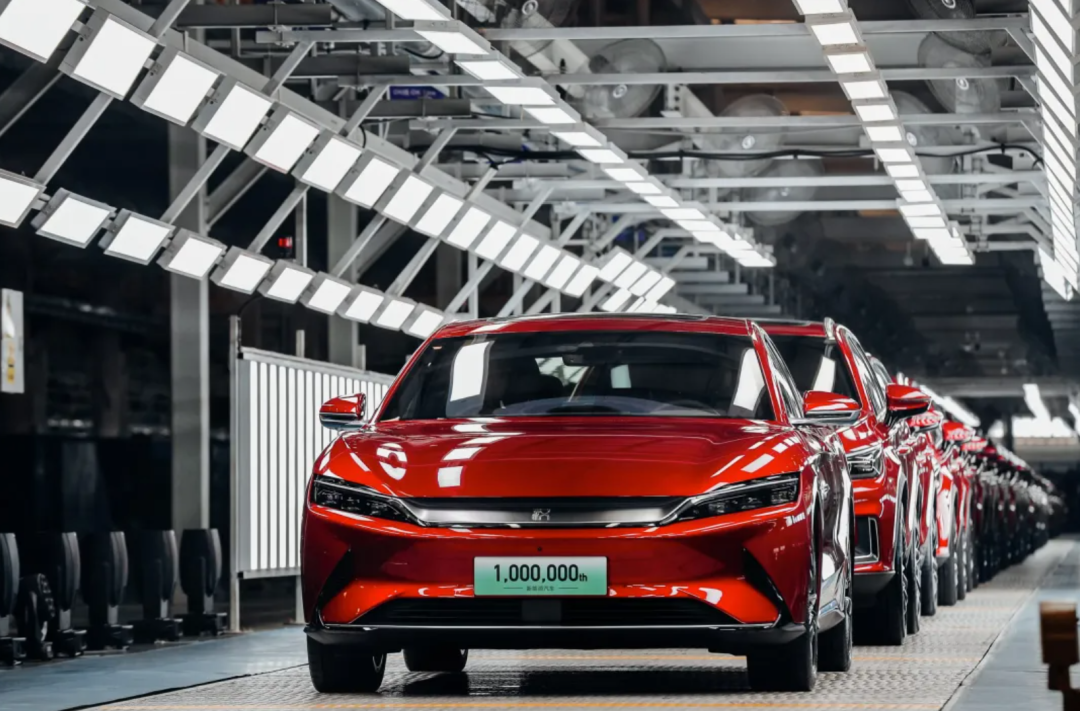
BYD's exports skyrocketed again in September!
The September figures are quite intriguing. Domestic sales reached 396,270 units, marking a 5.52% year-on-year decline. However, exports soared to 71,256 units, reflecting a remarkable increase of over 130% year-on-year.
For the same company and the same report, there are two vastly different realities at play.
Some might describe it as 'thriving abroad while struggling at home.' But that's only partially accurate.
A more precise description would be: The domestic market is fiercely competitive. Price wars have driven profits to such low levels that even the sale of screws is unprofitable, whereas the overseas market is just beginning to blossom.

How did BYD achieve this feat?
Let's delve into the fundamentals.
BYD's Core Operating Data for September 2025
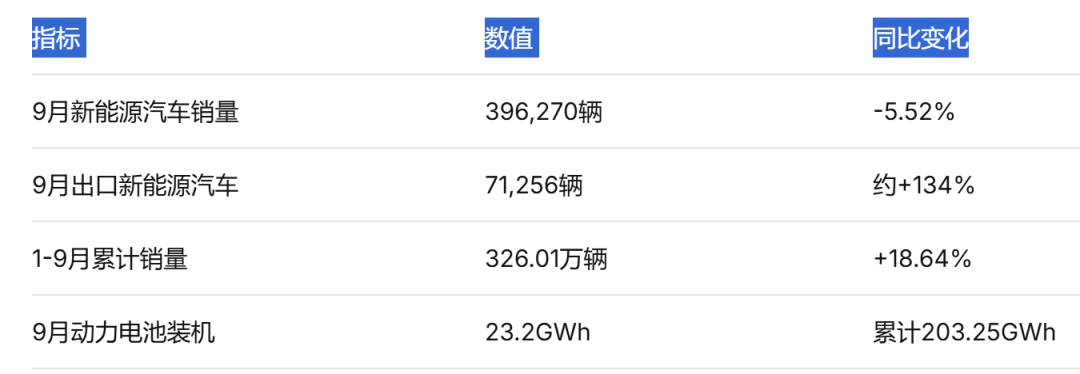
Data Source: BYD's September 2025 Production and Sales Report
The domestic market is shrinking, while overseas operations are booming.
This isn't merely a case of 'offsetting domestic weakness with exports.' Upon closer inspection, the profitability of export operations is truly impressive.
In 2025, BYD's overseas revenue soared to RMB 310.741 billion, up 40.05% year-on-year, accounting for 38.65% of total revenue. The gross profit margin for overseas business stood at 19.46%, nearly 3 percentage points higher than the domestic margin of 16.66%.
What does this signify?
Many harbor a stereotype: Chinese cars succeed overseas by being inexpensive. However, a higher overseas gross profit margin suggests that BYD enjoys stronger pricing power abroad than at home.
The average selling price of overseas models in the latter half of the year was approximately RMB 186,000, roughly 1.5 times that of domestic models.
The Tang and Han models command significantly higher prices in Germany than in China. The Seal is priced in Europe to directly compete with the Model 3. This isn't about sacrificing profits for market share—it's about genuine brand premium.
Key Milestones in BYD's Export Volume:
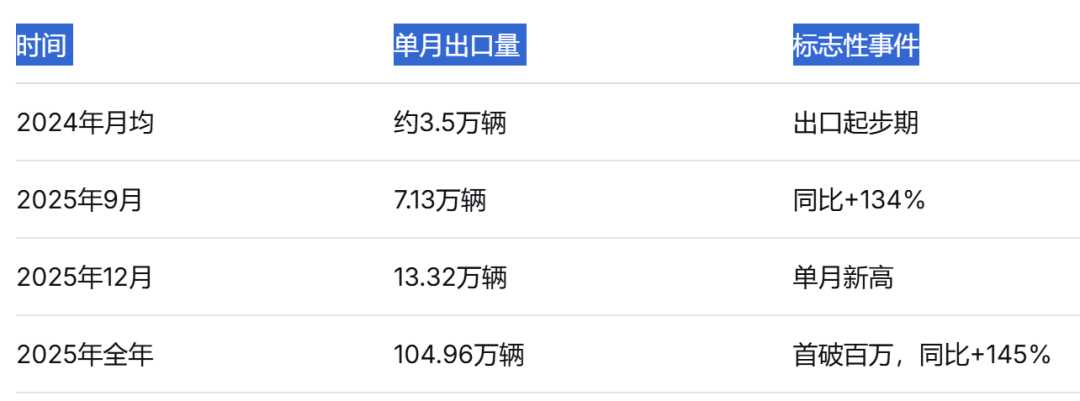
Data Source: BYD Announcements, Securities Times
From an average of 35,000 units per month in 2024 to 70,000-130,000 units per month in the second half of 2025, export volume more than tripled in a year.
Such rapid acceleration is unprecedented in China's automotive history.
Where does its product advantage lie?
BYD's success abroad can be attributed to two core strengths: technological innovation and product adaptability.
Firstly, technology. The Blade Battery, DM-i Super Hybrid, and e-Platform 3.0 are well-known in China, but they continue to be game-changers overseas.
European automakers' electrification transitions are generally behind schedule.
Volkswagen's ID series infotainment systems have faced widespread criticism, while Stellantis' electrification strategy remains inconsistent. BYD enters these markets with mature three-electric systems and a complete supply chain—essentially offering finished products to markets still grappling with half-baked solutions.
Then there's product customization. BYD doesn't impose a 'one-size-fits-all' approach overseas but tailors its offerings to local needs.
In Southeast Asia, pure electric models dominate.
Indonesia offers tax exemptions for new energy vehicles, with strong demand from ride-hailing and taxi fleets. In 2025, BYD exported 81,034 pure electric passenger cars to Indonesia, setting a benchmark in the local market.
This spring, Thailand's Prime Minister even switched his official vehicle to a BYD.
In Europe, plug-in hybrids are more popular. Charging infrastructure remains uneven, and range anxiety persists for pure EVs. DM-i's 'dual-fuel' capability perfectly addresses this pain point.
Latin America and the Middle East require different strategies.
Brazil has a special demand for flexible-fuel vehicles. In October 2025, BYD launched the world's first plug-in hybrid flexible-fuel model at its Camacari plant in Brazil.
The Middle East demands high battery stability in extreme heat—BYD has made targeted adjustments to meet these requirements.
This 'localization' capability doesn't happen overnight.
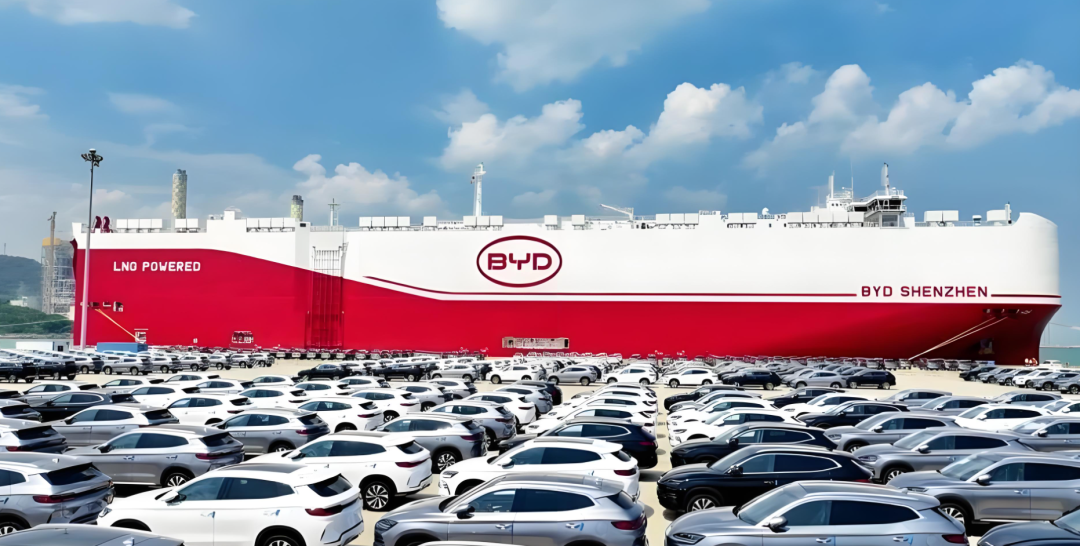
Chinese Automakers Going Global: BYD Leads the Way
Looking beyond BYD.
In 2025, China exported 8.32 million vehicles, up 30% year-on-year. New energy vehicle exports reached 3.43 million units, up 70%.
China secured its position as the world's largest automotive exporter for the third consecutive year.
2025 Export Performance of China's Major Automakers
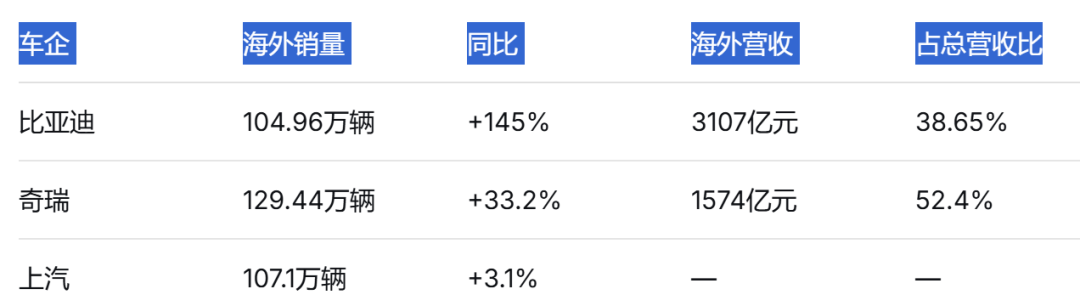
Data Source: 2025 Annual Reports and Announcements of Various Companies
Chery exported 1.2944 million units, leading Chinese passenger car exports for 23 consecutive years, with overseas revenue accounting for over half. SAIC sold 1.071 million vehicles overseas, with cumulative exports surpassing 6 million.
Export destinations are also evolving.
Top 5 Export Destinations for Chinese Cars in 2025:
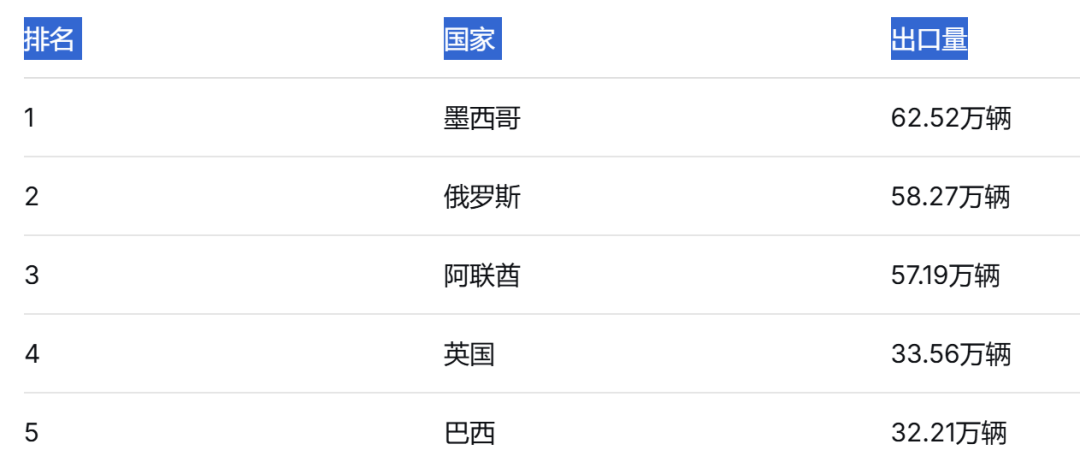
Data Source: CPCA Secretary-General Cui Dongshu, January 2026
Mexico surpassed Russia to become China's top automotive export destination.
Russia fell to second place due to rising scrappage taxes, persistently high benchmark interest rates (auto loan rates soared to 30% annually), and deterred consumers.
The UAE jumped to third place, reflecting rising consumer demand in the Middle East.
But behind the success lie significant challenges.
Going Global Isn't a Walk in the Park: Challenges Ahead
Chinese automakers face numerous hurdles abroad.
Firstly, tariffs.
The EU imposed anti-subsidy tariffs on Chinese EVs in October 2024: 17% for BYD, 18.8% for Geely, and 35.3% for SAIC.
The impact is real, but Chinese brands' market share in Europe didn't collapse post-tariffs.
Why? European automakers' electrified offerings lack competitiveness, and consumers vote with their wallets.
Secondly, localization.
It's not just about shipping cars overseas. After-sales networks, charging infrastructure, parts supply, financial services, and brand recognition all require building from scratch.
BYD's solution: build local factories. Plants in Thailand, Uzbekistan, and Brazil are operational, with combined annual capacity exceeding 300,000 units. Facilities in Hungary, Malaysia, and Cambodia are planned.
Brazil's Camacari plant is BYD's largest outside Asia and the biggest EV production base in Latin America, with total investment reaching BRL 5.5 billion.
In October 2025, the 14 millionth new energy vehicle rolled off this assembly line, with Brazilian President Lula becoming an owner.
Chery, SAIC, Great Wall, XPeng, and Leapmotor are also investing in local production. 'Product exports' are evolving into 'value chain exports'—easier said than done, as every step requires substantial investment.
Thirdly, and most importantly (and often overlooked): service systems.
Who repairs vehicles after sale? How are parts supplied? What about recycling?
These aren't issues domestically, where infrastructure is mature. But abroad, especially in newly entered markets, each question represents real costs.
Final Thoughts
BYD's September export record is cause for celebration. But focusing solely on the number misses the bigger picture.
Export volume is an outcome, not a cause.
What truly determines whether Chinese automakers can establish themselves globally are three factors: product competitiveness, brand premium capability, and overseas system-building.
BYD has already answered the first two questions with its 19.46% overseas gross profit margin—higher than domestic, proving overseas consumers recognize and pay for its brand value.
The third question takes time.
Building factories is relatively straightforward; building systems is challenging. Transplanting a complete sales, service, and supply chain overseas—then adapting it to local laws, consumer habits, and cultural differences—cannot be accomplished in a year or two.
Going global cannot be rushed.
But the direction is clear. In 2025, overseas sales accounted for about 24% of BYD's total volume. This isn't just icing on the cake—it's a strategic shift.
The question has evolved from 'Can we enter?' to 'Can we stay?'
BYD and its peers are writing their answers market by market.
What's your take on BYD's global expansion? Share your insights in the comments below.
Disclaimer: This article provides financial hotspot analysis based on publicly available data, company announcements, and Huishang IFinD. Views are for reference only and do not constitute investment or consumption advice.
-
![]()
Polarization of Light: The ‘Sense of Direction’ in the Realm of Transverse Waves
-
![]()
Polarizer, Wave Plate, and Polarized Light Path Design: The Essential Framework of Polarization Optical Systems
-
![]()
JAC Motors’ Stock Price Rockets for Three Days Straight: Is the ‘Huawei Partnership’ Being Treated as a Cash Cow?
-
![]()
What Does China's Motorcycle Industry Still Lack After 7 Billion Views?
-
![]()
Yijing’s First Car Hits the Market: Timing, Location, and Target Audience—How to Get Them Right?
-
![]()
Volkswagen Lays Off 100,000 Employees but Builds Three Battery Factories in Europe with Gotion High-Tech
-
![]()
GAC Group: Pioneering Integration Among Domestic Automakers
-
![]()
Huawei and Seres Forge Alliance: A Strategic 'Remarriage'!