Yijing’s First Car Hits the Market: Timing, Location, and Target Audience—How to Get Them Right?
 10/08 2026
 326
326
Huasheng Perspective
At a time when sedans are on the decline and SUVs dominate, Yijing makes its market debut with the X9.
The Yijing X9 has made a promising start. With a starting price of 279,800 yuan, it has lowered the entry barrier for consumers, and the 9,157 orders received within 24 hours of its launch reflect positive market acceptance.
However, the large six-seater SUV segment is already crowded, with established players like Aito M9 and Li Auto L9, and more new products waiting in the wings.
Dongfeng’s 57 years of automotive experience and Huawei’s cutting-edge technology, combined with a full-stack native collaboration model, form a strong foundation. Yet, success is not guaranteed; the final outcome will hinge on delivery speed, user reputation, and subsequent product iterations.
The collaboration between Dongfeng and Huawei is just beginning.
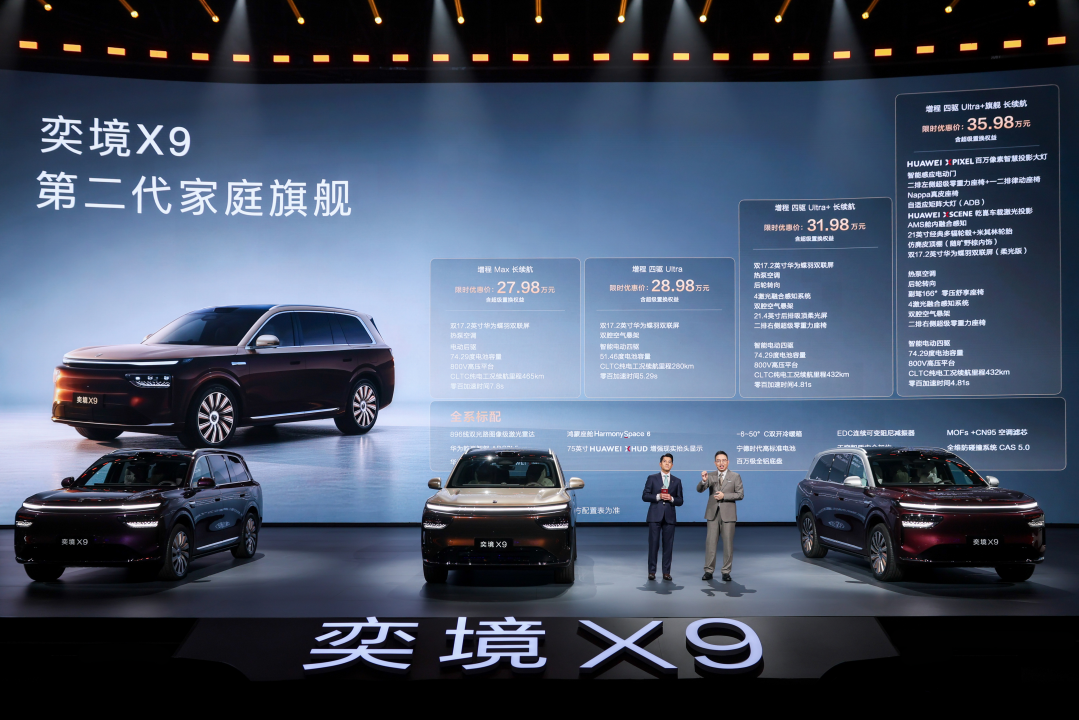
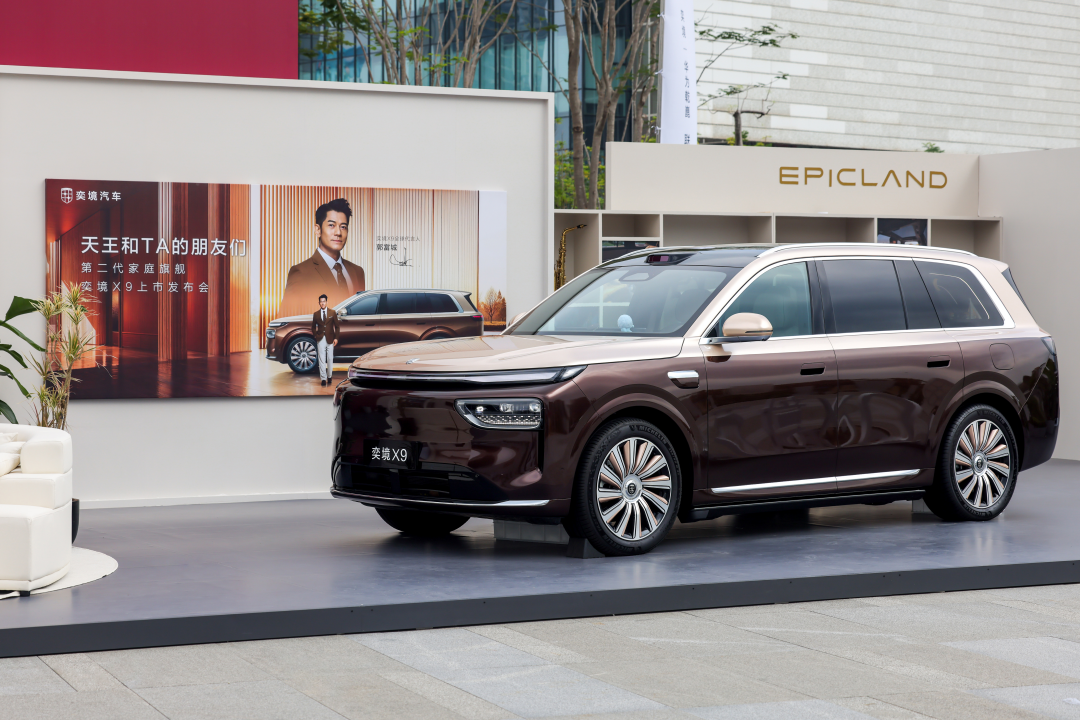
The Yijing X9 has been launched, featuring a limited-time promotional price starting at 279,800 yuan.
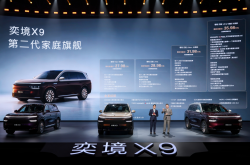
This marks the first vehicle from a new brand co-created by Dongfeng and Huawei Qiankun through ‘full-stack native integration.’ It is a 5.3-meter large six-seater SUV, fully equipped with Huawei Qiankun ADS 5 (Huawei’s fifth-generation intelligent driving system).
Four months ago at the Beijing Auto Show, media inquiries for Yijing were straightforward. How can this new brand establish itself? Is there still a market for SUVs? Is there room for Yijing in the luxury segment?
Now, Yijing has responded with a single vehicle.
Before delving into its answers, we must first understand the tone of China’s auto market. Sedans are declining, while SUVs are on the rise.
In 2025, SUVs are projected to account for more than half of the market share for the first time. By July of this year, the gap has widened to 56.7% versus 38.2%. While the overall market contracts, with passenger vehicle retail sales down about 20% year-on-year from January to July, structural opportunities become clearer in a cooler market.
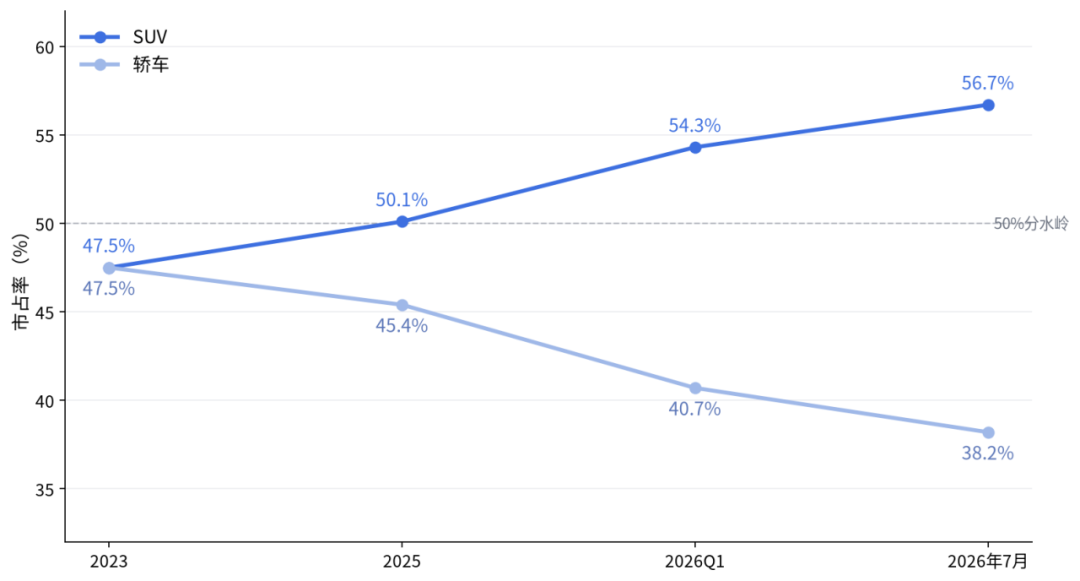
△ Changes in SUV and Sedan Market Share
(Data sources: China Passenger Car Association, Sina Technology, 36Kr; 2023 values are approximate)
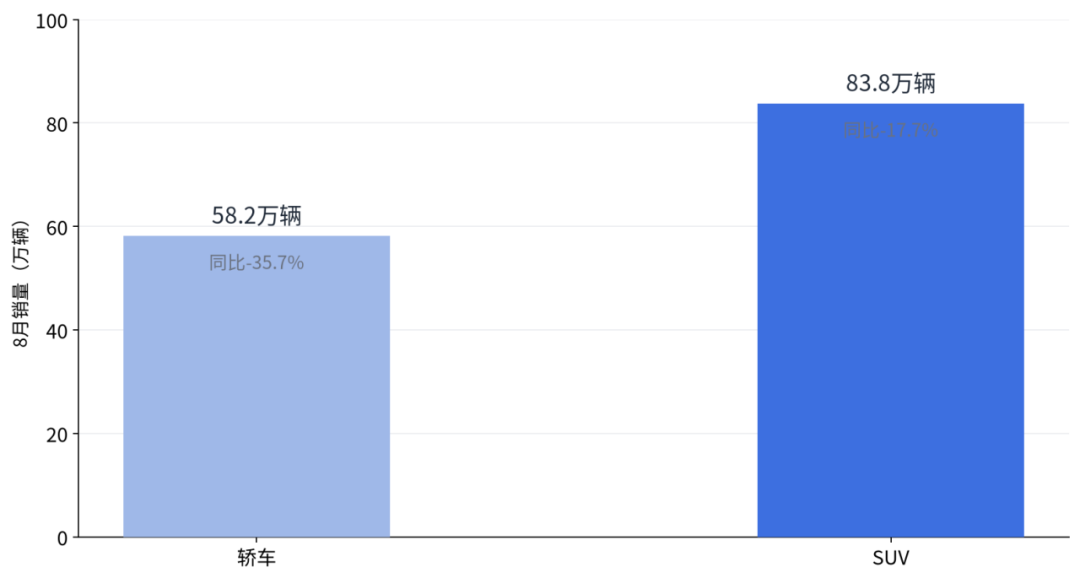
△ August 2026 Sedan vs. SUV Sales Comparison
(Data compiled by Gestalt Strategy Consulting, based on China Passenger Car Association figures)
01. Right Timing: SUV Surge, Large Six-Seaters as the Surest Segment

Family travel, self-driving scenarios, and upgrade purchases have propelled ‘spacious and versatile’ SUVs into the mainstream. Among them, large six-seaters represent the most promising growth segment. They accommodate multi-generational families under one roof, provide separate space for families with multiple children, and offer comfort for long-distance travel.
Another brand, Qijing, which also leverages Huawei Qiankun’s technological foundation, initially bet on the shooting brake segment for its first vehicle and only shifted to a large five-seater SUV for its second model. In contrast, the Yijing X9 has started in the most promising direction.
Zeng Qinglin, the brand’s general manager, gave a straightforward answer at the Beijing Auto Show. The six-seater market has significant capacity but is highly competitive because products tend to ‘specialize’—some excel in intelligence but lag in hardware, while others do the opposite. Yijing aims to excel in both.
The real challenge lies elsewhere. The larger the vehicle, the harder it is to drive. Difficulties in parking, meeting oncoming traffic, and deterring female and novice drivers are common issues for all large SUVs.
Yijing’s solution is engineering-focused. A 5.3-meter body paired with ±7° rear-wheel steering, combined with Huawei Qiankun ADS 5’s automatic parking, remote parking, and self-executing narrow road meetings, transforms the pain point of ‘large vehicles being hard to drive’ into a selling point.
Choosing the right segment is just the first step. The next question is whether Dongfeng’s ecosystem can support this new brand.
02. Right Location: Dongfeng’s 57-Year Foundation, Product Definition in Its Own Hands
For a new brand to succeed, it must answer two questions: Why should the group fully support it? Why should users remember it?
At the Beijing Auto Show group interview, a journalist directly asked how Dongfeng balances resources between Voyah and Yijing. I was taken aback, as this touched on a sensitive point in central state-owned enterprise (SOE) multi-brand strategies.
Zeng Qinglin’s answer was frank. Both Voyah and Yijing are the group’s premium new energy brands. Dongfeng’s strength is sufficient to support different brands in achieving success independently, as Voyah has already proven with its successful listing. Their user groups and brand positioning are staggered, avoiding internal competition.
Within Dongfeng, Yijing represents the second piece of the group’s premium layout puzzle. Voyah has proven the group’s ability to support brands, and Yijing must now prove its own viability.
The brand’s self-reliance is also concrete. Its logo was co-designed with Huawei’s Milan Research Institute, with a shield motif directly pointing to safety as its foundation—‘safety is the ultimate luxury.’
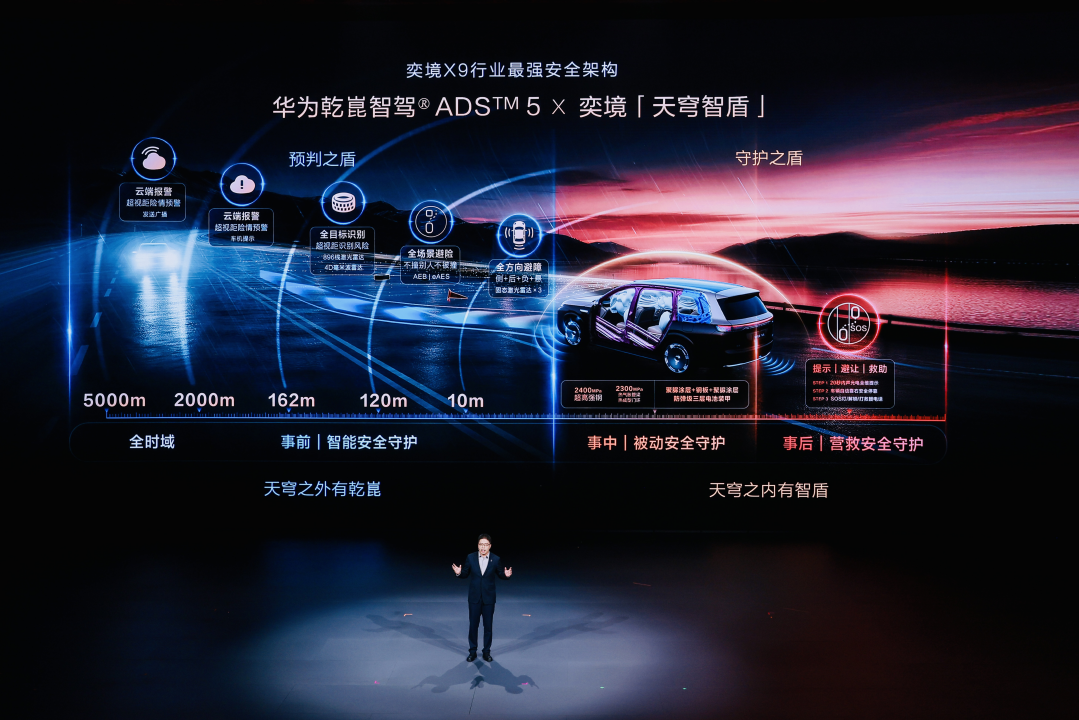
△ Tianqiong Zhishun All-Time Safety Architecture
The first vehicle delivers on the brand’s promise. The Tianqiong Zhishun system integrates intelligent driving safety, active safety, passive safety, battery safety, rescue safety, and daily cabin health into a complete framework. It includes 2400MPa ultra-high-strength steel (the highest grade currently used in vehicles, about 3-4 times stronger than ordinary steel), 105km/h ultra-high-speed frontal offset collisions, and 20-ton container vertical crushing resistance—all industry-firsts in mass production. The white body’s high-strength steel and aluminum alloy account for 92.4%.
The market has responded positively to this seriousness. Pre-sales saw over 16,000 small orders in 12 hours and over 20,000 in 24 hours. The official launch price is 20,000 yuan lower than pre-sales, starting at 279,800 yuan. Within 24 hours of launch, 9,157 large orders were secured. In the fiercely competitive 300,000-yuan-plus large six-seater segment, this is a solid start.
The order structure is also noteworthy. The mid-trim model at 339,800 yuan accounts for nearly 50% of orders. Users’ top three reasons for buying the X9 are Huawei Qiankun intelligent driving first, Dongfeng safety second, and spaciousness third. Zeng Qinglin set a clear goal: top three in the segment.
Dongfeng’s 57 years of automotive heritage is Yijing’s most solid foundation. But foundation alone is not enough; whether Huawei’s technology can truly land is key.
03. Right People: Full-Stack Native, Technology Fully Delivered and Well-Received
Dongfeng and Huawei Qiankun’s collaboration model is known in the industry as ‘full-stack native.’ It involves 1:1 deep binding, long-term symbiosis, and continuous investment across the entire value chain of research, production, supply, sales, and service.
On launch day, Wang Junjun, chairman of Yijing Auto, made a weighty statement: ‘The best of Huawei is in Yijing.’
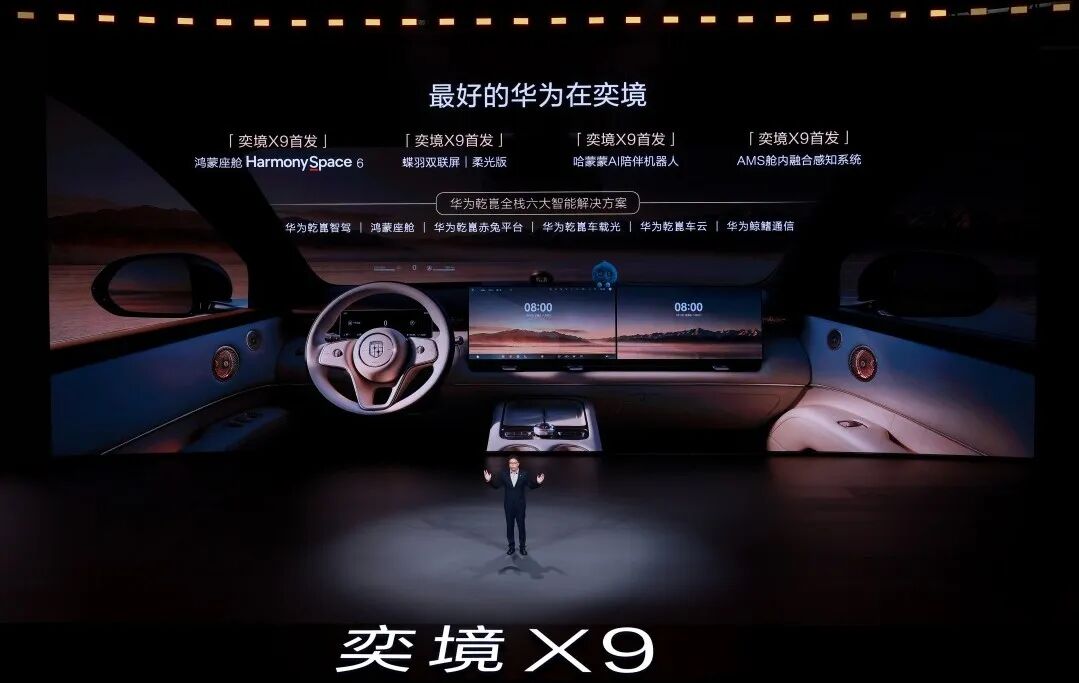
△ At the launch event, Wang Junjun: ‘The best of Huawei is in Yijing.’
This statement may seem overstated, but it can be broken down into two questions: Has Huawei provided its best technology to Yijing? And after providing it, can Yijing handle it?
The first question is easy to verify. ADS 5, HarmonyOS Cockpit 6, and XMC Digital Chassis Engine (Huawei’s chassis control software for faster and more precise chassis response)—Huawei’s latest technologies—all debut on the X9.
The second question is more critical. No matter how strong the technology, it must ultimately land within an automaker’s R&D, manufacturing, and sales systems. Dongfeng has accumulated experience in all three areas, and even its sales network is its home turf. Priority layout in 79 key cities, with over 60% of dealers among the top 100 nationwide, and 80% of stores renovated from former BBA locations to the latest standards.
Only when technology is fully delivered and well-received can this claim of ‘the best’ hold true. One could even say: The best of Huawei is in Yijing, and the best of Dongfeng is also in Yijing.
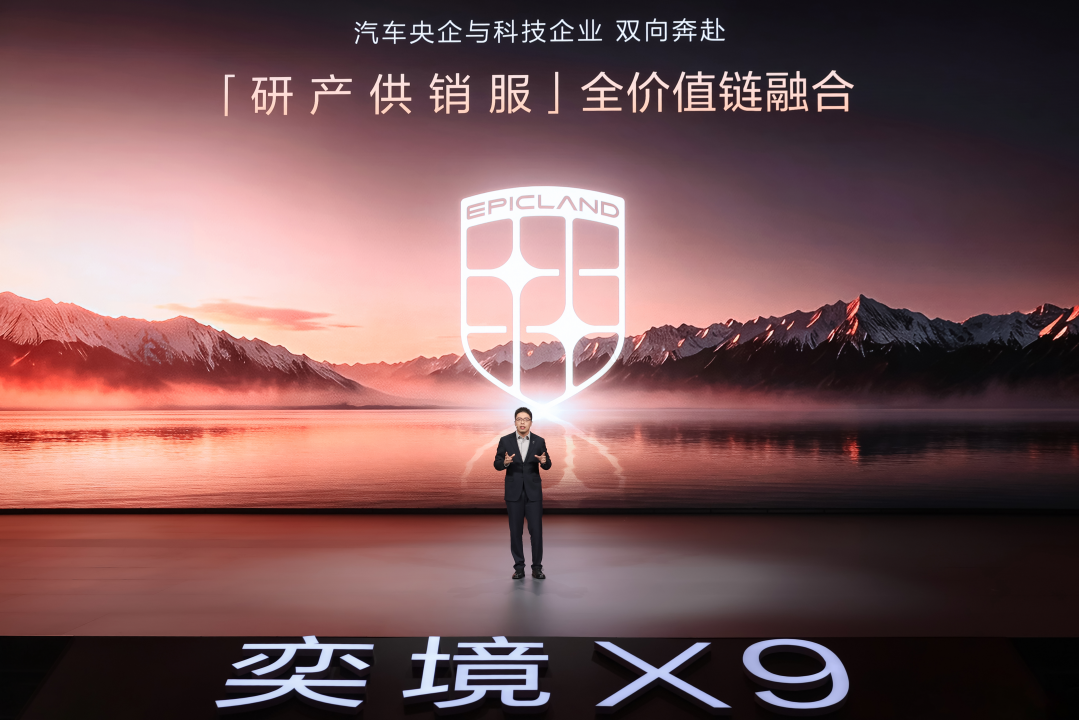
△ Deep co-creation across the entire value chain of research, production, supply, sales, and service
Outside concerns about ‘Huawei × automaker’ collaborations often center on one issue: Will the brand remain the automaker’s own after prolonged cooperation? Huawei has two common collaboration models externally. HiCar Smart Travel involves deep participation in product definition, channels, and marketing. Huawei Qiankun provides full-stack intelligent solutions while allowing automakers to retain dominance. Yijing falls into the latter category but has taken depth to an industry-rare level.
Thus, ‘Huawei is a technology partner, not the operator’ translates to: Technology can be fully provided, but the steering wheel is not handed over. This is likely a prerequisite for deep cooperation between a central state-owned enterprise and Huawei, with both sides clear on their boundaries.
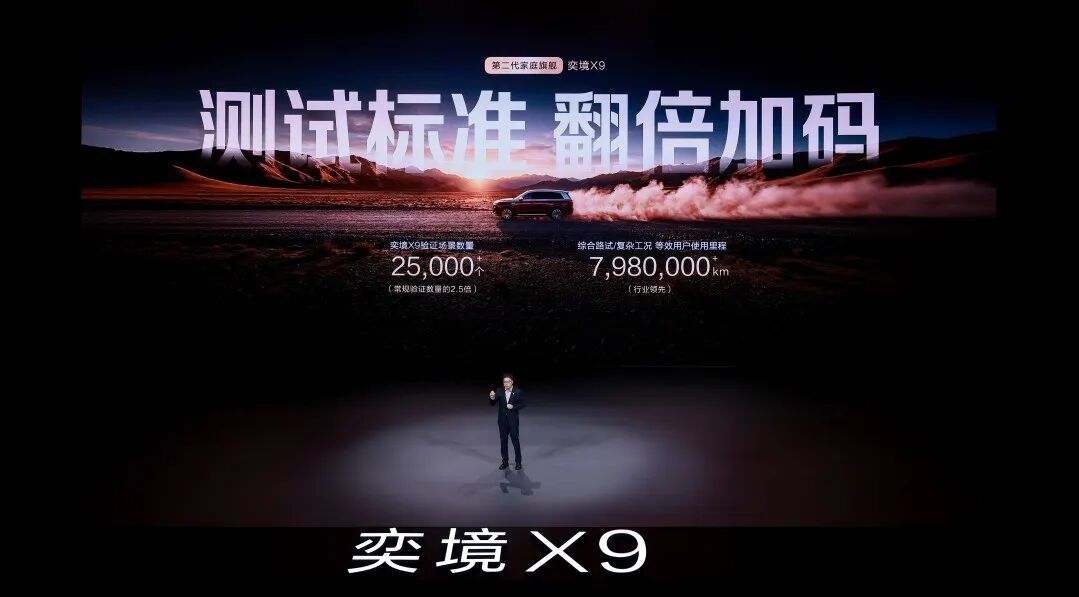
△ Far exceeding industry-standard vehicle verification intensity
Huawei has invested heavily over three years, with both sides forming a joint engineering team of over 5,000 people working together daily. Huawei has fully imported its IPD/IPMS (R&D and product management processes) without stopping at component-level adaptation. Joint development of next-generation intelligent chassis technology clusters has already begun.
Zeng Qinglin used a ‘planting flowers’ analogy. Grafting in the middle is entirely different from cultivating from the seed stage. Huawei’s XMC chassis control works closely with Dongfeng’s full-aluminum chassis. Many brands add software after the chassis is built, but when the software requests chassis responses, the chassis cannot deliver. Yijing integrates from the bottom layer, allowing hardware to maximize software effects and vice versa.
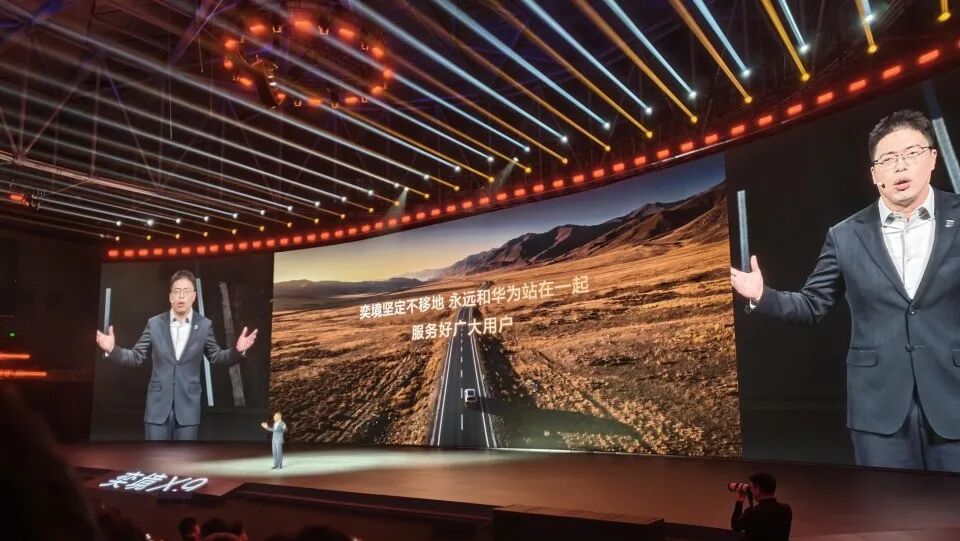
△ On-site large screen at the launch event
In quality control, Huawei has introduced 23 vehicle verification standards and methods, with both sides jointly building an automated testing lab covering over 4,000 vehicle interfaces and cumulative pressure tests exceeding 400,000 times. They have designed 220-plus scenario verifications for over 30 typical road conditions, far exceeding industry norms.
Yijing’s differentiation lies in the combination of ‘Dongfeng + Huawei full-stack native’ and its grip on product definition.
-
![]()
Polarization of Light: The ‘Sense of Direction’ in the Realm of Transverse Waves
-
![]()
Polarizer, Wave Plate, and Polarized Light Path Design: The Essential Framework of Polarization Optical Systems
-
![]()
JAC Motors’ Stock Price Rockets for Three Days Straight: Is the ‘Huawei Partnership’ Being Treated as a Cash Cow?
-
![]()
What Does China's Motorcycle Industry Still Lack After 7 Billion Views?
-
![]()
Yijing’s First Car Hits the Market: Timing, Location, and Target Audience—How to Get Them Right?
-
![]()
Volkswagen Lays Off 100,000 Employees but Builds Three Battery Factories in Europe with Gotion High-Tech
-
![]()
GAC Group: Pioneering Integration Among Domestic Automakers
-
![]()
Huawei and Seres Forge Alliance: A Strategic 'Remarriage'!