OMW, Born from Continental AG, Pays BMW €350 Million and Clinches €1 Billion in Orders!
 10/08 2026
 557
557
Produced by Zhineng Technology
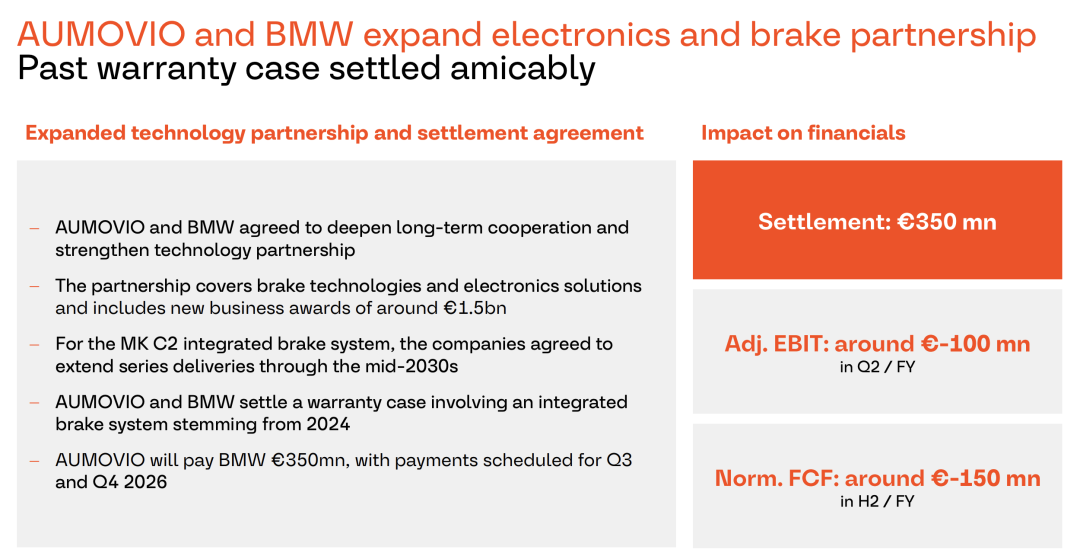
In its inaugural full semi-annual report since gaining independence, OMW disclosed a €350 million liability, with only €54 million previously set aside, resulting in an approximate €100 million hit to adjusted EBIT for the current period. Simultaneously, OMW secured new orders from BMW worth over €1 billion.
OMW issued an interim update, announcing a settlement with BMW over a warranty dispute concerning an early-stage integrated braking system. As part of the agreement, OMW will pay €350 million. Both parties have also entered into a long-term supply and development pact, with BMW planning to award OMW orders for new projects exceeding €1 billion.
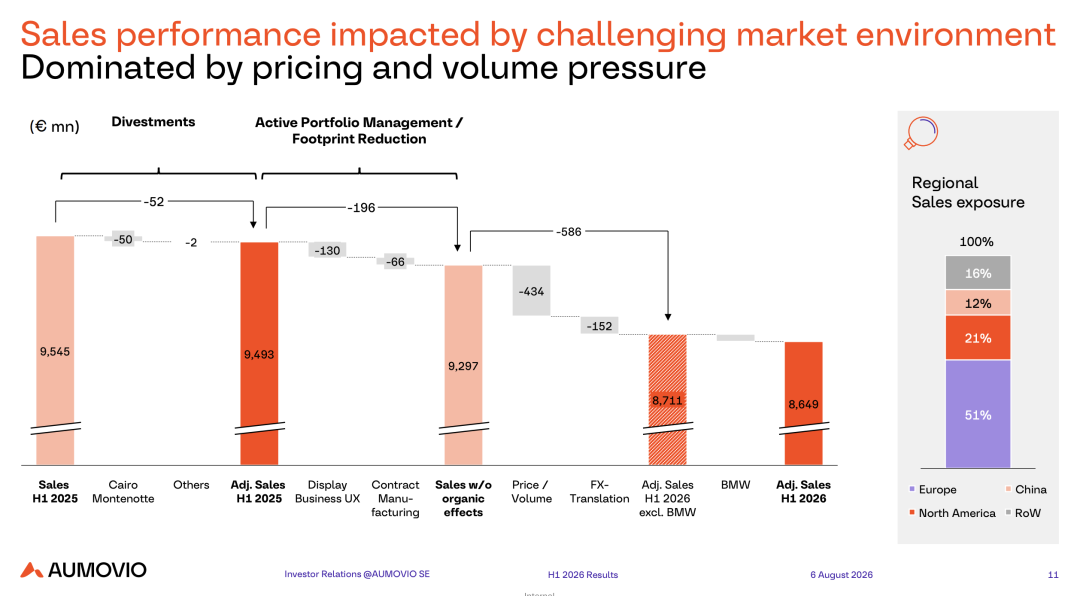
Following its separation from Continental AG, OMW reported adjusted revenue of €8.649 billion for the first half of the year, marking an 8.9% year-on-year decrease. Adjusted EBIT stood at €157 million, with the profit margin slipping to 1.8% from 2.7% in the same period the previous year.
In the second quarter, adjusted EBIT was a mere €50 million, translating to a profit margin of 1.2%, down from 3.5% last year.
OMW's strategy for the first half centered on divesting unprofitable ventures and trimming R&D expenditures to safeguard gross margins (the primary challenge being that revenue was declining at a faster pace than costs).
Part One: Only €54 Million of the €350 Million Liability Was Anticipated
The announcement clarified that the dispute involved BMW, Continental AG, and OMW Germany, focusing on integrated braking systems produced for BMW by OMW's predecessor, the Continental Automotive division. Following the spin-off, the factory and its customers, along with early project warranty liabilities, became the responsibility of the newly listed OMW, sans parental support.
Prior to the settlement, only €54 million in risk provisions had been earmarked for this warranty issue. Deducting this from the €350 million leaves nearly €300 million in expenses recognized this period, with cash payments scheduled for the third and fourth quarters. On the income statement, following company adjustments, a portion was deducted as a one-time item from second-quarter adjusted EBIT.
Excluding the settlement, second-quarter adjusted revenue was €4.307 billion, with adjusted EBIT of €152 million and a profit margin of 3.5%, unchanged year-on-year. Management provided more precise figures during the earnings call. First-half adjusted EBIT, excluding the settlement's impact, was €258 million, with a profit margin of 3%, up from 2.7% last year. Including the settlement, it fell to €157 million and 1.8%.
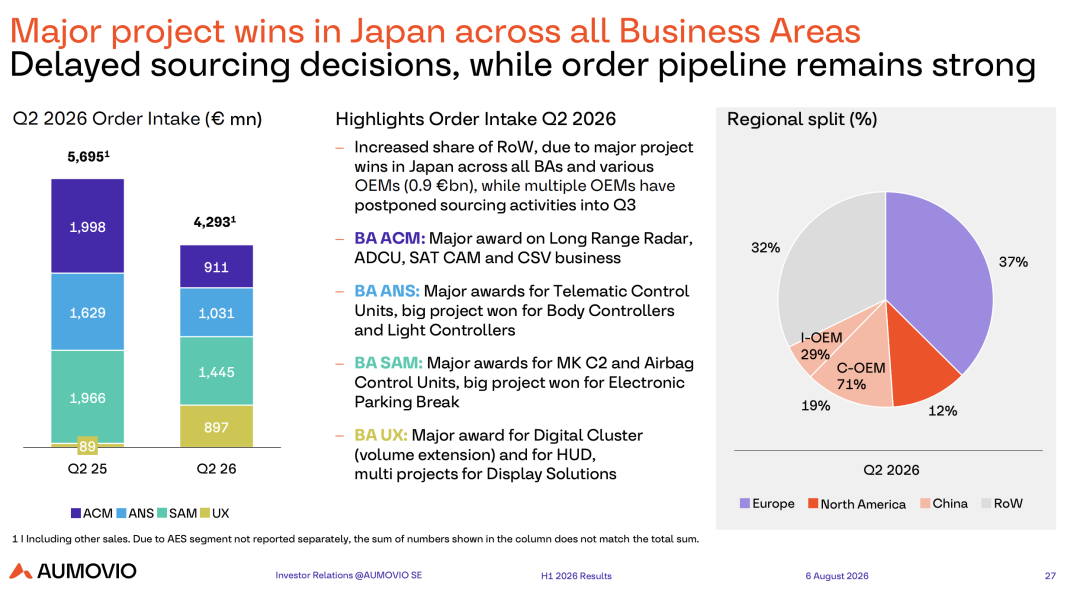
The new contracts encompass the MK C2 integrated braking system, brake calipers, and electronic control units, with MK C2 mass production slated to continue into the mid-2030s. The company defines order intake as estimated sales over the project's entire lifecycle. Full-year 2025 intake was €20.4 billion, translating to €18.5 billion in revenue and a book-to-bill ratio of 1.1.
Part Two: 8.9% Revenue Decline Attributed to Internal Factors
First-half revenue saw a year-on-year decrease of €844 million, with volume and price factors contributing €434 million, exchange rates accounting for €152 million in declines, and the exit from display businesses and contraction in OEM businesses removing €196 million.
Revenue Fell Across All Four Segments, With Profit Improvements in Two
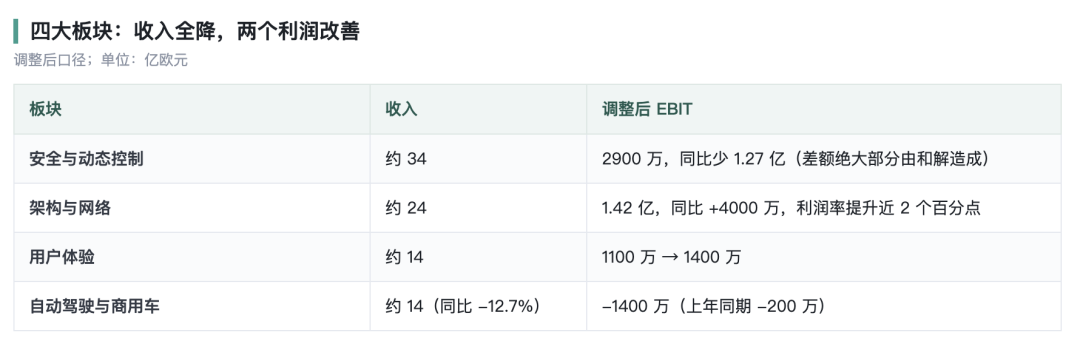
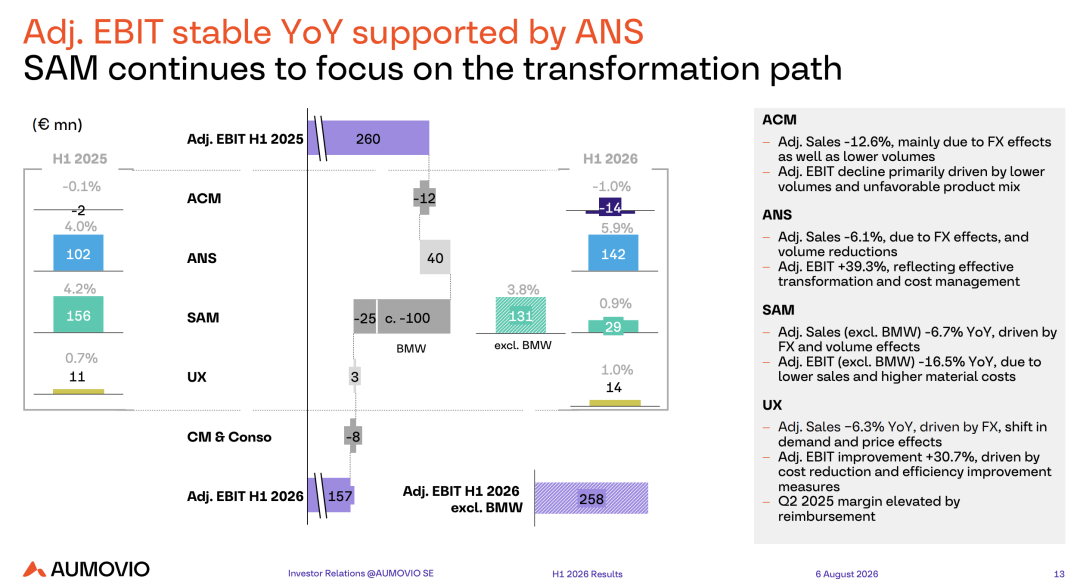
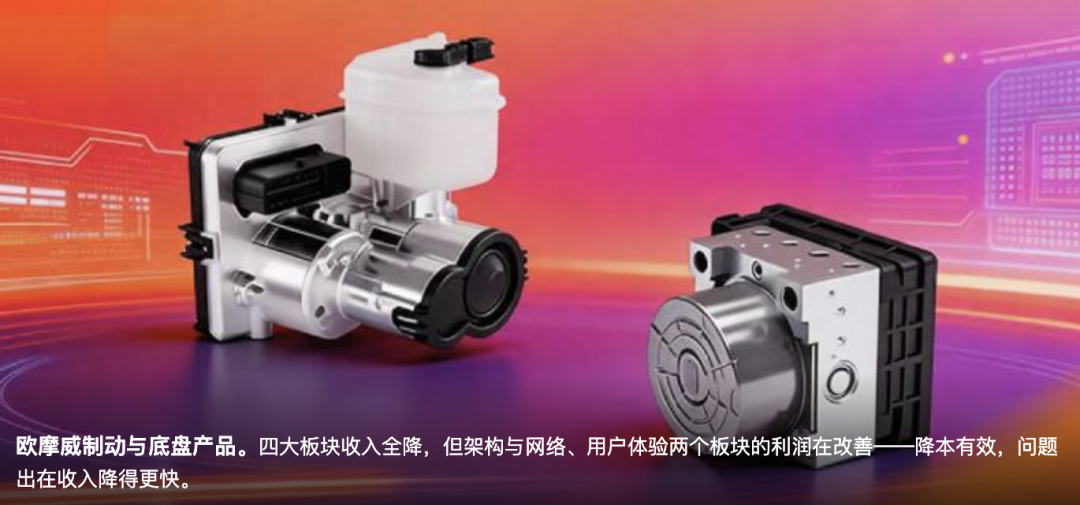
Safety and Dynamics Control (Braking and Chassis Safety) revenue reached approximately €3.4 billion, with adjusted EBIT of €29 million, €127 million less than the previous year, primarily due to the settlement.
Architecture and Network Solutions revenue was around €2.4 billion, with adjusted EBIT of €142 million, up €40 million year-on-year, and profit margins improving by nearly 2 percentage points.
User Experience (Cockpit Displays and Interaction) revenue stood at roughly €1.4 billion, with adjusted EBIT increasing from €11 million to €14 million.
Autonomous Driving and Commercial Vehicle Business revenue was approximately €1.4 billion, down 12.7% year-on-year. Adjusted EBIT was negative €14 million, compared to negative €2 million last year.
First-half adjusted gross margin was 20.1%, up nearly 0.6 percentage points year-on-year, driven by lower production costs and a more favorable product mix. Absolute gross profit decreased by €96 million due to reduced scale. Adjusted net R&D expenses fell by €115 million year-on-year, with the expense ratio dropping to 11.9%, and to 11.4% in the second quarter.
Cost-cutting measures proved effective, with gross margins rising and absolute R&D spending declining. The only area where spending increased was central functions, established post-spin-off, which rose by €64 million year-on-year. The issue lies in the revenue declines outweighing gross margin improvements, with volumes and prices still contracting, and the reported R&D expense ratio rising from 13.4% to 14.2%.
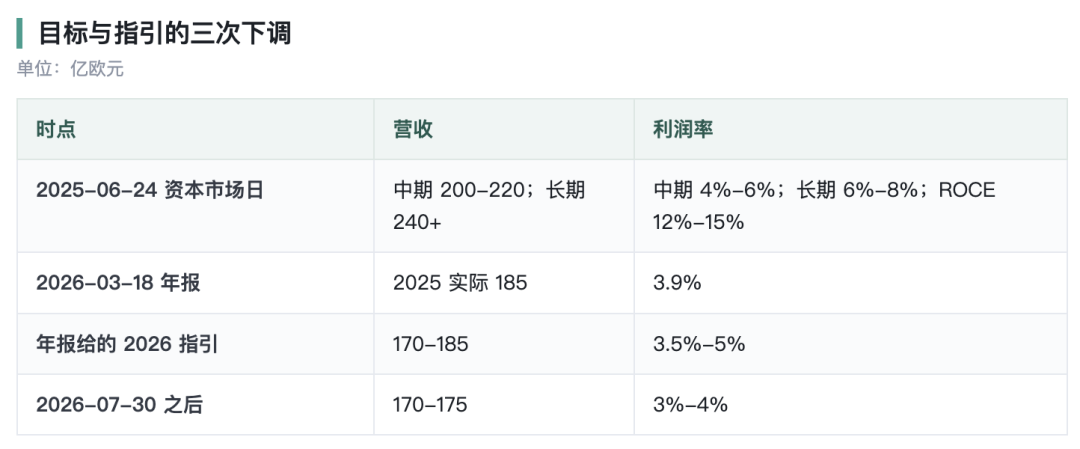
On June 24, 2025, at Continental AG's Capital Markets Day, OMW set medium-term targets of €20-22 billion in revenue, 4-6% profit margins, and ROCE of 12-15%. Long-term goals include revenue exceeding €24 billion and profit margins of 6-8%.
In March's 2025 annual report, full-year revenue was €18.5 billion, with a profit margin of 3.9%. The 2026 guidance was €17-18.5 billion in revenue and 3.5-5% profit margins.
After July 30, the revenue range was narrowed to €17-17.5 billion, with profit margins dropping to 3-4%.
The guidance has been revised downward three times.
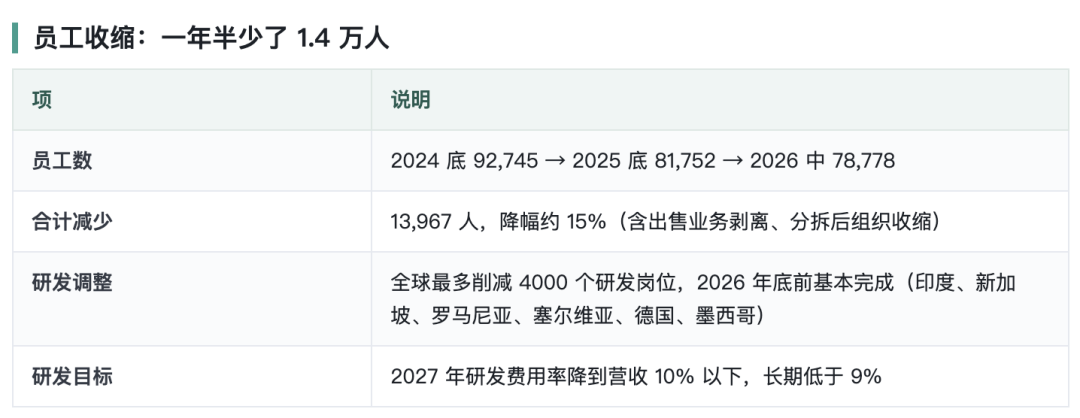
Headcount stood at 92,745 at the end of 2024, decreased to 81,752 at the end of 2025, and further reduced to 78,778 by June 2026. This reduction of 13,967 people, or about 15%, in under two years includes divestitures, post-spin-off organizational consolidation, and this round of R&D adjustments.
Summary:
German companies indeed face significant hurdles in the automotive electronics sector!
The spin-off resolved identity issues, with tires and automotive electronics now having separate, clean financial statements. However, the supplier's age-old dilemma remains unresolved: front-loaded investments, delayed payments, increasingly challenging price negotiations, and a single warranty incident capable of wiping out multiple quarters of profits.
-
![]()
UK Mulls Imposing EU-Style Tariffs on Chinese Electric Vehicles
-
AI Embarks on a New Phase Amidst Unabated Capital Fervor
-
![]()
Is Fan the Only Option for Laptop Cooling Systems?
-
![]()
What is the role of language in autonomous driving VLA?
-
![]()
Why Does Apple’s Foldable Screen Feel So Uninspired, Even as a Late Entrant?
-
![]()
How Did the iPhone 18 Pro Conceal Face ID Beneath the Screen?
-
![]()
Qualcomm and Huawei Are Becoming Inseparable Partners
-
![]()
Why Are Automakers Embarking on Realignment: Insights from Geely-NIO to FAW-GAC Collaborations?