What Impact Can the Low Price of IONIQ V Make?
 10/08 2026
 345
345
Recently, Beijing Hyundai officially rolled out its all-electric sedan, the IONIQ V, featuring five models with limited-time special prices ranging from 99,900 to 131,900 yuan. Given that it's a mid-size all-electric sedan with a length close to 5 meters and a wheelbase of 2,900 mm, the starting price of 99,900 yuan is quite attractive.
After all, in the 100,000-150,000 yuan new energy vehicle market, price is a crucial factor for consumers when evaluating cars. A lower price is more likely to spark interest. The IONIQ V clearly gets this, as it hasn't taken on a high-and-mighty "joint venture" attitude. Instead, it has set its special price at 99,900 yuan, aligning itself with mainstream domestically produced new energy models in the same class in terms of pricing. 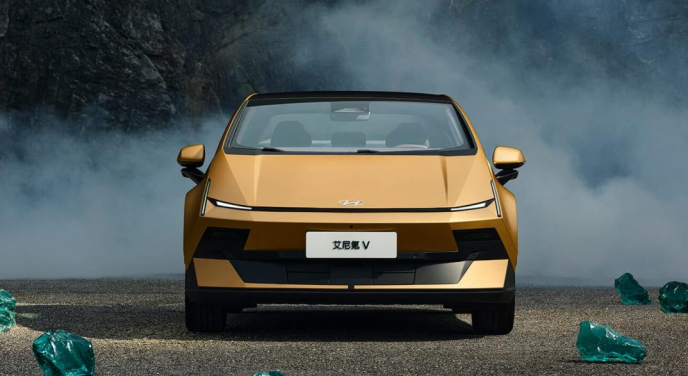
However, focusing solely on price without considering the vehicle's features is clearly inadequate. The IONIQ V is outfitted with the Qualcomm Snapdragon 8295 chip, a 27-inch 4K display, and Momenta assisted driving technology. It also utilizes an 800V high-voltage platform, offering a maximum CLTC all-electric range of 650 km. Additionally, it boasts features like HUD, Dolby Atmos, and more.
In truth, this set of features might have been eye-catching in 2025, but today, in the 100,000 yuan new energy vehicle market, the IONIQ V merely meets mainstream standards. When compared to models with similar prices and features, the differences become more apparent.
The BYD Qin MAX series starts at 99,900 yuan, while the Seal 06 series ranges from 99,900 to 155,900 yuan. Both models offer features such as second-generation blade batteries, flash charging, the "Divine Eye B" advanced assisted driving system, and the Yunchan-C intelligent damping body control system. The Seres L06, priced around 130,000 yuan, is equipped with lidar and 256 TOPS of computing power. In contrast, the IONIQ V's feature set seems somewhat lacking.
In terms of computing power, the 8620 chip in the IONIQ V delivers only 36 TOPS. Regarding intelligent driving, it mainly relies on millimeter-wave radar and cameras, lacking the backup of lidar. In the 100,000 yuan new energy vehicle market, these features merely bring it up to par and do not represent true leadership. 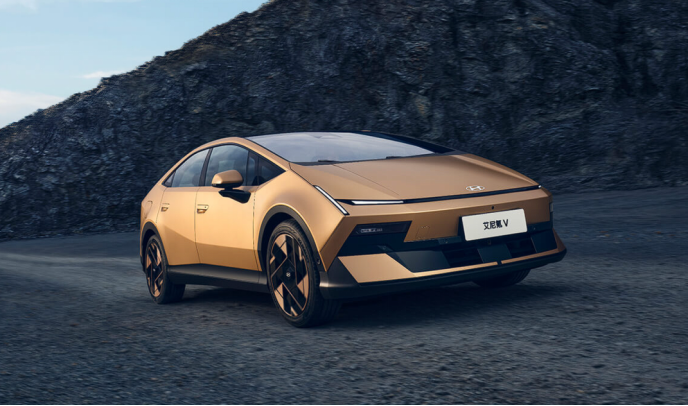
An even more daunting challenge is that the IONIQ V cannot sidestep a hurdle faced by joint venture brands in the new energy vehicle sector: brand recognition. Over the past few years, domestically produced new energy models have made significant strides in smart cockpits, assisted driving, and charging experiences, while joint venture all-electric models have struggled to keep pace with the transformation. Netizens even mock some joint venture electric vehicles as "off-brand electric cars."
This suggests that in the new energy market, the "brand halo" that joint venture brands once enjoyed is no longer as potent. The market share situation for joint venture brands is also quite clear. It is reported that in August 2026, the retail share of new energy vehicles from domestic brands reached 63.7%, while that of mainstream joint venture brands was only 4.3%. In the overall new energy market, the presence of joint venture brands is quite limited.
Moreover, Beijing Hyundai is already on the periphery of the new energy market. From January to August 2026, Beijing Hyundai sold approximately 58,645 vehicles in total, but its all-electric model, the EO Yio, sold only 578 units during the same period, with just 38 units sold in August alone. The presence of new energy models from Beijing Hyundai is virtually negligible. 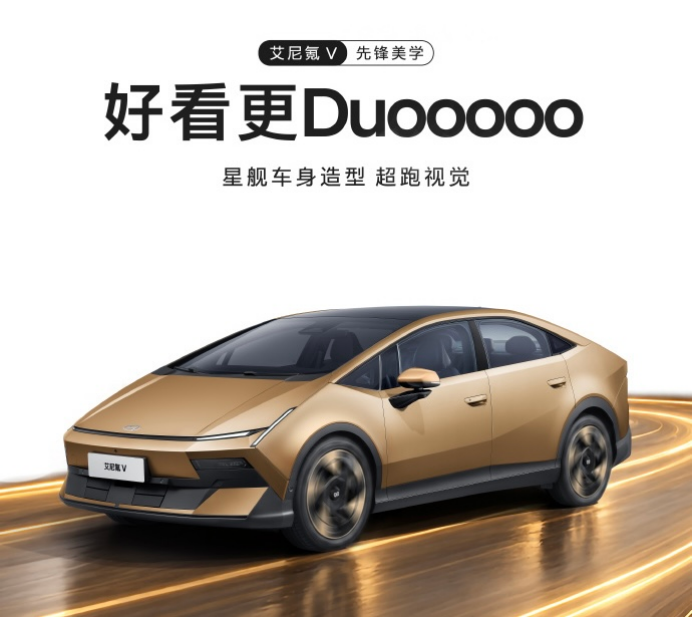
Under these circumstances, the exterior design of the IONIQ V fails to serve as a compelling selling point. Its low-slung, fastback profile, split headlight design, frameless doors, and extensive folded surfaces do give it a high degree of recognition, but this bold design has sparked considerable controversy since its debut. Many netizens have described it as "ugly" or "incomprehensible," while others argue that although the design is bold, it is too picky and even "repels people at first glance."
As the poet Wu Guijun wrote in "Liking Someone": "It starts with appearance, deepens with talent, and remains loyal due to character." The same principle applies to a vehicle. Ultimately, the most striking feature of the IONIQ V this time is its price of 99,900 yuan. However, in the 100,000 yuan new energy vehicle market, price is not the only deciding factor; features, intelligence, and even appearance all influence consumers' final choices.
For the IONIQ V, the preconceived notions associated with joint venture brands, combined with its controversial exterior design, present real challenges that cannot be easily overcome with a low price alone. Whether the 99,900 yuan price tag can truly attract consumers remains to be seen and will ultimately be determined by the market.
(Image sourced from the internet. Removal upon infringement.)
-
![]()
[Electric Equipment] BRETON Eyes African Mining Sectors: Venturing into Electric Mining Truck Sales
-
Anthropic is Going Public: Valued at 2 Trillion in 5 Years, Who’s Paying for the AI Bubble?
-
![]()
Going to work! Let's meet the new colleague: available 24/7, works hard for little pay, and has a great attitude.
-
![]()
Why Has NVIDIA Become the Biggest Winner in the AI Computing Power Race?
-
![]()
Day 4 of National Day: How are new energy vehicles performing for travel?
-
![]()
O-film Tech Becomes the Exclusive Supplier of Main Camera and 200MP Periscope Telephoto Lenses for Huawei Pura 90 Pro Series
-
![]()
Why is Baidu's AI large model rarely mentioned anymore?
-
![]()
In-Depth Guide to Car Purchase Incentives: Can You Really Save Nearly 10,000 Yuan on the Spot?