Memory Price Surge Fuels Alps Alpine's Automotive Business Growth at 12.7%, Yet Triggers 3 Billion Yen Loss
 10/08 2026
 354
354
Produced by Zhineng Technology
Alps Alpine's automotive sector is witnessing a surge in sales, but this growth is accompanied by mounting losses. The memory price escalations, spurred by the data center construction surge, have propelled a recovering automotive electronics supplier back to the edge of profitability.
In the spring of 2026, Alps Alpine underwent impairments, revised its mid-term strategy, and overhauled its business framework due to sluggish performance in its automotive-related module and system sectors. By the fiscal year's end in March 2026, the group's revenue soared to approximately 1.02 trillion yen, with an operating profit of around 42 billion yen. The mobility business emerged as the focal point for profit enhancement, with management intending to withdraw from low-margin ventures and redirect resources toward higher-value offerings like digital cockpits.
The new fiscal year commenced with robust car sales.
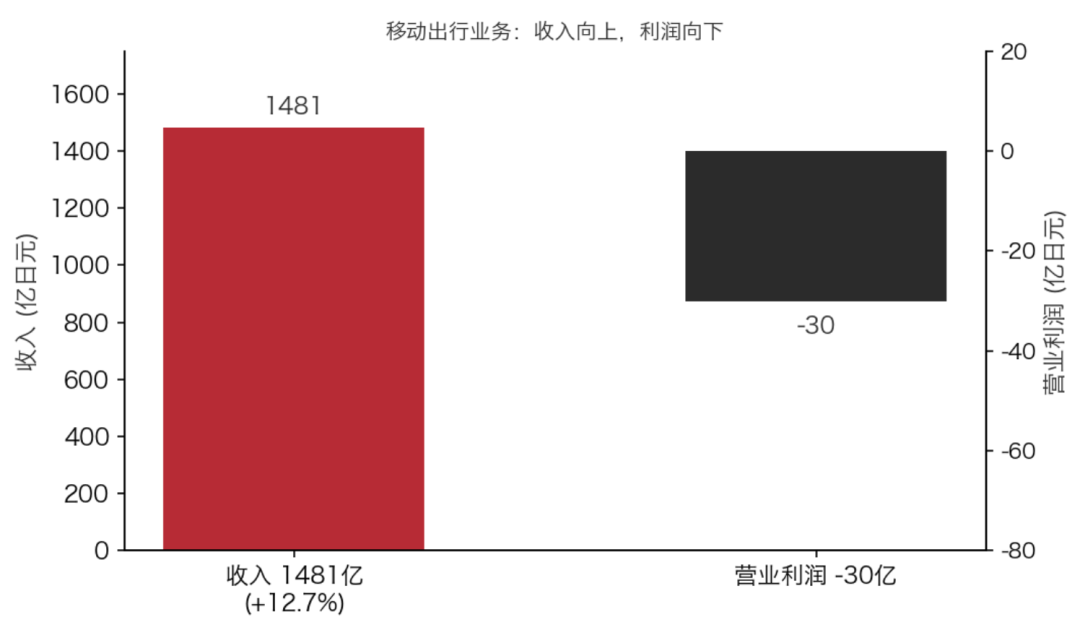
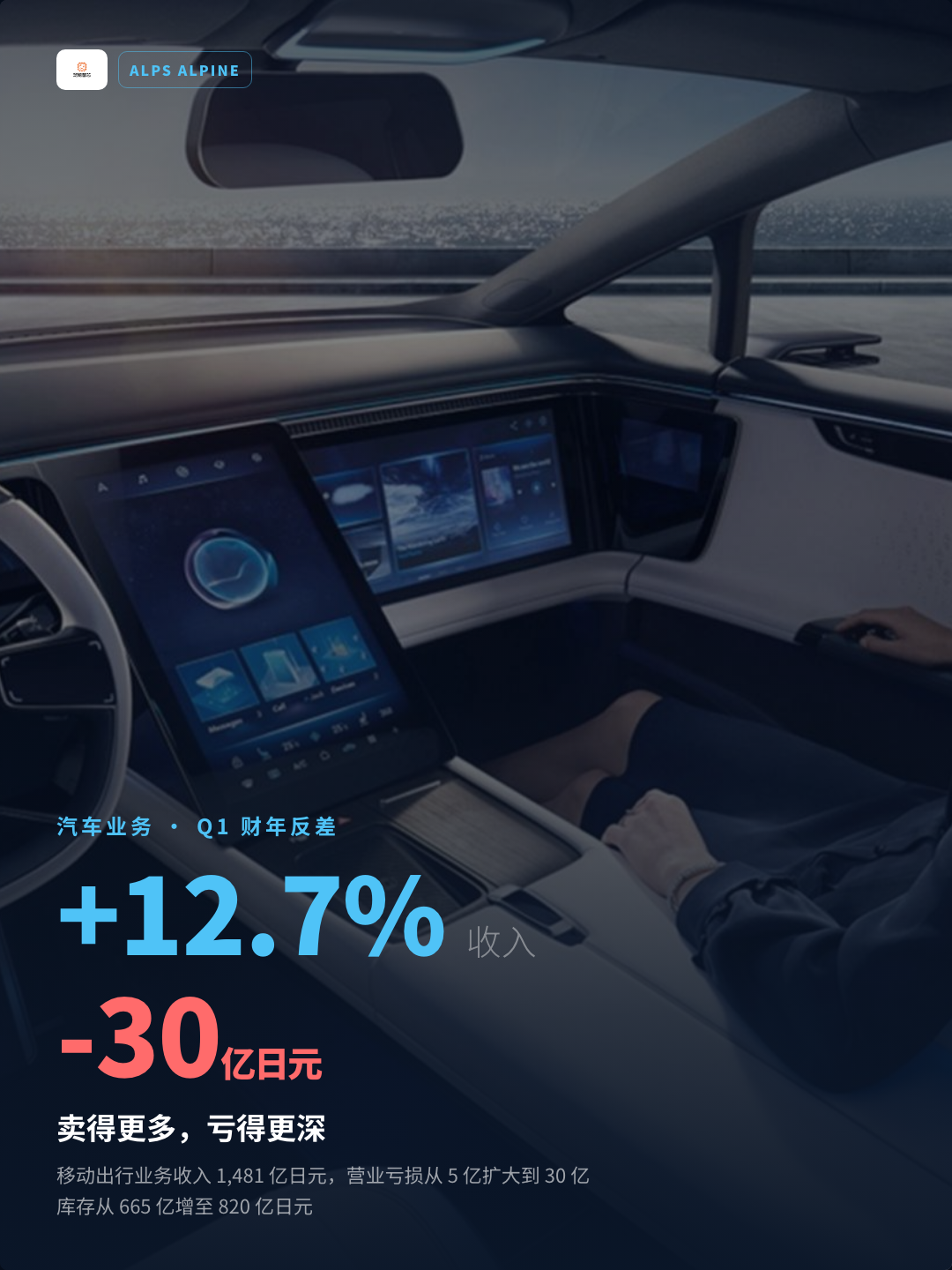
From April to June 2026, procurement by Japanese, North American, and European automakers surged, leading to a 12.7% year-on-year revenue increase in Alps Alpine's mobility business, reaching approximately 148.1 billion yen. However, operating losses ballooned from roughly 500 million yen in the same period last year to approximately 3 billion yen.
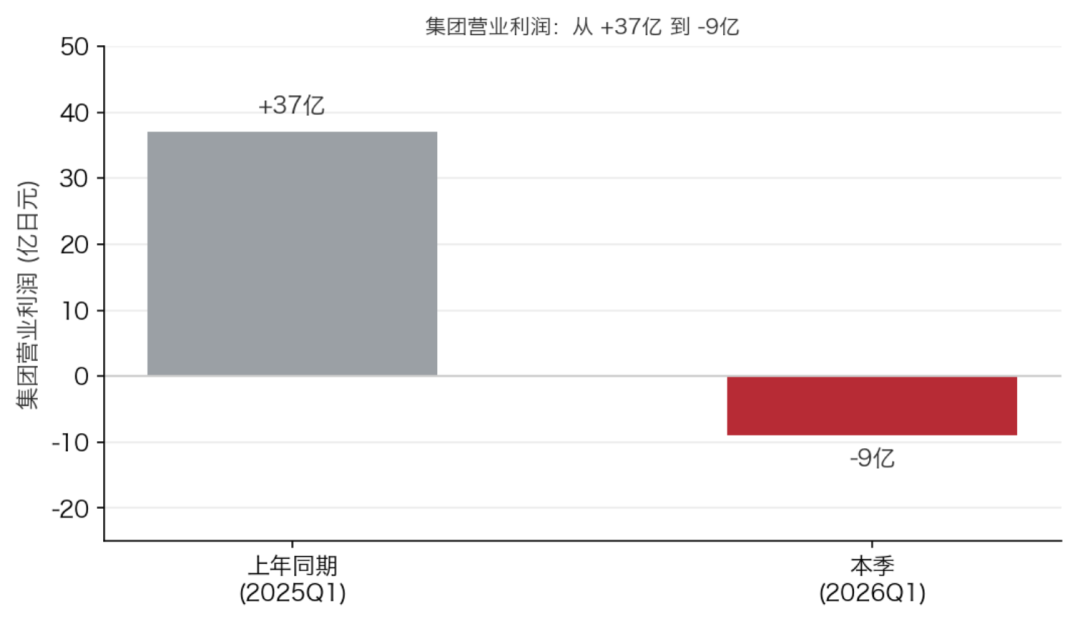
The group's operating results also shifted from a profit of about 3.7 billion yen in the same period last year to a loss of approximately 900 million yen. The revenue trajectory is ascending, while the profit curve is descending.
Over the past year, the mobility business regained profitability by eliminating unprofitable products, curbing abnormal costs, and boosting factory operational efficiency. Management integrated a transition toward high-value-added digital cockpits into the mid-term strategy. However, the revival of automotive projects has encountered fresh upstream cost shocks, necessitating a reassessment of previously perceived solid progress.
I) Are Data Centers and Memory Driving Automotive Business Losses?
The company attributes the decline in automotive business profits to escalating memory prices, which have driven up costs. It also links memory price hikes to the expansion of data center investments. As tech firms expand their computing infrastructure, fluctuations in the supply and pricing of related components exert pressure on automotive electronics suppliers who procure these components.
Screens, infotainment systems, and various electronic control functions in automotive cockpits rely on memory. Suppliers deliver a complete system to automakers, developed, verified, and stably supplied according to vehicle model specifications, with memory being merely one component. Adjustments to system selling prices and costs are constrained by project contracts, customer negotiations, and mass production timelines, while component prices may fluctuate according to a different market rhythm. Increased customer procurement does not necessarily promptly assist suppliers in absorbing price hikes.
This represents a common yet not readily apparent misalignment in the automotive electronics supply chain. Automotive projects awarded to suppliers have a lifecycle extending over several years, whereas the upstream memory market may experience supply and demand shifts within months. To avert supply disruptions, suppliers may need to procure components at elevated prices or stockpile in advance. Subsequently, they must negotiate with automakers based on actual cost changes. Successful negotiations may gradually alleviate pressure in subsequent quarters, while delayed negotiations may exacerbate losses in rapidly growing projects.
The component business was impacted by a decline in sales of mobile phone-related products, with revenue decreasing by 25.5% year-on-year. Additionally, an uptick in the group's selling, general, and administrative expenses also squeezed profits. While memory price hikes elucidate one of the primary pressures faced by the automotive business, they cannot supplant an analysis of the entire group's product mix and expense fluctuations.
Even within Alps Alpine, AI is not solely detrimental. The sensing and communication business, propelled by growth in data center demand, expanded sales of glass lenses for the consumer market. Quarterly revenue in this sector grew by 16.8%, with losses narrowing from about 2.1 billion yen to approximately 400 million yen. On one hand, AI-related demand is generating orders, while on the other hand, AI-related costs are already impacting the automotive business's profit and loss statement.
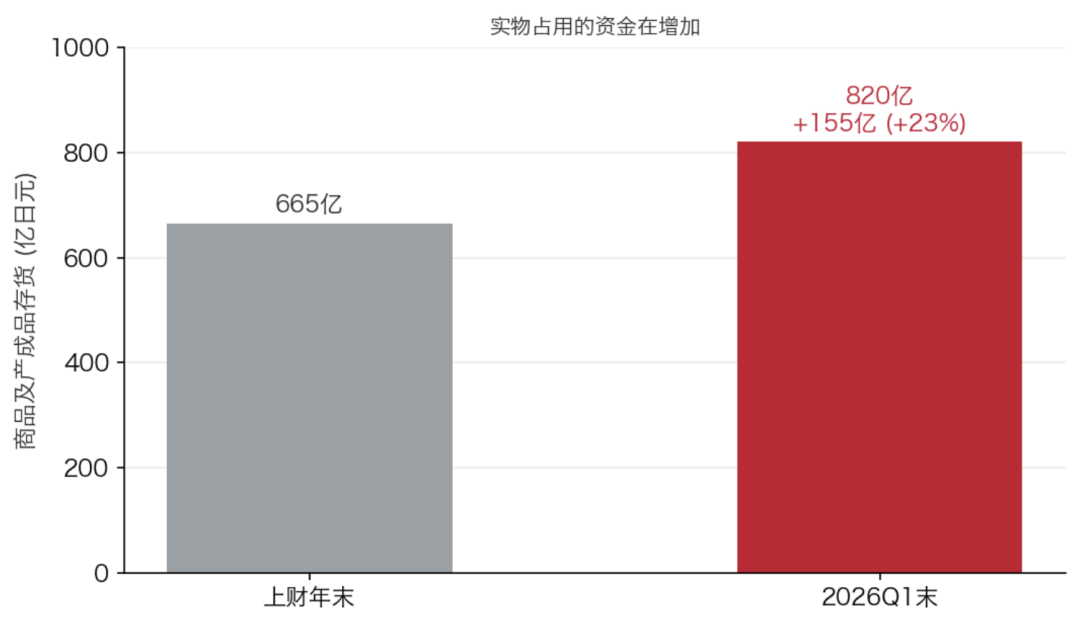
At the quarter's end, the group's inventory of goods and finished products rose from about 66.5 billion yen at the previous fiscal year's end to approximately 82 billion yen, with raw materials and reserves also increasing. These changes cannot be directly attributed to memory hoarding or inventory risks, as the financial report lacks such detailed evidence. However, it indicates that more funds are temporarily tied up in physical goods and production processes. If customer demand persists, inventory serves as a delivery guarantee. If project scheduling alters, inventory may become another source of profit pressure.

The Larger the Automotive Customer, the More Critical the Price Pass-Through for Suppliers
Alps Alpine's previous challenge was its substantial automotive business with slim profitability. After structural reforms, improvements in the last fiscal year demonstrated that exiting low-margin projects and controlling costs could be effective. However, this memory price hike has unveiled another layer of vulnerability: if new projects fail to account for fluctuations in key components during design, business growth may instead amplify suppliers' financial and profit pressures.
Automotive component projects often span several years from R&D to mass production. Suppliers must invest in engineering personnel, molds, equipment, and procurement arrangements early on. Once vehicles enter mass production, automakers will re-examine costs based on sales volume, competitive pricing, and cost-reduction targets. Whether suppliers can pass on sudden upstream price hikes to customers hinges on contract terms, the substitutability of components, the project's significance to the automaker, and the collaborative relationship on new models. Negotiation outcomes will not fully materialize within a single quarter.
After memory costs rise, whether suppliers can enhance procurement, redesign products, recover reasonable costs from customers, and avoid converting increased sales volume into increased losses indeed places significant strain on traditional automotive electronics companies.
The company maintains its forecast for the full fiscal year ending March 2027, with revenue projected at 1.045 trillion yen and operating profit at 48.5 billion yen.
Summary:
Alps Alpine, a traditional automotive electronics company, confronts the challenge of sustaining profitability in automotive orders amidst AI-driven fluctuations in upstream supply and demand. The more intelligent features vehicles incorporate, the more memory, computing components, and software development resources suppliers must procure, making profitability increasingly elusive!
-
![]()
After a model evaluation, I began to re-understand WorkBuddy
-
[Shanhu Talks] The Diverse Lives Unfolding in the AI Era: A Ten-Month Journey
-
【Tibetan Fox Talks】These Ten Months in 2026: People and Me Amidst AI Anxiety
-
Second-Gen Doubao Phone Falls Short in Resolving Previous Flaws
-
Second-Generation Doubao Phone Falls Short in Resolving Previous Limitations
-
![]()
"Dark Side of the Moon" Completes Final Pre-IPO Funding Round with Valuation of Approximately $50 Billion, Kimi Set to List in Hong Kong!
-
![]()
Apple Imposes Mandatory Adaptation Directive for iPhone Duo, Marking Unprecedented Assertiveness
-
![]()
Huawei's Xu Zhijun: The Real Challenge of Super Nodes Transcends Technology