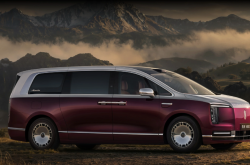
Zunjie Pedal Passes Third-Party Inspection, JAC's Stock Price Rockets
 10/13 2026
 449
449
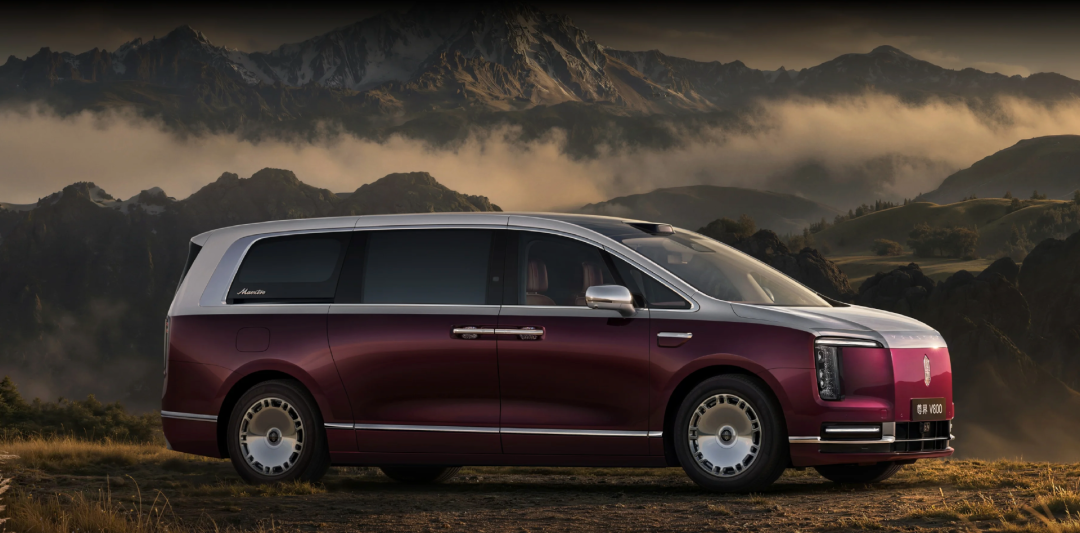
No signs of cracks or damage were detected.
"
Author | Zaizhou
The long-awaited third-party inspection results for the brake pedal of the Zunjie V800 have finally been unveiled.
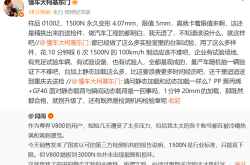
The verdict is unequivocal: it complies with industry standards. Under a standard load of 1500N, the pedal's displacement was significantly lower than the threshold. Even when subjected to repeated static pressure tests of up to 3000N, it remained intact, showing no cracks or damage. Judging solely by the data, it surpasses the industry's minimum requirements by a factor of two, meeting all compliance criteria.
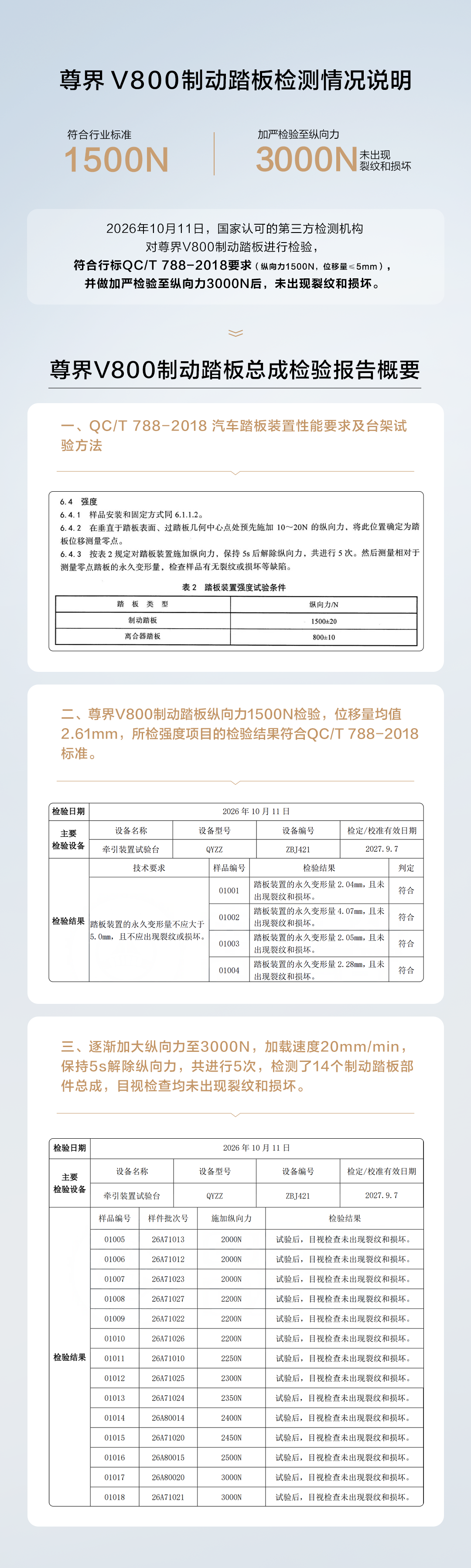
Reports from certain media outlets indicate that this test was carried out by the Testing Center of China Automotive Engineering Research Institute Co., Ltd., a nationally recognized testing authority.
Buoyed by this positive news, JAC's stock price surged, at one point climbing by over 8%.
But can this issue now be considered resolved?
Five days prior, during an extreme braking test conducted by DCD, the brake pedals of three brand-new Zunjie vehicles from different production batches snapped consecutively. They broke under a minimum load of 1612N, instantly catapulting this luxury MPV, priced at over a million yuan, to the forefront of trending topics. At the time, Zunjie dismissed it as a result of "non-standard extreme operating conditions," but netizens remained skeptical, and the market reacted accordingly.
Now, although this latest report carries significant weight, it fails to address the question that's on everyone's mind: Does robustness in static testing equate to resistance against breakage during dynamic use?
The industry-standard static load test involves applying force at a steady pace, simulating the forces encountered during normal, gentle braking. However, in a real-life emergency where the brake is slammed down suddenly, the instantaneous impact force, along with the direction and stress concentration effects, are vastly different.
Zunjie has now softened its stance, finalizing an upgrade plan by the end of October and offering free upgrades to users starting in November. This marks a progression from its initial public relations approach. Nevertheless, the underlying reason why all three test vehicles snapped at the same spot—whether due to structural design flaws, material weaknesses, or manufacturing process issues—has yet to be fully elucidated.
In essence, the logic is straightforward: car owners aren't concerned with how much pressure the pedal can endure in a laboratory setting; they only care about whether it will hold up when they slam on the brakes while driving at high speeds.
When it comes to brakes, trust can be shattered in an instant but takes considerable time to rebuild. Relying solely on a compliance certificate is clearly not enough. Whether Zunjie can provide a thorough root cause analysis and conduct public real-vehicle retesting after the upgrade may be the linchpin in truly restoring its reputation.
-
![]()
China’s Auto Show Offensive in Paris: More Than Just Bigger Booths
-
The Dark Side of the Moon Advances to the Final Round
-
Apple's iPhone Air 2 Arrives: Will It Overcome First-Gen Flaws to Become a "Legendary Device"?
-
![]()
Zunjie Pedal Passes Third-Party Inspection, JAC's Stock Price Rockets
-
![]()
Dongchedi Reacts to Zunjie: Static and Dynamic Loading Are Distinct! Expert Insights Provided
-
![]()
Dealer Service Operation Capability | Scale Does Not Equal Profitability: Three Profit Trumps for Group After-sales Breakthrough
-
Chinese Automakers Step Up Global Foray: From Paris Auto Show to European Factories
-
![]()
Liang Wenfeng Pours 40 Billion Yuan into Ulanqab, as AI Titans Flock to the Region