Max Compensation Reaches 4.87 Million Yuan! BMW’s Mass Layoff of 8,000 Sparks Online Frenzy, Luxury Auto Titan Invests Heavily to Preserve Reputation
 10/22 2026
 537
Author | Guanchejun
Layoffs often grab headlines, but it’s rare to see them trigger a rush akin to a shopping spree.

On October 21, the topic of BMW employees rushing to resign, causing a system crash, soared to the top of trending searches. According to IT Home, BMW plans to eliminate 8,000 white-collar positions by the end of 2027, offering severance packages that far exceed industry norms—with a maximum payout of €650,000, roughly equivalent to 4.876 million yuan.
The news triggered a stampede: approximately 40,000 employees logged into BMW’s internal HR portal simultaneously to check their potential compensation, overwhelming the system within hours. Although BMW restored service the next day, applications continued to flood in, prompting the company to temporarily halt new submissions.
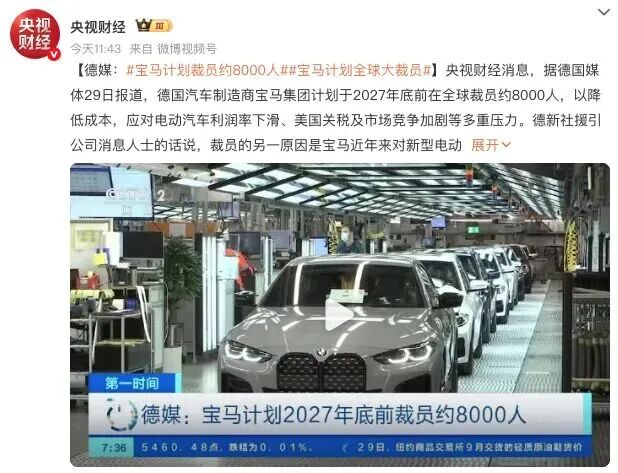
BMW clarified that the generous compensation isn’t mere altruism but a strategic move to achieve long-term labor cost reductions through one-time payouts. By laying off 8,000 employees, the company anticipates annual savings of approximately €1 billion (around 7.5 billion yuan) starting in 2028.
Reports indicate that severance packages offer flexibility, including installment payments, lump-sum cashouts, or transfers into the company’s pension plan. Employees aged 55 and older can also retain discounts on purchasing new or used BMW vehicles.
In Guanchejun’s view, this approach reflects a calculated efficiency typical of German industry. Given the complexities of negotiating with German labor regulations and unions, the hidden costs of prolonged stalemates far outweigh the upfront expenses of compensation.
Thus, spending generously to exit gracefully proves the most cost-effective solution. Why is BMW resorting to large-scale layoffs? The answer is straightforward: like other luxury automakers, BMW is grappling with declining sales in China.
Recent data reveals a nearly 25% year-on-year sales drop in China during the third quarter. While European and U.S. markets showed growth, it failed to offset the Chinese slump.
Compounded by U.S. tariffs, trade barriers, macroeconomic fallout from Middle East conflicts, and the industry’s electric vehicle transition, even the stoic German automotive giant finds itself on edge. Layoffs, however, are a symptom—not the root cause—of deeper challenges.
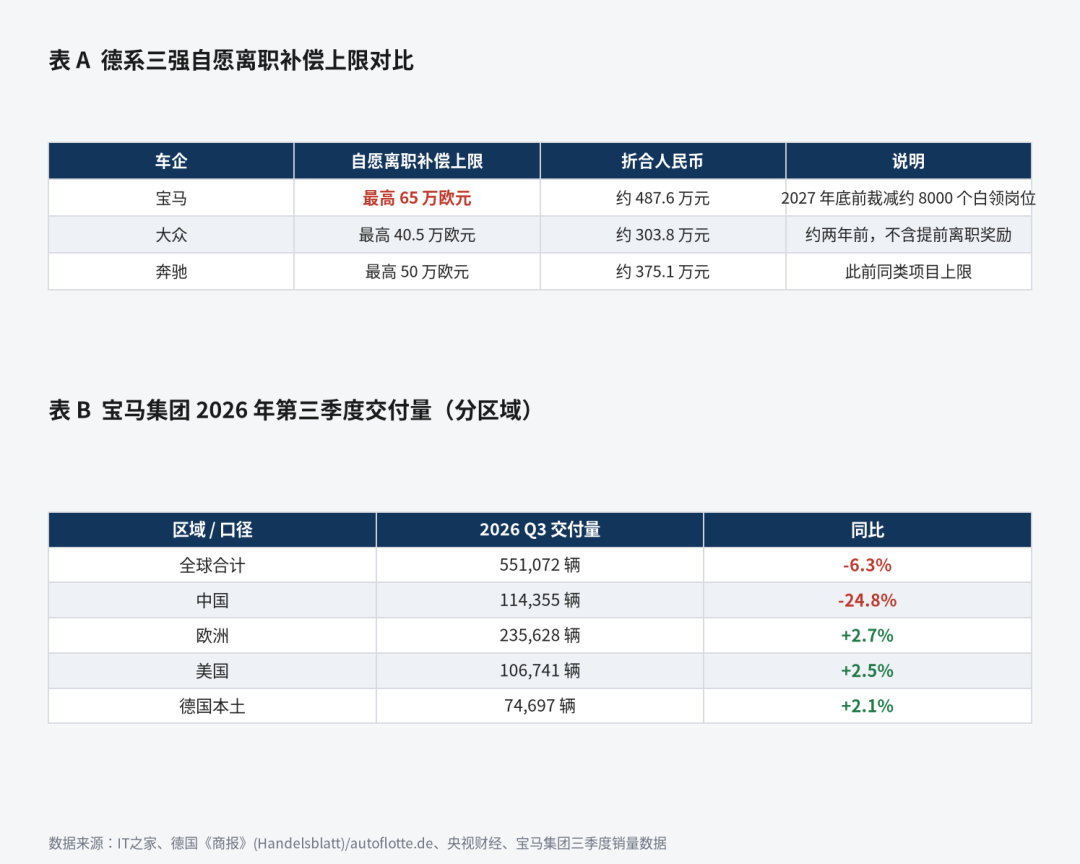
This does not imply BMW’s downfall. The German automotive sector faces collective headwinds: Volkswagen is shutting factories, and Mercedes-Benz is restructuring. BMW is merely navigating the same turbulent waters.
Moreover, the ability to offer compensation up to 4.87 million yuan while still achieving €1 billion in annual savings underscores BMW’s robust cash flow and profit margins.
The high-compensation strategy also safeguards the brand’s reputation, averting labor disputes and public backlash. Compared to the ruthless austerity measures of some rivals, BMW’s approach mitigates reputational damage, transforming what could have been a chaotic layoff into a relatively orderly process.
Conversely, the need to offer exorbitant compensation to incentivize departures underscores the severity of BMW’s cost structure challenges.
Labor costs in Europe’s automotive sector are stifling transformation. While BMW’s decisive layoffs project short-term dignity and medium-term resilience, long-term success hinges on reclaiming influence in the Chinese market.
Unless otherwise stated, charts in this article are sourced from publicly available data across multiple channels. We acknowledge and appreciate these contributions. The views expressed herein are for reference only and do not constitute investment advice.
This article is original content from Leverage Auto Observations and prohibited from reproduction without authorization. For permitted reproduction, please credit the source and author at the beginning. Thank you!
-
![]()
How Does China's Intelligent Driving Elite View the 'Second Half of Global Autonomous Driving' at WICV 2026?
-
xEV Multi-route Strategy Unveiled in Aachen: Can Hyundai-Kia's Bet on Diversified Powertrains Succeed?
-
![]()
Computing-Power and Electricity Synergy: The Most Hardcore 'New Infrastructure' in the AI Era is Rewriting the Relationship Between Computing Power and Electricity | Golden Eye
-
![]()
Max Compensation Reaches 4.87 Million Yuan! BMW’s Mass Layoff of 8,000 Sparks Online Frenzy, Luxury Auto Titan Invests Heavily to Preserve Reputation
-
![]()
Why Can't Large Model Companies Decide Their Position in Embodied AI?
-
![]()
The Story Behind One Grasp: Understanding 'Measurement' in Intelligence and How Token Economics Aggregates 'Computing Power, Models, and Corpora'
-
![]()
China's Commercial Remote Sensing: A New Chapter in Sky Allocation
-
![]()
Blockbuster! SERES AITO Suspected of Segmenting Domestic and International Markets: Domestically Closely Tied to Huawei, Internationally Partnering with 'Bosch'