Self-driving Cars Are on the Horizon, Yet BYD, Huawei, and XPENG Are Charting Distinct Courses
 10/22 2026
 402
Lead
Introduction
As we progress into the latter half of the self-driving car era, the timeline is converging, yet the paths diverge. The year 2028 serves as a pivotal juncture—some will eagerly push through the door, others will cautiously climb over, and a few will patiently await its automatic opening.
After years of discussions about self-driving cars, how much progress have we truly made?
If this question were posed three years ago, the likely response would be 'in the future.' Today, however, the future is beginning to take on a tangible deadline—2028 may well be the latest answer.
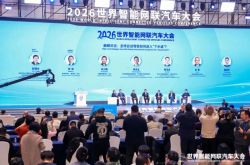
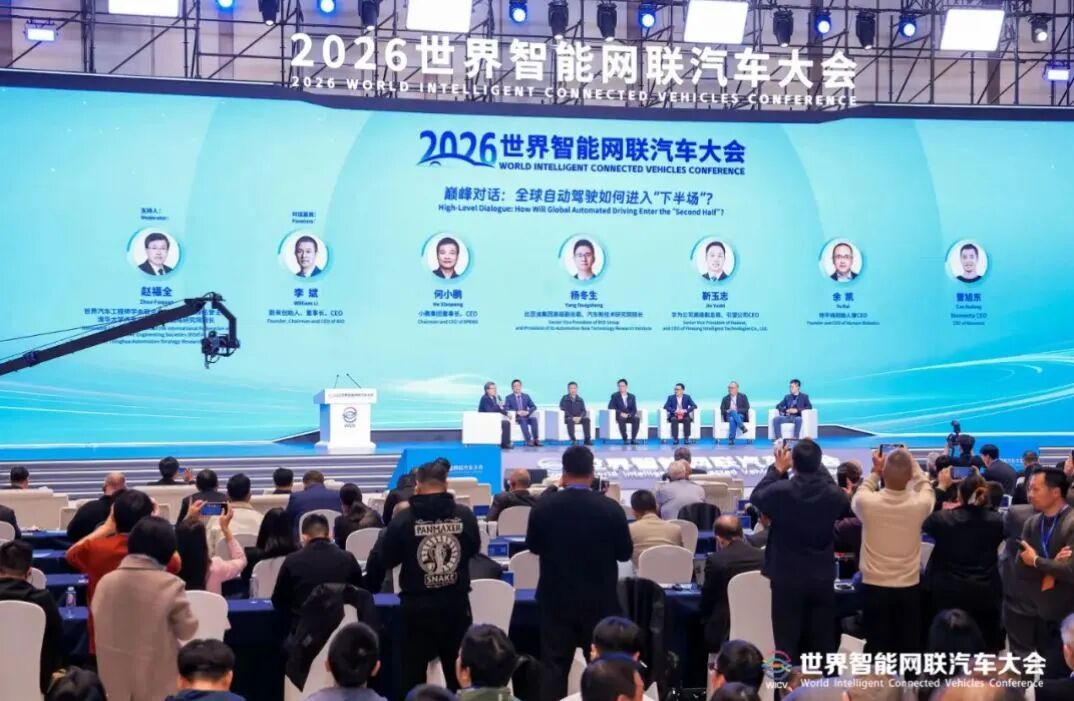
At the 2026 World Intelligent Connected Vehicles Conference, He Xiaopeng predicted the advent of L4 autonomy in the latter half of 2028. Yang Dongsheng positioned scenario-limited L3 for 2028. Li Bin stated, 'It will happen when regulatory approval is granted,' while Jin Yuzhi refrained from specifying a year but highlighted a series of safety milestones. For 2028, three distinct timelines are in play.
Yet, differing timelines do not imply a lack of progress. True self-driving technology is indeed within reach. What remains distant is the consensus among the three companies on 'how to achieve it.'
The excitement extends beyond mere timelines; a deeper divide lies in the chosen routes: Huawei and BYD are willing to take the intermediate step of L3, whereas XPENG aims to leapfrog it. Looking ahead, Yu Kai provides a benchmark—100 kilometers between takeovers is considered usable, 1,000 to 10,000 kilometers is good, and 100,000 kilometers is ideal.
The transition from assisted to self-driving involves three stages: taking your hands, eyes, and ultimately mind off the wheel, each stage exchanging a degree of control for increased liability and reduced takeover mileage. The inflection point is real, but beyond it, some will stand on solid ground, while others will find themselves in mid-air.
01 Three Timelines and One Inflection Point
The conclusion first: 2028 is not a distant dream; it marks the first time the industry has linked 'mass production' to a specific year.
He Xiaopeng's 2028 vision is L4 autonomy.
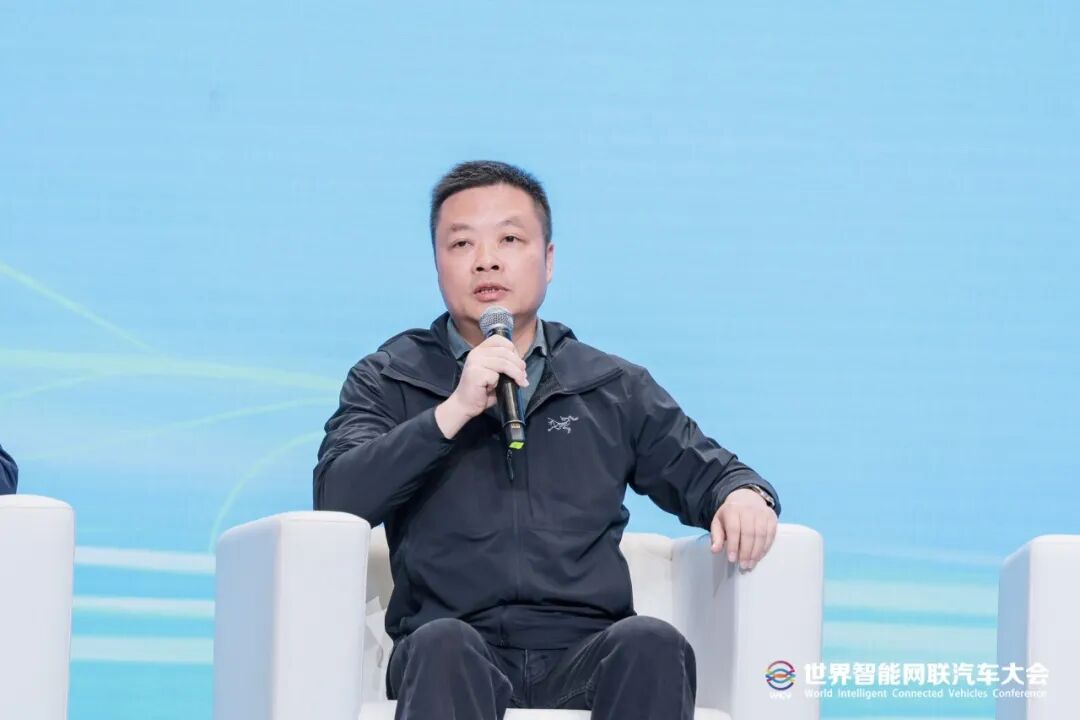
He stated that L4 technology will be realized in the latter half of 2028, with policy dimensions varying by country, region, and scenario from 2028 to 2032, and Robotaxi services potentially arriving sooner.
His rationale is straightforward: L3 merely shifts responsibility to the system without enhancing safety or optimizing the user experience—'L3 is just an enhanced L2.' After testing Audi's L3 on select European highways, which activated for only a few minutes throughout the day, he concluded that the experience was subpar. Thus, he removed L3 from his timeline and bet directly on L4.
Yang Dongsheng's 2028 target is scenario-limited L3.
He anticipated that scenario-limited L3 would enter mass production in 2028, with high-level self-driving in unrestricted scenarios iterating for another one to two years. 'Limited' is not a compromise but an engineering necessity: scenarios must be clearly defined for operational design domains (ODDs) to be precise, and ODDs must be precise for liability to be assigned.
He also emphasized BYD's scale—the larger the scale, the more cautious they must be about introducing unproven technology to millions of users.
Li Bin's inflection point is not explicitly stated.
He differentiates between technology and compliance: technically, L2 to L5 share a common origin and direction, with the industry largely following 'world models + closed-loop reinforcement learning'; from a regulatory perspective, L3 national mandatory regulations take effect on July 1, 2025, but implementation depends not only on technology but also on regulatory oversight, liability systems, and operational response mechanisms.
'The exact timing depends on regulatory approval.' In other words, the technology is ready, but the compliance timeline is not solely in the hands of automakers.
Jin Yuzhi does not cite a specific year; he relies on data.
Under assisted driving, the severe collision-free mileage before an accident was 10.356 million kilometers, 5.75 times the average for Chinese drivers; assisted driving now accounts for 60% of mileage.
His assessment is that the latter half of the transition is shifting from technical competition to safety and trustworthiness, where safety requires not just innovation but objective verification, advocating for transparent safety data.
Yu Kai tempers enthusiasm: 'Suddenly asking if we've reached the latter half, I think the revolution has just begun—the challenges are enormous. Each stage transition is like crossing mountains and rivers.'
Cao Xudong offers optimism from another angle: 2026 is the dividing line between halves, with Momenta's internal 'self-driving Moore's Law' improving tenfold every two years, achieving a hundredfold improvement in the past four years, and upgrading to tenfold annually in the latter half, possibly witnessing significant L3 and L4 inflection points in 2027-2028.
Skepticism has its reasons; optimism has its grounds.
However, by layering several information points, a judgment emerges: 2028 is not a gamble by a single company but the first time technology curves, regulatory clocks, and cost structures intersect within the same interval.
He Xiaopeng dares to peg L4 to 2028 because the technology has converged sufficiently to warrant such a bet; Yang Dongsheng dares to place scenario-limited L3 in 2028 because liability boundaries are calculable; Li Bin dares to say 'it will happen when regulatory approval is granted' because regulations are indeed moving forward.
The three timelines do not align, but what does not align is not 'whether it will come' but 'how it will come.' True self-driving is not far off—this, they all agree on.
02 Huawei and BYD vs. XPENG
The biggest disagreement in this executive debate is not over the year but whether L3 deserves to exist as a step.
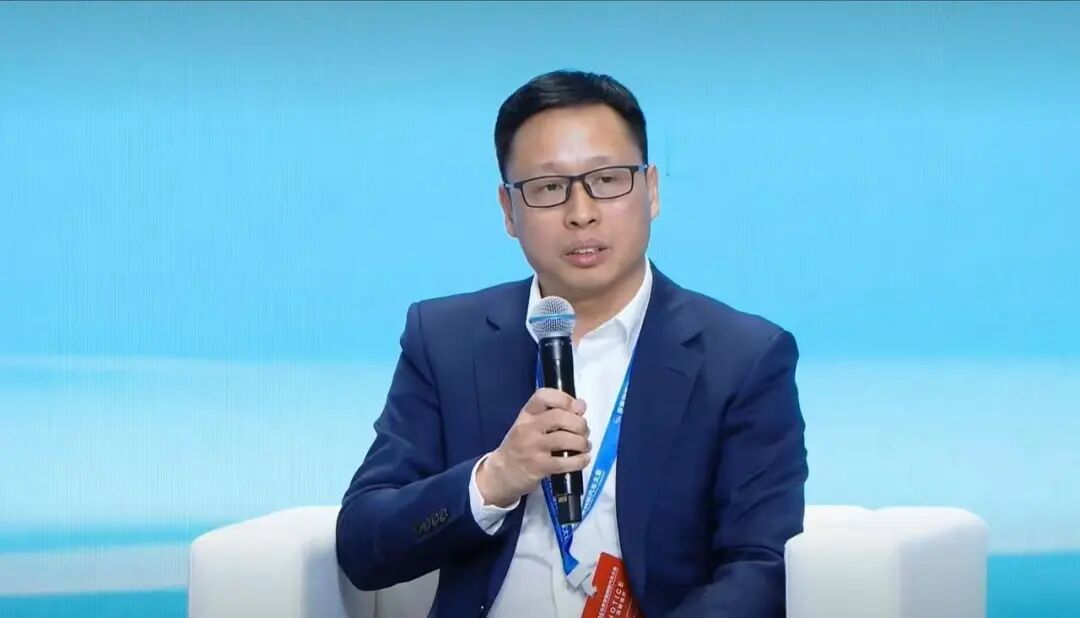
Jin Yuzhi clarifies the nature of L3: in L2, the driver is liable for accidents; in L3 and above, the system assumes liability.
'This is the biggest difference in the global self-driving 'latter half.'' Based on this, Huawei's stance is to elevate the foundation. Yinwang repeatedly emphasizes 'electronic screws'—not building cars, not competing with automakers, but laying in safety and experience components so L3's liability shift is data-driven and standard-compliant.
From 'safe driving' to 'convenient driving,' from '10-minute Qiankun self-driving life circle' to partnerships with CATL and Times Electric in smart battery-swapping ecosystems, every move breaks down 'self-driving' into deliverable parts.
Huawei does not announce when L3 will arrive but builds the trust infrastructure needed for when it does.
Yang Dongsheng's stance is to solidify the ground. L3 is 'scenario-limited' L3—firm up this step before discussing unrestricted scenarios.
He compares assisted and self-driving to 'advanced automatic transmission'—comfort matters, but safety is equally mission-critical. Automakers must ensure full-stack control and liability coverage, guiding users through 'usable—dare to use—use daily' stages.
He Xiaopeng rejects this step. His logic: L3 shifts liability but not safety or experience.
He explained earlier that L3 has near-L2 capabilities, with the driver still liable; L4 introduces a new, different liable party. Adding L3 between L2 and L4 challenges hardware, software, and regulations.
Indeed, Auto Business News recalls Ford and others discussing skipping L3 around 2015.
XPENG's choice is to bet resources on L4 and Robotaxi, skipping the 'liability shifted but experience unchanged' middle state.
This is not just about speed. Huawei and BYD are building a road with steps, each with its liability, verification, and fallback. XPENG believes the middle step shouldn't exist—better to jump from L2 flat ground than climb up and down.
Jin Yuzhi says L3 shifts liability to the system; Yang Dongsheng says L3 requires scenario limits and liability coverage; He Xiaopeng says L3 shifts liability but not safety—all three describe the same issue from three angles: L3 isn't a technical problem but a liability one. Recognizing this boundary determines whether you advance gradually or leap forward.
However, in Auto Business News's view, Horizon Robotics' Yu Kai offers a stringent benchmark for the leap-forward route—100,000 kilometers.
03 100,000 Kilometers to 'Ideal'?
This time, Yu Kai provides three tiers.
Industry-leading urban NOA's MPCI just crossed 100 kilometers; 1,000 to 10,000 kilometers is 'good'; 100,000 kilometers is 'ideal.' He hopes to cross these milestones in four to five years.
Cao Xudong offers another benchmark: tenfold annual improvement, with order-of-magnitude gaps compressed through engineering iteration. One speaks of mountains and rivers, the other of tenfold yearly progress.
Who is right? It depends on whether the next tenfold improvement requires a methodology shift rather than a natural extension of the same curve. The divide between gradual and leap-forward approaches ultimately lies not in announcements but in takeover mileage curves.
Looking back, Yu Kai offered a simpler tier at the Xuanyuan Forum: 'hands-off' by 2028, 'eyes-closed' L4 by 2030, 'sleeping' by 2035. Hands-off is taking hands off; eyes-closed is taking eyes off; sleeping is taking mind off. These three steps are closer to what users perceive than any Lx label.
Using this benchmark, L3's bottleneck becomes clear.
By Yu Kai's tiers, L3 falls between hands-off and eyes-off but not mind-off—the system takes over driving but not 'fallback.' He Xiaopeng says L3 'merely shifts liability to the system,' describing this state: eyes can look away, but mind must stay engaged.
Such products offer limited experience gains but high engineering costs. Audi's L3 'activated for only a few minutes a day' isn't an anomaly but a result of L3's ODD and liability structure.
L4 must cross the mind-off tier.
He Xiaopeng places L4 in the latter half of 2028 but admits improving safety takeovers to 10,000 or 100,000 kilometers annually by tenfold is 'very hard,' requiring full integration of chassis motion control and self-driving for scenarios like snow, swamps, and grasslands—'a challenge that can't be met in one or two years.'
Yu Kai's benchmark is more specific: 100 to 100,000 kilometers, three orders of magnitude. The method from 100 to 1,000 may not directly support the next order-of-magnitude leap. Each tenfold improvement requires a methodology shift, not a natural curve extension.
Data also cautions against hasty calculations.
Jin Yuzhi says severe collision-free mileage under assisted driving was 10.356 million kilometers, 5.75 times the Chinese average. Li Bin cites insurer data claiming combined assisted driving safety may reach eight times human driving, reducing severe accidents by ~30%; another source says accident safety loss drops 38.4%.
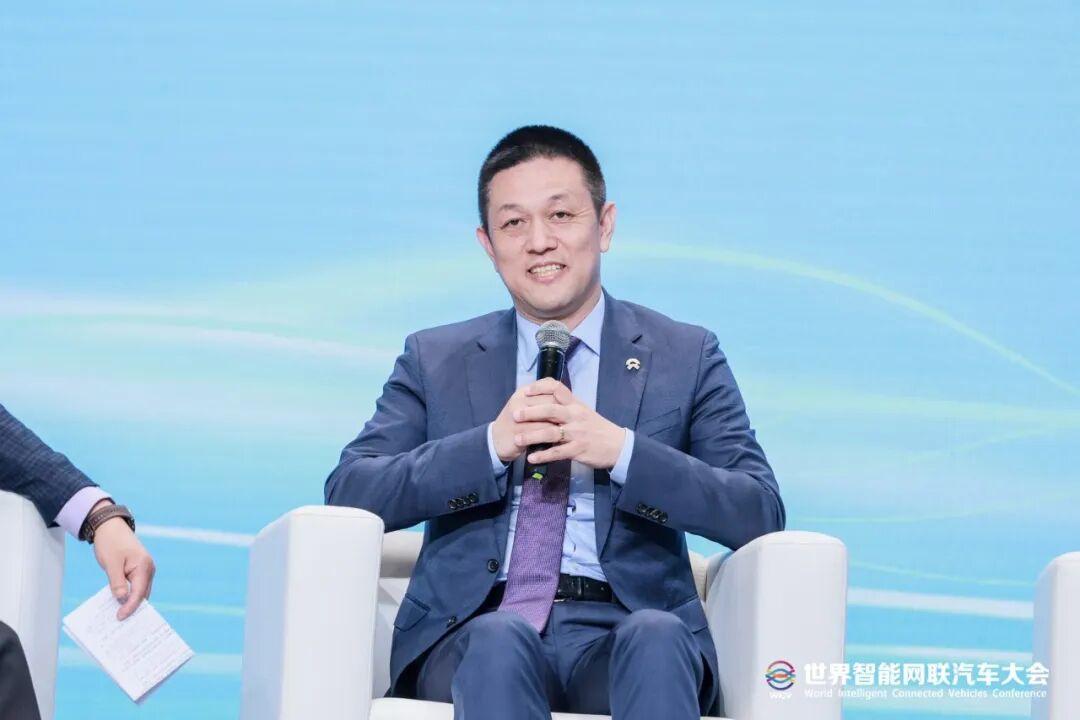
But Li Bin adds: 'Zero accidents aren't the goal for manufacturer liability.'
This should be the backdrop for every L3 and L4 announcement. Hands-off relies on features; eyes-off on redundancy; mind-off on liability systems, operational systems, and engineering patience for edge cases. The first two can be announced; the third must be earned kilometer by kilometer.
Yang Dongsheng's 'usable—dare to use—use daily' is the user-language version. Usable is about features; dare to use is about trust; use daily is about product stickiness. Yu Kai's 'usable—good—ideal' is the engineering version.
Translated, both mean: moving from assisted to self-driving isn't crossed by one OTA—it requires crossing trust, liability, and cost barriers.
By 2028, hands-off will likely arrive. Eyes-off: Yang Dongsheng says scenario-limited yes, He Xiaopeng says technically latter half, Li Bin says when regulatory approval is granted. Mind-off: Yu Kai says 2035, He Xiaopeng says hard, Cao Xudong says tenfold annually. With three different benchmarks, measured distances vary.
The inflection point is real.
But after it, some will stand on steps; others will hang in mid-air. The excitement is over timelines; the cold reality is three ledgers: safety, liability, and cost. Who balances these first can truly talk about 'landing.' The show has just begun.
Editor-in-Chief: Yang Jing Editor: He Zengrong

THE END
-
![]()
BMW Layoffs: Employees Compete to Leave!
-
![]()
Volkswagen Eyes Further Cuts After 100,000 Job Reductions
-
![]()
Self-driving Cars Are on the Horizon, Yet BYD, Huawei, and XPENG Are Charting Distinct Courses
-
![]()
Xiaopeng 'Soars' into the European Market
-
![]()
How Does China's Intelligent Driving Elite View the 'Second Half of Global Autonomous Driving' at WICV 2026?
-
xEV Multi-route Strategy Unveiled in Aachen: Can Hyundai-Kia's Bet on Diversified Powertrains Succeed?
-
![]()
Computing-Power and Electricity Synergy: The Most Hardcore 'New Infrastructure' in the AI Era is Rewriting the Relationship Between Computing Power and Electricity | Golden Eye
-
![]()
Max Compensation Reaches 4.87 Million Yuan! BMW’s Mass Layoff of 8,000 Sparks Online Frenzy, Luxury Auto Titan Invests Heavily to Preserve Reputation