Has the Overall Landscape of Battery Swapping Evolved? NIO Took Eight Years to 'Flourish', While CATL Achieved 'Success' in Just Two
 10/22 2026
 387
In October 2026, a notable contrast surfaced in the battery swapping sector.
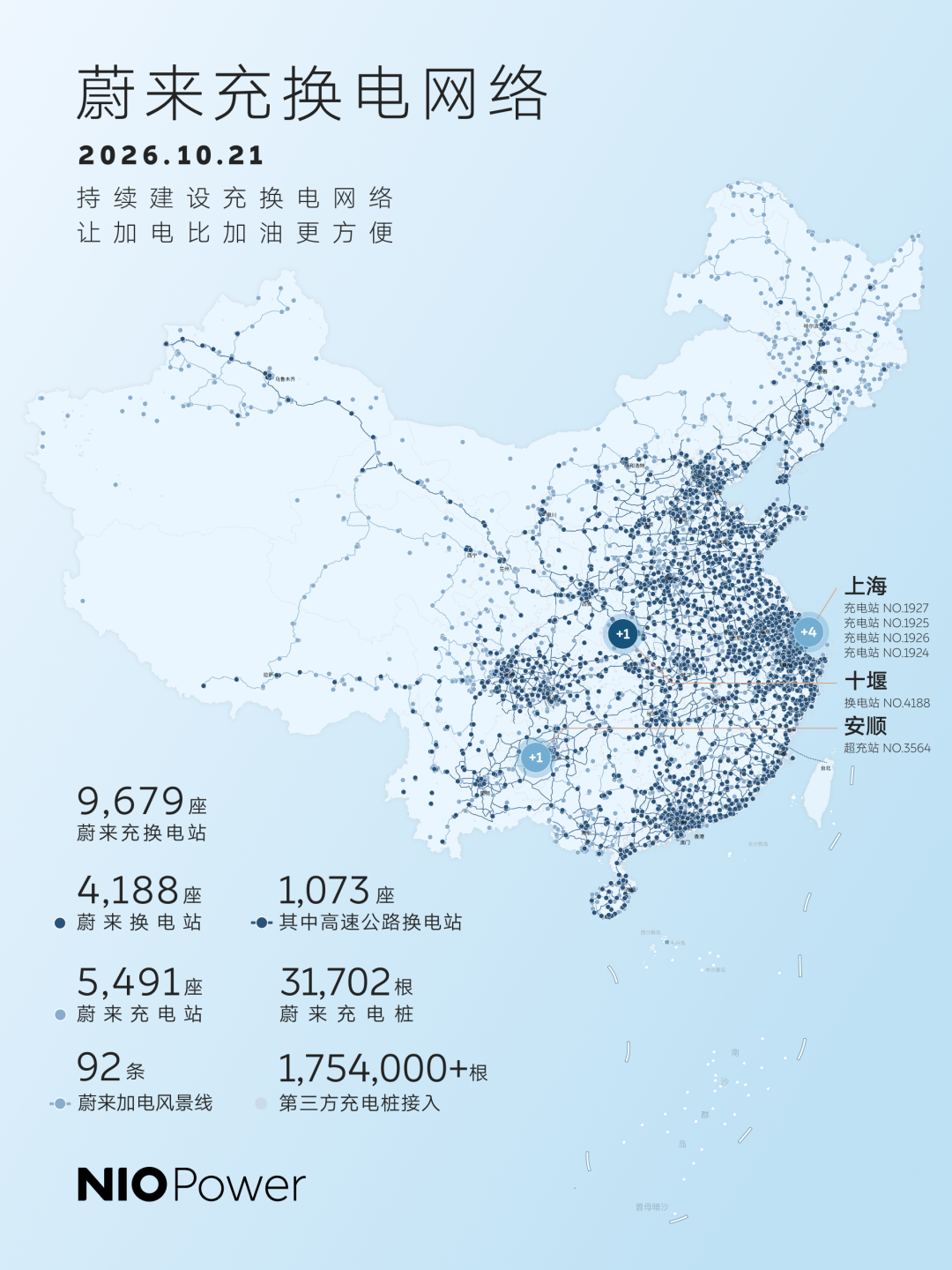
NIO has dedicated eight years to expanding its battery swapping network, growing from its inaugural station in 2018 to 4,188 stations, with over 1,000 situated along highways, spanning major transportation routes nationwide. Conversely, CATL's Chocolate Battery Swap had established 2,520 stations by September 29, just two years into its journey, already reaching 60% of NIO's total; the long-term vision is for 30,000 stations.
A more telling comparison can be drawn at the vehicle model level: The battery swap alliance spearheaded by NIO encompasses seven OEMs—FAW, Changan, GAC, Geely, Chery, JAC, and Lotus. However, as of September 2026, no mass-produced C-end models adhering to NIO's battery swap standards, capable of directly utilizing NIO's battery swap stations, have been launched within the alliance.
In contrast, collaborative models for CATL's Chocolate Battery Swap—such as the ARCFOX Beta S3 battery swap version—have already entered the market, with five automakers, including FAW, BAIC, Chery, and GAC, unveiling over 20 new Chocolate Battery Swap models simultaneously.
NIO is undeniably the trailblazer and influencer of the battery swap model. Yet, this pioneer is being overtaken by latecomers employing a vastly different business strategy. The crux of the disparity lies not in the pace of station construction but in the decision of 'who defines the battery and who sets the standard.'

NIO's 'Wall' is Imposing, but the Doorway is Constricted
The physical expanse of NIO's battery swap network is undeniable, as is its user loyalty. During the 2026 National Day holiday, NIO completed approximately 1.1922 million battery swaps, peaking at 183,700 on October 5. Distributing this peak across roughly 4,165 stations at the time, the daily average hovered around 44 swaps, with some highway stations exceeding 150 swaps per day. In regions like the Yangtze River Delta, Pearl River Delta, and major highway routes, the NIO battery swap experience has become a daily ritual for some users.
However, a structural flaw exists within this wall: NIO's battery standards diverged internally before being opened up externally.
NIO's battery swap system concurrently operates two generations of voltage platforms and at least eight types of battery packs with varying capacities. Not only are the battery specifications incompatible between old and new NIO models, but the batteries for NIO, Leapmotor, and Firefly are also mutually incompatible.
In August of that year, NIO founder William Li stated at a user event in Quanzhou that 'all cars can utilize the 120-kWh battery.' A month later, he retracted this statement: the 120-kWh battery pack is incompatible with the 400V platform, leaving owners of first- and second-generation platforms largely out of luck.
In a battery swap network where 'universal compatibility' is paramount, after eight years of operation, stations must stock a multitude of battery specifications, straining single-station storage space. During holidays, mismatches such as 'desiring a large pack but lacking one, or swapping a small pack that doesn't suit older vehicles' recur frequently.
This issue transcends technical management. When a company operates a battery swap network and sets the standards for its own vehicle batteries, its primary focus inevitably shifts to serving the continuity of experience for existing vehicle owners, rather than imposing self-restraint for a cross-brand standard that has yet to materialize.
NIO's commitment to 'upgradability' for old users is commercially prudent; however, in terms of standard convergence, it has created an increasingly intricate compatibility matrix.
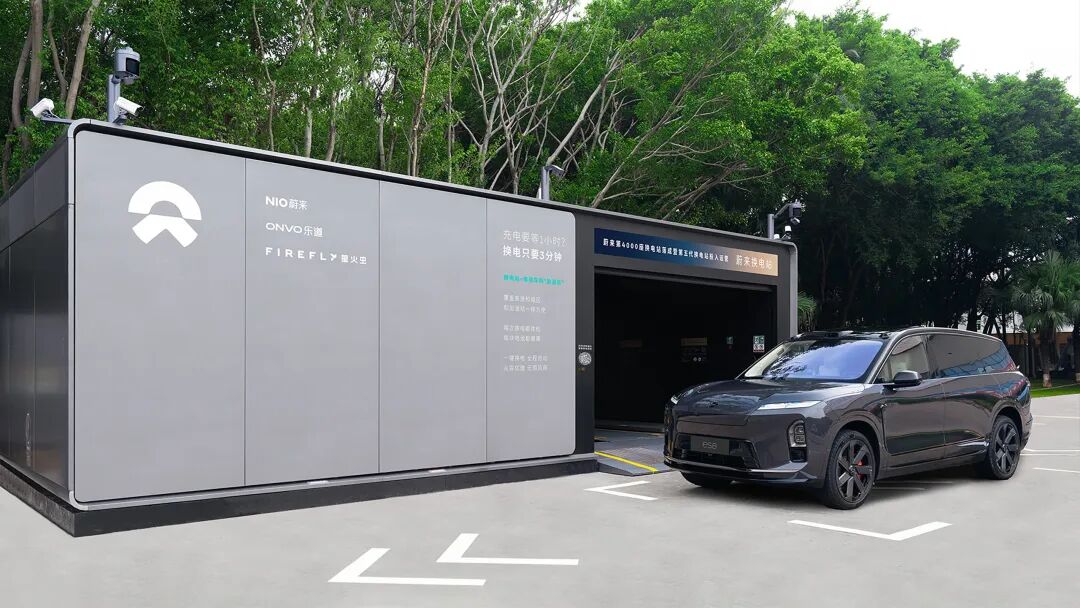
This matrix directly elucidates the 'inactivity' of the battery swap alliance. Automakers join the alliance to leverage an existing energy replenishment network and reduce capital expenditures on station construction. However, to launch a mass-produced vehicle compatible with NIO stations, they must align not only the chassis but also the physical dimensions of the battery pack, the locking bolt positions, the communication message format between the BMS and the station, and the most sensitive issue: who holds the right to define battery specifications.
An industry insider bluntly stated: 'Everyone acknowledges the value of the battery swap model when signing the agreement, but when it comes to internal project approval, various departments raise risks, and vehicle projects compatible with NIO's battery swap keep getting delayed.'
With the average profit margin in vehicle manufacturing now hovering around 1.5%, no automaker is willing to risk redesigning the chassis and modifying production lines for a standard defined by another entity. It's unsurprising that alliance agreements remain at the level of framework strategic cooperation memorandums, lacking mass production timelines or chassis modification constraints.
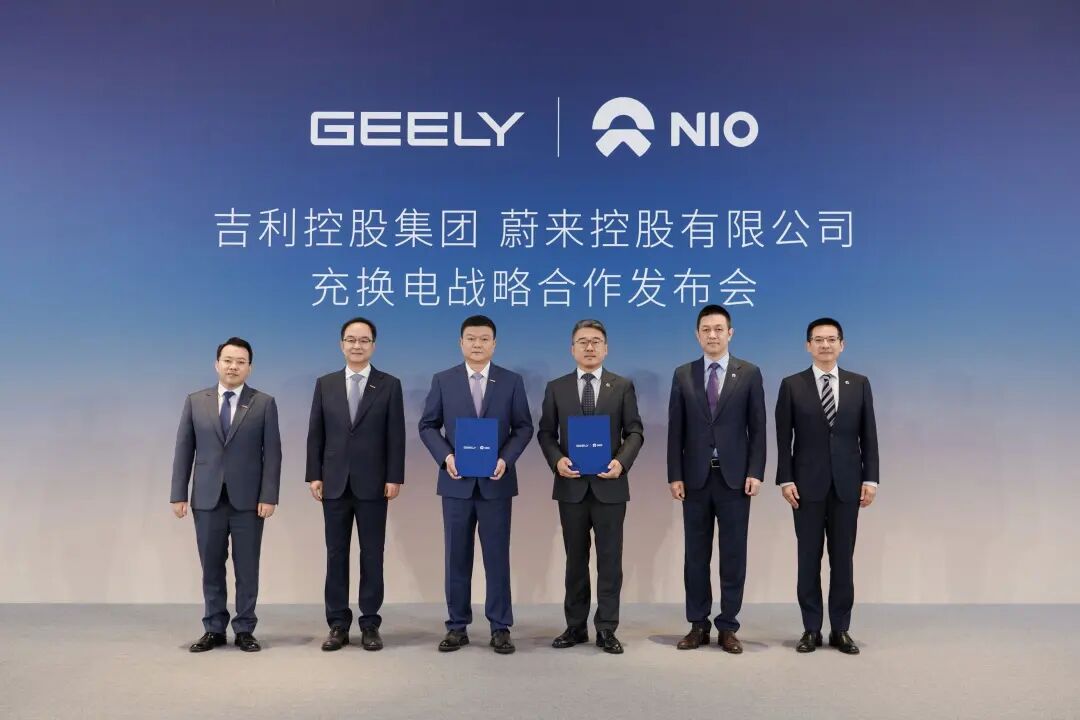
NIO is not oblivious to the issue. In March 2025, it signed a strategic cooperation with CATL, introducing the Chocolate Battery Swap standard for the Firefly brand, adopting a 'dual-network parallel' approach; in September 2026, Geely acquired a 30% stake in NIO Energy through 100% ownership of YiYi Interconnect and 640 million yuan in cash, becoming the first alliance member to invest real money.
Geely's entry is substantial: YiYi Interconnect covered 44 cities and 436 stations by June 2025, with over 45,000 daily swaps and more than 100,000 battery swap vehicles sold. NIO secured high-frequency orders and stable cash flow from commercial vehicles, a utilization supplement challenging to achieve with a private vehicle network. However, equity binding addresses 'who has the incentive to negotiate' but does not automatically resolve the three technical bottlenecks that have stalled for three years: battery specifications, locking mechanisms, and communication protocols.
CATL Builds a 'Ladder' to Scale the Wall and Markets Standards
Not long ago, discussions abounded on how automakers' in-house battery production would challenge CATL's dominance. Yet, facts demonstrate that when it comes to batteries, CATL, as the industry leader, has a far more profound布局 (strategic layout) than anticipated.
In the battery swap field, CATL is taking a distinct path. The core product of Chocolate Battery Swap is not 'a station' but standardized battery blocks.
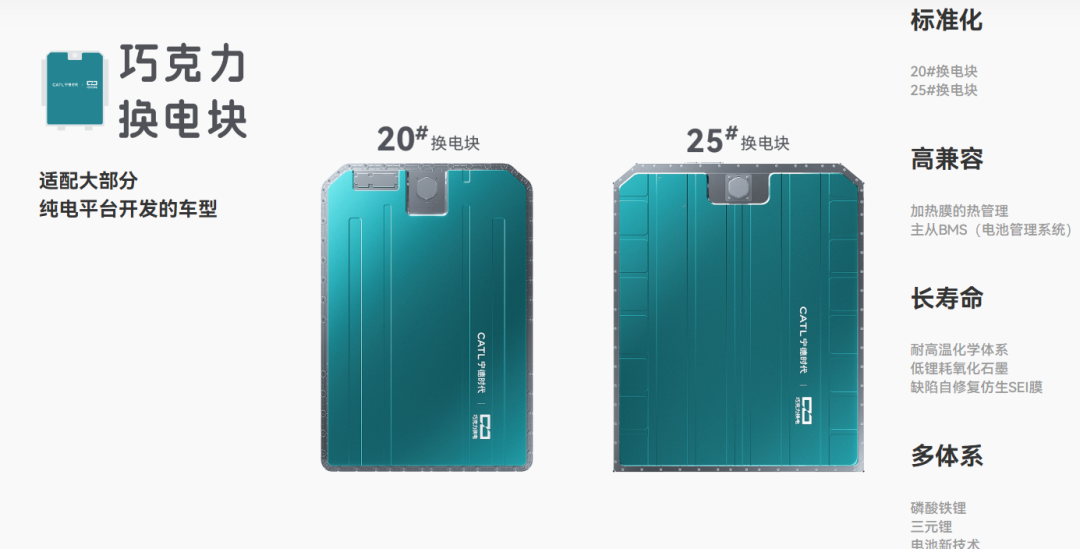
The 20# fits A0-class vehicles, boasting 42 kWh of LFP batteries and a 400 km range; the 25# suits A- and B-class vehicles, with 56 kWh and a 500 km range. The Chocolate 26# battery released in April 2026 is based on an 800V high-voltage architecture, with the initial 75 kWh version extending compatibility from A0 and A-class up to B- and C-class vehicles.
When automakers join the Chocolate network, they don't need to compromise on existing models around an established network. Instead, they adopt a standardized battery pack with converged dimensions, interfaces, and communication protocols from the product definition stage.
On CATL's collaboration list, the ARCFOX Beta S3 is already on the market, with BAIC New Energy revealing that monthly orders for the model have surpassed 10,000 units, with the battery swap version accounting for a high 70%, far exceeding expectations. BAIC had previously attempted its own battery swap efforts but opted for the Chocolate standard for mass production.
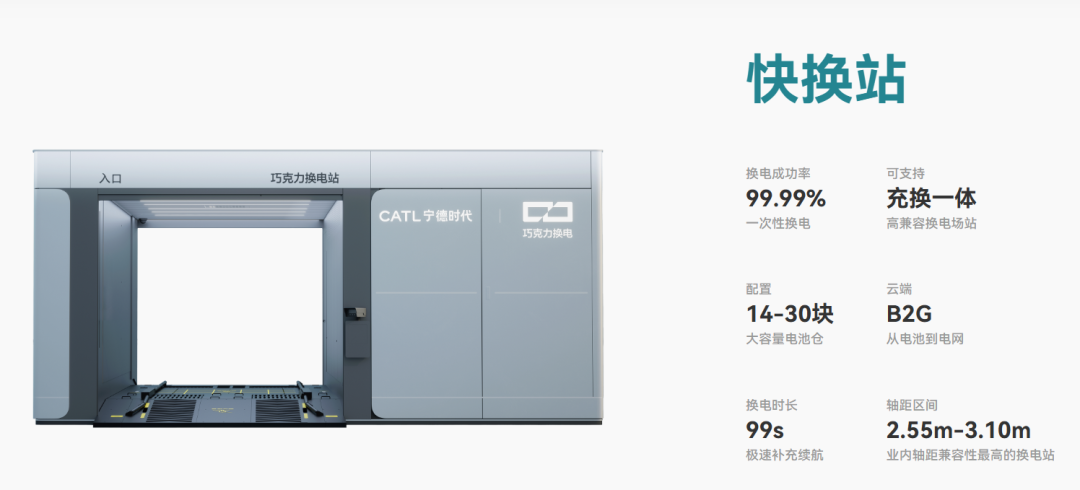
The underlying business logic is straightforward. CATL's approach involves a battery supplier that does not manufacture vehicles providing standardized battery blocks, granting automakers greater autonomy in chassis layout and product definition while keeping battery procurement scale, second-life utilization, and full lifecycle data within CATL's closed loop.
Additionally, as a battery manufacturer, CATL's core motivation in deeply participating in battery swapping is to expand battery shipment volume, establish deep business synergy with automakers, and create a closed-loop value chain through second-life utilization and recycling. For automakers, collaborating with a battery manufacturer on battery swapping means the counterparty is not a competitor, and CATL batteries also help enhance vehicle premium pricing—a win-win outcome.
CATL's internal strategic emphasis on battery swapping is also increasing. Chairman Robin Zeng predicted two years ago that by 2030, battery swapping, home charging, and public charging stations would 'share the market equally.' Within CATL, battery swapping has transitioned from a 'supplementary energy replenishment method after battery sales' to an entry point for driving battery shipment volume.
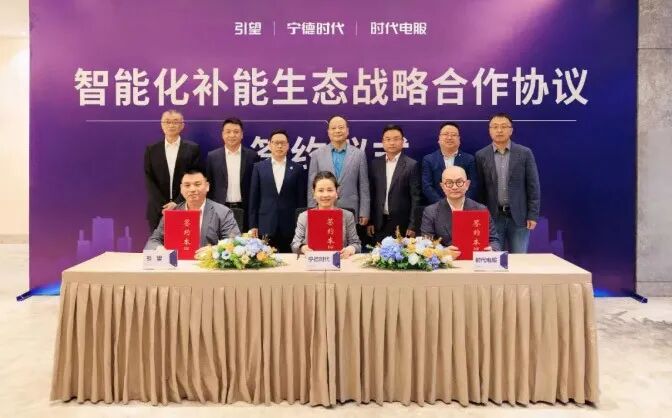
Huawei's entry further amplifies the potential of this entry point. On October 19, Yinwang, CATL, and Contemporary Amperex Technology Service signed an intelligent battery swap ecosystem cooperation agreement. Huawei's Qiankun Intelligent Driving and the Chocolate Battery Swap network integrated vehicles, stations, and the cloud at the system level, enabling vehicles to autonomously identify energy replenishment needs, locate stations, align automatically, complete a fully automatic 99-second battery swap, and drive away independently.
This 'seamless energy replenishment' solution caters to models equipped with Huawei's Qiankun Intelligent Driving. The value of battery swapping in the era of autonomous driving is not just 'a few minutes faster' but that vehicles can complete the energy replenishment loop autonomously without a driver present.
Currently, the competition in intelligent driving is shifting from highway NOA to urban and parking scenarios, and automation in the energy replenishment link remains an underexplored area. Huawei's choice to integrate underlying data with CATL's Chocolate network undoubtedly represents another significant transformation for the automotive industry.
The Ultimate Goal of Battery Swapping Is Not About 'Who Has More Stations'
The economics of battery swapping are often misconstrued. They do not hinge on the absolute price of batteries but on the proportion of battery costs in the total vehicle cost, as well as who holds the battery assets and how they are utilized.
Power batteries have long accounted for around 40% of total vehicle costs. The more expensive batteries are, the stronger the leverage effect of BaaS (Battery as a Service) and vehicle-battery separation in price-sensitive markets. Users do not need to purchase batteries outright, shifting the risks of battery degradation, depreciation, and residual value from consumers to asset operators.
However, for this model to be financially viable, the utilization rate of battery swap stations must be sufficiently high. Yang Jun, General Manager of CATL's Battery Swap Business, admitted in April 2026: 'The energy replenishment industry faces significant challenges today, with nearly universal losses and very low utilization rates.' A single battery swap station, excluding batteries, requires an investment in the millions of yuan, and the industry is still in the early stages of 'market expansion.'
Here, the two approaches diverge in financial logic. NIO's 4,188 stations represent eight years of heavy asset accumulation through self-construction, with each station relying on the vehicle ownership and swap frequency of NIO, Leapmotor, and Firefly to amortize fixed costs; the more stations there are, the more losses mount if per-station utilization does not keep pace.
CATL's 2,520 stations have a different asset nature. Batteries are its products, and battery swap stations are channels to expand battery shipments, acquire full lifecycle data, and lock in second-life utilization scenarios. The same low utilization rates represent a wound on the profit-and-loss statement for an automaker but are a tolerable channel deployment cost on the balance sheet for a battery company.
Geely's 30% equity stake in NIO Energy, Huawei's integration of Qiankun Intelligent Driving with the Chocolate network, and NIO's adoption of the Chocolate standard for Firefly all point to a dual-layer structure taking shape: NIO continues to operate China's largest and most mature brand-exclusive battery swap network, but the incremental growth in cross-brand, cross-automaker universal battery swapping is leaning towards CATL's standardized battery blocks and Huawei's intelligent energy replenishment entry point.
If the competition for 'battery swap standards' ultimately hinges on shipment volume and chassis adoption numbers, the cards in CATL's hand—standardized battery blocks, over 30 collaborative models, a long-term plan for 30,000 stations, and Huawei's intelligent driving ecosystem—are more aligned with the definition of 'infrastructure' in terms of openness and replicability than a network of stations that must accommodate eight battery specifications.
-
BMW Faces Surge of 40,000 Employees Seeking Resignation: Maximum Compensation Hits €4.87 Million, Overloading Internal Systems
-
Anthropic Unveils New Governance Framework: Redefining Capital Rules for AI Companies
-
Flying Complaints and Instant Sellouts: Why the iPhone Continues to Fly Off the Shelves Despite Criticism
-
![]()
Comparison of Industrial Strength Among China's Top-Tier Quantum Technology Cities: Hefei, Beijing, Shanghai, and Shenzhen
-
![]()
In the Lead-up to an IPO, What Has XREAL Been Up To These Past Six Months?
-
Can DeepSeek's 100 Billion Funding and MiniMax's HK Stock Debut Flop Sustain Big Models Until Profitability?
-
Xiaomi and VIVO Witness Decline in Overseas Sales Share, OPPO Sees Notable Rise
-
![]()
The Moat of Palantir Lies in Two Decades of Architectural Evolution