In the Lead-up to an IPO, What Has XREAL Been Up To These Past Six Months?
 10/22 2026
 404
Six months after submitting its application, XREAL has ramped up its product lineup, and the capital markets are still awaiting a fresh update.
Written by / VR Tuoluo, Ran Qixing
"Generally speaking, this year will be busier than the last."
When discussing XREAL's product development timeline and recent work status for 2026, Lin Zhou (a pseudonym), a source close to XREAL, shared this sentiment with VR Tuoluo. The AURA project, in particular, developed in collaboration with Google, entails extensive product development and teamwork, with a process far more intricate than what the outside world perceives as merely launching a new product.
2026 marks a pivotal year for XREAL. In April, the AR glasses manufacturer, founded nearly a decade ago, officially submitted its prospectus to the Hong Kong Stock Exchange, moving forward with its plans for a Hong Kong IPO.
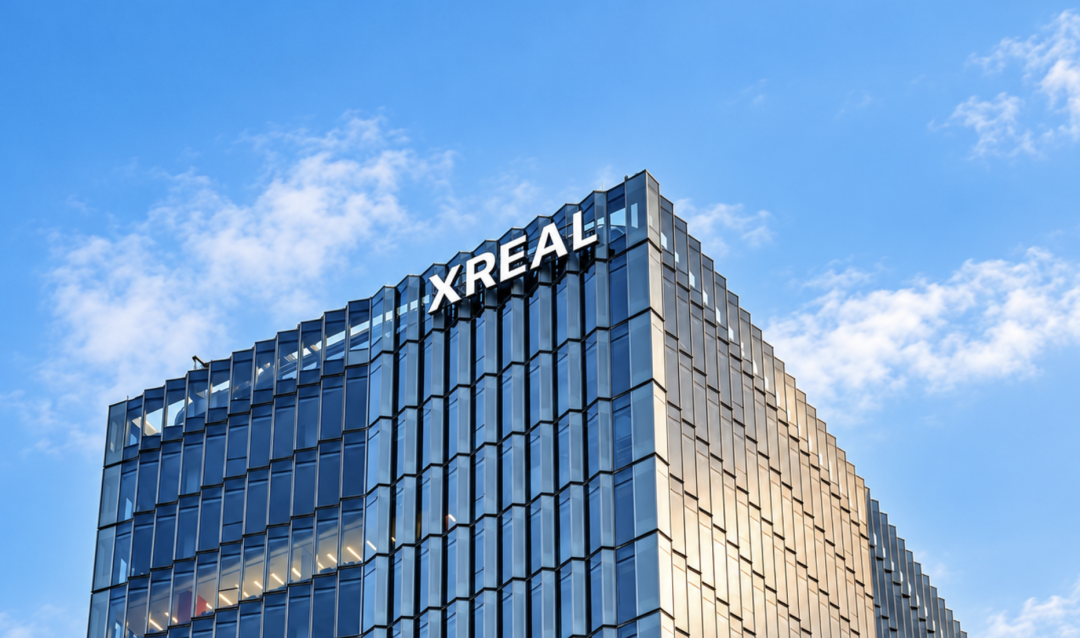
In the six-plus months since submitting its application, XREAL's product initiatives have grown increasingly robust. The launch of a new brand, a series of new product releases, and international collaboration projects entering the commercialization phase suggest that the company's product lineup is expanding into more price brackets and application scenarios, aiming to carve out new avenues for performance growth and bolster its bid for a Hong Kong IPO.
01
XREAL Ramps Up Product Lineup with New Brands and Products
According to incomplete statistics from VR Tuoluo, as of October 20, XREAL has publicly unveiled four tethered AR glasses this year, including ROG XREAL R1, xbx a01, xbx a01+, and XREAL 1 Pro+. Additionally, the XREAL AURA, initially revealed last year, announced its official pricing this year and entered the paid pre-order phase.
Compared to 2025, when product upgrades were primarily centered around the One series, XREAL's activities this year are noticeably more diverse, featuring a new sub-brand, entry-level products that further reduce prices, and distinct offerings targeting the gaming market and the high-end spatial computing market.
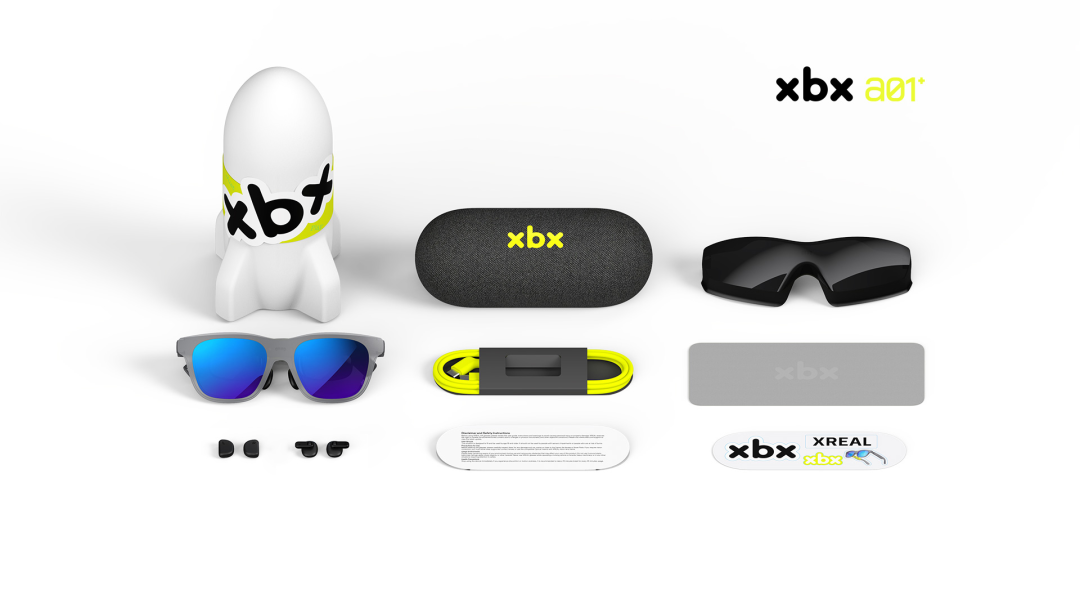
Among these, XREAL's new sub-brand, xbx (X by XREAL), caters to the mid-to-low-end market, with the xbx a01 priced at 1,699 yuan and the xbx a01+ at 1,799 yuan. On the other hand, XREAL is also continuing to explore the high-end market. In October, XREAL officially announced the pricing of the XREAL AURA, jointly developed with Google and Qualcomm, with the 12GB+256GB version priced at $1,279 and the 16GB+512GB version at $1,499, while opening sales to consumers who had previously participated in pre-orders.
Not only that, but just a week after AURA announced its official pricing, XREAL launched the XREAL 1 Pro+, priced at $599. Furthermore, VR Tuoluo has learned that XREAL appears to be developing an all-in-one AI waveguide glasses internally, with a high level of confidentiality. Based on XREAL's existing product ecosystem and technological style, it seems unlikely to be just an information notification glasses.
An XR industry investor, Zhou Heng (a pseudonym), told VR Tuoluo that during the phase of racing towards a listing, XREAL's consecutive new product launches and expansion into different market segments also consider demonstrating future growth potential to potential investors. In his view, XREAL's foray into more niche scenarios along its existing technological path has its commercial logic, but there is still uncertainty regarding how much actual growth these new products can bring to the enterprise.
02
AURA Pre-Orders Surpass 10,000, XREAL's Capital Story Continues
Among the many products XREAL has launched and commercialized this year, AURA is undoubtedly the most attention-grabbing.
Compared to previous products focusing on portable large screens, AURA boasts a larger 70° field of view and introduces native applications, multi-window interactions, and Gemini AI capabilities into the glasses form factor through the Android XR platform.
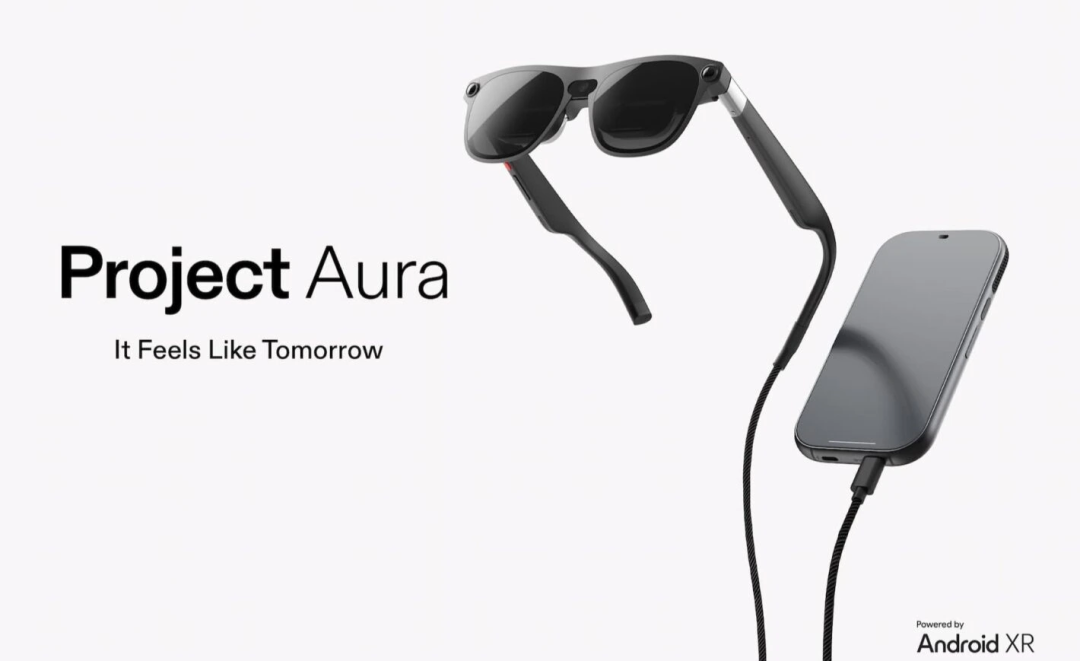
Despite a starting price of $1,279, which is not inexpensive, this product has garnered a significant number of potential consumers even before its official delivery. In June of this year, XREAL launched a limited edition of 2,000 Founder Priority Passes, allowing consumers to gain priority purchase rights by paying $299. According to data released by XREAL, all these pre-order qualifications were sold out within 36 hours of being made available.
By the end of August, XREAL Japan officially announced that the number of global advance reservations for AURA had surpassed 10,000. Lin Zhou also told VR Tuoluo that the early market feedback for AURA exceeded his expectations. Particularly surprising was that despite the high product price, many consumers were still willing to participate in pre-orders.
So, what exactly do these users see in AURA? Lin Zhou believes that the larger field of view, the Android XR ecosystem, and the OST optical see-through technology path are key factors attracting some consumers. Previously, consumer-grade AR display glasses have long been concentrated within a relatively limited field of view range, while AURA expands it to 70°, allowing users to obtain a wider virtual display area.
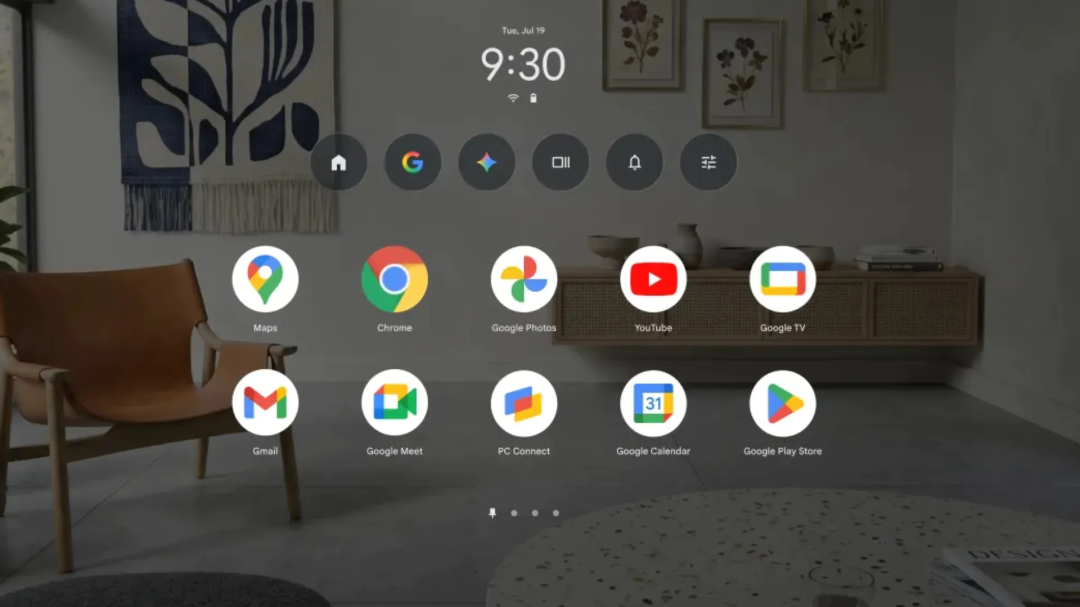
At the same time, Android XR has also piqued the interest of some XR enthusiasts and developers. They hope to use more native applications on the glasses and explore new interaction scenarios by leveraging Google's platform capabilities. For XREAL, the popularity of AURA has initially demonstrated the market appeal of high-end spatial computing products.
However, from new product development to large-scale sales and subsequent software ecosystem construction, continuous capital investment is required. Especially this year, as XREAL simultaneously advances multiple product projects, each link of R&D, production, and marketing all require financial support.
VR Tuoluo has learned that after submitting its IPO application in April this year, XREAL is still in talks with some investment institutions regarding financing matters. However, as of the time of writing, whether relevant financing has reached new investment agreements, the specific financing amounts, and the status of fund transfers have not been further confirmed.
03
Six Months After Submitting Application, How Much Longer Must XREAL Wait?
Despite new developments in products and financing, XREAL's Hong Kong listing process has not yet seen new public progress.
Since submitting its listing application on April 1 this year, as of October 20, no relevant disclosures have been seen in public channels regarding XREAL updating its prospectus, resubmitting its application, or passing the listing hearing.
It is worth mentioning that in August this year, the Hong Kong Stock Exchange announced a temporary extension of the validity period for eligible new listing applications from the original six months to twelve months, providing enterprises with more flexibility in adjusting their listing timelines.
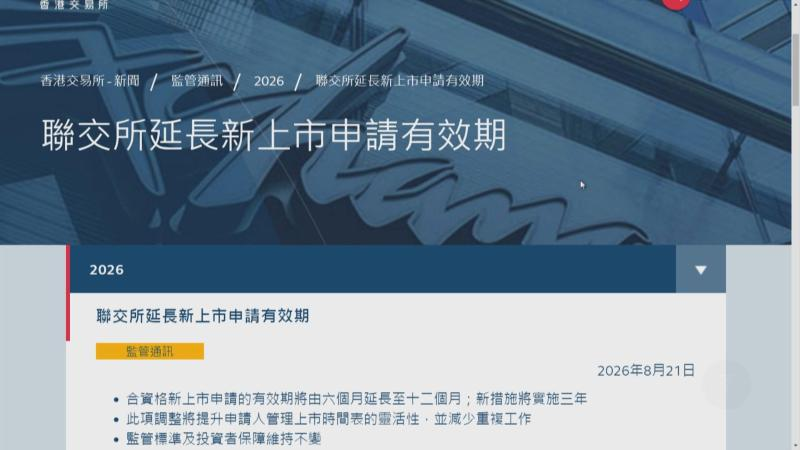
In fact, in the XR and related technology industries, it is not uncommon for enterprises to take a year or even longer from submitting their prospectus to officially listing.
For example, digital twin enterprise 51WORLD first submitted its listing application to the Hong Kong Stock Exchange in November 2024, then resubmitted its application twice in May and December 2025, and finally officially listed on the Hong Kong Stock Exchange's main board in December 2025. From the first submission to the successful listing, it took about 13 months; the listing journey of Insta360, which started with panoramic imaging, was even longer. From October 2020 to February 2025, the entire process lasted about 4 years and 7 months.
Investor Zhou Heng also told VR Tuoluo that from his understanding of the capital markets, while it may not be extremely common for an enterprise to still not be listed six months after submitting its application, it is not particularly surprising either. In his view, whether an enterprise can successfully complete an IPO also depends on factors such as the capital market's receptiveness, the issuance valuation, and investors' subscription intentions.
For XREAL, the new products densely launched in the past six months may also provide more support for its upcoming capital market performance. From the xbx starting at 1,699 yuan to the AURA entering the commercial sales phase, XREAL has begun to cover more price ranges and consumer scenarios.
Lin Zhou expressed his expectations for XREAL's listing from another perspective. In his view, AR glasses R&D requires long-term investment, and a successful listing has the opportunity to bring more funds and resources to the enterprise, further supporting product R&D and market expansion. Additionally, OST glasses are still in the market cultivation stage, and consumer awareness of such products needs to be enhanced, requiring enterprises to invest more resources in market education.
For XREAL, the past six months after submitting its application have seen the completion of a considerable product lineup. Next, as new products one after another enter the market, whether these investments can translate into larger-scale sales growth will also become an important basis for the capital markets to evaluate its future development potential.
04
Conclusion
From its establishment in 2017 to officially racing towards an IPO in 2026, XREAL has undergone nearly a decade of development.
Looking back at the more than six months since submitting its application, the company has indeed not stood still. The establishment of the new sub-brand xbx, the launch of the ROG co-branded product, the commercialization progress of AURA, and the continuous iteration of the One series all demonstrate that XREAL is actively seeking new growth opportunities.
However, how many units these products can ultimately sell, how much revenue they can generate, and whether they can drive the company to further narrow its losses still require time to verify.
At the end of the interview, investor Zhou Heng posed a rather direct question to VR Tuoluo: "You need to tell everyone, including Google, what people are going to do with this device."
This sentence perhaps also points out the core issue currently facing consumer-grade tethered AR glasses: if the product is only used for movie viewing and light gaming, the usage scenarios will be relatively limited, and the market size will be difficult to significantly expand.

For XREAL, which is racing towards an IPO, how to transition consumers from occasional use to high-frequency use, even to the point of willing to wear them daily, is the key to further opening up the mass consumer market, proving long-term growth potential, and winning more investor recognition.
Looking back at the development history of the mobile internet, from social media and short videos to mobile gaming, the core of competition among major platforms has always been user attention and usage time. The longer users stay and the more frequently they use, the greater the space for commercial monetization tends to be.
Will XREAL's next product bring a new answer?
Let's wait and see.
-
BMW Faces Surge of 40,000 Employees Seeking Resignation: Maximum Compensation Hits €4.87 Million, Overloading Internal Systems
-
Anthropic Unveils New Governance Framework: Redefining Capital Rules for AI Companies
-
Flying Complaints and Instant Sellouts: Why the iPhone Continues to Fly Off the Shelves Despite Criticism
-
![]()
Comparison of Industrial Strength Among China's Top-Tier Quantum Technology Cities: Hefei, Beijing, Shanghai, and Shenzhen
-
![]()
In the Lead-up to an IPO, What Has XREAL Been Up To These Past Six Months?
-
Can DeepSeek's 100 Billion Funding and MiniMax's HK Stock Debut Flop Sustain Big Models Until Profitability?
-
Xiaomi and VIVO Witness Decline in Overseas Sales Share, OPPO Sees Notable Rise
-
![]()
The Moat of Palantir Lies in Two Decades of Architectural Evolution