The Curtain Falls on the 'Wild Growth' Phase in the Automotive Sector: Blue Light Era Ends, Speedy Car Production Faces Ban?
 10/22 2026
 411
Embracing Safety and Enhanced Regulation.
Is the 'Wild Growth' Period of New Energy Vehicles Drawing to a Close?
Recently, the Ministry of Industry and Information Technology (MIIT) unveiled two pivotal documents for the automotive industry: the 'Draft for Comments on Installation Requirements for External Lighting and Light Signaling Devices of Motor Vehicles and Their Trailers' and the 'Draft for Comments on Notice on Further Strengthening the Management of Innovative Design, R&D, and Testing Verification of Automotive Products'.
In essence, the first document sets new standards for vehicle lighting, introducing specifications for autonomous driving indicator lights and establishing norms for vehicle light screens. The second document governs innovative vehicle designs, mandating declarations for features like hidden door handles, power suction doors, and virtual controls, along with safety assessments and comprehensive testing for vehicles.
These documents reflect the regulatory authorities' acknowledgment of emerging features in the automotive market, noting some excessive designs and their safety implications, and initiating measures to regulate and restrict them.
So, does this signal the end of 'imaginative' designs in new energy vehicles? What implications does this hold for the industry?
Are Standardized Car Designs on the Horizon with New Regulations?
If Dianchetong (ID: dianchetong233) were to encapsulate these two documents in one word, it would undoubtedly be 'regulation'.
The term is apt because both documents impose standardized treatments on various innovative designs in the automotive industry, including prohibitions, restrictions during driving, and requirements for declarations and testing.
For instance, the draft of the new lighting standard regulates 'blue lights' and various styled light screens.
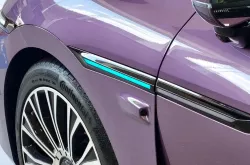
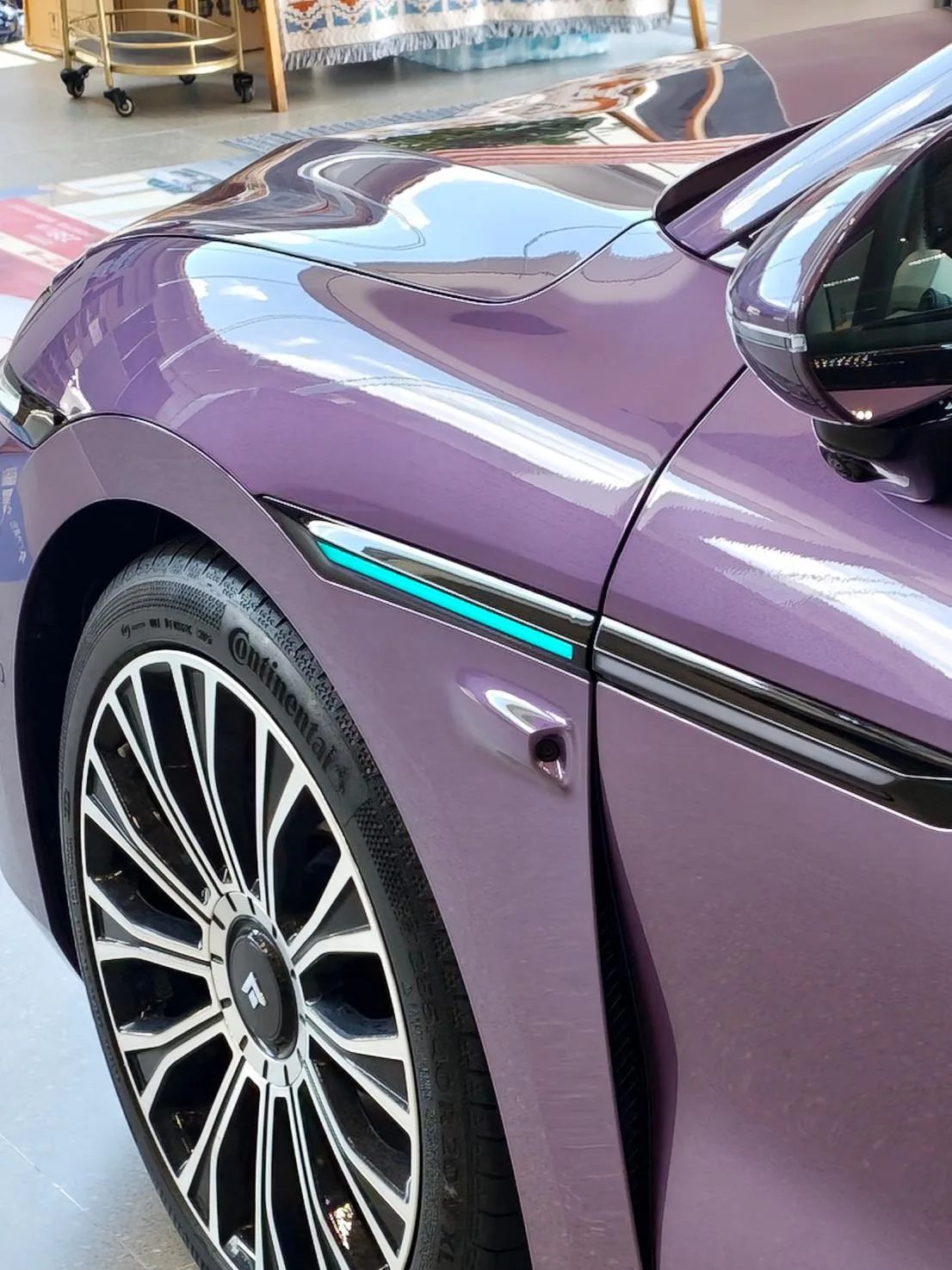
Blue lights, commonly used in models with Navigation on Autopilot (NOA) functionality, were previously unregulated, leading to inconsistent designs and safety hazards.
(Image Source: Dianchetong)
The new standard designates this light as the 'Autonomous Driving System Indicator Light' or 'ADS Indicator Light,' limiting its installation to models with Level 3 or higher autonomous driving functionality. It also specifies the light's color, changing it from light blue to blue-green, akin to the turquoise used by autonomous vehicles in the US and Europe.
Under the new standard, existing models with Level 2 NOA may theoretically lose blue light functionality, though regulations on existing models' continued use are unclear.
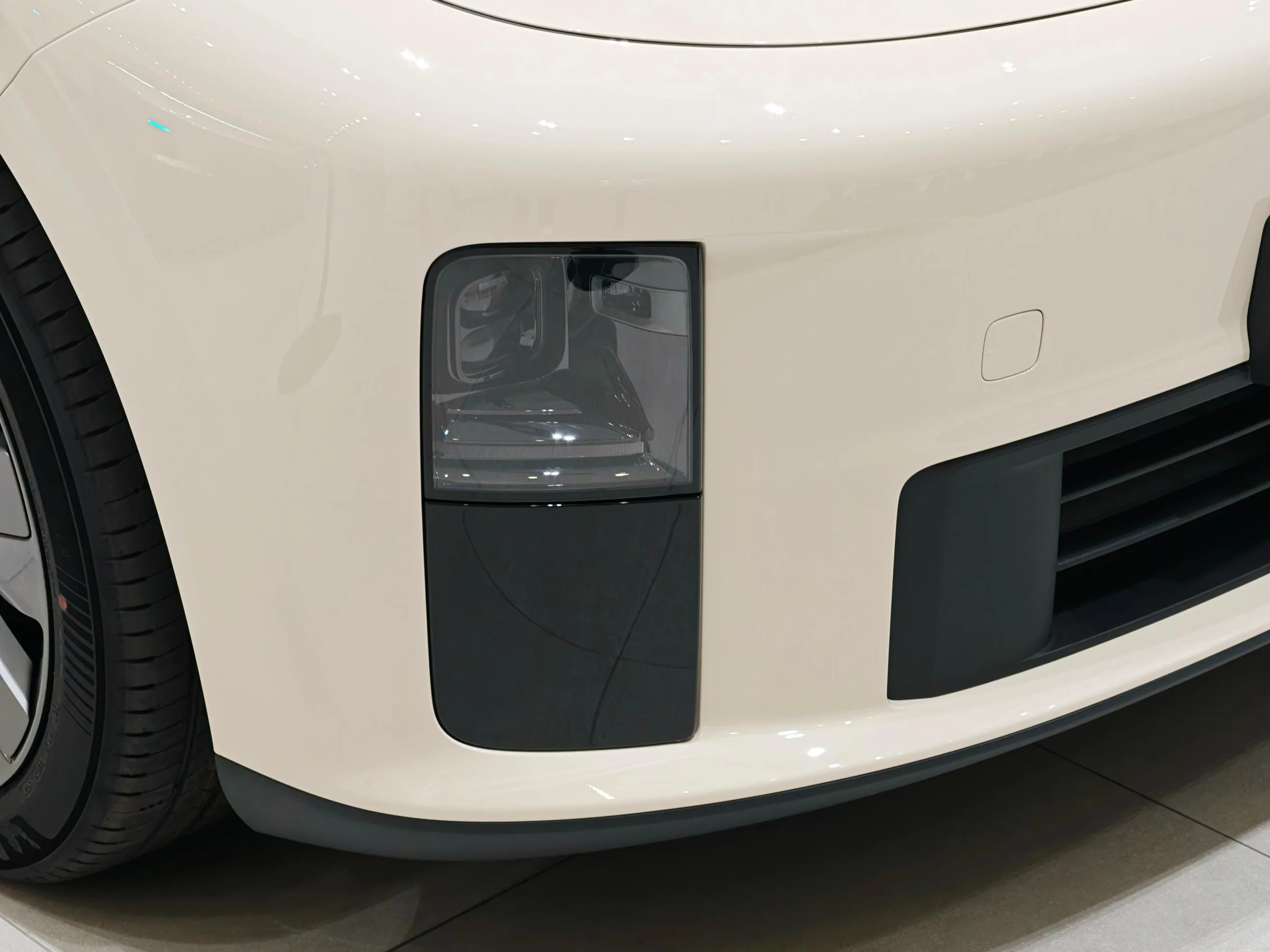
Notably, some automakers have already proactively removed blue light functionality from new models, exemplified by the 2026 Li Auto i6, set to launch this month.
(Image Source: Dianchetong)
Besides blue lights, the new lighting standard also regulates other lighting details, prohibiting text displays on headlights and preventing the formation of human or animal faces or other anthropomorphic graphics, thus restricting customizable light screen styles.
Furthermore, vehicle lighting control has been further standardized, prohibiting voice and gesture controls for lights and preventing the mixing of turn signals and reverse lights with brake lights and rear fog lights.
These regulations address current or past industry phenomena, such as dot-matrix light screens supporting text or emoji displays and voice-triggered headlight shutdowns. The new standard fills previously unregulated gaps, providing clear rules and preventing 'wild growth'.
The other document, the 'Draft for Comments on Notice on Further Strengthening the Management of Innovative Design, R&D, and Testing Verification of Automotive Products,' regulates two major aspects: innovative vehicle designs and the phenomenon of 'quick-built cars'.
Regarding innovative design regulations, they mainly involve adding technical parameters and strengthening safety assessments.
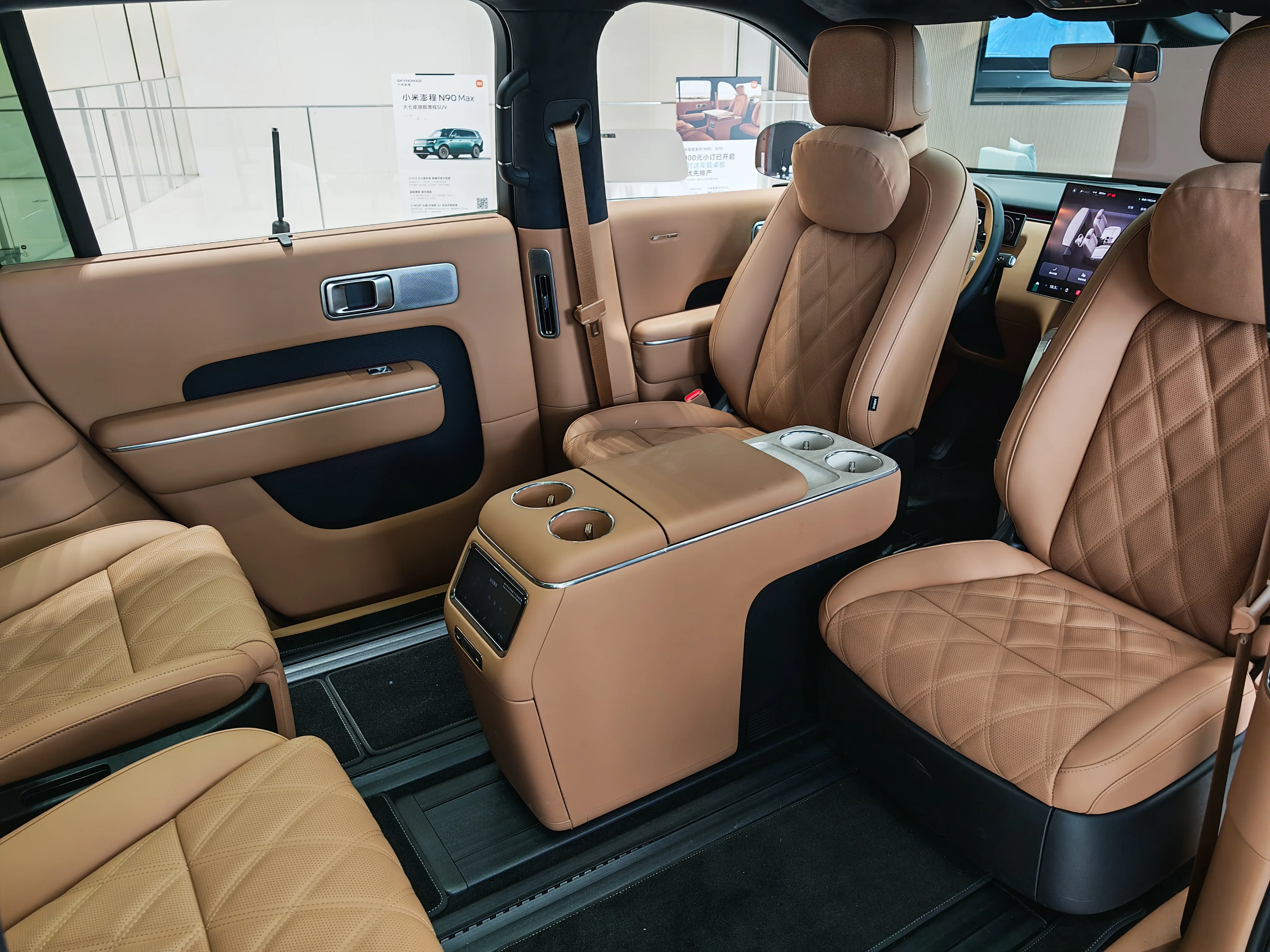
Adding technical parameters requires companies to report relevant parameters for R&D, testing, and verification of configurations like hidden door handles and virtual controls during the declaration process, incorporating them into MIIT's access and production consistency management. Strengthening safety assessments involves proposing specific requirements for innovative designs like irregular steering wheels, urging companies to conduct comprehensive assessments.
(Image Source: Dianchetong)
Currently, this regulation mostly requires automakers to conduct relevant tests and proactively declare certain new vehicle features without outright banning their use. For example, screen-based gear shifting and irregular steering wheels, criticized by consumers, can still be used after passing tests.
However, for features directly related to personal safety, like power suction doors, the regulation imposes clear restrictions, such as requiring anti-pinch functionality and prohibiting use while the vehicle is in motion, to better protect occupant safety.
Dianchetong (ID: dianchetong233) believes that the starting point of this notice regarding innovative design regulations is to protect personal safety rather than restrict technological innovations. As long as automakers can prove a feature's safety, it can pass access requirements and be included in commercially available models. Features innovating for the sake of innovation without considering driving safety will be excluded by the new regulations.
Another aspect concerns testing and verification regulations. This notice upgrades multiple requirements to mandatory ones, stipulating that companies' reliability verification must cover at least 30,000 kilometers, environmental adaptability verification cycles must be no less than one year, and must include 'two winters and one summer' testing.
This specifically addresses the 'quick-built cars' phenomenon, closing loopholes where some automakers, seeking speed, lack real-world testing, leading to undetected potential issues endangering driving safety.
These two documents reflect various phenomena emerging in recent years as the Chinese automotive industry has experienced rapid development.
Positively, these phenomena have driven technological progress and enhanced industry vitality, propelling Chinese automobiles into a new development stage.
Negatively, the industry's rapid development has led to intense competition and excessive innovation. Some innovations, aimed at adding selling points or creating hype, fail to address user pain points, contribute little to industry development, and even compromise safety. The introduction of relevant regulations aims to restrict these pseudo-innovations, reduce their survival space, and allow genuine technological innovations to flourish.
Although these new regulations may limit automakers' imaginative creativity in the short term, leading to more conservative vehicle designs, ensuring occupant and road traffic safety takes precedence over design diversity.
Why Are These Two New Regulations Being Released Now?
Many may wonder why these regulations are being released now rather than when automakers first introduced these new technologies.
From Dianchetong's (ID: dianchetong233) perspective, the regulatory authorities' decision to adjust standards or issue notices at this time is based on practical considerations.
Firstly, there is always a time lag between technology's introduction, application, and impact. Imposing conclusions and restrictions at the introduction stage may stifle potentially promising technologies and dampen industry innovation enthusiasm.
Therefore, the automotive industry currently adopts an approach of allowing orderly development first, then addressing non-compliant behaviors later. This maintains the industry's innovative atmosphere while restricting unreasonable and non-standardized intense competition, keeping the industry generally orderly and vibrant.
On the other hand, the industry's initial development peak has subsided, with monthly sales in 2026 showing a noticeable decline compared to the same period in 2025. Regulating the industry during this slowdown phase is more acceptable to enterprises, helping to avoid adverse effects on the regulatory process.
Lastly, there is the impact on overseas expansion. Currently, major automotive brands are engaging in overseas business, and the quality of vehicles sold abroad directly affects the global reputation of the Chinese automotive industry.
If domestic automakers release models with impractical features and inadequate verification in overseas markets, leading to concentrated problems, it will severely damage the reputation of Chinese automobiles abroad and potentially earn them a label of 'cheap but low-quality,' repeating the mistakes of Chinese motorcycles' overseas expansion in Southeast Asia and significantly impacting the globalization process of the Chinese automotive industry and related enterprises' overseas operations.
Therefore, the regulatory authorities' decision to release relevant regulations at this time minimizes interference with the industry's overall innovative atmosphere while better regulating automakers' behaviors, benefiting consumers, automakers, and the industry as a whole.
What Is the Next Step for China's Automotive Industry?
Besides regulating vehicle configurations and requiring stricter testing from enterprises, regulatory authorities have also been continuously following up on vehicle quality and safety aspects this year, gradually guiding the industry toward healthier development.
For example, in August this year, four departments jointly launched a year-long special action to improve vehicle production consistency and quality, focusing on addressing production consistency, reliability, durability, and testing verification of new technologies.
From the regulatory authorities' series of actions, coupled with central media reports and criticisms of 'quick-built cars' and other automotive industry disorders, it is evident that China's automotive industry is transitioning from relatively extensive and laissez-faire development in previous years to a more regulated and orderly development model.
Looking back at the development of the new energy vehicle industry in recent years, Dianchetong (ID: dianchetong233) believes that China has forged a unique and leading industrial development path. However, this also means that China cannot rely on the experiences of other countries in automotive industry development and must continuously explore and learn through its own efforts.
At this stage, China's automotive industry has largely completed its electrification transformation and is on the verge of further advancing into the realm of intelligence. Self-renewal at this juncture will promote further industry development in the next stage.
Although some brands may be eliminated or exit the market due to quality or competitiveness issues during this phase, the remaining enterprises will likely have relatively more reliable technology and better quality, driving the industry into a new stage of high-quality development.
Thus, the next direction for China's automotive industry is clear: continue to improve quality and technology, consolidate the technological and product advantages formed at the current stage, and continuously address corresponding shortcomings to achieve further overall development of the automotive industry.
One wonders if various automakers are prepared for this.
Source: Leikeji
Images in this article are from the 123RF licensed image library. Source: Leikeji
-
![]()
A Whopping 20 Million Yuan Investment! Yubo Optics Eyes Shangrao with Annual Production of 6 Million Lens Sets
-
![]()
Single Quarter Yields Profit! SeeYA Technology’s Q3 2026 Revenue Skyrockets 409% Year-on-Year
-
![]()
NVIDIA GTC Berlin: Setting the Rules for the Next Round of AI Competition in Advance?
-
![]()
The Curtain Falls on the 'Wild Growth' Phase in the Automotive Sector: Blue Light Era Ends, Speedy Car Production Faces Ban?
-
![]()
Huawei AI Glasses Undergo Functional Enhancement: Now Support Scan-to-Pay in Parking Lots and Head Motion-Controlled Payments
-
BMW Faces Surge of 40,000 Employees Seeking Resignation: Maximum Compensation Hits €4.87 Million, Overloading Internal Systems
-
Anthropic Unveils New Governance Framework: Redefining Capital Rules for AI Companies
-
Flying Complaints and Instant Sellouts: Why the iPhone Continues to Fly Off the Shelves Despite Criticism