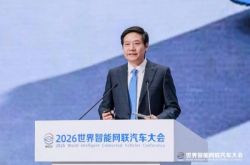
Post-National Day Sales of Xiaomi Revealed, Netizens: Pengcheng's Sales Take a Dive!
 10/23 2026
 443
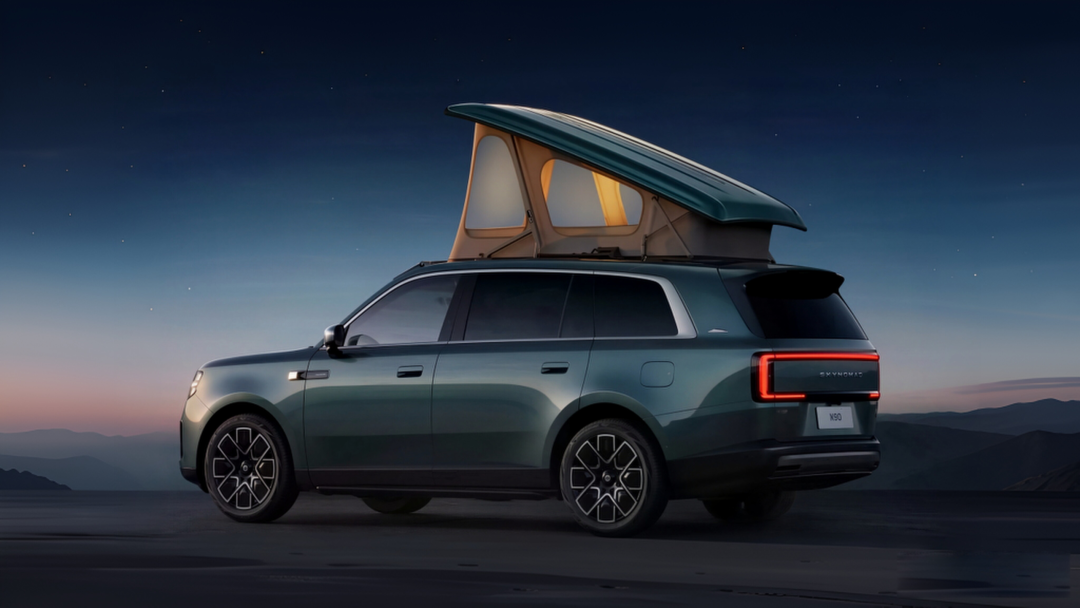
The sales performance in the first week following the National Day holiday has become a focal point, as it provides a more accurate reflection of daily sales compared to the bustling National Day promotion week.
Blogger "New Energy Exploration" has released the sales statistics for Week 42 (October 12-18), revealing that Xiaomi Auto received 8,350 new orders this week, marking a 41% month-over-month (MoM) decline from the previous week's 14,200 orders. This news has sparked a heated online debate, with many netizens asserting that Pengcheng's sales have collapsed, and some even estimating declines could reach as high as 70-80%.
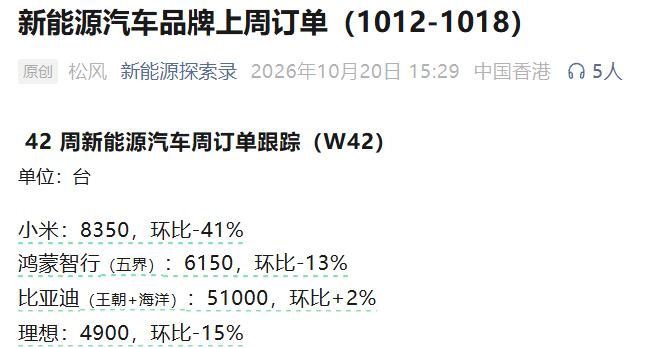
Image Source: New Energy Exploration 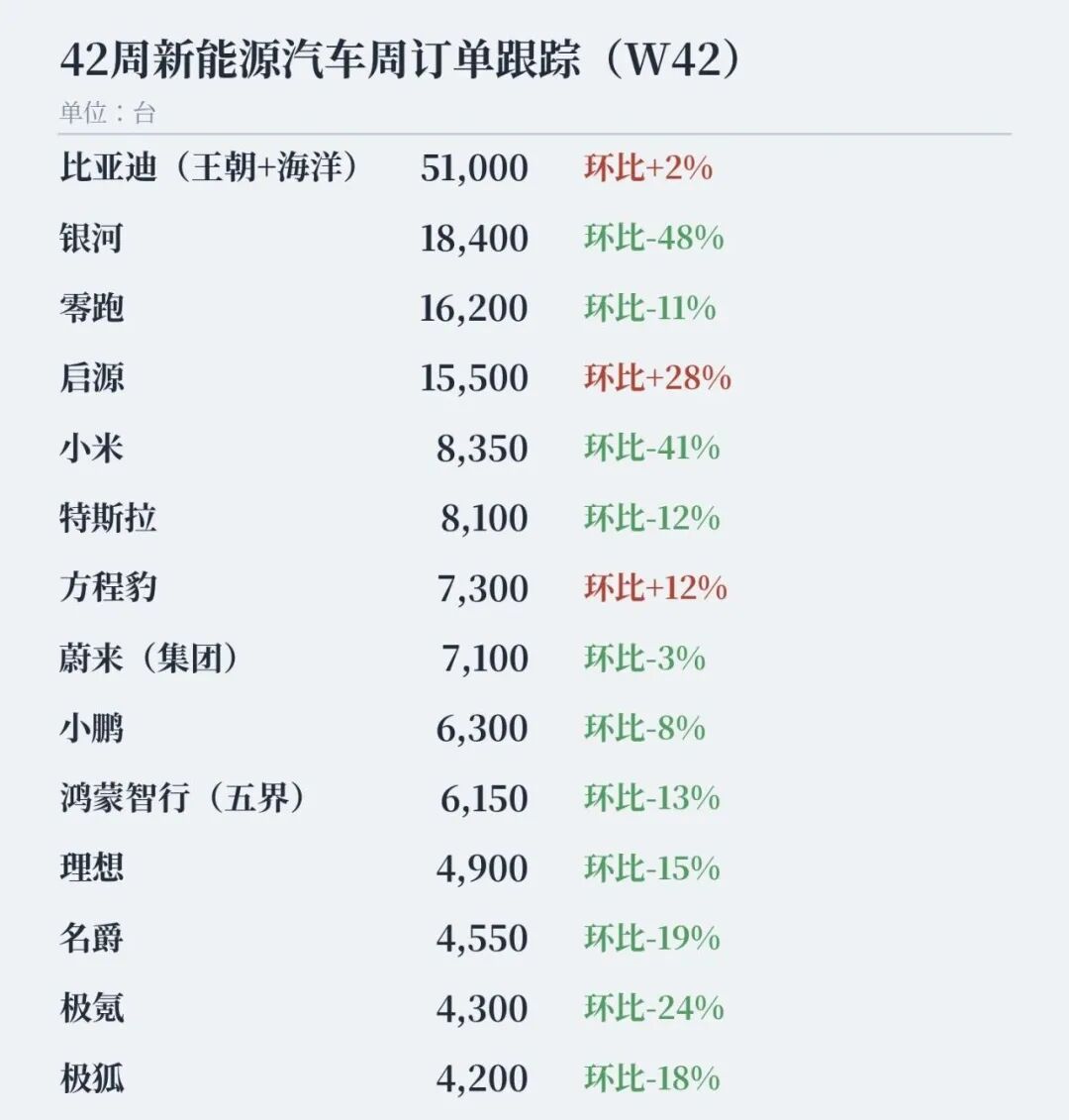 Image Source: Weibo
Let's set the record straight from the outset: These figures are estimated orders tracked by a third-party blogger and do not represent official Xiaomi or China Passenger Car Association (CPCA) delivery data. Treat them as market rumors rather than definitive registration numbers.
Is a 41% MoM Decline Indicative of Weakness or Waning Hype?
To be honest, a collective drop in orders during the first post-holiday week was largely anticipated. Prior to the holiday, automakers rolled out a plethora of incentives and benefits, effectively harvesting a wave of buyers early on. After the break, people returned to work, fewer visited dealerships, and the overall market slowed down—this trend is not unique to Xiaomi.
However, a 41% decline is hard to overlook.
The primary reason is straightforward: The initial surge in orders following Pengcheng's launch has largely subsided. Over the past five weeks, excluding the launch week's frenzy, Xiaomi's orders have stabilized around 16,000. When Pengcheng N70 and N90 debuted, hype reached its peak, with 70,000 first-month lock-ins, including 55,000 in the launch week and 40,000 for Pengcheng alone. A wave of Xiaomi enthusiasts eagerly awaiting new models placed orders early, effectively depleting demand.
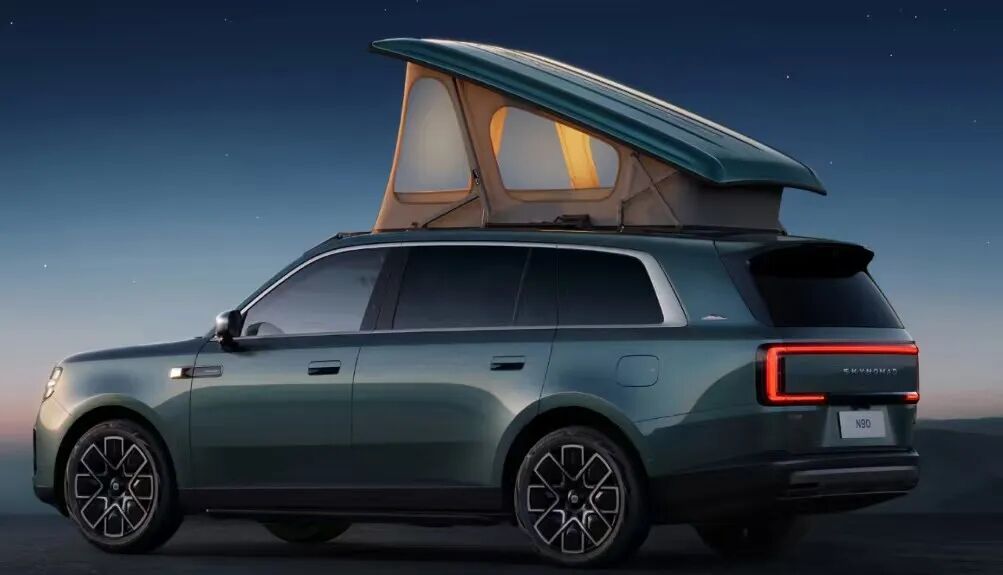
Image Source: Weibo
Roughly calculated, Pengcheng likely accounted for 3,000-4,000 orders this week, with SU7 and YU7 combined at around 4,000. Previously, SU7 and YU7 consistently hit 7,000-8,000 weekly orders, making the current drop quite stark. Interestingly, Pengcheng—a home-focused extended-range SUV—was designed to complement the performance-oriented SU7 and YU7, but its hype inadvertently diverted potential pure-electric customers.
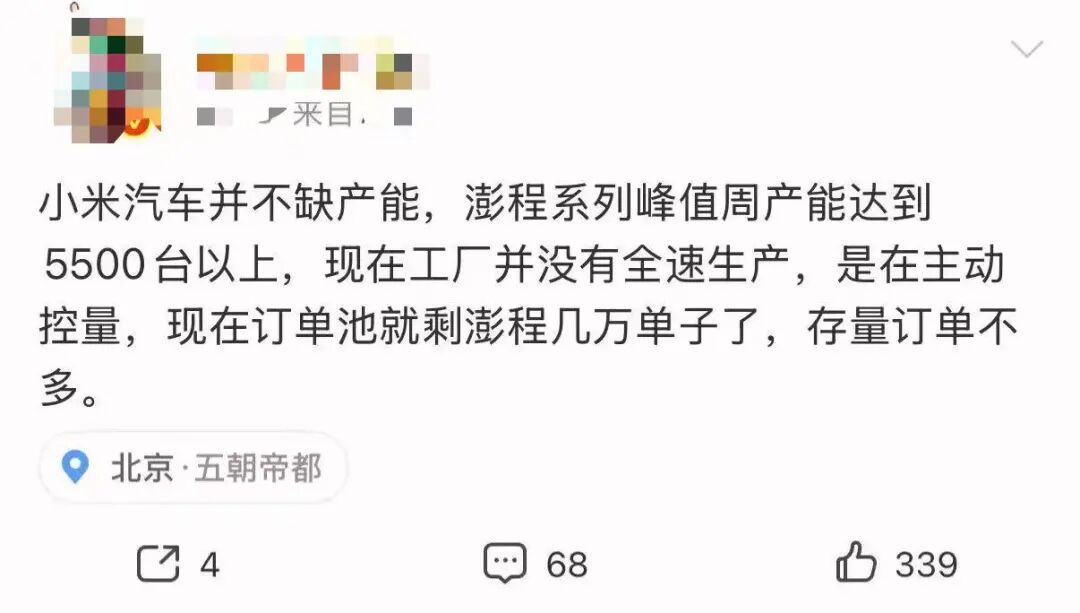
Image Source: Weibo
Production tells another story: Pengcheng N70 and N90 share a production line capable of over 5,500 units weekly, but the factory has not ramped up to full capacity, instead opting to control output. Excluding the 12,444 units delivered in September, at least 60,000 orders remain pending, with Xiaomi aiming to clear them by year-end. Rational netizens have offered perspective: "While 8,350 is far below the recent 17,000, it indicates that Pengcheng depleted much of its inventory during National Day and is now in a production ramp-up and delivery transition phase." In other words, the issue is not a lack of orders but delayed deliveries of locked-in vehicles.
Many focus on the total order decline, overlooking a crucial detail: The growing share of Pengcheng Explorer Edition orders. In northwest regions, high-end Explorer models account for nearly 30% of orders.
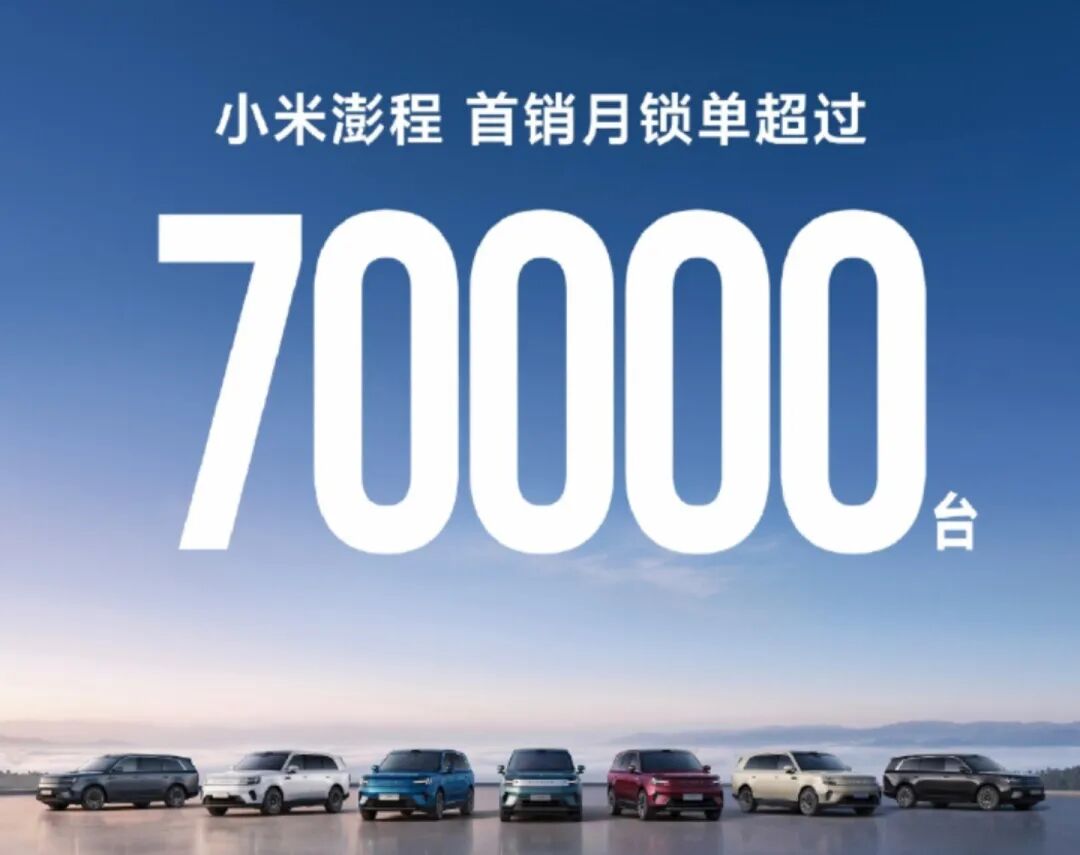
Image Source: Weibo
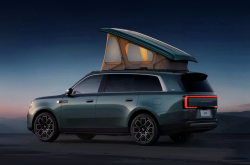
This aspect is far more significant than weekly order numbers. Pengcheng's average transaction price nears 300,000 yuan, boasting unique selling points like a "living room mode" and factory-installed roof tents, targeting families interested in long-distance travel and corporate buyers. As one netizen noted: "This means buyers aren't chasing bargains—they're willing to pay 300,000 yuan for a high-end model. This order structure matters more for Xiaomi's brand uplift than hitting 10,000-20,000 weekly orders." Those opting for high-end versions are not impulse buyers lured by small discounts but genuine product advocates. For Xiaomi Auto, which aims to move upmarket, a healthier order mix and higher average prices outweigh short-term order spikes.
Market Fragmentation: Some Retreat, Others Rise
Zooming out to the broader new energy vehicle (NEV) sector reveals a fragmented market—some brands are cooling off, while others are thriving.
BYD's Dynasty + Ocean series remain market anchors, with 51,000 orders this week, marking a 2% MoM increase. The new Han model drove demand, with mid-tier variants accounting for approximately 65%. Many shoppers who compared options concluded: "After looking around, I settled on Fangchengbao 5, Tengshi Z9 GT, or BYD Han—BYD's ecosystem is unbeatable." Longtime fans reiterated: "It's still BYD, selling millions annually."
Qiyuan was a surprise this week, with 15,500 orders, marking a 28% MoM increase after a steep drop last week. The Q06 and refreshed Q05 continue to perform well in the 100,000-150,000 yuan mass-market segment, where affordability remains a key selling point.
Fangchengbao emerged as a dark horse in the off-road niche, with 7,300 orders, marking a 12% increase. The Titan 7 maintained hype, with production nearing 28,000 units (half plug-in hybrid, half pure electric), facing limited competition.
Conversely, several brands struggled. Yinhe's orders halved to 18,400, as initial excitement for the Zhanjian 700 faded and model transitions sparked a wait-and-see sentiment among consumers. Leapmotor led NEV startups with 16,200 orders but fell 11% MoM. Zeekr, Arcfox, and MG also experienced declines, as entry-level EV buyers, lacking brand loyalty, flock to the best deals—stop incentives, and orders collapse.
Other top NEV startups saw milder fluctuations: NIO Group held steady at 7,100 orders, down just 3%, with its Lexee and Firefly sub-brands cushioning the fall—the most stable among the "NIO, XPeng, Li Auto" trio. XPeng had 6,300 orders, down 8%; Tesla China saw 8,100, down 12%, typical after quarter-end sales pushes. HarmonyOS Intelligent Mobility (Aito) had 6,150, down 13%, with the Aito M6 driving nearly half its orders. Li Auto reported 4,900, down 15%, as its L series nears end-of-cycle and pure EVs ramp up, forcing it to protect its base.
The key takeaway: Differentiated products resist declines better; those relying solely on price cuts see orders vanish once incentives end. Many pragmatic netizens shrugged: "Quality matters most. Short-term orders don't build lasting success."
Year-End Crunch Begins: Pengcheng's Real Test Awaits
The industry now awaits Xiaomi's October delivery results with bated breath.
Pengcheng's September launch propelled Xiaomi's monthly deliveries past 40,000, with expectations of sustaining 40,000+ in October. Optimistically, if Pengcheng hits 20,000 monthly and SU7/YU7 maintain 30,000 pure-electric deliveries, Xiaomi could reach a new monthly high of 50,000.
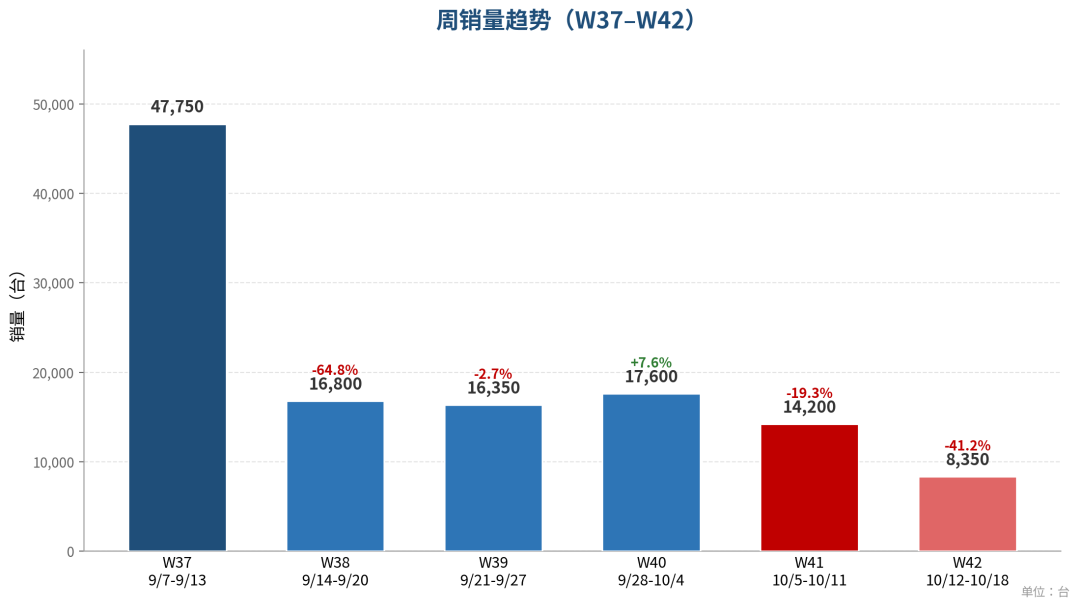 Image Source: Weibo
However, achieving this won't be easy, with hurdles in production scaling, order conversion, and delivery timing. As Pengcheng delivers en masse and more vehicles hit the roads, owner feedback will shape its reputation. Whether it escapes the "launch hype, then fade" cycle and retains family and corporate buyers remains uncertain. Many potential buyers are awaiting new incentive policies from Xiaomi.
No automaker dominates forever. A post-holiday order dip doesn't seal fates. This decline feels more like a hype purge, filtering out impulse buyers and leaving those genuinely willing to wait and value the product.
After the "Golden September," November and December are critical for all automakers. Uncertainty around purchase tax policies will drive many buyers to act by year-end. The next two months' product strategies, incentives, and delivery speeds will determine who closes the year strongly.
For Pengcheng, this week's order drop is merely a blip. The real challenge isn't the initial lock-in rush but sustaining 20,000 monthly sales after the hype fades.
So, what do you think? Is Pengcheng's order decline a sign of weakness or a natural post-launch correction? Share your thoughts in the comments.
Disclaimer: This is financial commentary on major companies and does not constitute investment advice. All corporate data and regulatory events mentioned are sourced from public information and are for reference only; refer to official releases for accurate details. Images sourced online; contact for copyright removal if needed.
-
![]()
Post-National Day Sales of Xiaomi Revealed, Netizens: Pengcheng's Sales Take a Dive!
-
![]()
Understanding NVIDIA GTC Berlin at a Glance: AI in Manufacturing, Physical AI, and Three Key Strategies
-
![]()
Final Verdict: Can Battery Swapping Become the Mainstream Energy Replenishment Approach for Electric Vehicles?
-
With a 350,000-Yuan Budget for a Luxury Off-Road SUV, Is the 2027 Tank 500 a Wise Purchase?
-
![]()
Why Are Interpersonal Relationships Emerging as a Business Superpower in the AI Era?
-
![]()
Hot Topic | Microsoft's 2nm Self-Developed Chip Hits Third Iteration, Shifting Inference Workloads Away from NVIDIA
-
DeepSeek Inches Closer to the Largest IPO Financing in Chinese History
-
![]()
Lei Jun Reiterates the Centrality of Safety: In the Auto Industry, Safety Underpins All Else