Japanese Car Companies' Local Alliance Faces Disintegration Amid Emulation of China's Rapid Development
 10/23 2026
 459
Lead
Introduction
The once rock-solid Japanese automotive alliance is now teetering on the brink of collapse.
For years, Japanese automakers have maintained intricate relationships through complex capital ties, the "keiretsu" supply chain model, and elaborate alliances.
In Japan's traditional automotive landscape, this collaborative yet competitive ecosystem has been divided into two main factions. One is the extensive network centered around Toyota, which encompasses brands like Subaru, Mazda, and Suzuki through shareholdings. The other is the alliance formed by Nissan, Mitsubishi, and later joined by Honda.
Moreover, propelled by the strong initiative of the Japan Automobile Manufacturers Association (JAMA), the seven major traditional Japanese automakers are striving for comprehensive standardization of non-competitive components. They aim to dismantle past barriers and jointly develop and procure generic parts, such as wiring harnesses, hoses, and fasteners, which are invisible to consumers, to counter external challenges.
However, amid the global automotive industry's transformation, particularly the "China Speed" that is reshaping the global automotive competitive landscape, this long-standing traditional structure is undergoing a dramatic evolution. The once-invincible local alliance of Japanese automakers in the international market is now under unprecedented pressure to disintegrate.
Last year, Chinese automakers overtook their Japanese counterparts in global car sales, becoming the world's largest for the first time. A key factor behind this achievement is the rapid pace at which Chinese automakers develop new models, giving them a significant competitive edge. They can complete the research and development of a new model in just two to three years, whereas Japanese automakers typically require three to four years.
Consequently, some analysts argue that reducing the development time for new models has become a top priority for Japanese automakers. Most crucially, the shortened intelligent iteration cycle of Chinese electric vehicles is compelling traditional Japanese automakers to break away from their previously closed and sluggish development models and even start learning in reverse.
01 Catching Up by Emulating China's Rapid Development
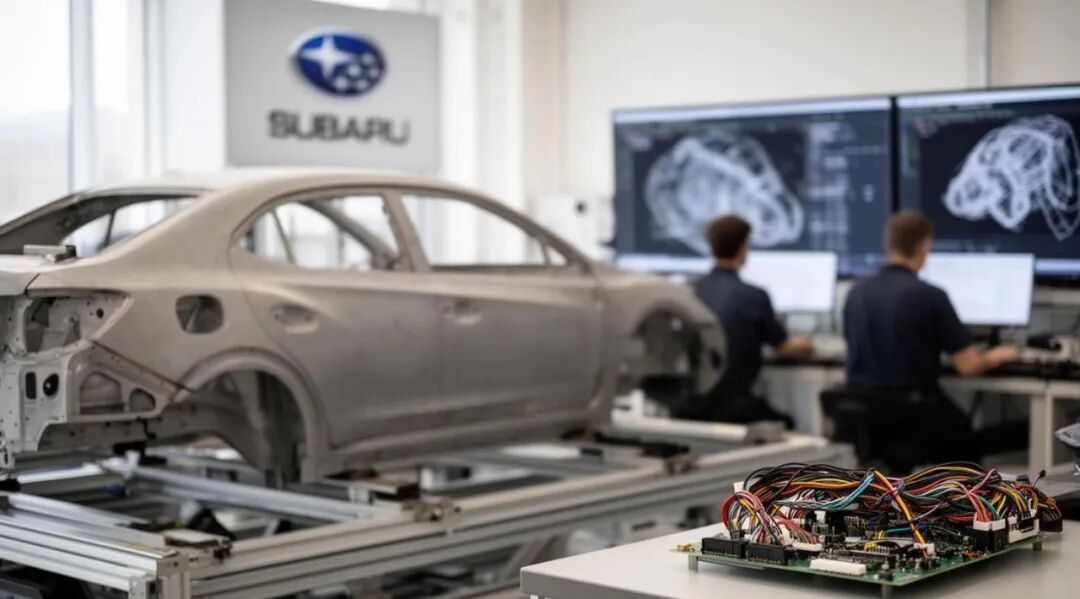
Recently, Subaru unveiled its plan to build electric vehicle prototypes in half the time to meet the challenges of the Chinese market. It's noteworthy that Subaru has no production base in China and sold only 2,000 vehicles in the country during the fiscal year ending March 31. Nevertheless, Subaru views China's faster and more cost-effective planning and production methods as a new global benchmark.
In October this year, at a test track north of Tokyo, Subaru showcased a test vehicle of its next-generation electric vehicle prototype, featuring an entirely new electric architecture. This move signifies Subaru's intention to break free from its reliance on Toyota and strive to match the ultra-fast research and development speed of its Chinese competitors.
Thanks to proactive digital modeling, overlapping planning phases, and early coordination with suppliers, Subaru's executive officer of engineering stated at an October 18 press conference that these technologies could halve the time required for Subaru to develop and validate vehicles and reduce the overall time to market by up to 40%.
Coincidentally, in September this year, Suzuki Motor Corporation announced plans to halve the development time for new models to keep pace with the rapidly evolving automotive industry led by China. For vehicles using standardized platforms, Suzuki aims to shorten the development cycle from the previous 40 to 48 months to 24 months by 2030.
In Japan, Suzuki has long been a dominant player in the compact car segment. With increasingly fierce competition in this market, including BYD's entry this year, Suzuki describes its models as "the perfect electric vehicles that fully consider how customers use cars in their daily lives and the challenges they face, which can only be understood through Suzuki's expertise in manufacturing and improving compact cars."
Suzuki's leaders explained that the company would shift its vehicle development approach from a sequential process to synchronous parallel development, with planning, design, production, quality, and procurement working towards the same goal from the outset. "This is not just about improving efficiency or reducing costs. When we consider what Japan needs to do to keep up with Chinese automakers, I believe we need to take measures to accelerate our pace."
Mitsubishi Motors is also following suit. Recently, the company has increased the number of models developed independently of Nissan. The next-generation Outlander SUV, expected to hit the market around 2028, will use its self-developed platform. The Outlander was once the flagship model of their collaboration, sharing most of its major components with Nissan, but Mitsubishi Motors ultimately believes that independent development can bring higher profitability.
Since Nissan's investment, Mitsubishi Motors' strategy has often been aligned with Nissan's. However, Nissan's deteriorating financial situation has reduced its ability to provide support. At Mitsubishi Motors' annual shareholders' meeting in June, insiders were appointed as chairman and president for the first time, indicating that the relationship between the two companies is gradually shifting from a parent-subsidiary model to a loose cooperative relationship while pursuing their independent development.
In fact, in August, Honda also announced that it had begun using artificial intelligence to aid in car body design. Honda's policy is to halve R&D costs, time, and man-hours by 2025. Its goal is to halve the development cycle for minor facelift models starting from the 2026 fiscal year and for full-model change vehicles starting from 2028.
Nissan, by leveraging the agile development experience of Dongfeng Nissan and utilizing AI technology and digital simulation to optimize testing and design phases, plans to significantly shorten the development cycle of its mainstream models from 50 months to 30 months. The development cycle of its latest-generation flagship model, Skyline, has been compressed to just 26 months.
It is evident that over the past few decades, Japanese automakers have relied on close internal alliances to achieve extremely high quality control and profit monopolies. However, in the face of China's rapid development, this closed alliance centered on slow and meticulous work is disintegrating from within. Some argue that the stable alliance that Japanese automakers have long taken pride in is turning into a "Nokia moment," hindering their survival in the face of rapid iteration in the intelligent electric era.
02 China's Rapid Development is Just the Tip of the Iceberg
Just two decades ago, Chinese cars were primarily seen as cheap imitations of European or Japanese vehicles. Domestic manufacturers lagged far behind global automakers in terms of technology, design, safety, and quality, while Volkswagen, General Motors, Toyota, and other foreign companies dominated the Chinese market.
Over the years, as global automakers established joint ventures with domestic local partners, for Volkswagen, General Motors, and other automakers, this was the price of entering a vast market, but at the same time, China gained manufacturing experience, trained engineers, suppliers, and technology.
It's important to note that European and Japanese companies have accumulated decades of experience in producing gasoline and diesel engines. Toyota, Honda, Mercedes-Benz, BMW, and Volkswagen possess advanced technologies, patents, manufacturing processes, and vast supplier networks that other companies find difficult to match. However, the real turning point came when the world began to shift from internal combustion engine vehicles to electric vehicles.
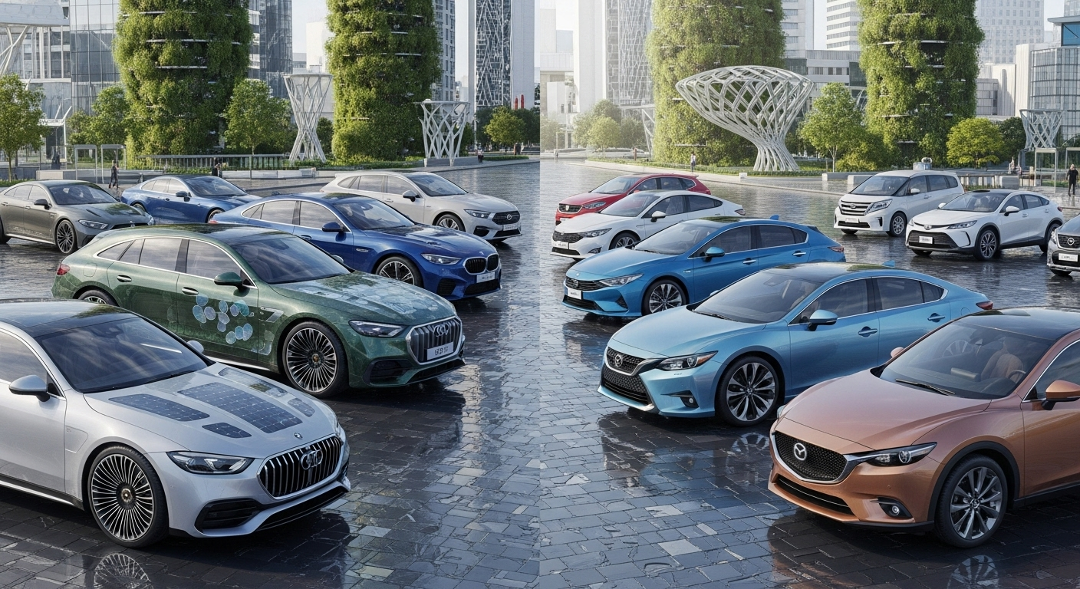
Electric vehicles have to some extent offset this advantage, as they no longer contain complex gasoline engines, traditional transmissions, or a large number of mechanical components. Instead, batteries, electric motors, power electronics, software, and vehicle control systems have become key components. China has begun to build a new automotive industry based on these technologies and has already formed a vast ecosystem.
Automobile, battery, display, electronic component, sensor, motor, metal part, and software factories all operate within the same production environment. Automakers can almost instantly find suppliers for any components domestically, and often even within the same industrial zone. This not only saves money but also significantly accelerates the development of new models.
At the same time, Chinese companies are no longer limited to exporting complete vehicles but have begun to build factories overseas. This allows them to circumvent some tariffs, reduce logistics costs, create local jobs, and position cars as products specifically produced for particular markets rather than as imports from China.
Southeast Asia has become the largest region for Chinese automakers to build factories overseas. According to the International Energy Agency's forecast, by 2025, the region will account for more than half of China's total overseas automotive production capacity. And this is just the beginning. China's top ten automakers have announced a goal to sell more than 7 million vehicles to overseas markets by 2026, nearly double the previous year's plan.
Some argue that the challenge posed by Chinese automakers to traditional automakers is structural and systemic, not just product-based. Simply launching another electric vehicle will not suffice because traditional automakers operate in a fundamentally different business model from their Chinese competitors.
This year, we can witness a historic reversal in the joint ventures of Japanese automakers such as Honda, Toyota, Nissan, and Mazda in China. They have chosen to fully delegate product definition, intelligent platform, and component procurement rights to local Chinese teams or partners, with the Japanese headquarters retaining only brand and quality control.
In fact, almost all foreign automakers in China are facing the same dilemma. Due to their lag in software, batteries, and vehicle platforms, foreign brands are turning to Chinese partners to stay in the market. However, even with access to Chinese technology, there is no guarantee that they can match local competitors in terms of speed, execution, or consumer appeal.
This also illustrates that launching new electric vehicle models is merely putting a new shell on an old business model. China's automotive expansion is forcing traditional automakers to completely abandon their old operating models. They must not only change their product lines but also be compelled to transform into software companies, energy suppliers, and vertically integrated technology manufacturers to remain competitive.
Editor in Charge: Yang Jing Editor: He Zengrong

THE END
-
![]()
Japanese Car Companies' Local Alliance Faces Disintegration Amid Emulation of China's Rapid Development
-
![]()
When Each Car Brings Only 3,000 Yuan in Profit, How Long Can Upstream Auto Parts Suppliers Hold On?
-
![]()
Net Profit Tumbles! Musk Persists in Investing, Tesla Faces a ‘Crucial Challenge’ in 2027
-
![]()
Post-National Day Sales of Xiaomi Revealed, Netizens: Pengcheng's Sales Take a Dive!
-
![]()
Understanding NVIDIA GTC Berlin at a Glance: AI in Manufacturing, Physical AI, and Three Key Strategies
-
![]()
Final Verdict: Can Battery Swapping Become the Mainstream Energy Replenishment Approach for Electric Vehicles?
-
With a 350,000-Yuan Budget for a Luxury Off-Road SUV, Is the 2027 Tank 500 a Wise Purchase?
-
![]()
Why Are Interpersonal Relationships Emerging as a Business Superpower in the AI Era?