Young People Embrace 'Bed Car' Self-Drive Adventures
 10/29 2026
 338
When Cars Transform into Life's Extensions
As autumn arrives, the northwest winds of China grow cooler. Following the National Day holiday, the peak tourist season along the Gansu-Qinghai Loop draws to a close.
A homestay owner along this scenic route observed a decline in revenue compared to the previous year during the National Day holiday.
He noted a new trend: many young self-drive travelers are ditching advance hotel bookings. As dusk falls, they park their cars in service areas, recline the rear seats, lay out inflatable mattresses, activate the parking air conditioning, and settle in for the night. The owner quipped, half in jest, "Our biggest rival used to be the neighboring homestay. Now, it's smart electric vehicles." Indeed, it wasn't a second-tier brand that overtook top-selling instant noodles, but rather food delivery services.
Today, this 'bed car' self-drive lifestyle is quietly gaining popularity along popular domestic self-drive routes. Shortly after the National Day holiday, numerous individuals shared their bed car travel expenses online. Those who opt to sleep in their cars during self-drive trips have their reasons: during holidays, hotels at popular destinations are scarce, prices skyrocket, and accommodation quality varies. Rather than vying for overpriced rooms, resting in the car saves thousands of yuan in accommodation fees per long-distance trip and eliminates the stress of booking.
Converting a car into a temporary shelter was nearly impossible during the era of gasoline-powered vehicles. Besides the fact that most gasoline cars can't transform into a bed with a single click, running the engine at idle speed overnight with the air conditioning or heating on produces large amounts of carbon monoxide, posing a lethal risk in confined spaces. Even if one could tolerate the temperature extremes and turn off the engine overnight, there's still a risk of oxygen deprivation while sleeping in the car.
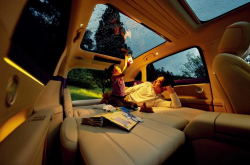
Today, many new energy vehicles feature a 'one-click bed' function, allowing the air conditioning to run continuously while parked. Some models even offer camping mode and external power discharge capabilities. Transportation no longer merely conveys people and luggage to distant places but has evolved into a mobile space for short stays and rest.
This new travel trend, initiated by self-drive enthusiasts, has spurred the launch of more new models suitable for family outings, camping, and off-roading. Vehicle-mounted lifestyle features are rapidly gaining popularity, and continuously evolving smart technologies and new models are taking this trend global.
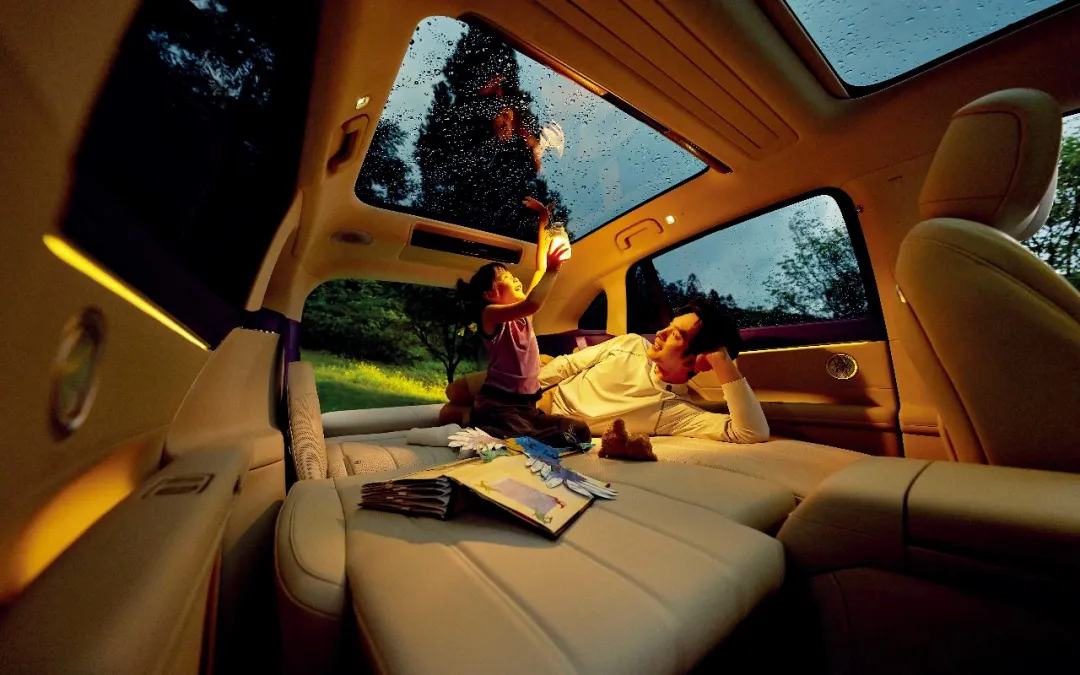
The new energy model, Qijing GX7, boasts a 20-second one-click bed transformation. Photo/Provided by the interviewee
An Extension of Home
Lao Wu, an office worker in Beijing, previously had straightforward criteria for choosing a car: it just needed to get him around and have sufficient space.
That changed when he purchased an additional smart electric vehicle. He then realized that cars are not just transportation tools but can seamlessly integrate into every aspect of family life.
"Since switching to an electric car, we rarely use our gasoline car," Lao Wu said. He has embraced the new experiences of the electric era: remotely activating the air conditioning via his phone before leaving home, avoiding the sweltering cabin after summer sun exposure, and not having to endure freezing seats in winter. During family outings, his children in the rear seats can entertain themselves with the built-in screen, significantly reducing travel burdens.
On weekdays, this electric car serves as his exclusive rest space. Before acquiring this car, he could only nap at his desk, leaving his hands numb and his neck sore. Now, by reclining the seat and closing the windows, the cabin instantly becomes a comfortable personal nap space.
With continuous advancements in smart experiences and accelerating model updates, more consumers' perceptions and demands for cars are transcending the traditional category of transportation tools. In-car refrigerators, large-screen entertainment, and spacious comfortable cabins, once dismissed as marketing gimmicks, are gradually becoming standard competitive features in the mid-to-high-end new energy vehicle market.
Changes in demand have fueled a wave of flagship product launches. Recent frequent releases of models like the XPENG G9L, VOYAH Dreamer 9, Yijing X9, and SAIC Volkswagen ID.ERA 9X indicate that in the automotive industry, 'Series 9' models generally represent the brand's highest configuration and latest technology flagship vehicles. Automakers are striving to transform these large vehicles into comfortable spaces for family travel.
This year's collective focus on 'Series 9' models by automakers also stems from a fundamental commercial logic: hedging against profit pressure from entire vehicle sales and improving profit structures. The ongoing price war in the domestic passenger vehicle market continues to compress per-unit gross margins, with mid-range volume models generally yielding thin profits or even losses, making it difficult to sustain corporate profitability goals through volume alone. 'Series 9' models, positioned higher with higher average selling prices per unit, offer more substantial gross margin potential. He Xiaopeng, Chairman and CEO of XPENG Group, told China Newsweek, "Large models must ensure sufficient profits and also have significant scale potential from a global perspective."
The frequent release of 'Series 9' models also directly reflects the trend of high-end upgrades in automobile consumption. As more users shift from 'necessity-driven purchases' to 'quality-driven upgrades,' high-endization has become the core theme of new automobile consumption. As the second-largest household expenditure after real estate, simply buying a car as a transportation tool may require careful consideration, but when cars gradually become an extension of home, providing the same comfort and convenience as home during family travel, high-end automobiles become another 'necessity.'
Niche Off-Roading Goes Mainstream
Akai, a post-90s, defied his parents' wishes and purchased a new hardcore off-road SUV, a model his parents considered neither comfortable nor 'family-friendly.' However, this car fulfilled his long-standing desire for off-roading and gave him and his family the possibility to venture into the mountains and seas at any time, even though he doesn't have a high frequency of off-roading needs.
In fact, many consumers who choose models with camping and off-roading capabilities, like Akai, do not have frequent opportunities to go off-road. What truly attracts them is the yearning for a relaxed and free lifestyle.
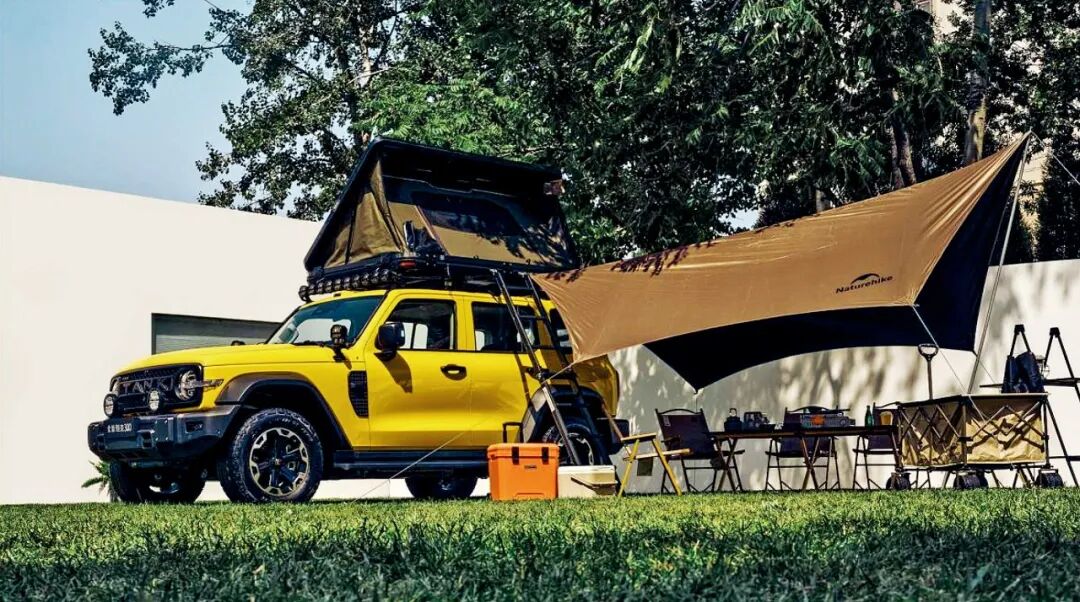
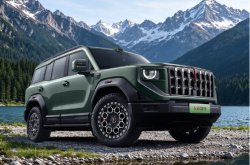
Great Wall Motors' Tank 300 offers an optional factory-installed roof tent. Photo/Provided by the interviewee
"Whether it's new energy off-roading or traditional off-roading, it's inherently a small market," admitted Mu Feng, President of Great Wall Motors. From the usage scenarios of Tank 500 users, over 98% are in urban areas. Some Tank 300 and Tank 500 users have never tried off-roading, not even light off-roading. What consumers truly desire is the off-road lifestyle.
"We need to satisfy consumers' inner desires, not just view these as functional products but as emotional appeal products. Therefore, by leveraging new energy and smart technologies to explore new segments in the off-road category, there will definitely be growth. The more supply, the greater the growth, though not necessarily in direct proportion," Mu Feng said.
Meanwhile, hardcore off-road vehicles are not slackening in their 'hard skills,' with continuous improvements in off-road capabilities. While 'Series 9' urban flagship models are being frequently released, the hardcore off-road segment has seen a batch of new models named '700' hit the market.
These models focus on integrating off-road performance with smart technologies, lowering the barriers to off-roading, allowing even novice users to experience the fun of off-roading. Once considered niche recreational tools, hardcore off-road vehicles are seeing their market positioning rewritten, becoming an incremental segment in the new automobile consumption landscape.
"The Galaxy Warship 700 even has emergency floating capabilities," introduced Li Chuanhai, Vice President of Geely Automobile Group and Dean of Geely Automobile Research Institute.
Once a niche segment, hardcore off-roading is experiencing significant sales growth in its sub-market, gradually going mainstream, thanks to the diversified development of Chinese new energy vehicles and the increasing penetration of smart driver-assistance technologies.
"Chinese off-roading is reshaping the global industry's development trajectory," stated bluntly Zhang Guofu, Deputy General Manager of BAIC Group and Chairman of Beijing Off-Road. "Chinese brands account for 70% of the domestic off-road market, and the global voice in luxury off-roading is shifting toward China."
Global Models Go Overseas
The wave of new product iterations in China has laid a new foundation in product competitiveness for Chinese automobile exports. Today, Chinese high-end new energy vehicles are continuously expanding into overseas markets, with exports covering Europe, Southeast Asia, the Middle East, Latin America, and other regions. The strategy has upgraded from using cost-effective models to explore emerging markets to launching flagship and high-end smart models at mainstream auto shows in developed countries, selling to global consumers.
In recent years, Chinese new energy vehicles have steadily increased their market share in Europe. According to Schmidt Automotive Research, in the second quarter of 2026, Chinese brands accounted for 10.7% of the European automobile market, up from 5.7% a year earlier. In the Western European plug-in hybrid market, Chinese brands' share rose from 2.2% in the same period two years ago to over 26%.
Zhang Yongwei, Chairman of the Che Bai Hui Research Institute, told China Newsweek that during his research trips to Europe, he observed a key change: local young people love user-friendly and fun Chinese smart connected new energy vehicles and embrace this new automotive lifestyle. Chinese automakers can directly connect with C-end users when going overseas. Consumer recognition of Chinese cars will force local industries and governments to adjust relevant policies, representing a new path for going overseas. Exporting China's mature new automotive lifestyle to win global consumer resonance is also a form of soft power.
From October 12 to 18, the Paris International Motor Show kicked off, with over 20 Chinese automobile brands making a collective appearance, double the number from 2024. Among them, the Avatr T09 concept car made its global debut in Paris; NIO officially released its European strategy at the auto show, with the Li 6 (the domestic model is the NIO i6) making its European debut; the XPENG G9L went on global sale at the Paris Motor Show, with deliveries commencing shortly after.
Wu Anfei, General Manager of XPENG Group's Product Matrix, told China Newsweek, "We focus more on how to make this large five-seater flagship model appealing not only to Chinese users but also to global consumers."
Of course, as the scale of going overseas continues to expand, Chinese automobiles are also facing various challenges, including product quality, localized quality control, overseas regulatory compliance, and after-sales systems. Recently, the Chery OMODA 5 experienced a rear wheel detachment incident in the Malaysian market. Chery promptly conducted technical investigations and initiated a recall of 8,878 affected vehicles locally, offering free inspections and part replacements. Simultaneously, they conducted risk assessments of the same batch of vehicles in domestic and other related markets and issued public apologies.
This incident reminds the industry that going overseas is not just about selling entire vehicles abroad but requires establishing a globally unified quality control system and localized after-sales networks, while considering different countries' regulations, road conditions, and user habits.
To guide automakers in regulating their overseas operations, on September 1, the Ministry of Commerce, the Ministry of Industry and Information Technology, and the State Administration for Market Regulation jointly issued the "Guidelines for Overseas Competition Behavior and Compliance Construction in the Automobile Industry," providing references for regulating the overseas market competition behavior of automobile industry enterprises and enhancing their overseas localized compliance operation capabilities.
In recent years, regulatory authorities have attached great importance to the industrial transformation driven by new energy vehicles and have continuously introduced relevant policies to guide the industry's standardized and healthy development.
The current automobile industry is at a critical stage of sales structure transformation. According to the China Association of Automobile Manufacturers, from January to September 2026, domestic passenger vehicle sales reached 19.96 million units, with new energy vehicle sales at 12.472 million units, becoming the main force in market sales. Market competition is intensifying, and the issue of 'rushed-to-market vehicles' has drawn widespread attention. Some automakers, to seize market share, excessively compress research and development cycles, skip real vehicle verification processes, and hastily launch new models.
In response to this phenomenon, regulatory authorities have intensively introduced measures to establish safety baselines. On October 10, the Ministry of Industry and Information Technology and three other departments publicly released the "Notice on Further Strengthening Management of Innovative Design and Research, Development, Testing, and Verification of Automotive Products (Draft for Comments)";
On October 15, the Ministry of Industry and Information Technology, the Ministry of Public Security, the Ministry of Ecology and Environment, and the State Administration for Market Regulation convened discussions with more than 30 leading automobile manufacturers. The aim was to enhance the management of automotive product research, development, testing, and validation processes, to further standardize the development of the industry, and to uphold fundamental product safety standards.
As a significant consumer product within the national economy, the evolving demands for automobiles mirror shifts in household consumption patterns. With ongoing technological advancements throughout the industrial chain, the scenarios for in-car lifestyles will continue to broaden, leading to a greater diversity in product segments. Long-term trends towards high-end, scenario-based, and personalized automobile consumption will shape the new landscape of the automotive market.
In Zhang Yongwei's perspective, the era of driving growth through mere scale expansion is drawing to a close. Future growth in the industry must hinge on innovation to uncover and meet new demands. There remains a substantial number of unmet user needs in the automobile market. Companies that can accurately identify and fulfill these needs will stand as the exemplars of the new quality productive forces within the automobile industry.
When consumers are willing to pay for a cherished desire, a spontaneous adventure, or a self-indulgent experience, the consumption logic of automobiles, as a 'major consumer product,' is being subtly rewritten by the nuances of their daily lives.
-
Li, Xiao, and Wei: Struggling in the Valuation Trough - Same Decline, Different Destinies, Three Companies at Distinct Stages
-
New Pure Electric GLC Fails to Halt Mercedes-Benz Sales Slide; 30% Drop Persists Post-Leadership Change; Zhang Mingxia Struggles to Reverse Decline
-
![]()
JavaScript and Node.js: Why Front-End Games Can Be Tampered With
-
![]()
Leqi II's Answer Sheet: How Many of the Four Optical Hurdles Has It Cleared?
-
![]()
The Intelligent Driving Market is Heating Up, Yet Some Suppliers Struggle to Keep Pace!
-
![]()
Medium-Heavy Trucks and Large Buses: Draft for Approval of Mandatory AEB National Standards Released
-
![]()
Young People Embrace 'Bed Car' Self-Drive Adventures
-
![]()
Starting at 349,800 Yuan, Can the Hongqi G919 Achieve a Breakthrough in the Premium Market?