Starting at 349,800 Yuan, Can the Hongqi G919 Achieve a Breakthrough in the Premium Market?
 10/29 2026
 492
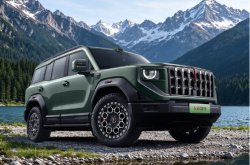
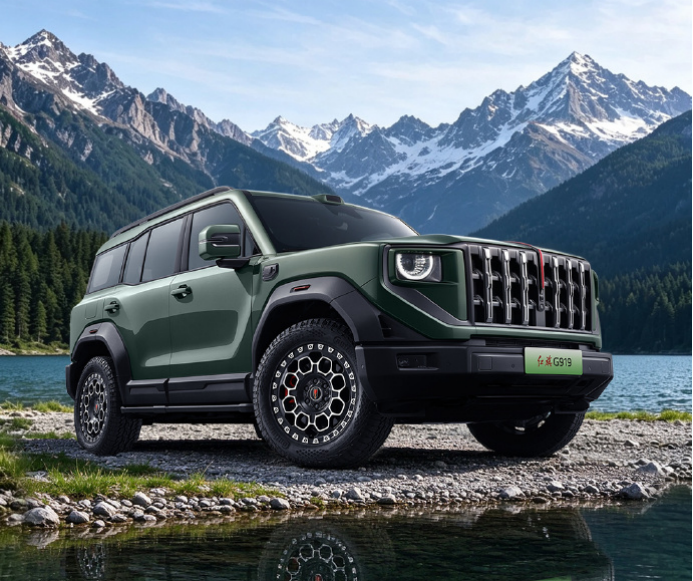
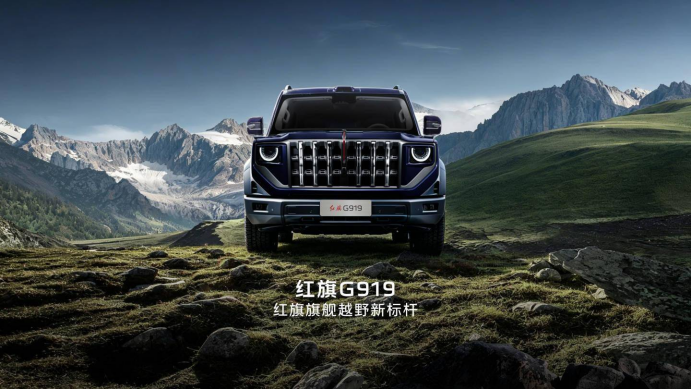
Recently, the FAW Hongqi G919 made its official debut. Positioned as a mid-to-large SUV, the new model boasts an extended-range power system and is available in three trim levels, with prices ranging from 349,800 to 429,800 yuan. As Hongqi's latest entry into the off-road market, the G919 has generated significant buzz among netizens since its launch.
Judging from netizens' comments, some have openly questioned: "Can it go head-to-head with competitors like the Baoma 8 and Tank 700?" Others commented: "The specs look promising, but the 350,000-yuan price tag makes me think twice." Some even criticized: "The grille design is... interesting, to say the least."
It's evident that there are still uncertainties surrounding the G919's market prospects. This is understandable, given that Hongqi has primarily focused on sedans and urban SUVs in the past, lacking relevant experience and a dedicated user base in the off-road segment. Compared to established brands like Tank, the G919 must not only win consumer trust through product performance but also demonstrate robust after-sales service capabilities for off-road models—a process that takes time. For such a newcomer, consumer skepticism is inevitable.
Beyond its limited experience in the off-road market, Hongqi's brand appeal in the luxury segment presents another challenge for the G919.
While Hongqi has positioned itself as a premium brand, its presence in the high-end market remains relatively modest, with sales primarily driven by models like the H5 and HS5. From January to September this year, Hongqi sold a cumulative total of 185,400 vehicles, with the H5 contributing around 69,000 units and the HS5 about 30,600 units—together accounting for over half of total sales. In contrast, high-end models like the H9, a mid-to-large luxury sedan, sold only 4,051 units during the same period, with just 259 units sold in September. The HQ9 PHEV fared no better, with cumulative sales of only 2,044 units, averaging less than 230 units per month.
Clearly, Hongqi's high-end models have underperformed, indicating limited brand appeal. Now, with the G919 targeting the off-road market and premium consumers, whether it can gain recognition and drive sales remains uncertain.
Beyond brand and market positioning, the G919's design has also sparked debate, particularly its front fascia. Some netizens criticized the grille, saying it "looks like a pile of coal balls," while others bluntly stated that "the front end is hard to describe." While aesthetics are subjective, appearance plays a crucial role in shaping consumers' first impressions. For the G919 to attract a broader audience, its design must resonate with potential buyers.
Setting aside these internal challenges, the market landscape for the Hongqi G919 is far from favorable.
In recent years, the off-road and "boxy" SUV segments have continued to gain popularity, attracting numerous brands. From Tank and Fangchengbao to Mengshi and Zongheng, the high-end new energy off-road market is now crowded with competitors, each showcasing its unique strengths.
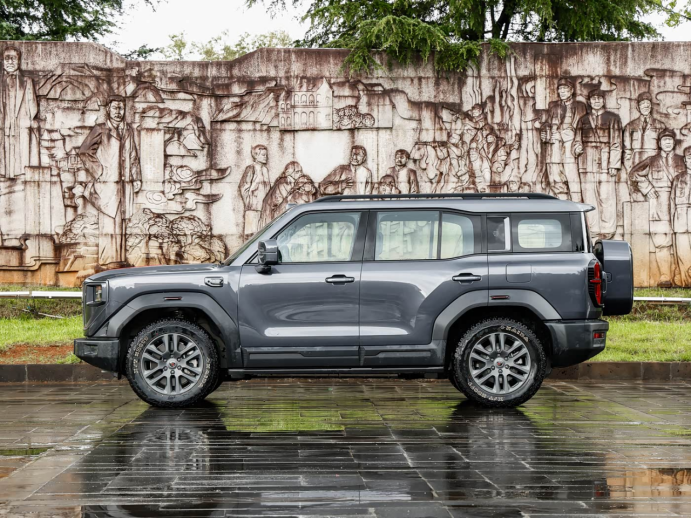
As a new entrant, the G919 brings considerable hardware to the table. The vehicle is equipped with a 2.0T extended-range system and four electric motors, delivering a combined output of 620 kW and a peak torque of 1,320 N·m, achieving a 0-100 km/h acceleration time of just 4.5 seconds. In terms of range, it offers a CLTC pure electric range of 280 km and a combined range of 1,350 km. Additionally, it features off-road essentials like a body-on-frame construction, three differential locks, and in-place turning capability, making it a compelling package overall.
However, while the G919's specs are impressive, its rivals in the high-end new energy off-road market each have their strengths. For instance, the top-spec Mengshi X700 is priced 70,000 yuan lower than the base G919, offering a pure electric range of 360 km—surpassing the G919's 280 km. It also comes with Huawei's ADS 5 intelligent driving system and HarmonyOS cockpit, boasting competitive smart features.
Another rival, the Zongheng G700, priced similarly to the G919, delivers a combined output of 665 kW—higher than the G919's 620 kW—and offers a combined range of 1,400 km. While the G919 performs admirably in power and range, the Zongheng G700 holds its own advantages.
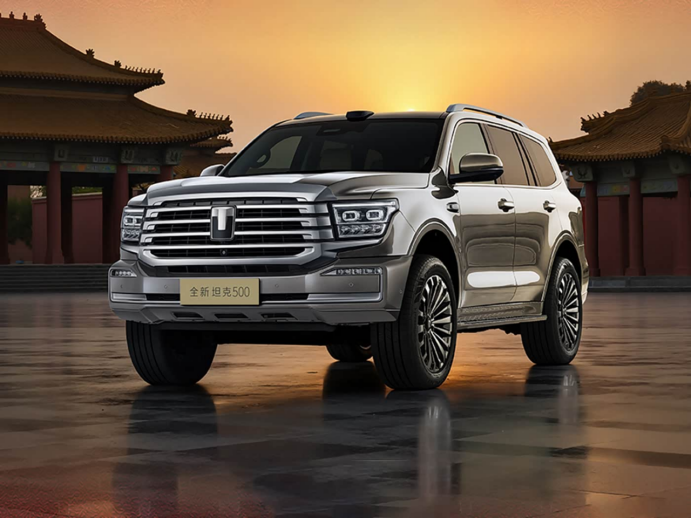
In the 350,000-400,000 yuan price range, the Tank 500 New Energy is another formidable competitor. As a veteran in the off-road market, the Tank 500 boasts mature off-road technology and a solid user reputation. Meanwhile, the higher-priced Fangchengbao Baoma 8 features Huawei's ADS intelligent driving system and Yunchan-P intelligent hydraulic body control system, offering highlights in smart technology and chassis performance.
Given this competitive landscape, the G919's specs are competitive, but its rivals each have their unique strengths, making it difficult to stand out solely on specifications. Moreover, off-road enthusiasts prioritize reliability and real-world performance—areas where Hongqi still needs to prove itself over time.
More realistically, while "boxy" SUVs continue to gain traction, it is the affordable urban light off-road models that truly drive sales. Data shows that in the first half of this year, 42 "boxy" SUV models in China sold a cumulative total of 447,600 units, with urban light off-road vehicles accounting for over 70% of sales. The best-selling models are mostly priced below 200,000 yuan, while the market for hardcore off-road vehicles priced above 300,000 yuan remains relatively niche. For the G919, starting at 349,800 yuan, carving out a share of the market will be no easy feat.
Today, as automakers intensify competition in power, range, and intelligent driving, simply stacking specs is no longer enough to gain an edge. For consumers purchasing high-priced off-road vehicles, brand reputation, vehicle reliability, and ownership experience are equally important.
While the Hongqi G919 demonstrates considerable product strength, it faces established rivals and limited market demand, making it no simple task to gain a foothold. Whether the new model can win over consumers will depend on its market performance in the coming months.
(Images sourced from the internet; removal upon infringement notice)
-
![]()
Leqi II's Answer Sheet: How Many of the Four Optical Hurdles Has It Cleared?
-
![]()
The Intelligent Driving Market is Heating Up, Yet Some Suppliers Struggle to Keep Pace!
-
![]()
Medium-Heavy Trucks and Large Buses: Draft for Approval of Mandatory AEB National Standards Released
-
![]()
Young People Embrace 'Bed Car' Self-Drive Adventures
-
![]()
Starting at 349,800 Yuan, Can the Hongqi G919 Achieve a Breakthrough in the Premium Market?
-
![]()
Audi: Balancing the Dawn and the Dusk
-
![]()
A Small Step for RTX Spark, A Giant Leap for NVIDIA PCs! Lenovo YOGA Pro 15 RTX Spark Review
-
A RMB 375 Million Share Repurchase Fails to Halt Ultrapower's Stock Price Slide Amid Dual Performance and Valuation Pressures