A Year In, a Year Out: Li Fenggang's Departure Lays Bare the Most Awkward Truth About Joint-Venture Automakers
 11/02 2026
 364
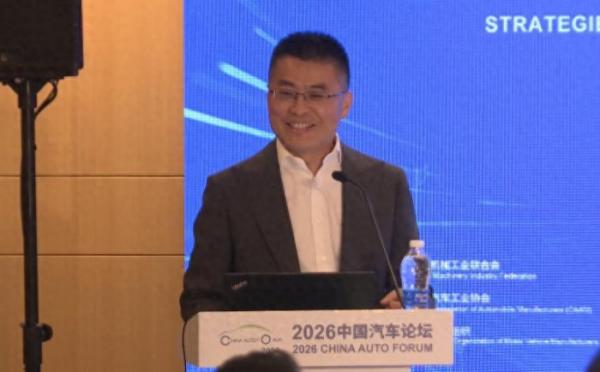
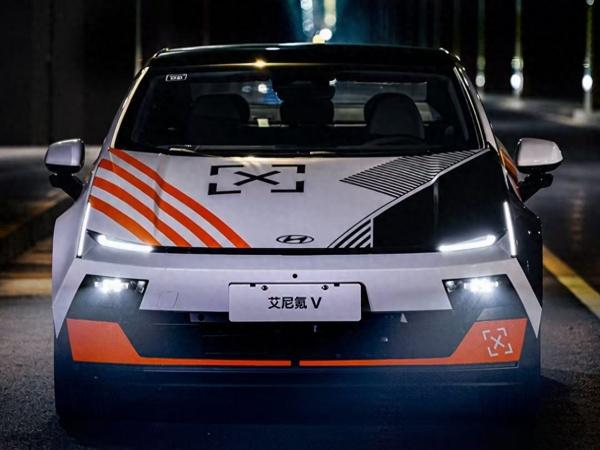
Just one month after Beijing Hyundai's all-new strategic model, the Ioniq V, hit the market, General Manager Li Fenggang was reported to be on his way out. Sources inside Hyundai China say Li will formally step down on November 1—exactly one year after taking the job on November 10, 2025.
Officially, Li's departure is being attributed to "personal reasons," but in reality it is the concentrated eruption of long-simmering disagreements between Beijing Hyundai's Chinese and Korean shareholders. This looks less like a simple personnel change than a governance crisis.
Why did he leave?
Beijing Hyundai has long followed a staffing rule: the Korean side appoints the general manager, and the Chinese side appoints the executive deputy general manager. Li Fenggang was the first Chinese general manager in Beijing Hyundai's 24-year history, and when he took office last November he was seen as a key signal of Hyundai Motor's push for localization. But the difficulties he actually ran into left him caught in the middle and at a loss, making it very hard for him to push through reform plans on his own. This was mainly reflected in four aspects:
① Board standstill: Over the past year, Beijing Hyundai's board of directors has had almost no substantive deliberations, making major decisions difficult to advance.
② Divergent shareholder goals: The Chinese side wants to protect sales and curb losses; the Korean side places more value on profit and has conservative sales targets. In July this year, the two sides even suspended issuing policies to dealers and paused payments to suppliers because the targets had not been finalized—the sharpest outbreak of conflict between the two shareholders.
③ Cost-cutting deadlock: Seventy to eighty percent of Beijing Hyundai's suppliers belong to the Korean system. The Chinese side wants substantial cost cuts, while the Korean side tends to protect the existing supply chain.
④ Mismatch of authority and responsibility: Although Li Fenggang holds the title of general manager, key positions are still mainly held by Korean personnel, and the resources he can actually deploy and his decision-making power fall far short of what the position itself entails.
It was not until September this year that the two sides reached a consensus again, lowering the annual sales target to about 160,000 vehicles and capping losses at around 1.9 billion yuan. But it was already too late—perhaps by then Li Fenggang had already decided to leave.
What problems does this reflect?
The structural predicament of the joint-venture model: Under a 50:50 shareholding ratio, any major decision requires unanimous consent from both sides, and once there is disagreement it falls into deadlock. By contrast, Volkswagen Anhui has a 75% Volkswagen stake, and SAIC-GM has renewed its contract through 2047 and ceded local decision-making power. Beijing Hyundai is relying on changing people rather than changing the mechanism—which clearly treats the symptoms but not the root cause.
Localization remains at the staffing level: Product definition, the supply chain, and R&D authority remain in the hands of the Korean headquarters, making it difficult for a local general manager to truly lead strategy. In my view, Li Fenggang was a reform executor, not a rule-maker. When reform goals, the pace of cost reduction, and the pace of model launches cannot be agreed upon, he is the easiest person to push to the forefront to bear the consequences.
The market window is closing: In September this year, Hyundai and Kia's retail sales in China were only about 9,000 vehicles, down 39% year on year, falling below 10,000 vehicles for the first time during the year, with market share dropping to 0.6%. At the same time, the much-anticipated Ioniq V had only 135 insurance registrations in its first month on the market, while the industry had originally expected the model's steady-state monthly sales target to be 2,000-2,500 vehicles—showing that Beijing Hyundai's new energy transformation has yet to open up the situation.
What to make of what comes next?
Although Beijing Hyundai faces many tests, what is certain is that it will not immediately withdraw from China. On the one hand, the two shareholders jointly injected about 8 billion yuan in additional capital at the end of 2024; on the other hand, Beijing's export business continues to grow, with 47,000 vehicles exported in the first half of this year, up 15.8% year on year, accounting for nearly half of total sales of 94,697 vehicles.
However, the core problem remains unresolved: Who will succeed as general manager? Can the two shareholders truly rebuild trust and a decision-making mechanism? Frankly speaking, Li Fenggang's departure is not simply a failure of personal ability, but a phased setback in a highly difficult joint-venture reform.
Hyundai's willingness to hand over the general manager position proves that it has seen the changes in the Chinese market. But the disagreements between shareholders over sales, profits, and the supply chain prove that for multinational automakers to adapt to the intensely competitive domestic new energy environment, the hardest part is not finding a local executive who understands the market, but how much power the headquarters is willing to cede and forming a unified long-term strategy with the Chinese shareholder.
In fact, Li Fenggang's departure is enough to show that in the era of new energy vehicles, if joint-venture brands only change faces and not mechanisms, localization will ultimately be empty talk. For Beijing Hyundai, what is more urgent than changing the top executive is whether the two shareholders can find a real common goal between protecting sales and protecting profits, and truly hand decision-making power to people who understand the Chinese market. What do you think?
-
Apple's Foldable Screen Is Truly Impressive—Can Three Months of Sales Surpass Huawei's Full Year?
-
![]()
A Year In, a Year Out: Li Fenggang's Departure Lays Bare the Most Awkward Truth About Joint-Venture Automakers
-
Is the Sky Falling for Domestic Mobile Phones? The Sea-of-Models and Low-Price Strategies Have Both Failed
-
![]()
Apple Intelligence Launches on Apple China Website with Qwen Integration, Beta Testing Begins November 4
-
![]()
Apple's Market Value Overtakes Nvidia Again, Reclaiming the Title of World's Most Valuable Company
-
October Brings the Year's 14th Fuel Price Hike—How Should You Choose a Car at Year-End Amid High Oil Prices?
-
![]()
Is AI Really Your Enemy in the Workplace? It Should Replace Tasks, Not Your Job
-
Third-Quarter Report | Unisplendour Corporation's Revenue Exceeds 100 Billion Yuan, Yet Its Computing Power Business Is Increasingly Hard to Profit From