Zhuoyu Hands "Pay Stubs" to 40-Ton Trucks: Saving 20,000–30,000 Yuan in Fuel a Year—But Who Foots the Bill?
 11/02 2026
 462
At two in the morning, a fully loaded heavy truck rolls down the highway toward the next distribution center. The driver has just cleared a long incline, and ahead lie a curve, slow traffic, and a toll station. For a passenger car, this is merely a stretch of road that demands focus; for a truck driver, it is also working time, delivery deadlines, and responsibility for the safety of a full load of cargo. What truck drivers want from intelligent assisted driving is a little less fatigue, one fewer hard brake—and ideally, one less tank of fuel. What fleet owners want to know is: how much money can this system save me each year?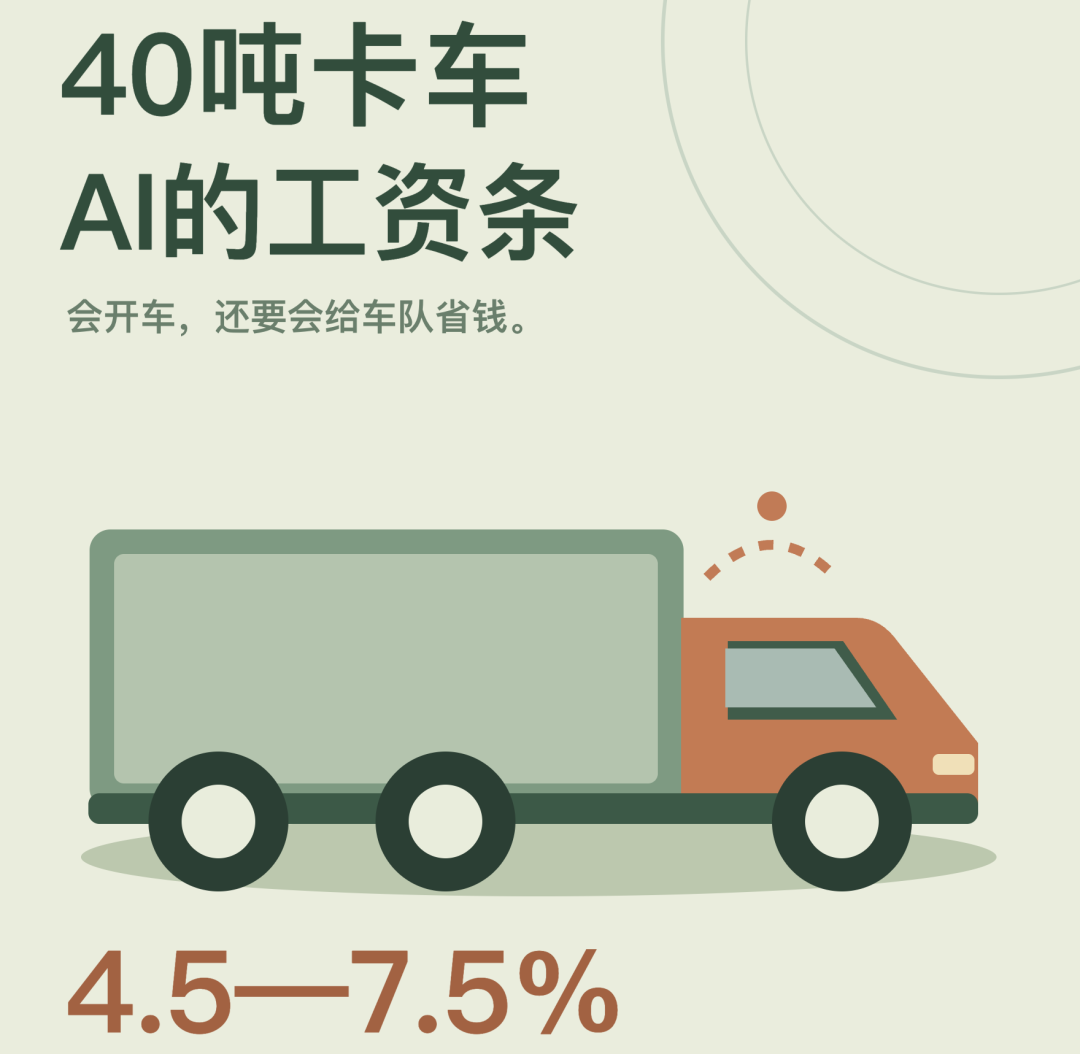
On October 29, Zhuoyu unveiled its "Panxing" system in Zhuhai, putting cost front and center at the launch event. PDS 4 debuts in the high-speed trunk-line heavy truck segment, while PDS 5 targets urban transportation scenarios such as buses, light trucks, and vans; the former already has mass-produced vehicles in operation, while urban NOA for the latter is still in progress.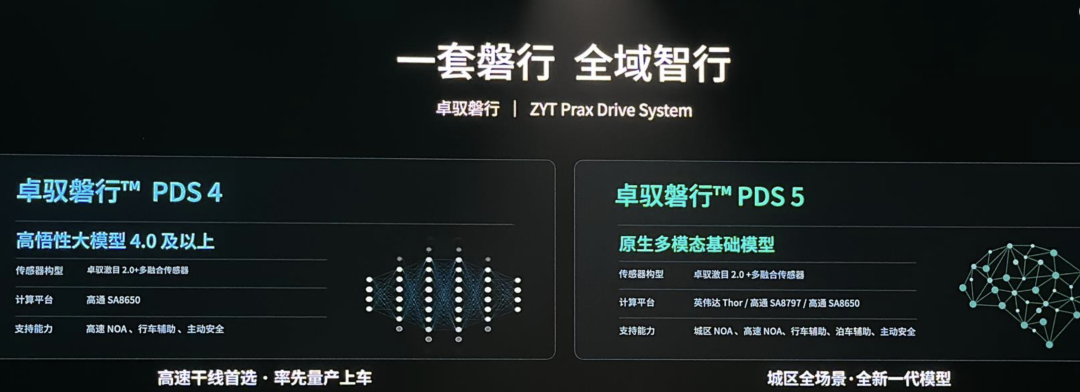
I) Can an assisted driving system earn back its own cost?
The Ministry of Transport's "2025 Statistical Bulletin on the Development of the Transport Industry" shows that annual commercial freight volume reached 58.700 billion tons, with road transport accounting for 43.288 billion tons—73.7% by freight tonnage.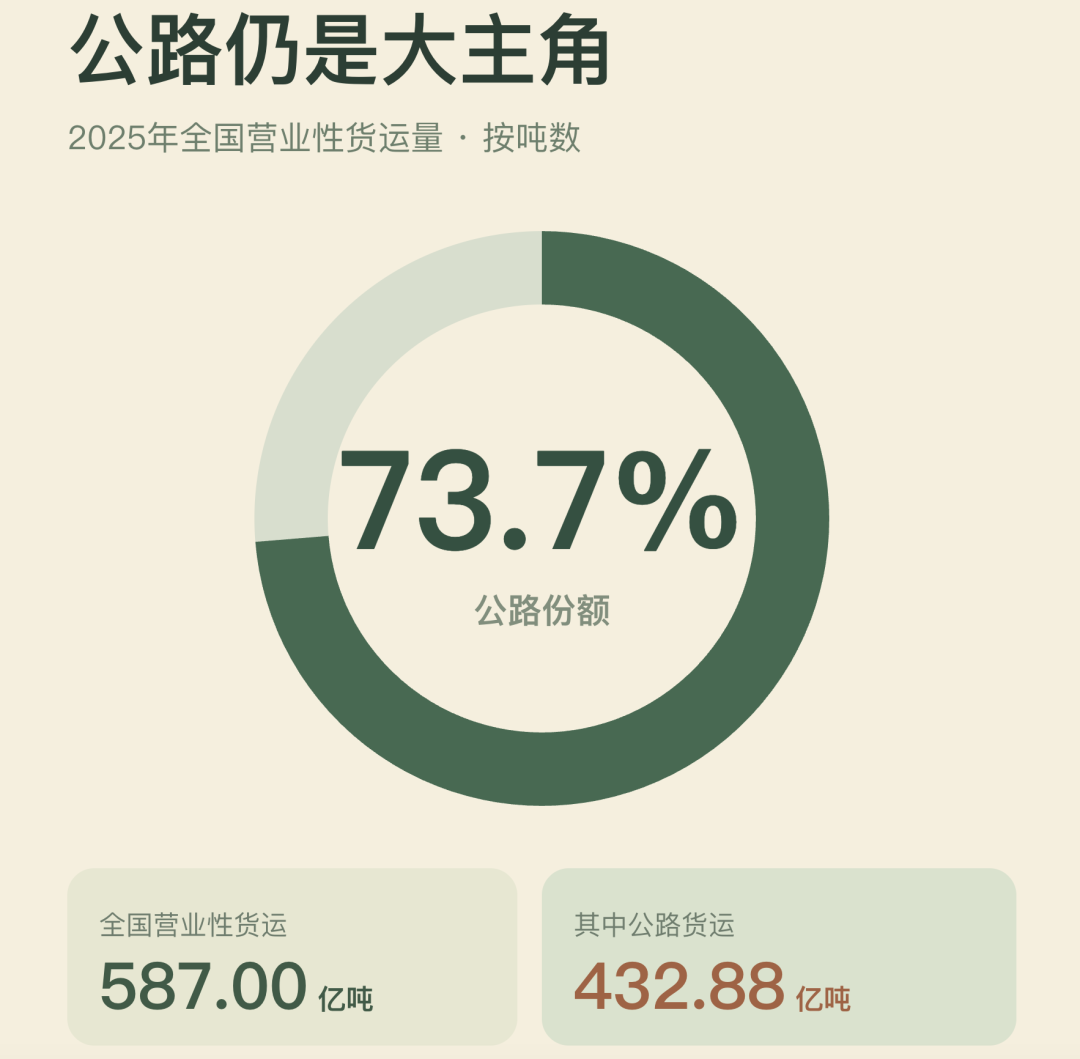
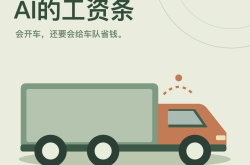
This is a low-margin, high-frequency business with long operating hours. Fuel, tires, tolls and road fees, drivers, and vehicle depreciation all eat into profit. Operating fleets care more about how much less is spent per 100 kilometers under the same route, same delivery time, and similar load. Zhuoyu disclosed that over the past two months it has tracked 230 mass-produced heavy trucks with cumulative operating mileage exceeding 20 million kilometers. After adopting an AI reinforcement-learning fuel-saving algorithm, measured fuel savings ranged from 4.5% to 7.5%. The company estimates that a single vehicle can save 20,000–30,000 yuan per year and stated that the system has a chance to pay for itself within one year.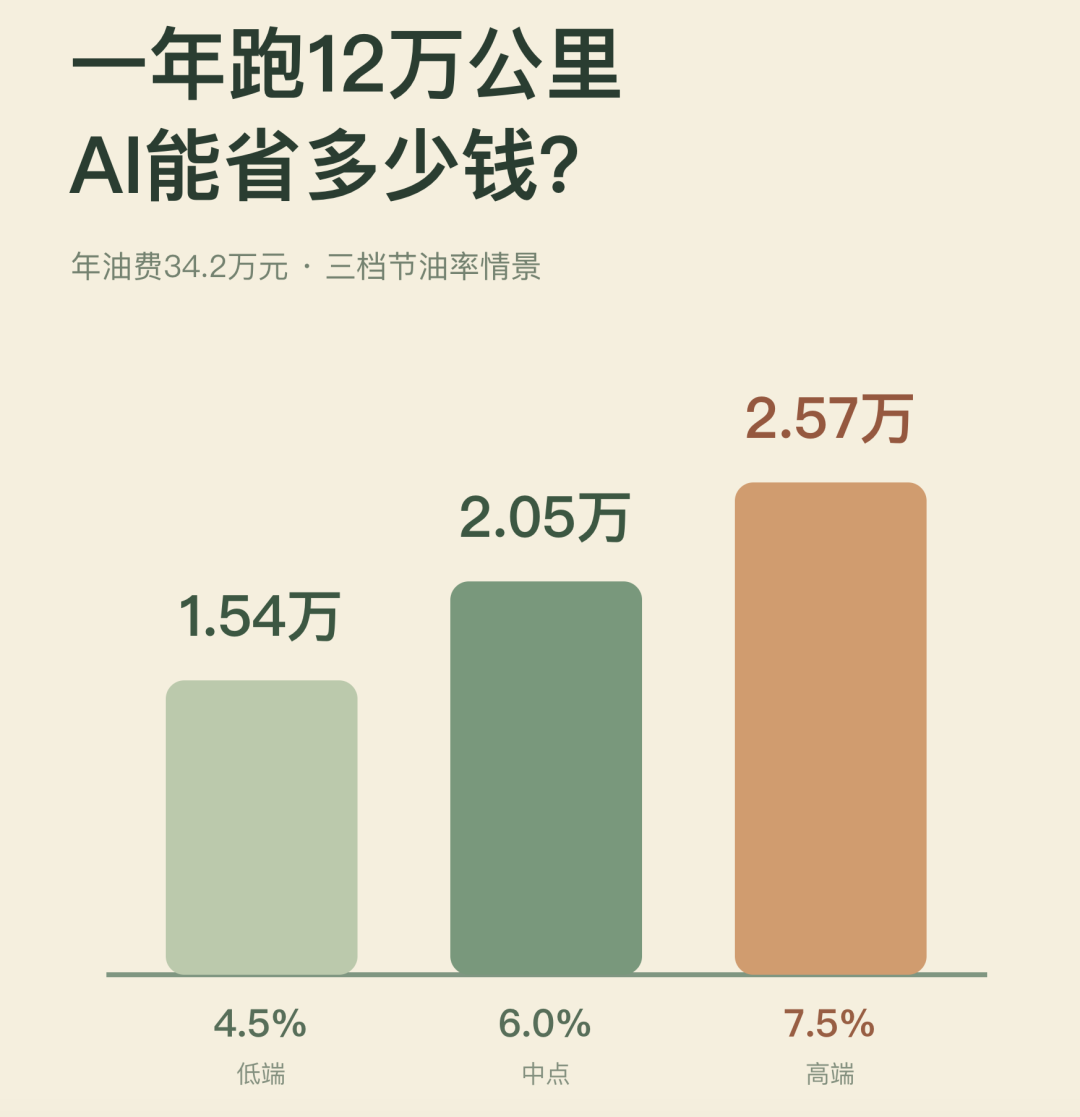
Take a fuel-powered heavy truck with an annual mileage of 120,000 kilometers (an operating-intensity assumption, not a fleet average), fuel consumption of 38 liters per 100 kilometers (used here as an example for a fuel heavy truck), and a diesel price of 7.5 yuan per liter. The annual fuel cost without the fuel-saving algorithm is about 342,000 yuan (120,000 ÷ 100 × 38 × 7.5). On this baseline, a 4.5% fuel saving corresponds to an annual saving of 15,400 yuan, 6.0% to 20,500 yuan, and 7.5% to 25,700 yuan. At an annual mileage of 150,000 kilometers, the corresponding fuel savings are 19,200–32,100 yuan. Assuming an incremental assisted driving purchase cost of 25,000 yuan and an estimated annual saving of 20,520 yuan, the static payback period is about 14.6 months; with an incremental cost of 15,000 yuan, it is about 8.8 months.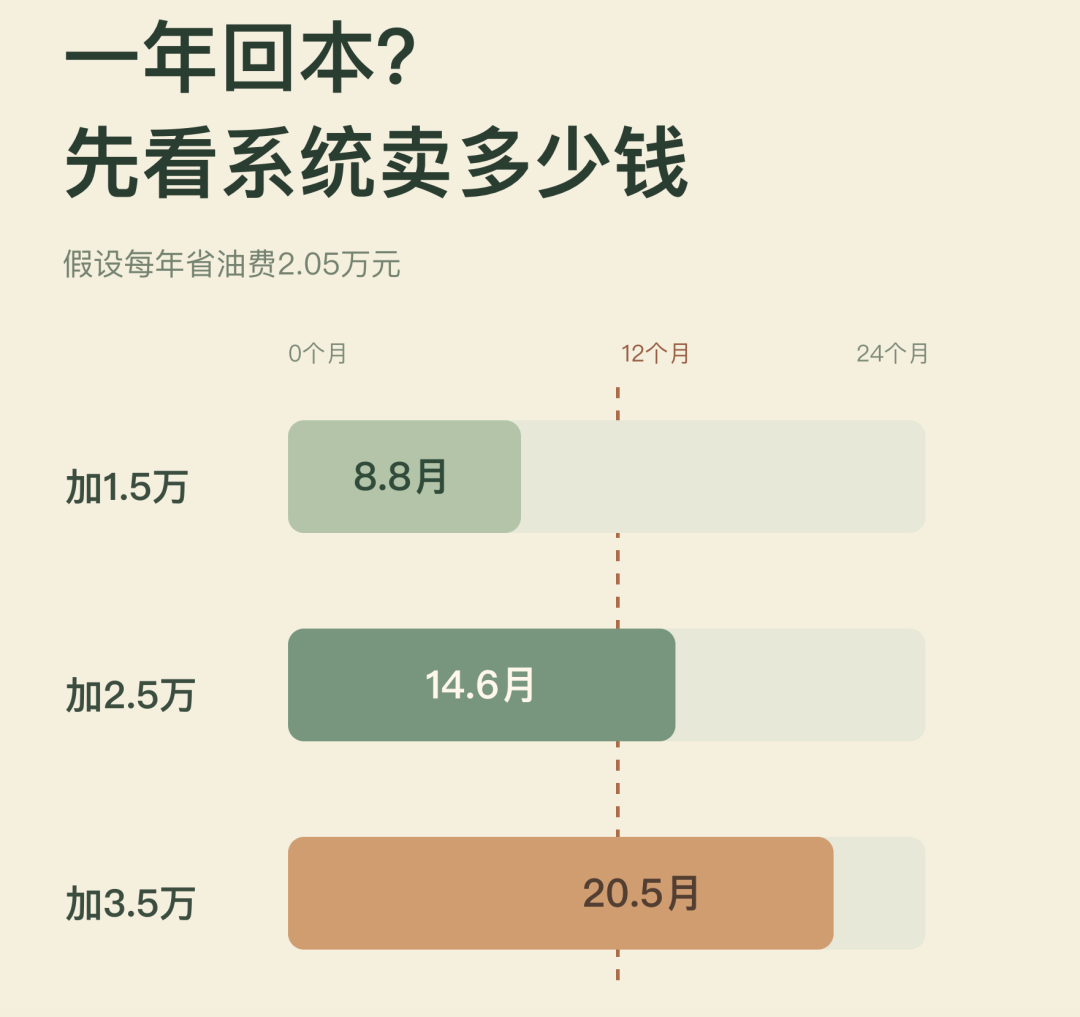
The Zhuoyu system draws on more than 3 billion kilometers of road data from passenger cars and learns from 400 million frames of heavy-truck-specific data. Understanding of lanes, vehicles, intersections, and traffic behavior can be transferred, but once the body becomes a heavy truck, control changes completely. The first difficulty: see early, and judge correctly. When fully loaded, a heavy truck has a longer braking distance, so recognition of small obstacles ahead cannot be completed only at close range. Panxing's debut "Jimu 2.0" places the lidar inside the cab, with high-speed detection capability reaching 500 meters, and strengthens recognition of low-reflection irregular objects such as tires and cardboard boxes.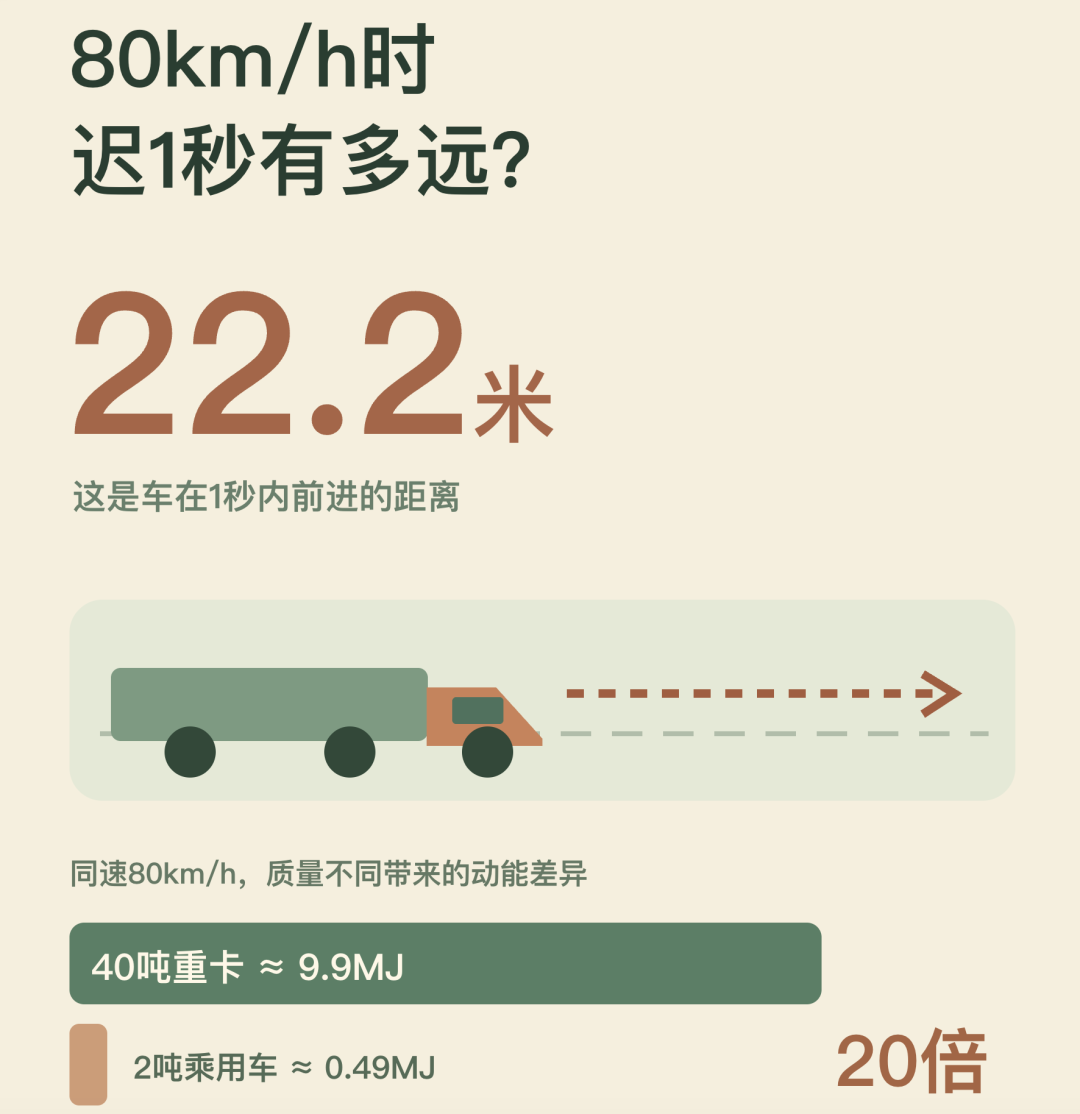
The second difficulty: heavy truck actions have delay. Traveling at 80 km/h, the vehicle covers about 22.2 meters per second. Assuming the combined delay of perception, decision-making, and execution is one second, the vehicle has already traveled 22 meters. Merely to illustrate the order of magnitude, if it then decelerates at a constant 3 m/s², the theoretical braking distance is about 82 meters, for a total of about 104 meters. The third difficulty: the trailer affects the tractor.
A 40-ton heavy truck at 80 km/h has about 9.9 megajoules of kinetic energy, equivalent to 20 times that of a 2-ton passenger car at the same speed. The articulation angle between tractor and trailer, cargo weight, slope, and lateral stability of a heavy truck are constantly changing. Upshifting on inclines, retarder use on downhill sections, and curve control—if any step is handled crudely, it may make the vehicle fuel-inefficient or even unsafe.
Therefore, after transferring the passenger car foundation model, Zhuoyu also needs to add heavy-truck-specific data, load estimation, trailer posture recognition, coordination of braking and retarders, fault diagnosis, and minimal-risk strategies. High-speed NOA remains driving assistance; the driver must maintain supervision in accordance with the vehicle instructions and applicable requirements and must not mistake it for unmanned driving.
II) The fuel-saving algorithm may become the best "salesperson" for assisted driving
Veteran truck drivers save fuel through several anticipatory actions: lifting off the accelerator before the crest of a slope; prioritizing the appropriate retarder on downhill sections; reducing sudden acceleration and deceleration when encountering slow-moving traffic; and avoiding repeated gear shifts for brief speed changes.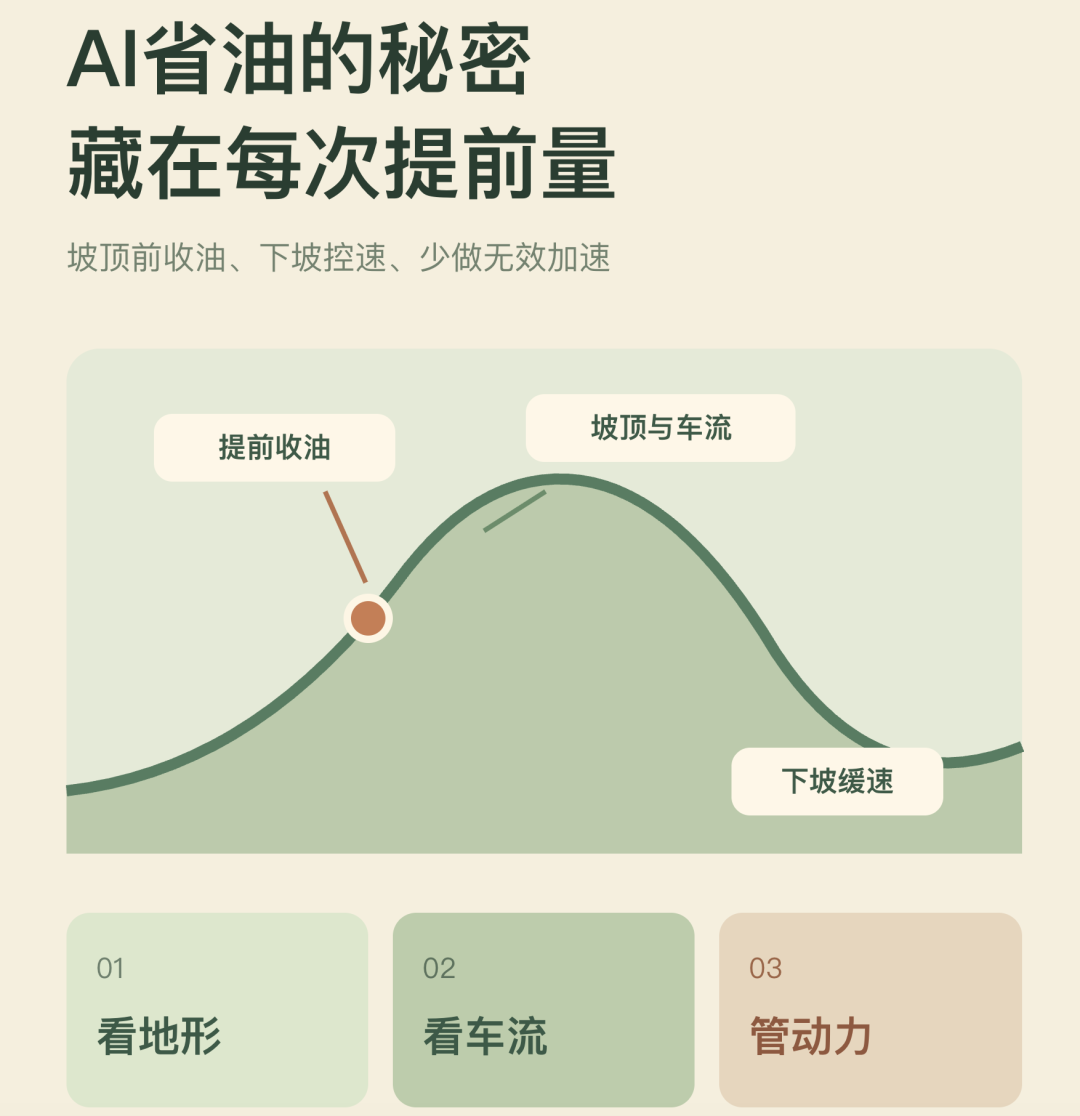
Zhuoyu's reinforcement-learning fuel-saving solution lets the algorithm repeatedly practice these actions in a simulated environment, then comprehensively weigh slope, curves, the vehicle ahead, and powertrain state to choose gears, throttle, and braking—optimizing timeliness, safety, and energy consumption within the same control problem. Fuel saving and reduced driving stress are naturally complementary.
If high-speed navigation can reduce unnecessary frequent operations, the driver's attention can be devoted more to monitoring risks. User experience indicators include continuous usage mileage, manual takeover frequency, number of hard braking events, performance in dangerous scenarios, and whether the driver can remain alert. The higher the usage rate of assisted driving functions, the greater the effective coverage of energy optimization.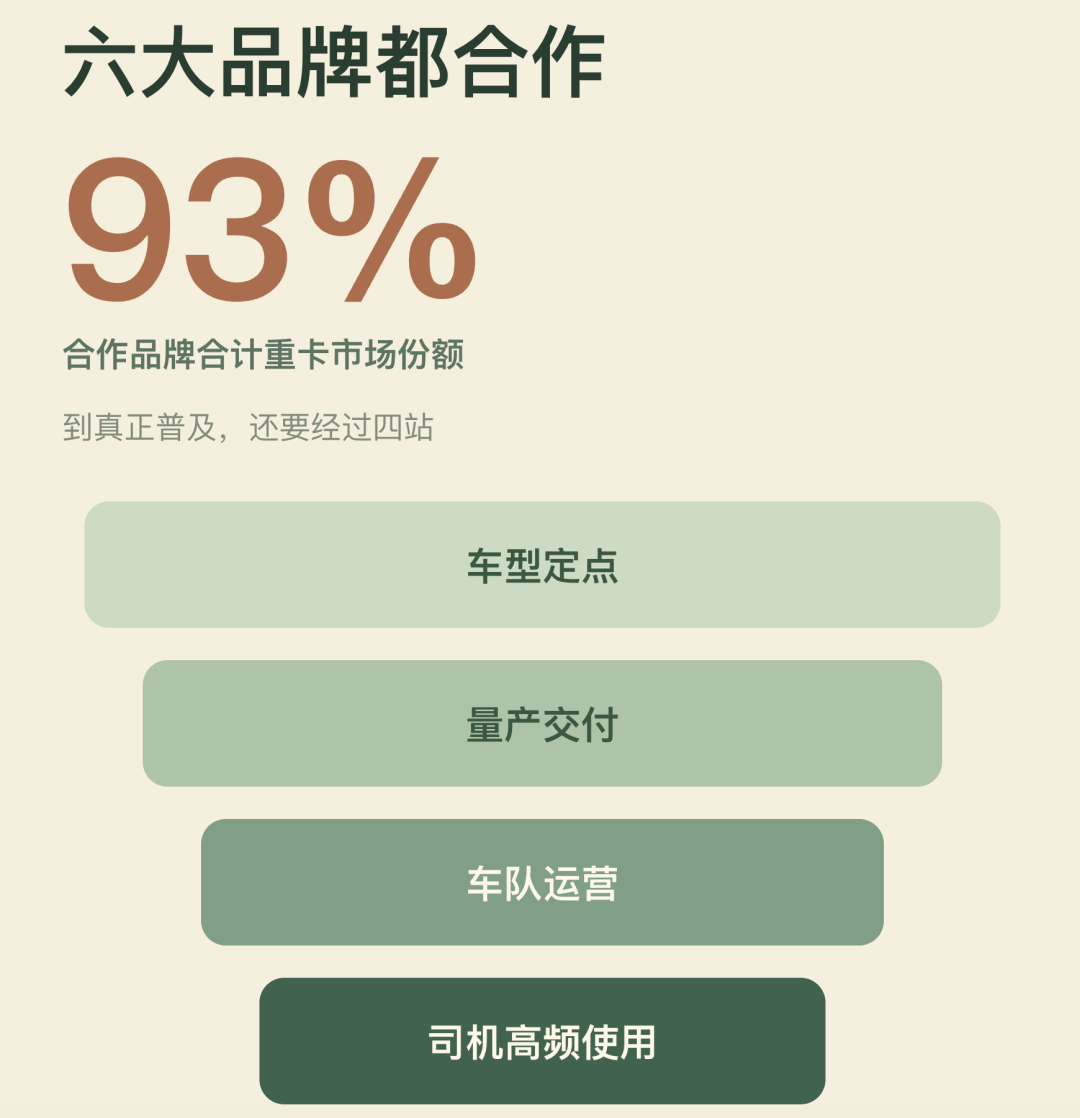
The Delong X5000 will be mass-produced in June 2026, and hundreds of vehicles have already been put into Yunda Express trunk-line operations. Models equipped with PDS 4 from XCMG Hanjing, Sinotruk Sitrak, Foton Auman Galaxy 5, and Dongfeng Tianlong KH point to mass production or market launch around the end of 2026; FAW Jiefang has disclosed multiple cooperative designated models.
Buses, light trucks, and vans are the next stage. PDS 5 is based on a native multimodal model and is planned to support urban NOA; the Yutong Yuwei E9 PRO urban version and Foton light truck and van platforms are under corresponding cooperation arrangements. Vulnerable road users, frequent starts and stops, and temporary stopping for loading and unloading in urban conditions pose more fragmented challenges to control and safety systems.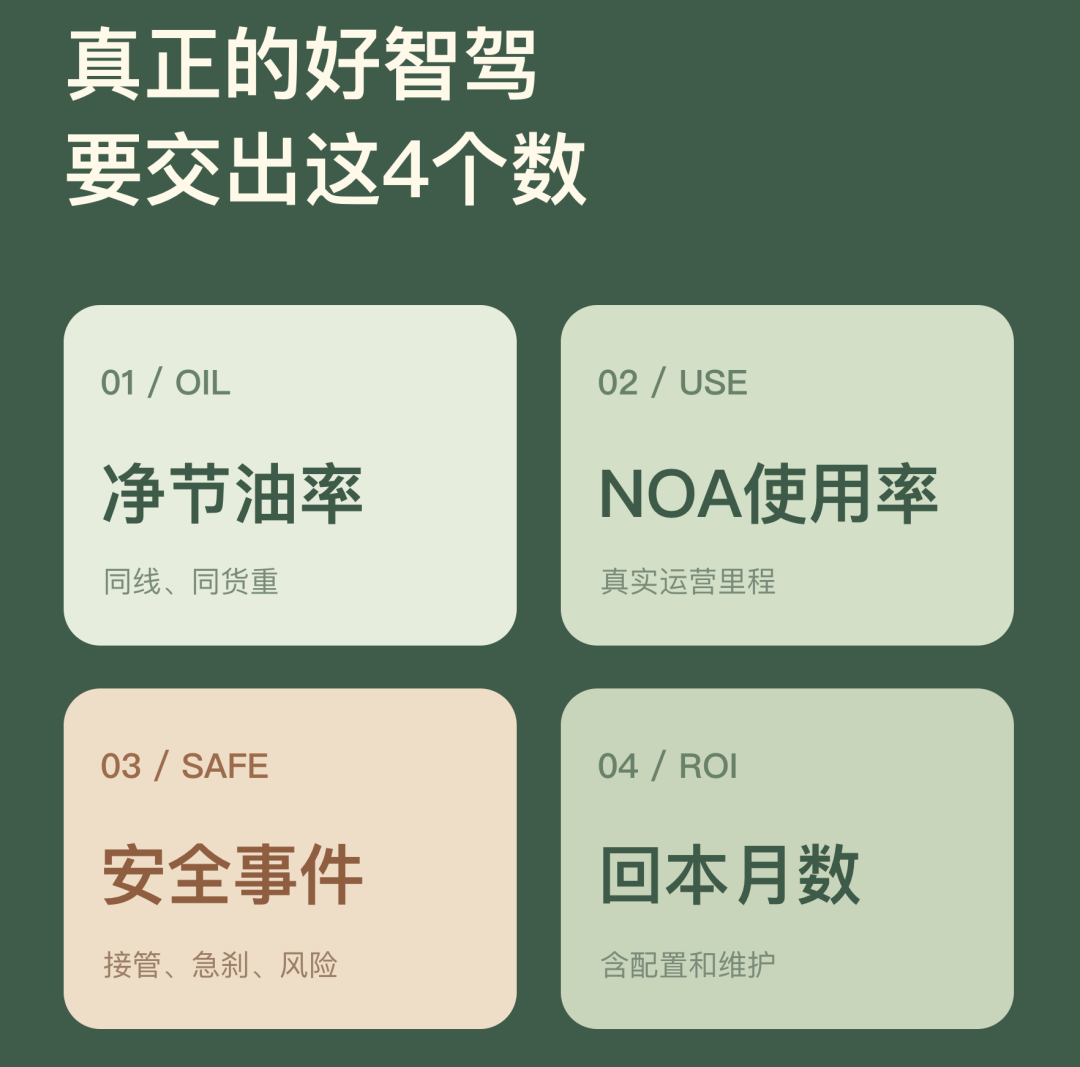
In conclusion, for trucks, AI being able to save on fuel costs is very important!
-
![]()
Competing for the 2026 Auto Sales Crown Is No Longer Important
-
![]()
Xiaomi Invests 1.7 Billion Yuan for Stake in Sunwoda Power: Automakers Shift from "Buyers" to "Co-Definers"
-
![]()
Microsoft: High Investment, High Growth, Strong Cash Flow—Is It the Only Cloud Giant with True "Character" Deserving a Premium Valuation?
-
![]()
Zhuoyu Hands "Pay Stubs" to 40-Ton Trucks: Saving 20,000–30,000 Yuan in Fuel a Year—But Who Foots the Bill?
-
![]()
Building a "Chicken Farm" Together: Co-Building Charging Piles Becomes an Industry Trend
-
![]()
Computing Power Is No Longer the Ceiling for AI Agents—the Ecosystem Wall Is
-
![]()
BYD: Trading Price for Volume at Home, and Its Overseas "Savior" Is Starting to Falter Too?
-
![]()
The Vanished "Golden September and Silver October"