Xiaomi Invests 1.7 Billion Yuan for Stake in Sunwoda Power: Automakers Shift from "Buyers" to "Co-Definers"
 11/02 2026
 528
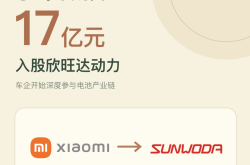
Following Li Auto's investment in Sunwoda, Xiaomi has invested 1.7 billion yuan for a 5.34% stake in Sunwoda Power, becoming its third-largest shareholder.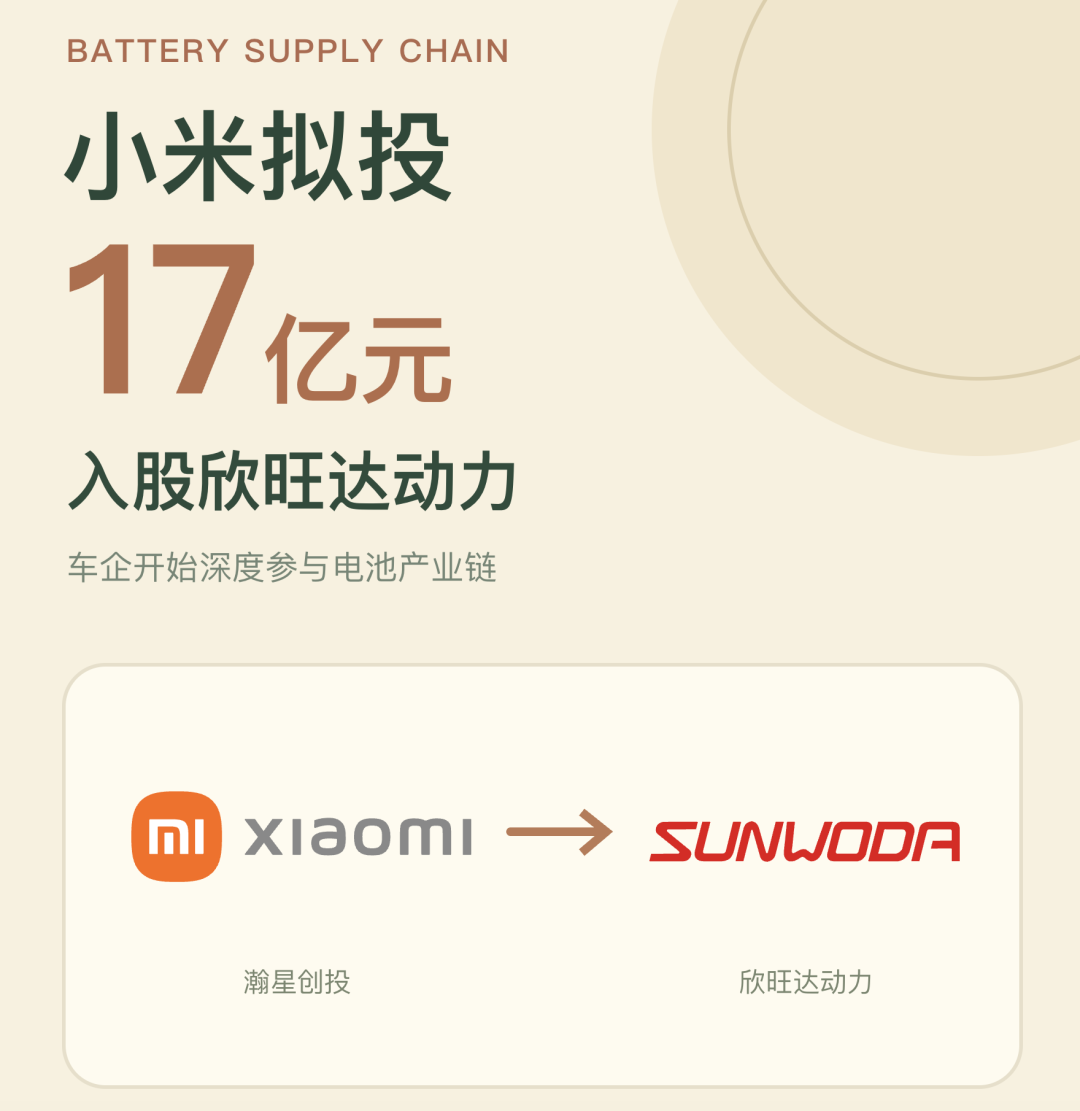
In 2026, we are seeing the relationship between automakers and battery companies begin to shift away from a purely supply-based dynamic. This is a natural progression now that the new energy vehicle industry chain has matured. For key components such as batteries, automakers are moving from "buyers" to "co-definers."
I believe a key reason is that third-party battery companies lack stable customer demand, while it is also difficult for automakers to immediately commit fully to making batteries themselves. This kind of cooperation is a healthy development model. By investing in battery companies, automakers can take greater responsibility for battery safety.
Power batteries are directly tied to range, charging, and fire risk. If automakers remain only at the procurement stage, it is difficult to truly gain deep insight into battery cell materials, manufacturing processes, quality traceability, and after-sales responsibility. With equity holding serving as a capital link, it becomes natural for automakers to participate in battery companies' operations and to intervene earlier in product definition, standard setting, production line control, and closed-loop problem resolution.
Xiaomi has previously jointly launched the "Longjia Battery" with CALB and Sunwoda, and introduced commitments such as lifetime protection against battery spontaneous combustion and lifetime protection against fire caused by collision. Moving from buying battery cells to placing safety responsibility on the vehicle side—this is a closed loop.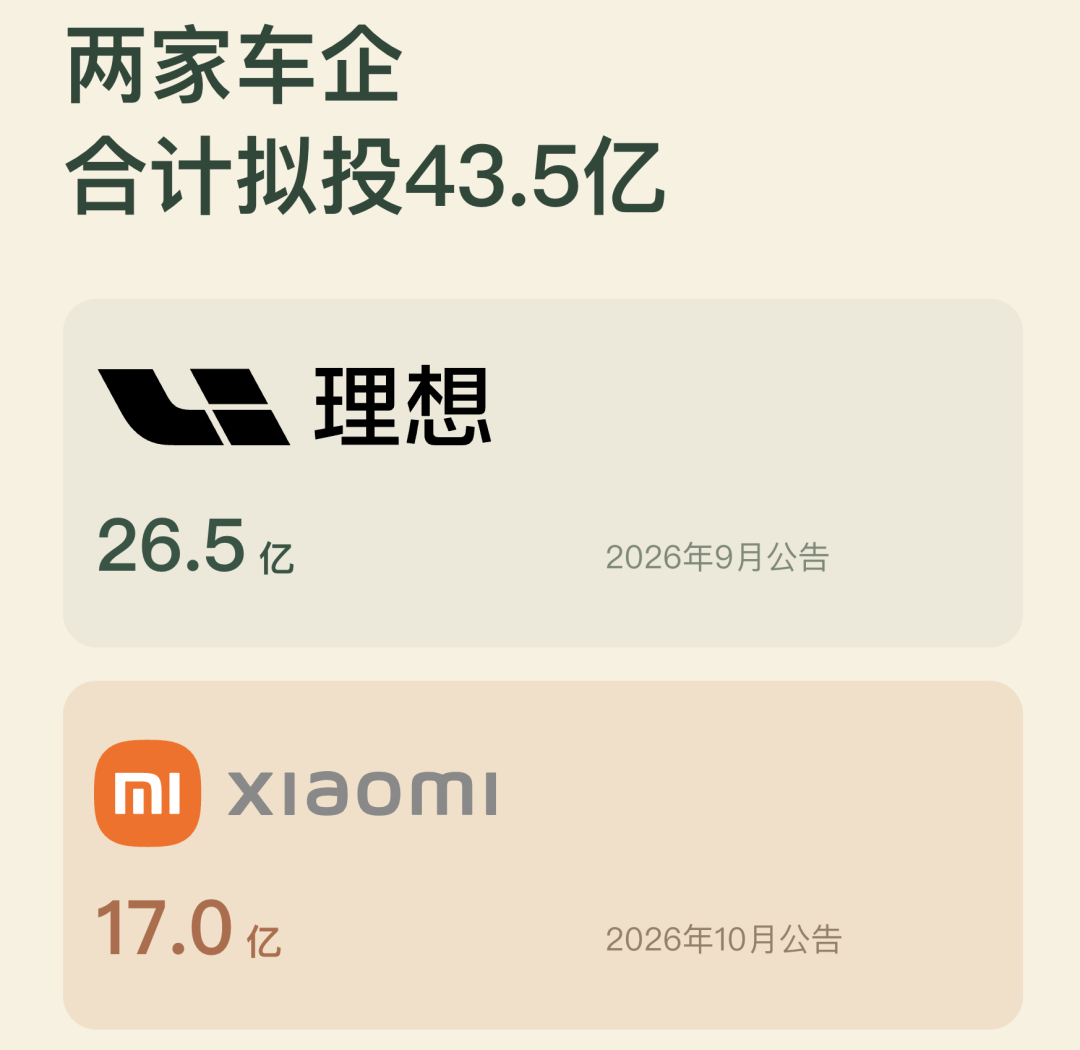
Li Auto previously also increased its capital in Sunwoda Power by 2.65 billion yuan, holding a total stake of about 11.17%, with the same goals including enhancing its say in manufacturing quality and long-term collaboration.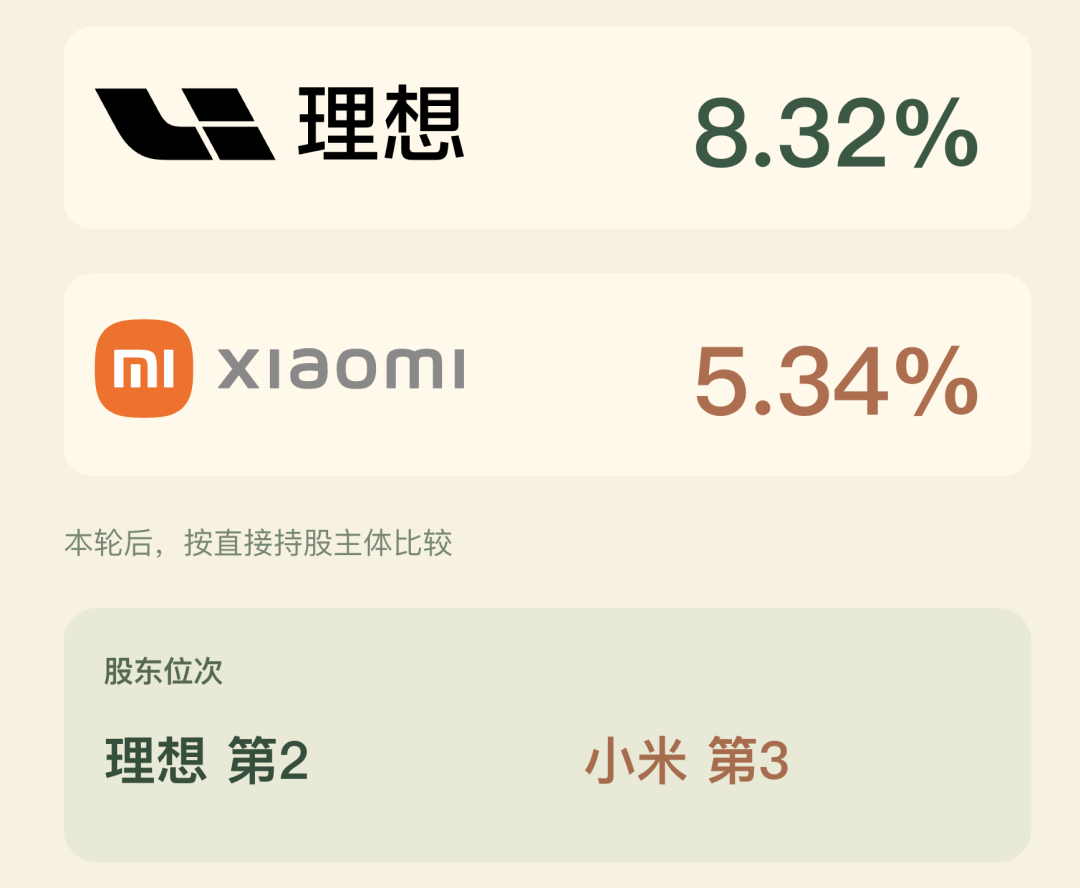
In 2026, competition in the pure electric vehicle segment is highly transparent. Chinese automakers are building multi-supplier systems to enhance supply chain resilience. Power batteries are one of the most core components of new energy vehicles. Once a single supplier experiences fluctuations in capacity, technology, pricing, or delivery, vehicle production will be left in a passive position.
Li Auto also clearly stated that after the capital increase, it will still maintain a diversified battery supplier system. Against the backdrop of increasing global supply chain uncertainty, this has risen from a cost issue to a security issue.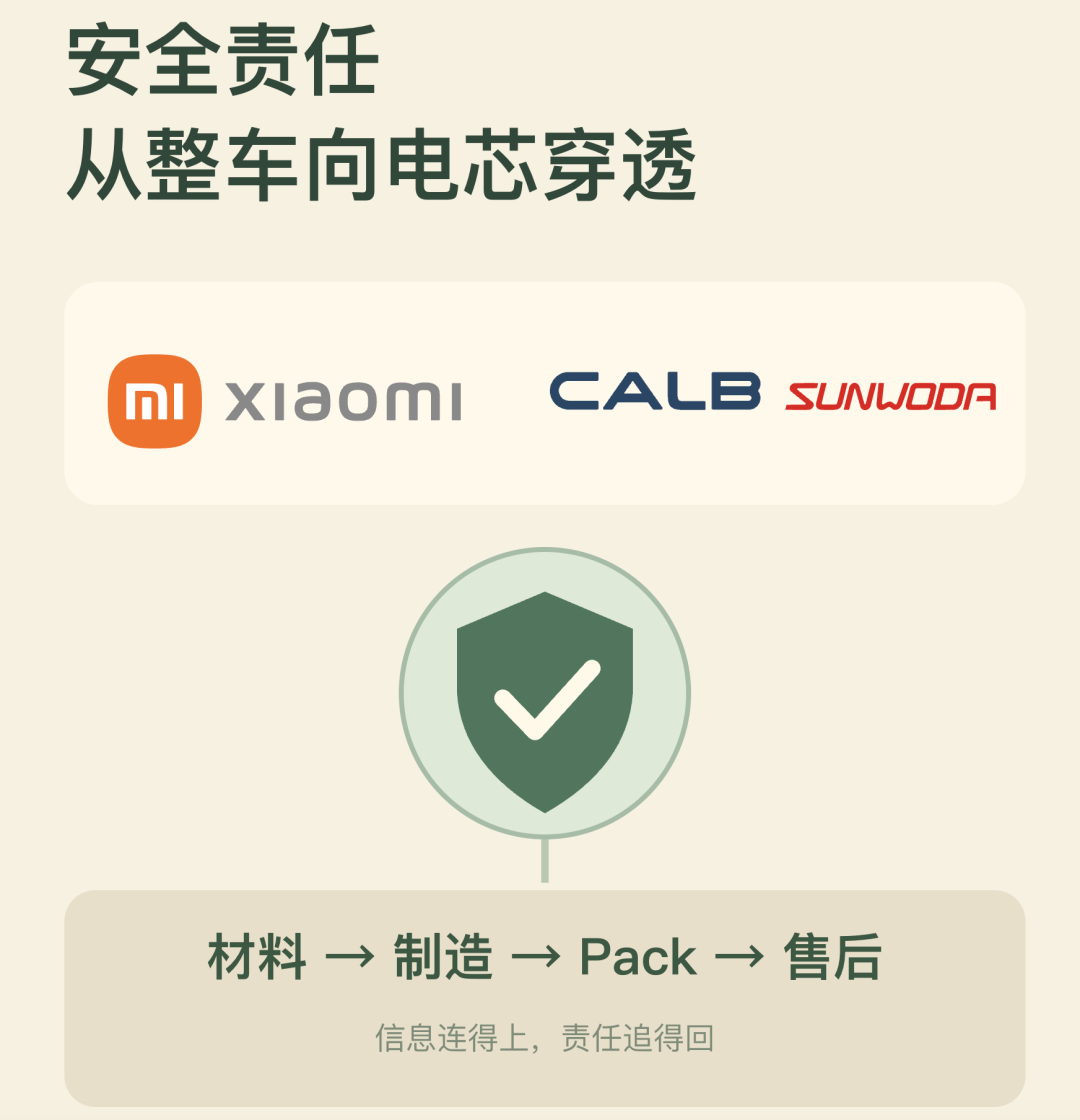
For vehicle manufacturers, core components are usually sourced from multiple suppliers—both for cost and for delivery security.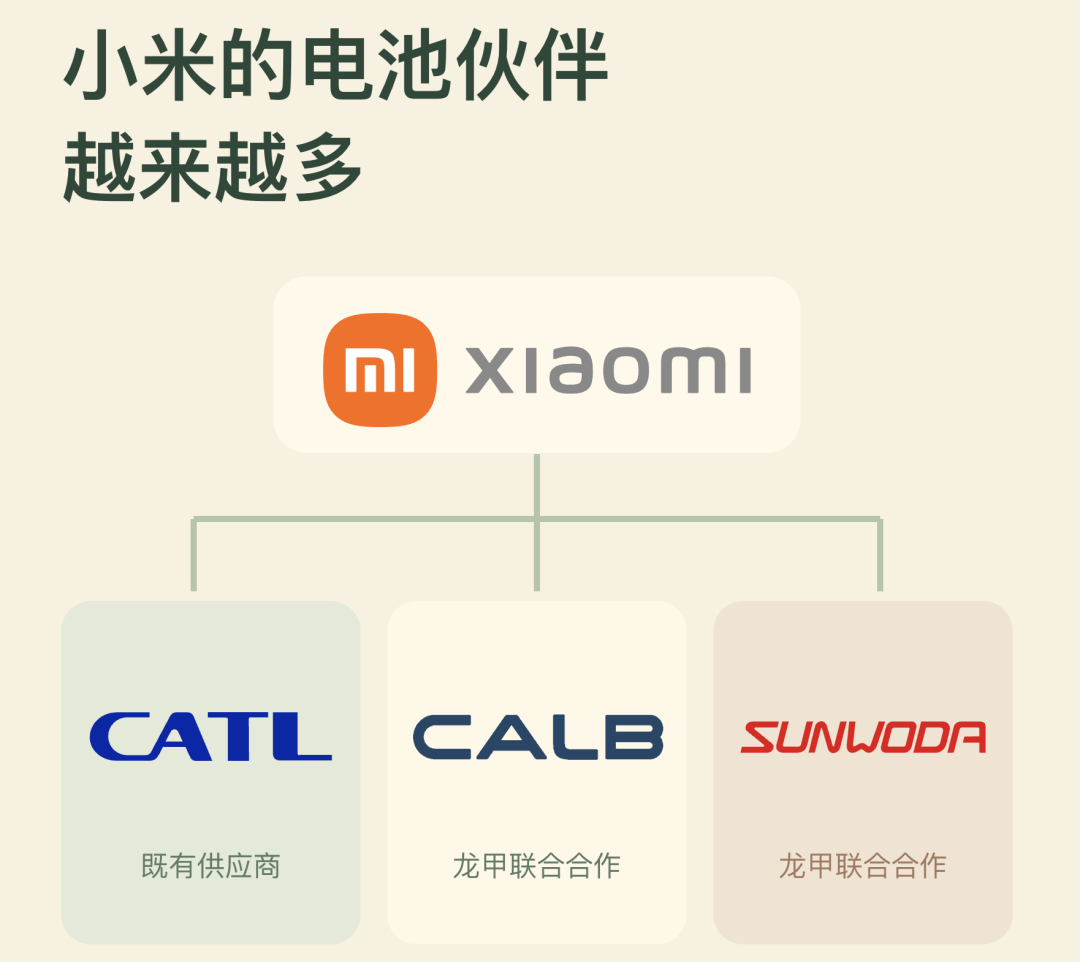
Xiaomi's pure electric models use CATL batteries, and its installation volume ranks among the top of CATL's customers. Its extended-range batteries open a new path, and using Sunwoda more is about securing customized capacity and collaboration capabilities for new models and new battery solutions such as the Pengcheng series. This is indeed a necessary step for automakers to form a stable and healthy supply system.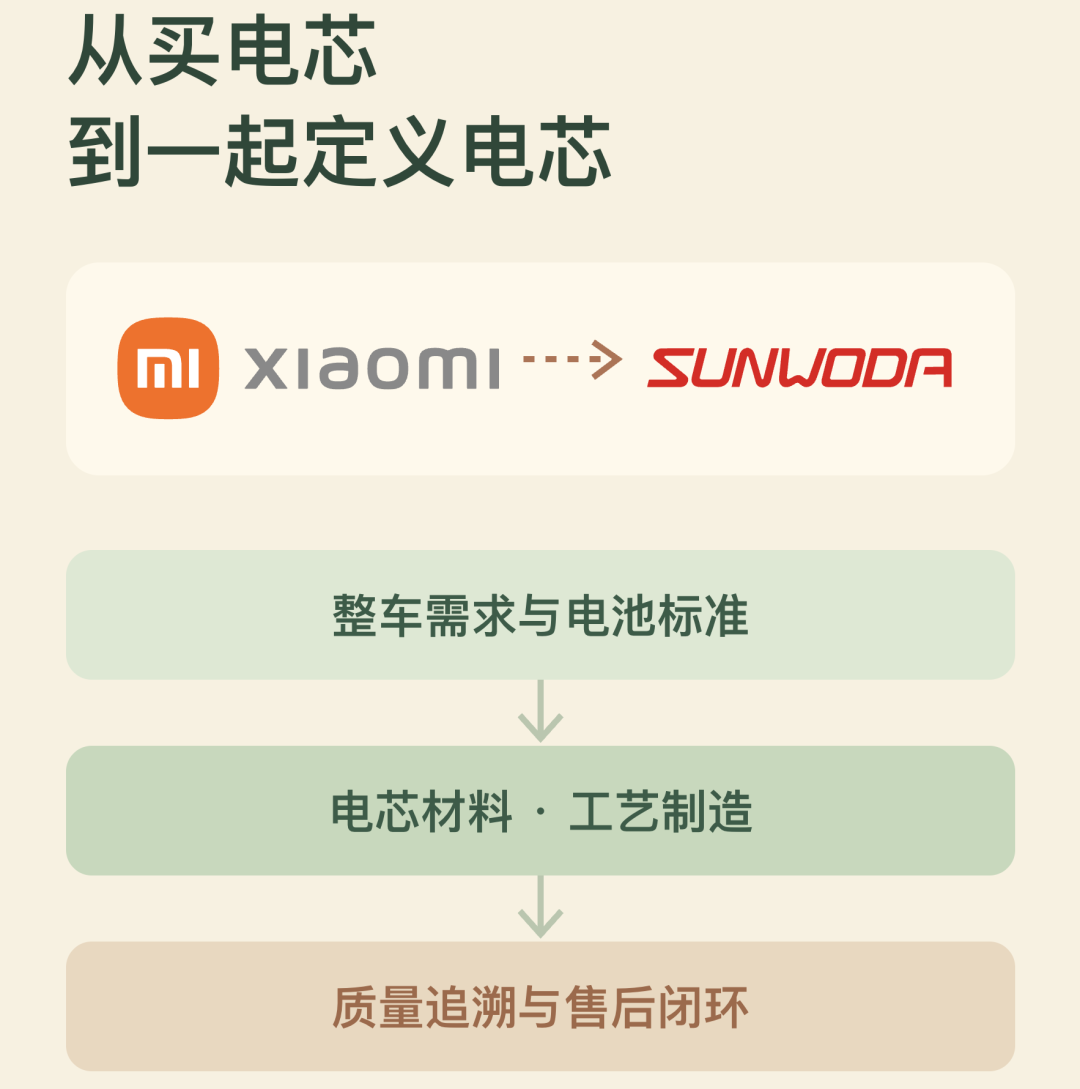
Xiaomi's investment in Sunwoda does not need to be exaggerated; it is simply a very normal and very mature market move.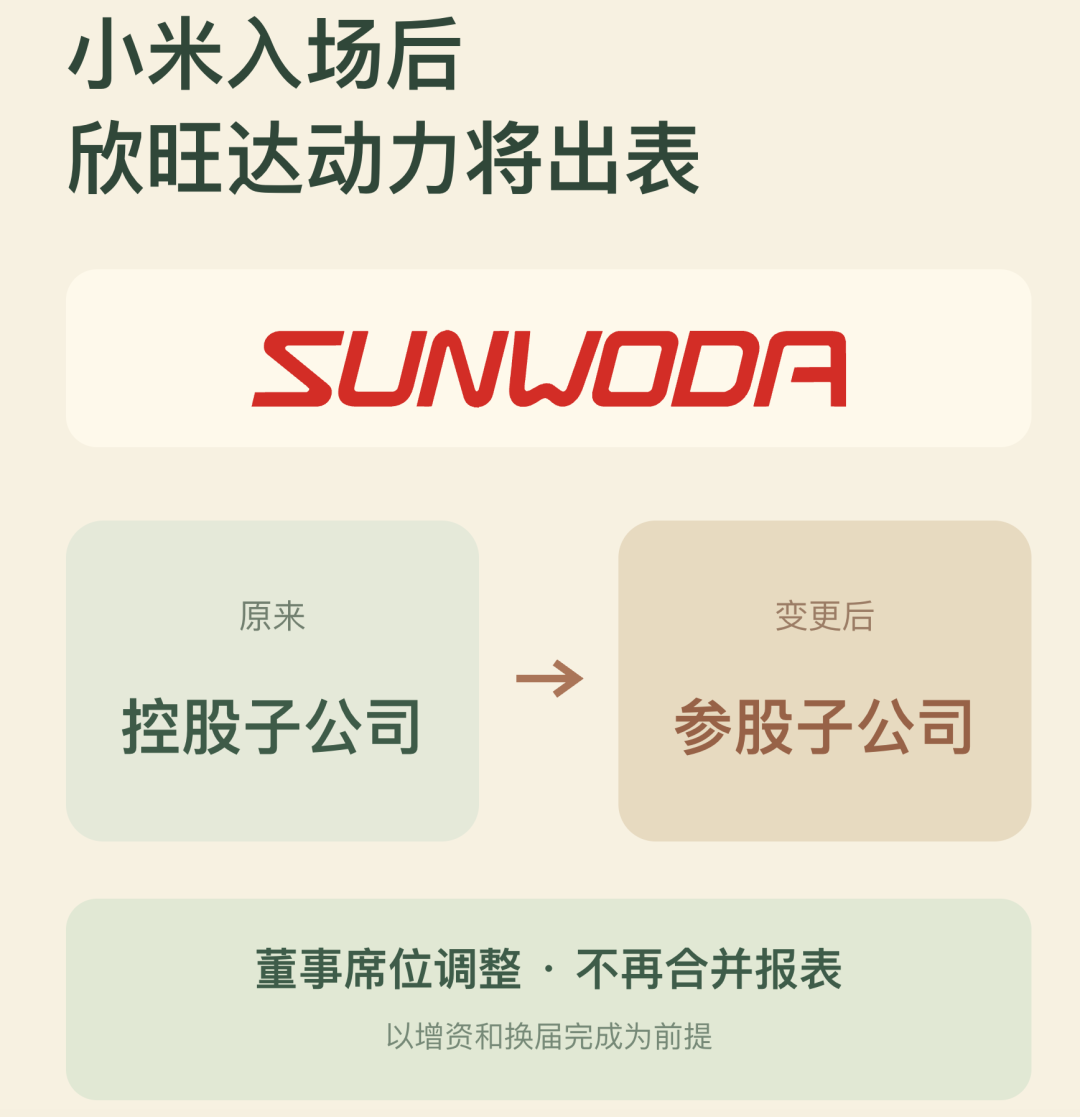
Automakers want a safer and more stable battery supply, and battery companies also need to be closer to vehicle demand. I am quite optimistic about this stable cooperation model—a partnership spanning capital, products, manufacturing, and quality across all aspects. Even the overseas expansion of China's new energy vehicle industry needs closer cooperation to bring higher-standard products to the world.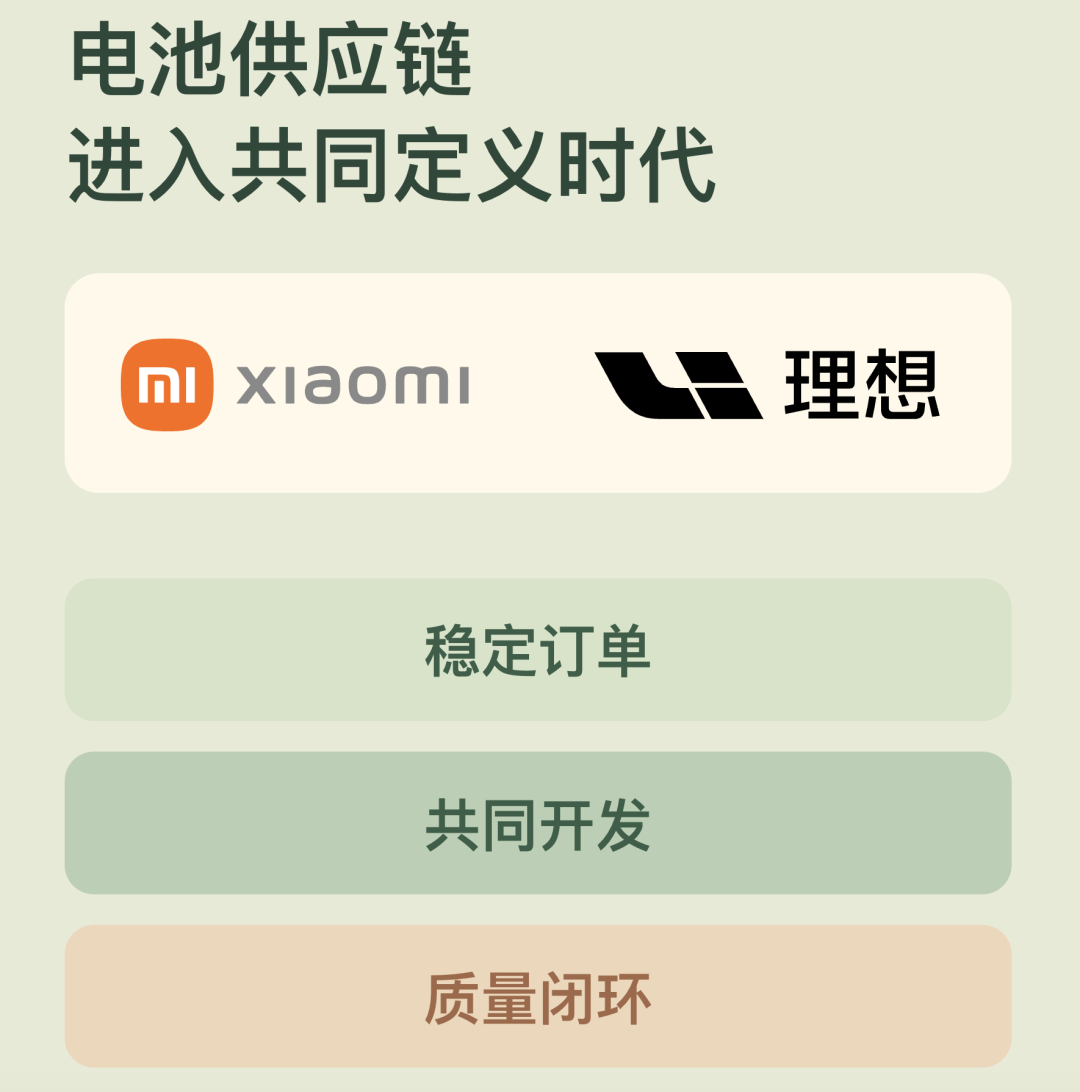
-
![]()
Competing for the 2026 Auto Sales Crown Is No Longer Important
-
![]()
Xiaomi Invests 1.7 Billion Yuan for Stake in Sunwoda Power: Automakers Shift from "Buyers" to "Co-Definers"
-
![]()
Microsoft: High Investment, High Growth, Strong Cash Flow—Is It the Only Cloud Giant with True "Character" Deserving a Premium Valuation?
-
![]()
Zhuoyu Hands "Pay Stubs" to 40-Ton Trucks: Saving 20,000–30,000 Yuan in Fuel a Year—But Who Foots the Bill?
-
![]()
Building a "Chicken Farm" Together: Co-Building Charging Piles Becomes an Industry Trend
-
![]()
Computing Power Is No Longer the Ceiling for AI Agents—the Ecosystem Wall Is
-
![]()
BYD: Trading Price for Volume at Home, and Its Overseas "Savior" Is Starting to Falter Too?
-
![]()
The Vanished "Golden September and Silver October"