Leapmotor Tops 100k, Xiaomi and Xpeng Cross 50k, HarmonyOS Hits 30k, Li Auto… New Forces Reveal October Sales
 11/03 2026
 393
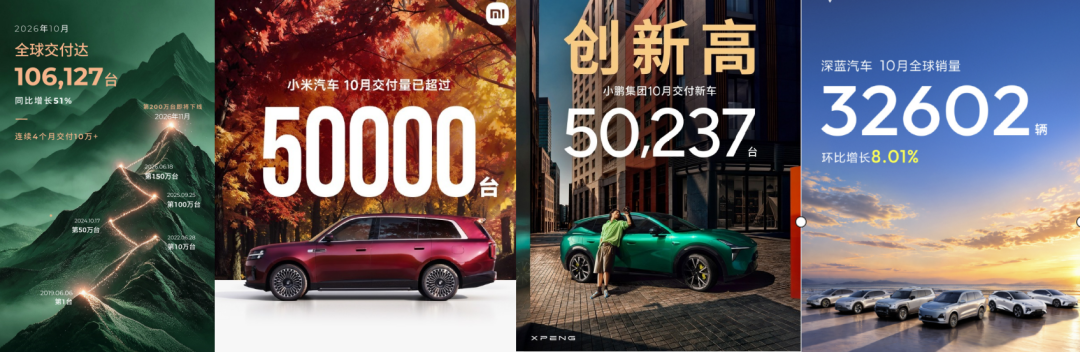
On the morning of November 1, new energy vehicle companies raced to roll out their October delivery figures.
Whenever monthly sales are released, the first to report tend to be either those with better-than-expected results or those holding solid numbers and feeling confident. This time, the gap in the rankings has widened sharply. Some have pulled a full tier ahead of their rivals, some have barely scraped new highs, and premium-focused brands are still quietly absorbing the pressure. Consumers are holding their wallets tighter than ever, and shifting preferences are written all over these numbers.
Leapmotor: 106,127 units, above 100,000 for four straight months, leading by a wide margin
Leapmotor delivered 106,127 vehicles globally in October, up 51% year-on-year, cementing its lead among new forces.

With global deliveries above 100,000 for four consecutive months, the result speaks for itself. Frankly, catching up to this scale will not be easy for other new forces in the short term.
Leapmotor is not the type to hold daily press conferences to drum up hype. Its approach is pragmatic, rooted in cost-effectiveness. Based on the data, overseas sales account for roughly 20% of the total, so it is not just moving volume at home but also steadily opening up overseas markets. Having proven the affordable route works, its scale advantage keeps compounding—it has arguably carved out a path of its own.
Xpeng: 50,237 units, a record high, overseas sales surge
Xpeng delivered 50,237 vehicles, up 22% month-on-month and 20% year-on-year, setting a new monthly delivery record for the brand.
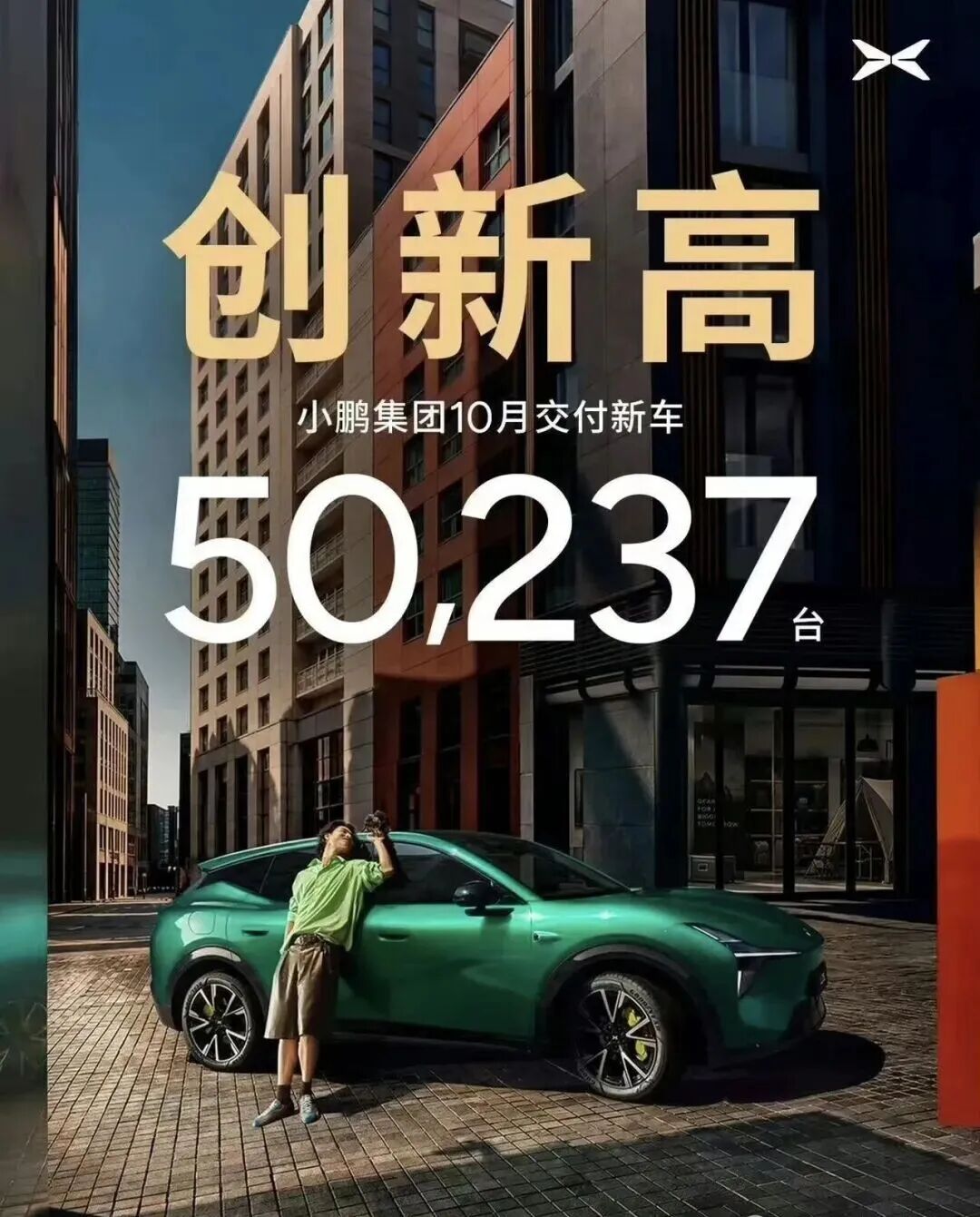
The surprise is not confined to the domestic market; overseas single-month deliveries reached 13,326 units, soaring 166% year-on-year and also setting a new overseas high.
Xpeng's new car cadence has been dense this year. The GX has established a foothold in the large SUV market, the MONA L03 has held steady with monthly sales above 10,000, and the cost-effective route aimed squarely at young buyers has already gained traction. The highly anticipated L05 was only released recently and has yet to be delivered at scale. Many are waiting for it, and it is expected to drive another upward wave in November.
Xiaomi Auto: 50k+ deliveries, Pengcheng becomes the main force, returning to the 50k tier
Xiaomi's October deliveries crossed the 50,000-unit mark, the first time this year it has stood firmly above 50,000 in a single month. The last time it hit this level was December last year.

The Pengcheng extended-range series launched in September welcomed its first full delivery month in October. Industry estimates suggest the model contributed nearly 30,000 units. Combined with the stable base of about 30,000 units from the SU7 and YU7, the two forces together pushed Xiaomi into the 50,000 club. When Pengcheng first launched, initial orders exceeded 70,000. It is now clear that Pengcheng is the key piece in Xiaomi's volume push.
NIO: 34,246 units, all three brands contributing, Firefly hits a new high again
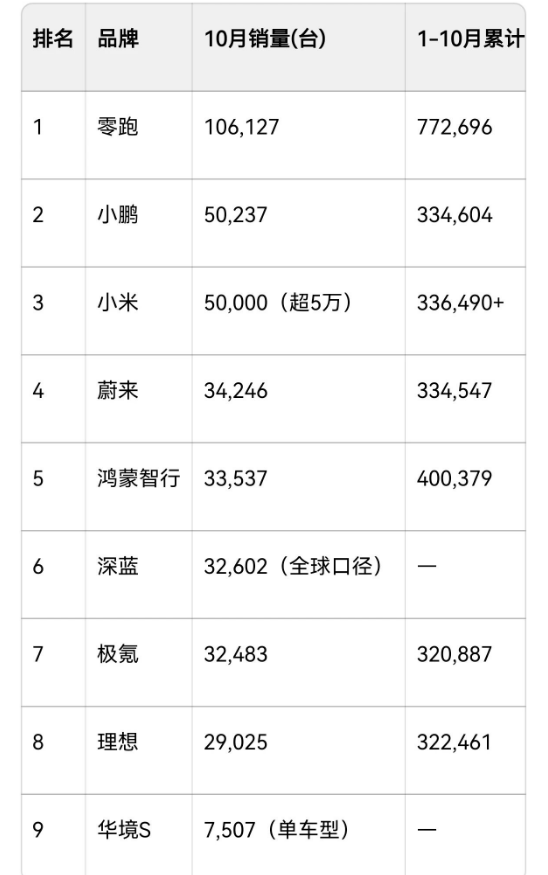
NIO Group's three brands together delivered 34,246 units: the main NIO brand delivered 18,125 units, Onvo 8,383 units, and Firefly 7,738 units. Firefly once again set a new monthly record.
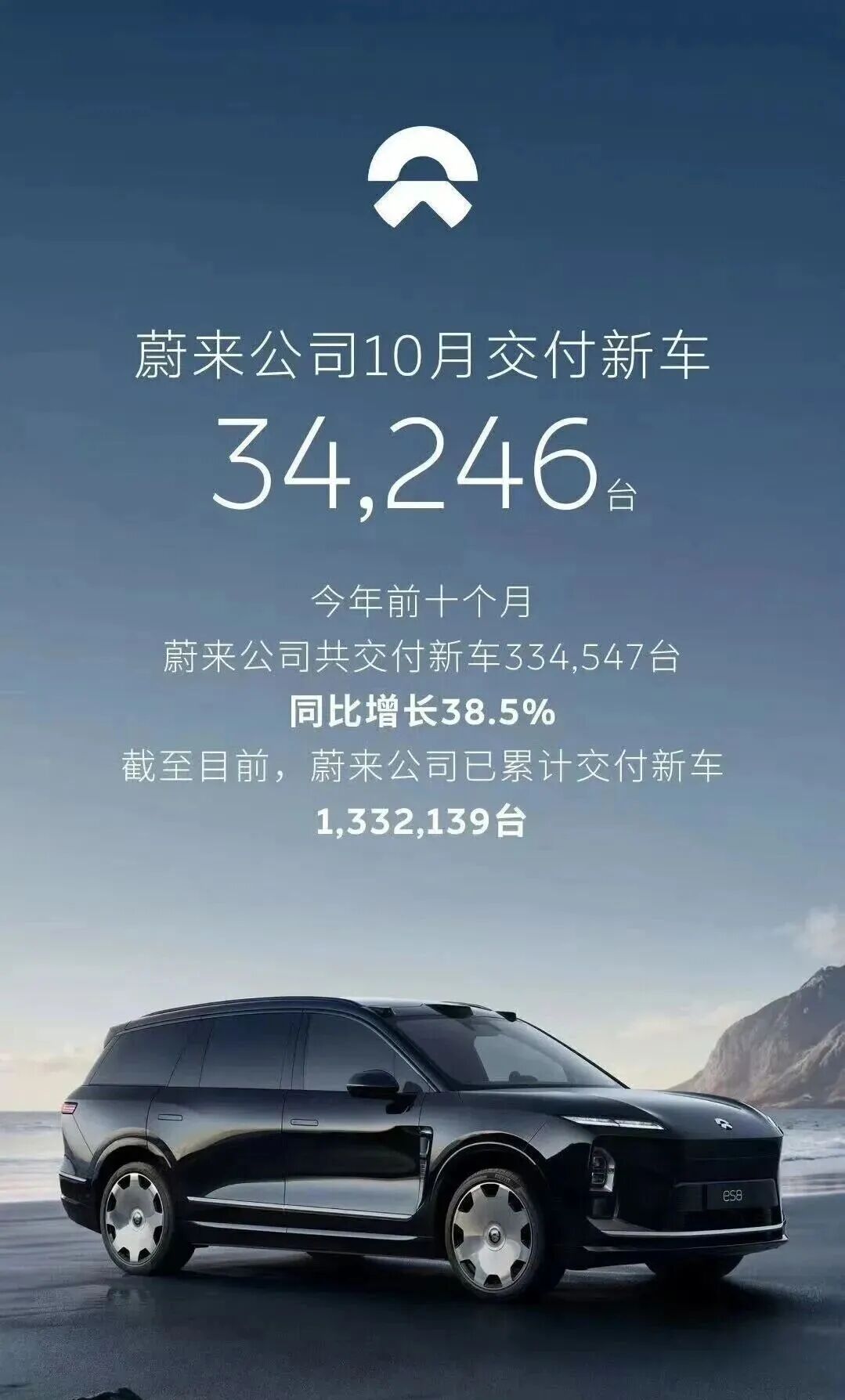
The division of labor among the three brands is clear-cut. The main NIO brand guards the high-end positioning, while Onvo and Firefly cover different price segments below. At this stage, however, NIO's mainstay remains the ES8 and ES9 holding the fort. The major new third-generation 5566 models have yet to launch, leaving a short-term gap in new hit products to drive growth. Many in the market believe that once next year's new products catch up, NIO Group will have a shot at challenging monthly sales of 50,000.
HarmonyOS Intelligent Mobility: 33,537 units, cumulative deliveries exceed 1.6 million, declining for four consecutive months
HarmonyOS Intelligent Mobility delivered 33,537 units in October, with cumulative deliveries across all series exceeding 1.6 million.
But the comparison is sobering. Deliveries in the same period last year were close to 68,000 units—nearly halved year-on-year; compared with September, they also continued to decline, marking four consecutive months of falling sales.
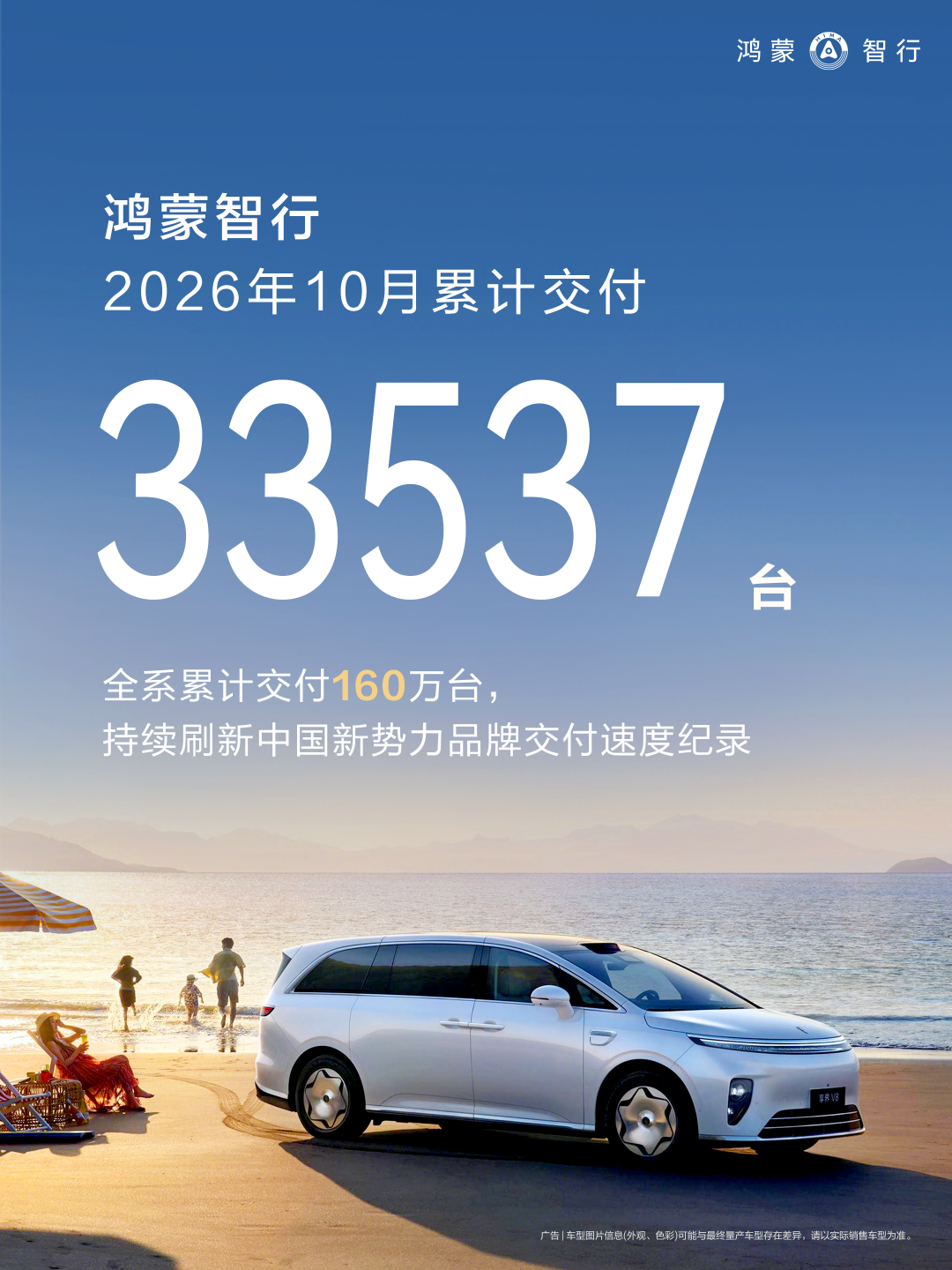
At present, the delivery base is still supported by the AITO M9, which has long maintained monthly sales above 10,000. New cars such as the Luxeed G9 and Zhijie RX have not been on the market long, and orders and production capacity are still ramping up. In addition, the AITO M8 is about to be released. During this transition between old and new models, the burden is not light.
Zeekr: 32,483 units, annual target completed ahead of schedule, double growth for 9 consecutive months
Zeekr delivered 32,483 units in October, up 51.6% year-on-year; from January to October, cumulative sales reached 320,887 units, up 94.4% year-on-year, also setting a new monthly high and achieving year-on-year and month-on-month double growth for nine consecutive months.
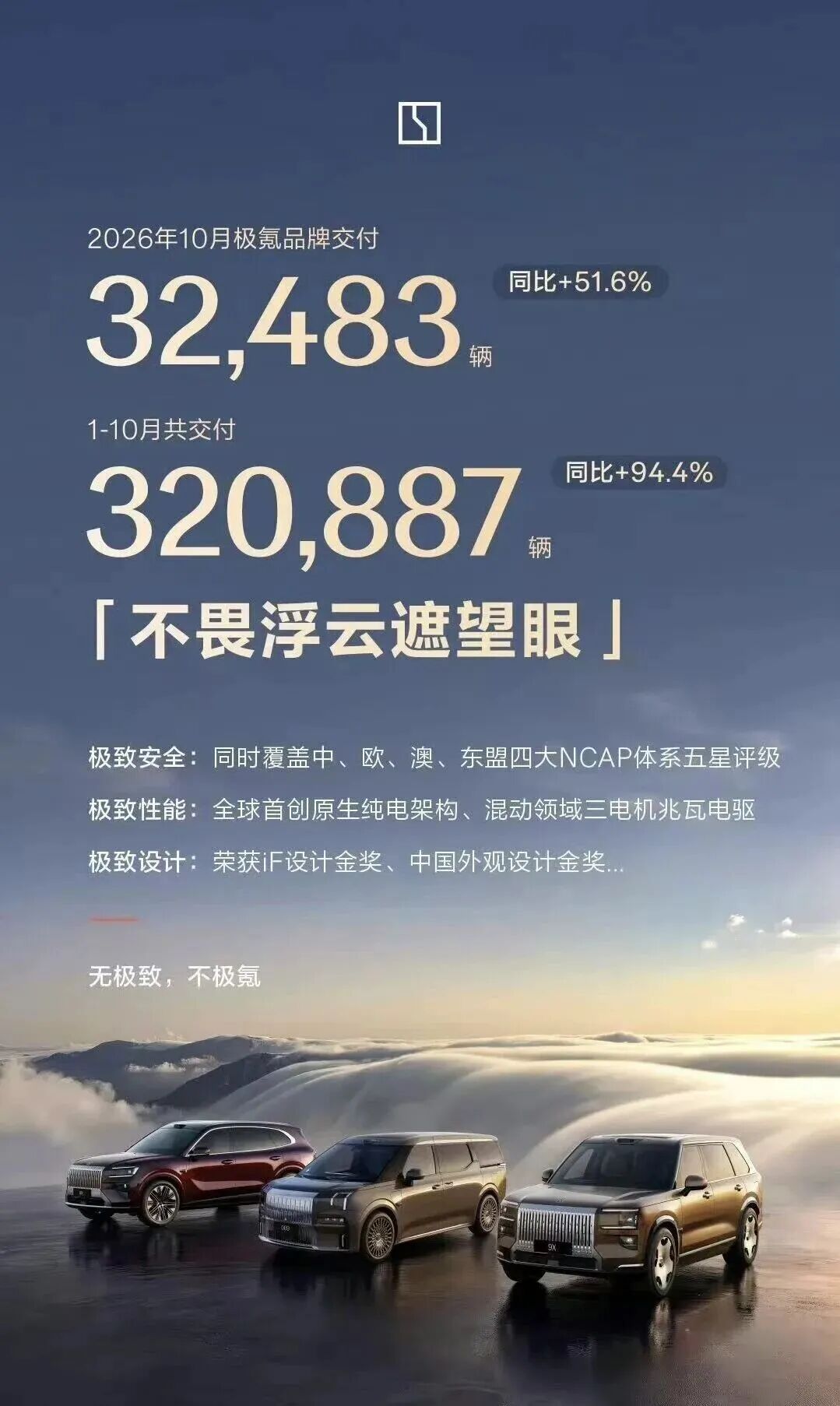
In this group, Zeekr is a winner. It set an annual target of 300,000 units at the beginning of the year and exceeded it by the end of October. The 9X and 8X high-end models have good reputations and have established a foothold in the high-end pure electric segment. It is one of the few players on this list that has completed its annual task ahead of schedule.
Deepal: 32,602 units, steadily climbing, Changan system making a low-key push
Deepal sold 32,602 units in October, up 8.01% month-on-month. It delivered 30,185 units in September, with cumulative sales of 252,213 units from January to September.
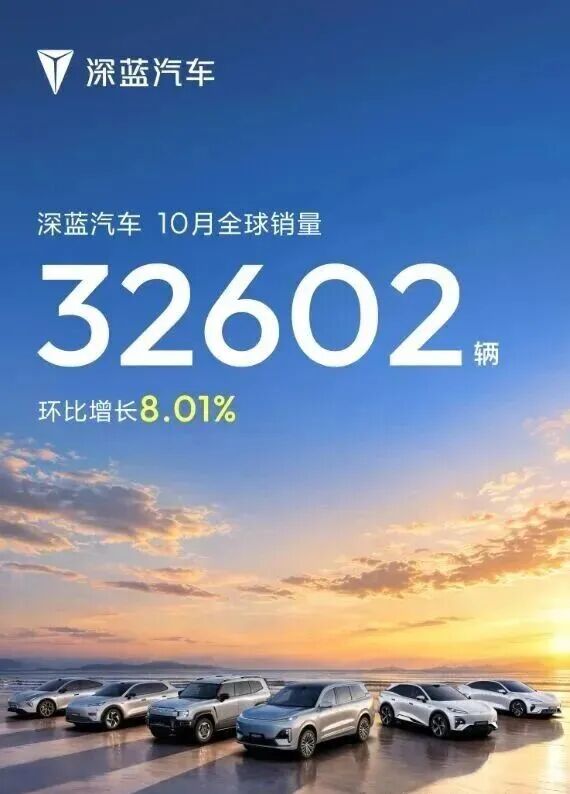
Both under Changan, Deepal and Avatr take completely different routes. Deepal focuses on affordability and keeps a low profile, steadily holding its place in the 30,000-delivery tier. Among new energy brands incubated by traditional automakers, it is one of the most consistent performers.
Li Auto: 29,025 units, year-on-year and month-on-month declines, waiting for the new i6 to save the day
Li Auto delivered 29,025 units in October. As of the end of October, cumulative deliveries reached 1,862,676 units.

Compared with the same period last year and September data, both year-on-year and month-on-month figures are falling. The reason is relatively clear: the main model i6 underwent a brief production halt and adjustment due to a model change, which directly dragged down deliveries. The first sales heat of the revised MEGA was decent, selling about 3,000 units in October.
The market generally expects that only after the new i6 resumes normal production scheduling in November will Li Auto's sales have a chance to recover.
Other players: Huajing S alone reaches 7,507 units
The single model Huajing S delivered 7,507 units. Being able to steadily reach 7,000 units with just one new car means its opening performance exceeded many people's expectations. On the traditional automaker side, GAC Toyota delivered 53,022 vehicles in October, Dongfeng Honda 17,026, and Volkswagen Anhui 1,697. Between fuel vehicles and new energy vehicles, the divergence remains obvious.
Reading the market through sales: high-end is a hard sell, cost-effectiveness is the traffic code
Looking at the entire list together, the trend is clear at a glance.
Brands focused on high-end and higher average prices are generally under pressure. HarmonyOS Intelligent Mobility, Li Auto, and NIO have all encountered growth bottlenecks. In contrast, models priced in the teens or low 200,000s, focused on practicality and cost-effectiveness, have much stronger volume momentum.
Consumers are now more cautious when buying cars and more rational in spending, and the decision cycle for high-priced models has clearly lengthened.
On the other hand, going overseas is no longer an optional bonus item. Leapmotor and Xpeng have both achieved considerable incremental growth overseas. As domestic competition becomes increasingly fierce, overseas markets have already become a new battleground that leading automakers must capture.
There is plenty to watch in November: the Xpeng L05, the new Li Auto i6, and the AITO M8 will gradually enter their delivery cycles. Next month's sales rankings will most likely see new changes again.
Speaking of which, whose performance on this October sales list exceeded your expectations? Which brand are you more optimistic about for volume growth in November? Let's talk in the comments. Disclaimer: This article is only a DACHANG financial commentary and does not constitute any investment advice. The corporate data and regulatory events mentioned in the article all come from public information and are for reference only; specifics should be subject to official releases. Image source: internet. If there is any copyright issue, please contact us for deletion.
-
![]()
Xiaomi's October Sales Surge: "One Meter Pierces Eight Realms" Meme Persists as Pengcheng Delivers
-
![]()
Leapmotor Tops 100k, Xiaomi and Xpeng Cross 50k, HarmonyOS Hits 30k, Li Auto… New Forces Reveal October Sales
-
![]()
Ford's New Category to Counter Chinese NEVs: The UEV Platform Fathom
-
![]()
France Proposes Internet Traffic Tax: 0.4 Yuan per GB Transmitted; Tech Giants Push Back, Bill Unlikely to Pass
-
Lexus's Imported All-Electric RZ Is a Sales Flop—Will Its Domestically Produced EVs Fare Any Better?
-
![]()
Samsung Tops Africa's Smartphone Market for the First Time in 31 Years as Q2 Shipments Surge 34.8% Year-on-Year
-
Plug-in Hybrid Exports to Europe Surge 372% in First Nine Months: Why Do European Consumers Prefer Chinese PHEVs?
-
![]()
AITO Accelerates Overseas Expansion Again! Full Entry into Europe by 2027—Is It About More Than Just Orders?