Rediscovering Nissan China
 11/18 2026
 542
「 The cards it holds, and how it will play them in the future 」
Nissan Motor first knocked on China's door in 1973, when its luxury sedan Cedric was exported to China in a single batch. By then, the automaker was already a global name, yet for a considerable period it had no systematic China strategy. The neighboring Chinese market was, to it, little more than a token presence.
It was not until 12 years later that the multinational set up a Beijing office on Jianguomenwai Street—which later grew into Nissan (China) Investment Co., Ltd. (hereinafter referred to as "Nissan China"). In the early days, three employees mainly handled technology transfer.
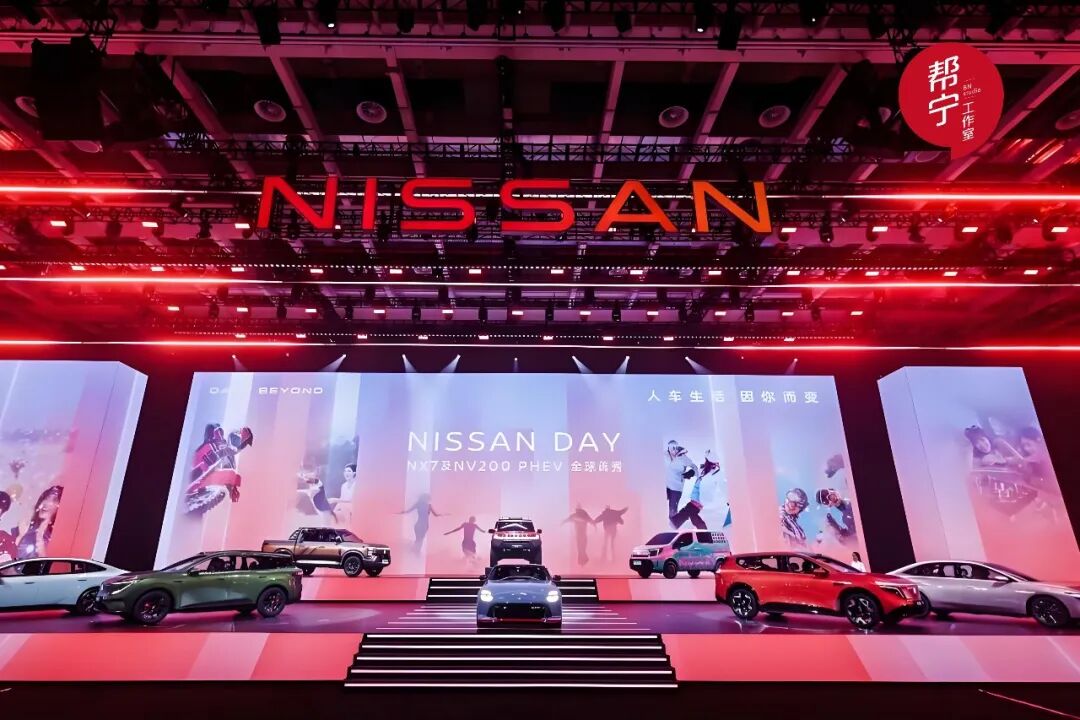
Times change. After 53 years in the Chinese market, on November 13, 2026, at the Zhuhai International Convention and Exhibition Center, Nissan Motor held its most important brand event of the year, NISSAN DAY.
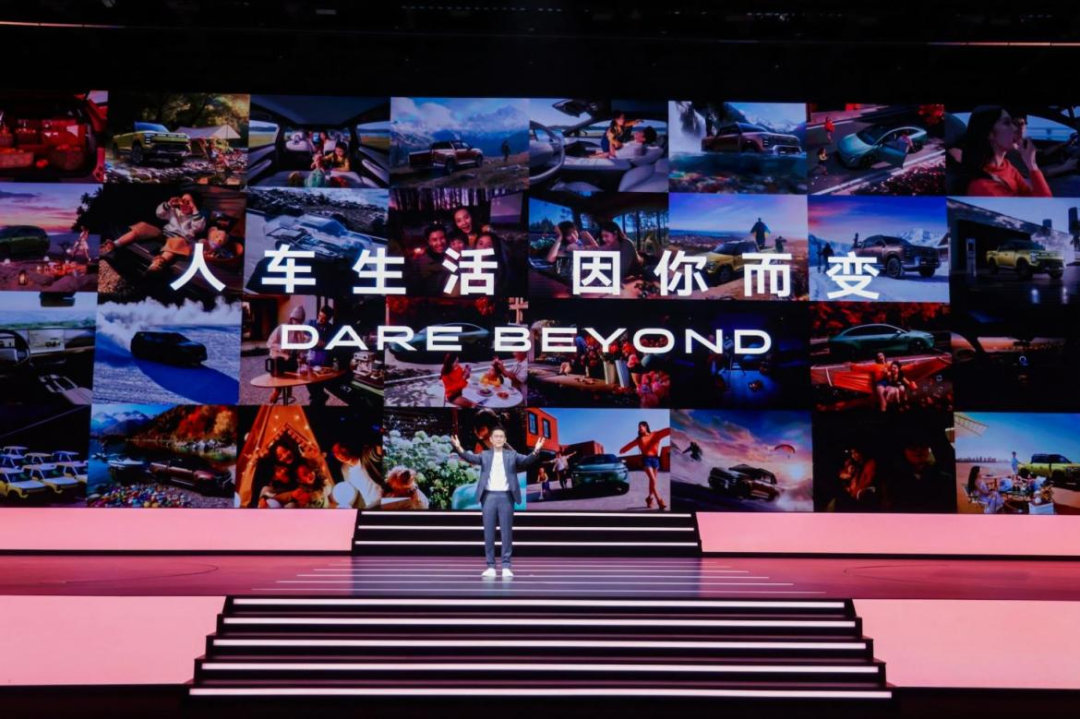
That day, Nissan Motor not only announced a new brand manifesto—"People, Cars, Life, Changed by You"—but also gathered and unveiled its new energy product matrix. Ma Zhixin, Chairman of the Nissan China Management Committee and President of Dongfeng Motor Co., Ltd., revealed in an interview that day that by the end of 2026, products of Nissan China's joint venture company will be exported to more than 30 countries and regions, "not only fuel vehicles, but also new energy vehicles—all are being promoted for export."
Nissan China has changed. In the past, Nissan Motor brought technology into China; today, it brings products developed and manufactured locally in China to the world.
This is a more thorough self-renovation and a comprehensive counteroffensive.
The grand NISSAN DAY, jointly created by Nissan China, Dongfeng Nissan, and Zhengzhou Nissan, showcased passenger vehicles, light commercial vehicles, and export models on the same stage.
Through four things—the new brand manifesto, the NX7 presale, the global debut of the NV200 PHEV, and the introduction of the NISMO brand into China—they hope to answer two questions the industry cares about: what cards Nissan China holds in its hand, and how it will play them in the future.
At present, Chinese auto joint venture brands are all having a hard time. Data from the China Passenger Car Association shows that their market share has retreated to one quarter. In October, for example, retail sales of mainstream joint venture brands were 320,000 units, down 38% year-on-year, while the retail share of independent brands reached 73.8%. Over the past year, voices in the outside world bad-mouthing joint venture brands have risen one after another.
Against this general trend, Nissan China is betting on the present and the future. It is worth noting that Nissan Motor's sales in China also had highlights this year; the N-series new energy models, for example, saw cumulative sales in the first 10 months increase by 37% year-on-year.
Competition in the new energy era is shifting from parameter comparison to competition in system strength. The difficulty for joint venture automakers is that it is easy to put on an electrification label, but it is hard to be user-centered, iterate quickly locally, and at the same time safeguard quality, safety, and product value.
Nissan China's actions at NISSAN DAY are precisely a response to this requirement—the subject of the brand manifesto was changed, shifting the message from "what Nissan wants to give you" to "what your life needs"; product definition was handed over to the Chinese team, with the core functions of the NX7 determined according to the actual usage scenarios of Chinese families; in terms of export, the production capacity of Chinese factories is connected to Nissan's global product lineup.
NISSAN DAY needs to be viewed over a span of time to be seen more clearly.
▍01
A New Brand Narrative
To understand Nissan China's renewed brand manifesto, one must first see clearly what it replaced—the previous one was "Enjoy by NI," with the focus on emotion; the new one is "People, Cars, Life, Changed by You," with the focus on commitment.
Liu Xinyu, General Manager of Nissan (China) Investment Co., Ltd., explained at a media communication meeting: "People, cars, and life are the original aspiration we have always adhered to; 'changed by you' is our determination to exceed expectations."
From emotion to commitment, the difference lies in where responsibility falls. Emotions can be released at any time, while commitments need to be fulfilled. Once the manifesto is changed, the right of evaluation is immediately handed to users: since Nissan China changes because of users, then after user needs change, can its products and services keep up?
Ma Zhixin revealed that the adjustment of the brand manifesto was discussed at Nissan Motor headquarters for nearly a year, and then studied by the Chinese team for several months. Everyone was repeatedly seeking the answer to the same question—in the new era, what kind of company is Nissan Motor, what kind of cars does it build, and why is it loved by users.
Nissan Motor's global brand proposition is "Dare Beyond." In Ma Zhixin's view, this expression works in the English context, meaning daring to challenge and exceed expectations. But when entering the Chinese market, what slogan should be used? Nissan studied for a long time and looked back at Nissan's decades-long history in China, believing that what users value is still Nissan's "people, cars, life," and that these words can also well express what Nissan wants to do.
This is a re-identification of roles.
Nissan Motor does not lack brand assets. The "People · Cars · Life" proposition was introduced to China more than 20 years ago and is a rare tangible asset in the joint venture camp that does not require re-educating consumers. Nearly a century of brand history superimposed on half a century of China experience—such depth is rare among similar companies.
However, this depth also carries a burden. From terminal feedback, Nissan Motor in China is still regarded by a considerable number of consumers as a fuel vehicle company, and its new energy products have not yet fully entered public awareness. But the advantage is that the thicker the asset, the more stable the impression.
If a new auto brand claims "I am young," no one questions it. But when a brand that has operated in China for more than half a century says "I am young," users' first reaction is still its fuel vehicles. Nissan China's manifesto renewal this time is a positioning correction—only by replacing the old impression first can the new narrative have a place to land.
In addition, NISMO is Nissan Motor's high-performance sub-brand, and since its founding it has focused on motorsports and the tuning and development of high-performance models. Nissan Motor does not only talk about life, comfort, and companionship; it also has track sports genes, and its more than 90 years of brand history is also full of driving pleasure and passion.
The group of Chinese people who love performance cars is expanding. At this moment, Nissan Motor is introducing the NISMO brand into China, both as a response to this demand and to empower mass-produced models with tuning experience accumulated on the track.
The choice of timing is also particular. The Chinese auto market has an abundance of choices, severe product homogeneity, continuously declining prices, and converging performance. Yet products that truly carry sporty and performance attributes are generally priced on the high side.
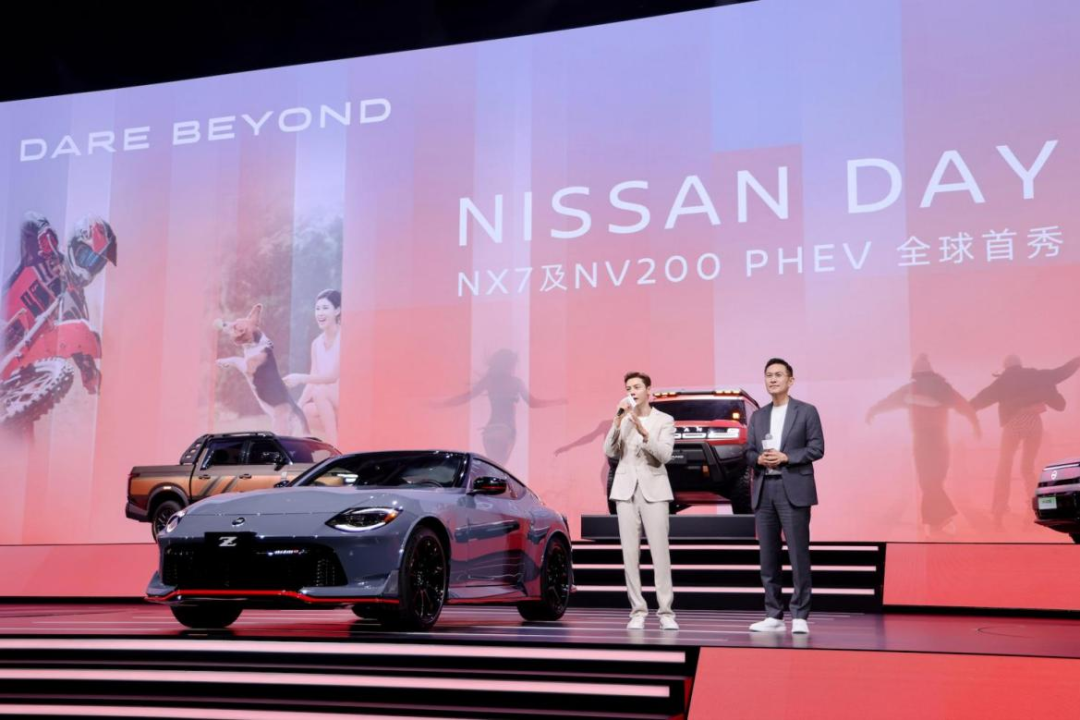
A gap has been left between the two. To some extent, there are not many choices that offer both performance and a suitable price, and for a long time, Nissan Motor has precisely brought performance car prices to a level ordinary consumers can afford.
It is worth noting that Hirofumi Eta, who once served as chief engineer of the Nissan Z NISMO, is now in Guangzhou responsible for Nissan's R&D in China. At the communication meeting, Ma Zhixin specifically mentioned this matter. He said: "From this point, one can see what kind of products Nissan Motor will do in China in the future."
Whether a performance brand can land does not depend on the volume of the launch event, but on whether real investment is made in R&D for it.
▍02
How to Implement
Next is the implementation method.
For the next stage of joint venture automakers, what is compared is who puts the right of definition in China earlier. Nissan China's answer is to take 3 steps.
The first step is to hand the right of definition to the Chinese team.
Up to now, five new energy vehicles designed, developed, and manufactured by the local team—Z9, N7, Frontier Pro, N6, and NX8—have been launched. Together with the presale NX7 and the globally debuted NV200 PHEV, Nissan China's new energy models have covered three powertrains—pure electric, plug-in hybrid, and extended range—as well as multiple categories including sedans, SUVs, and pickups.
The second step is to expand the powertrain routes.
Nissan China's choice can be summarized in four words: pure electric +1. When Chinese consumers shift from fuel vehicles to electric vehicles, they generally carry range and charging anxiety, and plug-in hybrid and extended range have become more realistic choices during the transition period.
As for the so-called "+1," at the communication meeting, Nissan China management explained that it refers to plug-in hybrid or extended range. The specific choice of powertrain depends on which segment has greater demand. Models launched at the current stage are each equipped with one powertrain, and next year each will add one more power mode on that basis.
This indirectly reflects a reality—China's new energy vehicle market has multiple powertrain routes running in parallel, and perhaps no single technical route can dominate the world.
Nissan China's product layout presents a risk structure. For joint venture automakers, the greatest capital is the system depth of multiple routes running in parallel; once a bet is wrong, there is still room to turn. This is a diversified bet; no single car can be guaranteed to become a hit, but as long as Nissan China's system remains, there is a certain margin for error.
The third step is to make one car solid.
NX7 does not aim to be first in parameters, but emphasizes "six firsts," namely first-class appearance, first-tier battery, first-class intelligent assisted driving, first-class smart cabin, first-grade comfort, and first-class quality. None of the six is traded off. For example, pure electric range is 320 kilometers, and the driving assistance function adopts the Momenta R7 large model.
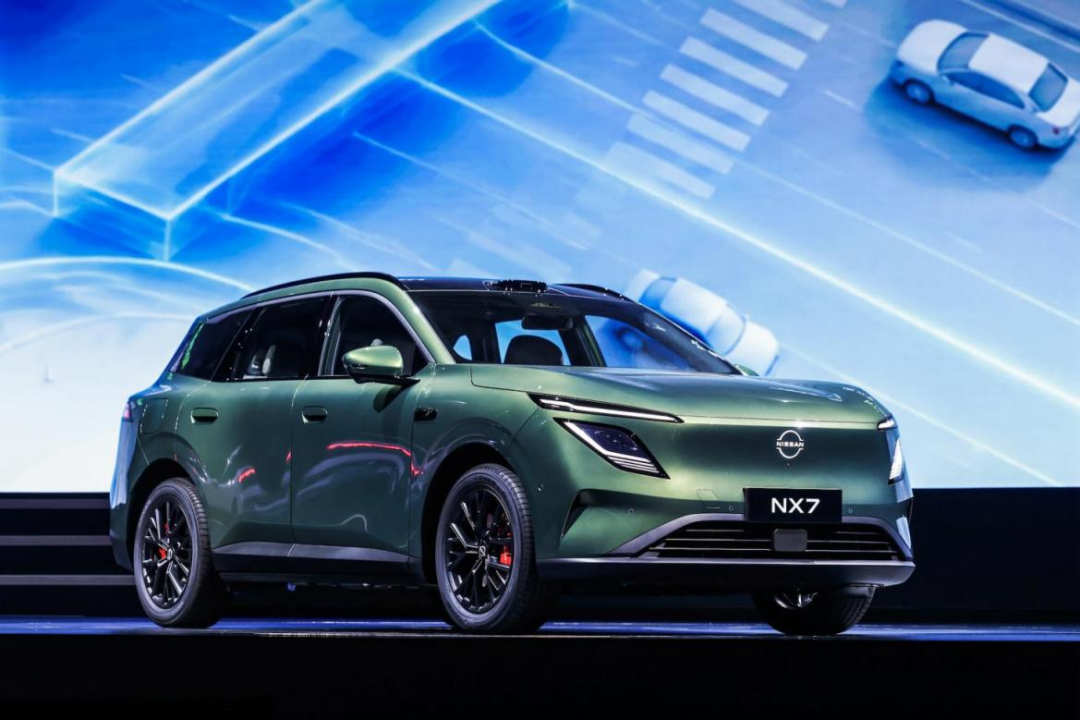
More noteworthy than parameters is Nissan China's review of past product experience.
Focusing on Nissan China's products, the new energy vehicles launched over the past year and a half have been continuously improving. The experience left by these forerunners is vividly reflected in NX7, such as how to add configurations, how to treat users, how stores receive customers, and what price range to set.
From this perspective, NX7 is a concentrated realization of organizational learning at Nissan China. If the first car sold product strength, then NX7, in addition to product strength, also has "organizational memory."
The outside world mostly believes that joint venture automakers move slowly because foreign parties do not open up technology. In fact, from a practical point of view, this slowness appears more after vehicles are sold, such as the timeliness of service response, the closed-loop cycle of quality feedback, and whether dealers have disposal rights.
The industry widely says that "the freshness period of a new car is only about 3 months." Then after 3 months, what do you rely on? Nissan China's answer is to rely on products continuing to provide freshness and on service to receive users.
Specifically, the card Nissan China holds in its hand is 19 million Chinese users. In China's market where incremental growth has peaked, this is its most concrete service entry point. Channel networks were once regarded as costs, but are now regarded as assets.
Therefore, whether it is Nissan China or other joint venture brands, their second chance in China does not lie in proving that they are equally capable of building electric vehicles, because China does not lack new energy players.
What they need to prove is another thing—that they are better at running an electric vehicle into a good car.
▍03
An Arithmetic Problem
After the products are rolled out, the last thing is to position China on Nissan's global map and consider which end of the chain to place the Chinese market at.
In fact, China's significance to Nissan Motor is shifting from the largest single market to the supply side with the lowest cost and fastest iteration. This point needs to be observed within Nissan's 53-year history in China.
When it entered China in 1973, Nissan Motor was only an importer. In 1993, Zhengzhou Nissan was established, adding the identity of manufacturer. In 2003, Dongfeng Limited was established and the first Sunny rolled off the line at Dongfeng Nissan, further opening the Chinese market as a joint venture operator.
In 2026, it began to ship Nissan cars made in China to the world on a scale, thereby adding a fourth identity—exporter. The first three times, global cars were brought into China, but this time, the direction is exactly the opposite.
In July this year, the first batch of Frontier Pro set sail from Shanghai Port to Latin America. This is Nissan's first model led by the Chinese team in design, R&D, and production and exported globally. Since September, it has also been shipped to Southeast Asia; on October 7, it was launched in Mexico; on November 6, it was launched in the Philippines together with N7.
"In Mexico, Nissan Motor ranks first in market share, about 18% in October." Ma Zhixin revealed at the communication meeting, "We receive feedback every week saying that customers can't wait and want more Frontier Pro shipped to Mexico."
Users there are waiting for a pickup made in China. This means that export models have become a key piece for Nissan to improve its global product lineup.
According to the plan, in 2026, products from Nissan's joint venture in China will be exported to more than 30 countries and regions—double the number next year. For example, the Frontier Pro will enter the first batch of right-hand drive markets such as Australia and New Zealand, and the NX8 is also on the export list.
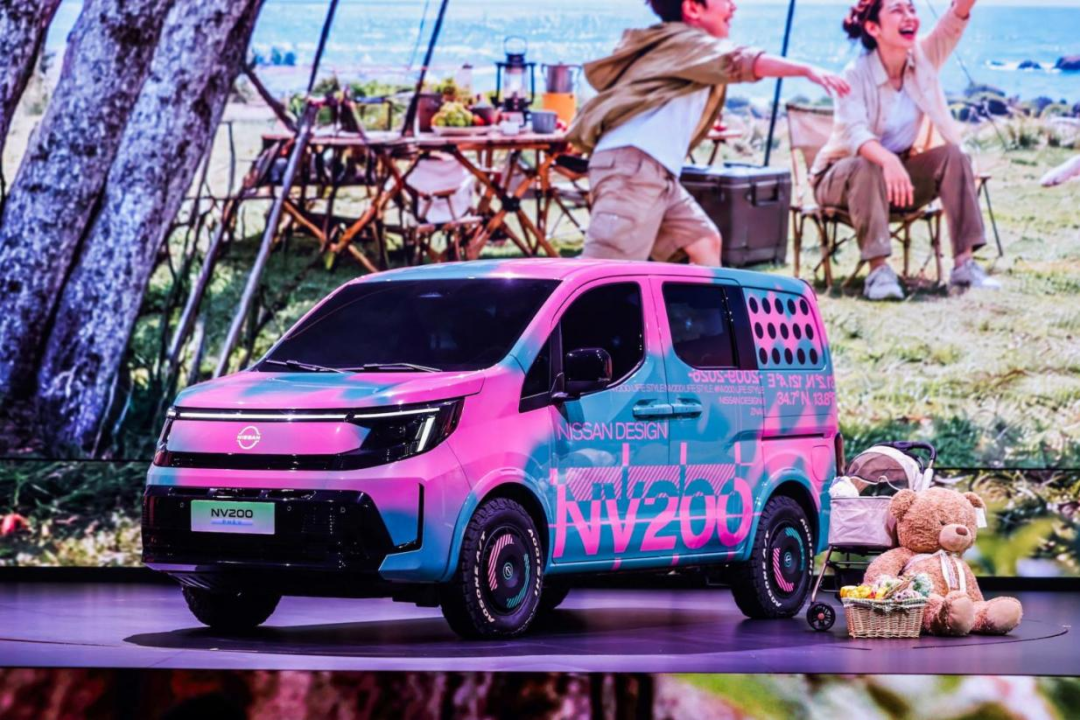
Going global is often described as a matter of sentiment, but once broken down, it is an arithmetic problem—produce where costs are lower and ship to where demand is stronger, with Nissan Motor pursuing the optimal combination. Among this, the threshold is not price, but standards.
The difficulty is that the same car entering different markets needs to be adjusted according to local conditions, and users in different places have different expectations of a Nissan car. Nissan Motor has accumulated decades of brand awareness in overseas markets. Whether to change or not, one judgment cannot be avoided—it must still be a Nissan car.
The biggest hurdles for Chinese automakers going global are, first, standards, and second, trust—and these two happen to be Nissan's armor. At NISSAN DAY, Nissan Motor CEO Ivan Espinosa delivered a video address. He said: "China is gradually becoming Nissan Motor's innovation center and global export base, helping us bring products developed in China that meet global standards to consumers in different regions around the world."
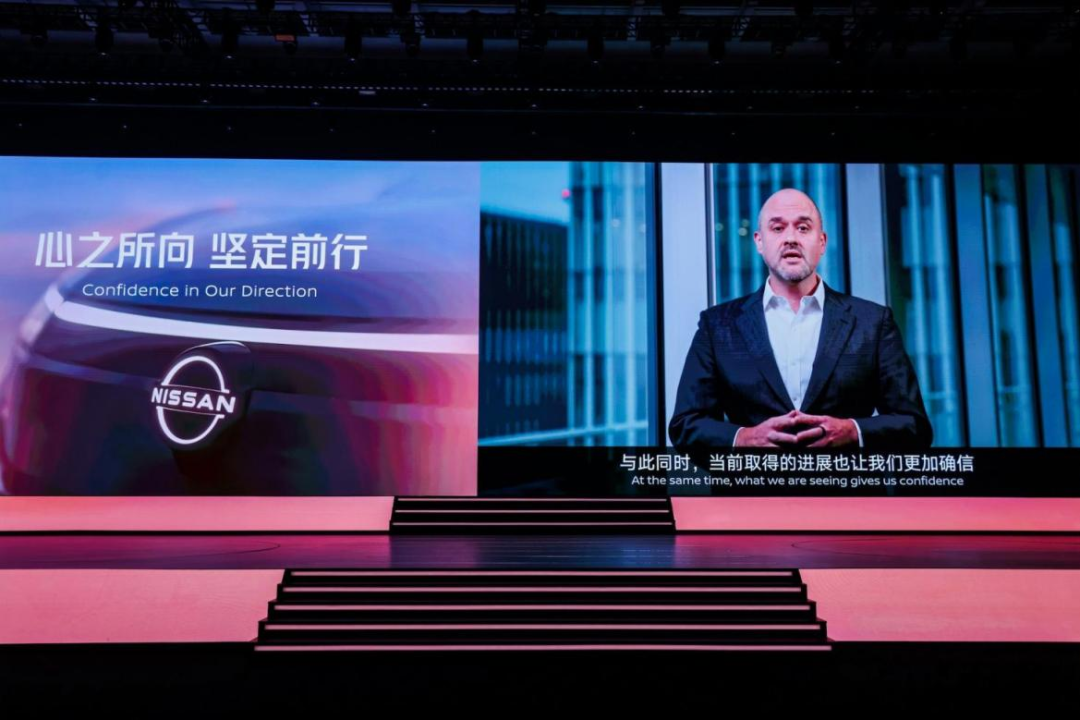
Zhang Yongwei, chairman of the China EV100 Research Institute, once proposed that multinational companies' institutions in China should shift from "in China, for China" to "in China, for the world." This formulation aligns quite well with Nissan China's development strategy, which is to directly incorporate models developed, manufactured, and exported in China into Nissan's global product lineup.
The 19 million users are Nissan's most solid foundation in China. A massive base of fuel vehicles, a mature user service system, and a dealer network and organizational inertia built over decades all mean that the four words "Change for You" carry two different levels of difficulty for Nissan China and for a new carmaking company.
If a new carmaking company says "Change for You," it is traveling light. But for Nissan, which has been rooted in China for 53 years and has manufactured tens of millions of vehicles, saying "Change for You" requires the entire long chain to turn at the same time. For it, the hardest test lies ahead, namely every delivery day of its products.
NISSAN DAY ended according to the agenda, the exhibition area was brightly lit, and attendees slowly dispersed among several lifestyle scenes.
A refreshed manifesto, the introduction of the NISMO brand, the debut of new products, and new export plans—after all, the content carried by a single brand day event and the information it conveys are limited. Turning direction into fact depends on every vehicle subsequently delivered into users' hands, and on users' more real experiences and feelings.
It is time to get to know Nissan China anew.
-
![]()
Slashing Prices While Imposing Quotas: The AI Large-Model War Has Already Switched Tracks
-
![]()
XPeng Reports 870 Million Yuan Net Loss in Q3 — Who Ate the Profit?
-
Xiaomi 18 Pro Overseas Launch: 86% More Expensive Than Domestic, Breaking 10,000 Yuan!
-
![]()
Avatr's Shareholder Shift Ahead of Hong Kong IPO: CATL's Influence Set to Change
-
![]()
New M8 Secures Only 11,000 Firm Orders in Three Days—Has AITO's Report Card Lost Its Luster?
-
![]()
AI Computing Power Stocks Defy Market Downturn with Sharp Gains
-
![]()
OpenAI Unveils GPT-6.2 Astra and Sol, Outperforming Claude Fable 5.2 at Just 5% of the Cost
-
![]()
Baidu's Q3 Report: Advertising Stalls as AI Takes the Wheel