Survival Is Already Hard Enough—So Why Talk About "Brand Upward Mobility"?
 11/19 2026
 550
Introduction
When everyone is chasing ultimate cost-effectiveness, building a brand is harder than ever.
Price war, price war, and more price war.
In this year's auto market, almost every move has revolved around this theme. And as time goes on, consumers' ever-growing demands—wanting everything and then some—are being answered by automakers again and again, leaving this market with little room for any product that has inherent shortcomings.
For a long time, everyone has been hoping that Chinese automobiles would truly rise and reclaim the share held by foreign brands. This aspiration has become especially strong as the entire industry enters the electrification era.
In recent years, thanks to the rapid evolution of new energy and intelligent technologies, "Chinese automobiles" have indeed shed the label of "shoddy manufacturing." BYD has been crowned the global leader in new energy vehicles, and new forces have taught plenty of people, step by step, what "overtaking on the curve" really means.
But one indisputable fact remains: "cost-effectiveness" is still a label Chinese automobiles cannot shake off.
They say the "spend big, get a bad car" story of the joint-venture era has been completely rewritten by Chinese cars. But with industry profit margins as pitifully low as 1.5%, is cutthroat competition really the only path Chinese automobiles can take?
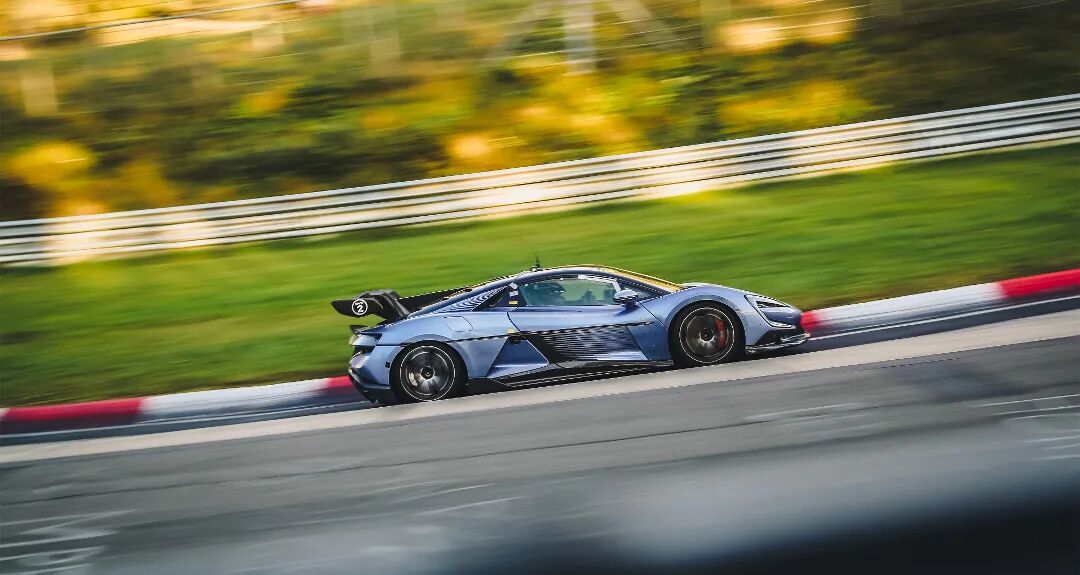
Today we have Nürburgring lap-record monsters and a host of all-around players that can bring a home into the car. Logically, as Chinese automobiles' performance gains worldwide recognition, "brand upward mobility" should follow naturally.
Unfortunately, just as Chery Chairman Yin Tongyue said not long ago, "Chinese automakers cannot pursue sales volume alone; building a brand with real value is the fundamental way out."
Even as he keeps stressing that "pursuing volume alone is not the way out," the reality is that the industry remains broadly mired in a price war. To chase traffic, unscrupulous provocation and belittling have become the norm. All of this shows that the industry is not as prosperous as it appears and is riddled with too many hidden problems.
Domestically, if the industry is to become a pillar of the national economy, it cannot rely on endless mutual harm—and true internationalization is not simply "shipping out to sell."
On how to drive self-improvement and industry transformation through brand influence, impetuosity is unacceptable, and piling up volume for achievements should not be what Chinese automobiles aspire to.
01 Disorderly Competition Has Led the Industry Astray
The proposition of "brand upward mobility" has been discussed by Chinese automobiles ever since the auto market opened up.
More than a decade ago, joint-venture brands stood at the top, using products, culture, and history to build an impenetrable wall.
Tiguans sold at a premium, the Audi A6 was the decent choice within the system, and the BMW 3 Series was the entry ticket for the young and promising. What were independent brands doing at that time? In the 70,000–80,000 yuan market, they competed on sheet metal thickness, spaciousness, and "look how long my configuration list is." They struggled to justify themselves, yet they struggled without complaint.
Later, the entire industry was reshaped by the "new four modernizations," and the auto industry replaced real estate as a national development priority. Everyone thought the era belonging to Chinese automobiles had arrived.
Three-electric systems kept upgrading and iterating, and intelligent technologies brought a qualitative leap in the overall vehicle experience. Acceleration from 0 to 100 km/h in under 3 seconds, range exceeding 1,000 kilometers, advanced smart driving that makes driving effortless—so "high-end" could be democratized just like that. Did that mean Chinese automobiles had already accomplished "overtaking on the curve"?
But everyone has seen how the past few years have played out.
What was democratized was the "technology barrier," not the "brand barrier." When everyone can achieve the same acceleration, everyone buys smart driving solutions from the same supplier, and cockpits all connect to the same large model, the label of "I'm more premium than you" was thrown into the fire and burned to ashes by our own hands—and then the problems began.
Now when buying a car, people have grown accustomed to the idea that regardless of class or model, all configurations, necessary or not, must be fully equipped. As long as a new car is not an all-rounder, a single remark like "Others have higher configurations than you, so why should I spend the same money on yours?" or "The configurations are all the same anyway, so why are you so much more expensive than the one next door?" can leave automakers speechless.
Immediately after, companies fall into a strange cycle of self-justification, and everyone wants to treat Leapmotor's playbook as the code of success. Step by step, "technology has leveled the threshold, but premium pricing has lost its footing" is the true portrayal of today's auto industry.
Many times, consumers have been telling automakers that the joint-venture playbook of the past was dross, and that Chinese automobiles should popularize technology in the most down-to-earth way.
But now, with the topic of "rushed cars" still fermenting and the Ministry of Industry and Information Technology leading the way to supervise and rectify payment chaos in the industry, can we look back and ask: was the fuel vehicle era that everyone despised really like an outdated copy of "Story Club," completely worthless?
Chery has long suffered over "brand." Exeed has yet to establish a high-end image, and that has stuck in Chery's throat. So can other independent automakers stay uninvolved?
Yes, there are currently hot-selling new energy SUVs that have crossed the 500,000 yuan mark and are selling well. But on second thought, when potential customers of BBA and Porsche can be attracted, isn't that essentially still because of cost-effectiveness? Brand factors account for a little, but they are definitely not the main factor in purchase decisions.
What has been the most surreal scene in the auto market over the past two years?
It is the dazzling lights at auto shows, with senior automaker executives on stage talking about long-termism, while below the stage the head of sales has a phone that keeps ringing: competitors have cut another 20,000 yuan—do we follow?
From 2025 to today, industry profit margins have fallen again and again. A group of people busy for a whole year, and when the accounts are settled, most companies have not even gotten a taste of the soup. Over 80% of dealers are selling at inverted prices, and losing 20,000 to 30,000 yuan per car sold is the norm.
In such books, "brand upward mobility" is definitely a luxury. If anyone still says they want to build a brand, just ask them: like smart, making the same 100,000 yuan two-seat pure electric small car with only 300 kilometers of range and no advanced smart driving at all—do you have the confidence to make it a hit?
If no one dares to give an answer, then please tell me: when the blank of brand history cannot be filled, how can we talk about so-called "brand upward mobility"?
02 To Win the Future, Brand Is Key
In the era of traditional fuel vehicles, a century of mechanical accumulation, racing pedigree, handmade craftsmanship, and exquisite materials—there were too many external things that could make users willing to pay. It is like facing most luxury goods: when you point out that your bag can hold more and the hardware fittings are more durable, you have already lost.
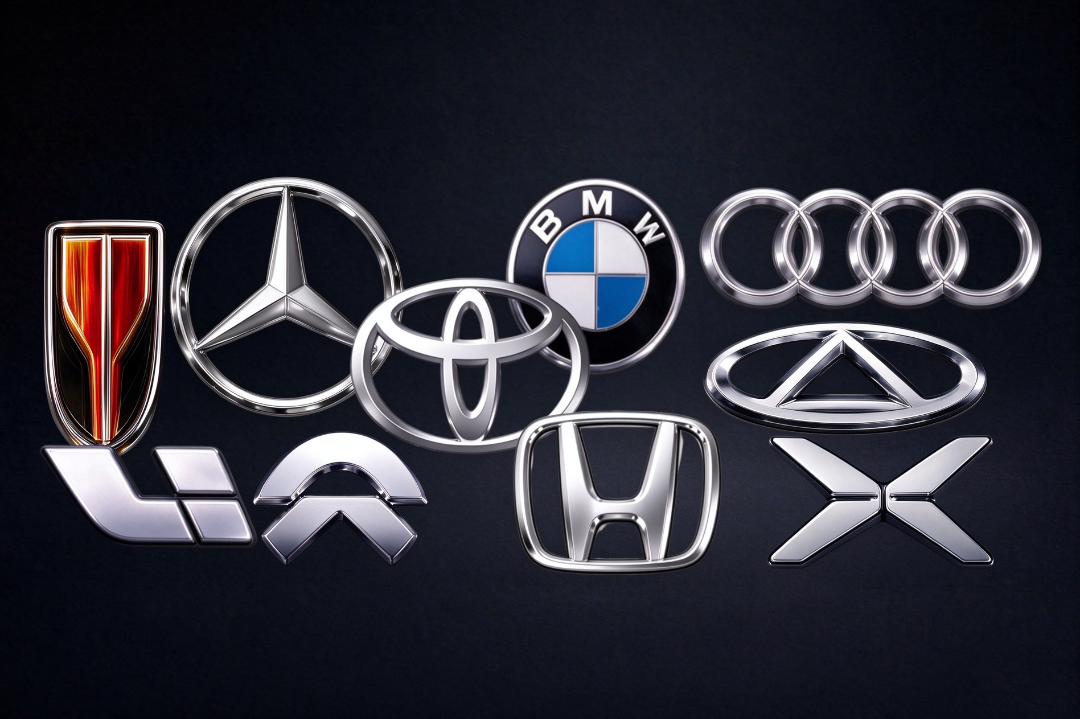
In the new automotive era, Li Auto established itself with "color TV, refrigerator, large sofa," NIO cultivated human connection through service and battery swapping, and AITO won over phone enthusiasts with full-vehicle intelligence. These new brands indeed spent five or six years building user trust one car at a time.
But with the price war continuing to this day, more automakers' main brands are still pursuing volume. Products at the 100,000 yuan level do the job of past models above 200,000 yuan, and the brand seems dispensable. Apart from BYD incubating Denza, Fang Cheng Bao, and Yangwang, each with its own battlefield, it is hard to find another typical example.
Exeed changed leaders seven times in seven years, and its products all became pioneers for overseas expansion; WEY went from the VV series to the coffee series, and then improved somewhat thanks to MPVs, but its marketing team underwent a major reshuffle; Hyper, carrying GAC's oath of "no upper limit," is still looking for its positioning...
Is this the result of bad products? Actually not. Brand upward mobility requires determination. And the mind of every newly launched high-end brand cannot withstand repeated alterations. Today it says it is performance luxury, tomorrow it changes its tune to family intelligence, the day after it talks about personalized propositions, and in the end none can escape the heavy burden of sales volume.
Judging purely by this chain, which new brand can withstand such tossing around? For reference, NIO, with the strongest brand power among new forces, solely to maintain its brand tone, must burn money to establish the Onvo and Firefly brands separately, and even then must expand the battery-swapping ecosystem to protect NIO users' rights.
In the end, "brand upward mobility" is not something that can be achieved by shouting a slogan.
It requires independent channels, strong service, user operations, and years of continued investment without making money. But every company ultimately cannot escape quarterly financial reports and investors constantly examining your sales volume. Thus brand elevation always becomes empty talk.
Once, when the dividends of the era still existed, too many people could not resist the temptation and set aside their original intention of brand upward mobility for the sake of sales.
Now, even though users cannot perceive the difference in daily use between 700 kilometers and over 1,000 kilometers of range; and regarding computing power in the cockpit, consumers' perception is far less stimulating than the specs—for automakers, it is already quite difficult to accumulate sales by stacking hardware, let alone shape a brand.
The Chinese auto market is certainly not short of smart people, and Chinese automobiles are even less short of manufacturing capability. Batteries, electric drives, smart driving, electronic architecture—there are tough players everywhere along the chain. What we lack is reverence: reverence for cycles, reverence for users, reverence for time, and the patience to translate "capability" into "character."
Brand upward mobility is difficult, not because of technology, but because no matter how abundant the resources or how harsh the environment, one must always resist cutting prices, resist copying homework, resist changing the narrative, and resist the urge to take off with the wind while you are still solving users' complicated problems. There is no shortcut to this.
The 2026 McKinsey China Auto Consumer Insights report pointed out early on that a turning-point change this year is that among the key purchase factors for electric vehicles, "brand" jumped from fifth place, where it had long lingered, to second place, second only to "range and charging time."
Not only that, in new market trends, brand is making a strong return to the core of consumer decision-making and has become a key indicator of future market competition.
"Looking ahead to the next decade, the future winners will be those automakers that can precipitate innovation into stable experiences, translate brand into credible promises, and transform industrial collaboration into systemic competitiveness."
Although this is McKinsey's conclusion, as Chinese automobiles grow into global spokespeople, "survival" should logically not become a stumbling block to brand upward mobility. Brand upward mobility is a practice of restraint.
When the market enters a mature stage and gaps in range, smart driving, and intelligent cockpits are basically eliminated, if brands begin to assume the final role of "value judgment" and help consumers complete purchase decisions in a highly complex market,
then this restraint will receive long-awaited returns.
Editor-in-Charge: Du Yuxin Editor: He Zengrong

THE END
-
![]()
October Auto Sales Inventory: Four Carmakers Exceed 70% of Annual Targets
-
Li Shufu's "Relentless" Bet on the Methanol Market
-
Why Has AI Office Work Become the Competitive Focus for Industry Players?
-
![]()
Voyah Secures MIIT Batch 412 Production Access Qualification, Formally Bids Farewell to Operating Under Dongfeng's Umbrella
-
Tencent also cannot achieve the "impossible trinity": traditional business growth, AI business breakthroughs, and positive net cash flow
-
Anthropic Goes Public: A $1.4 Trillion Public Stress Test
-
![]()
Shenzhen: Letting the World Understand China
-
![]()
Survival Is Already Hard Enough—So Why Talk About "Brand Upward Mobility"?