Shenzhen: Letting the World Understand China
 11/19 2026
 475
Source 丨 Shenlan Finance
More than thirty years ago, Shenzhen used a theme park to let the Chinese people "see" the world; today, APEC lets the world understand China through Shenzhen.
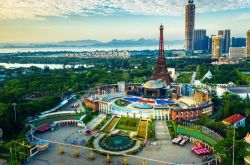
In June 1994, on a stretch of land by Shenzhen Bay, a replica of the Eiffel Tower rose from the ground.
This is Shenzhen Window of the World. Covering 480,000 square meters, the theme park was jointly invested in and built by China Travel Service (Hong Kong) Group and OCT Group. It miniaturizes more than 100 world-famous landmarks—among them the Pyramids, the Taj Mahal and the Roman Colosseum—all scaled down and gathered into a single park. When it opened, a slogan that would later become widely known played on loop at the entrance: "Give me a day, and I'll give you the world."
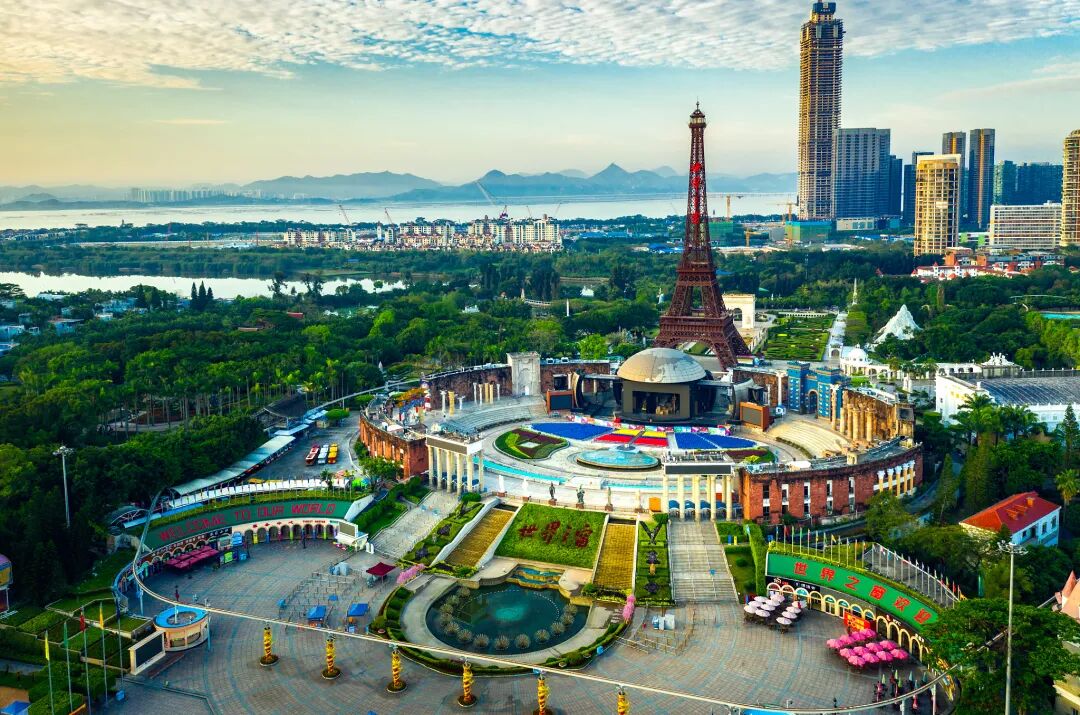
That was an era when most Chinese people had never set foot abroad. Visitors came from all over the country and queued up to take photos in front of the Eiffel Tower and the Pyramids. For many, it was their first time "seeing" the world. By 2024, the 30th anniversary of its opening, Shenzhen Window of the World had received nearly 100 million visitors, with cumulative revenue approaching 10 billion yuan and more than 500 receptions of foreign leaders.
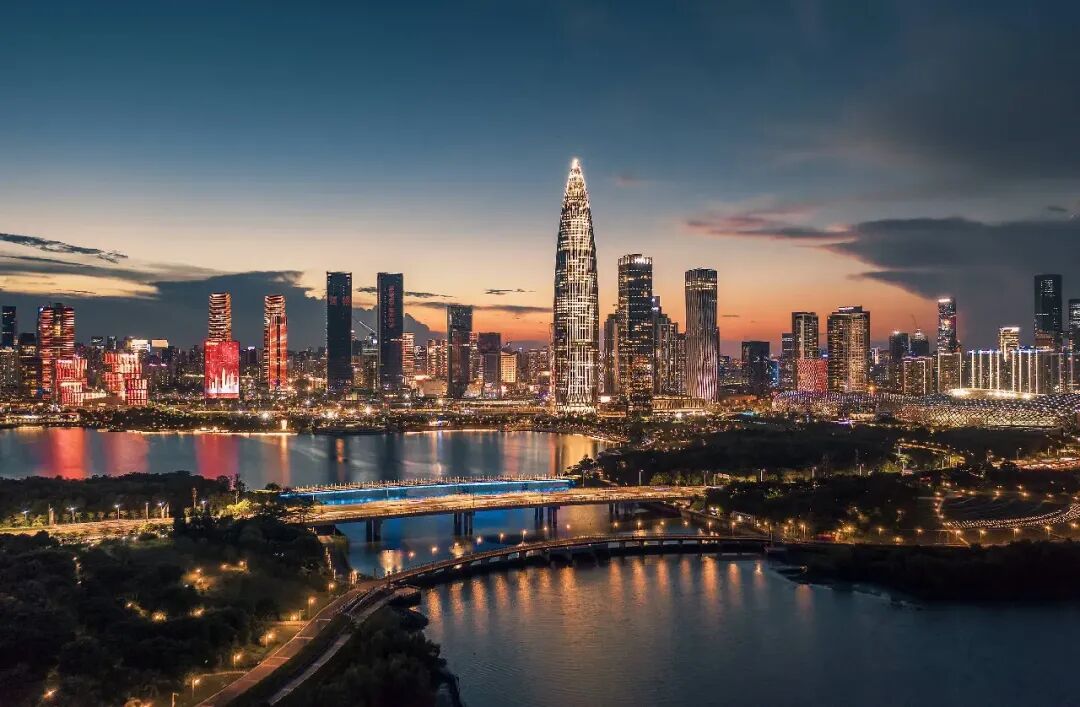
Thirty-two years later, also by Shenzhen Bay, the direction of the gaze has reversed.
From November 18 to 19, the 33rd APEC Economic Leaders' Meeting was held in Shenzhen. This marks the third time China has hosted APEC—after Shanghai in 2001 and Beijing in 2014—and the highest-profile home-ground diplomatic event Shenzhen has undertaken since its establishment as a city.
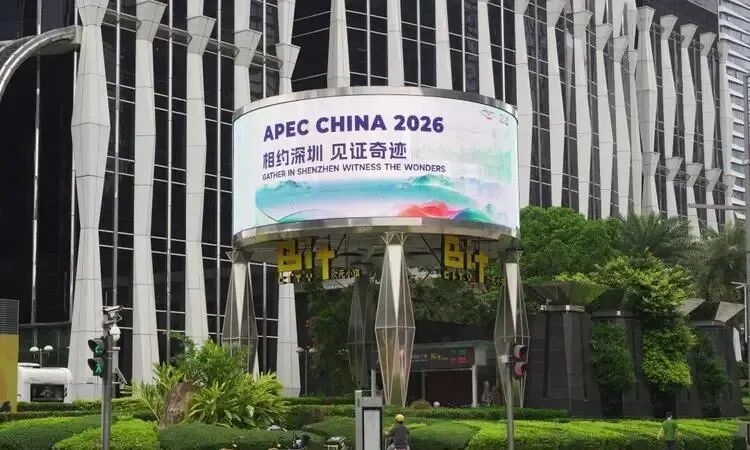
The 21 APEC member economies account for nearly 40% of the world's population, more than 60% of global economic output and nearly half of global trade. The forces that shape the global economy have gathered in Shenzhen—in the past, Chinese people came to Shenzhen to see the world; this time, the world comes to Shenzhen to see China.
1 From a Window to a World Hub
Shenzhen has long been called the "window" of China's reform and opening up. More than forty years ago, foreign capital, orders and technology flowed from Hong Kong into the mainland, and the processing models of "three supplies and one compensation" and "shops in front, factories behind" set the city on its path.
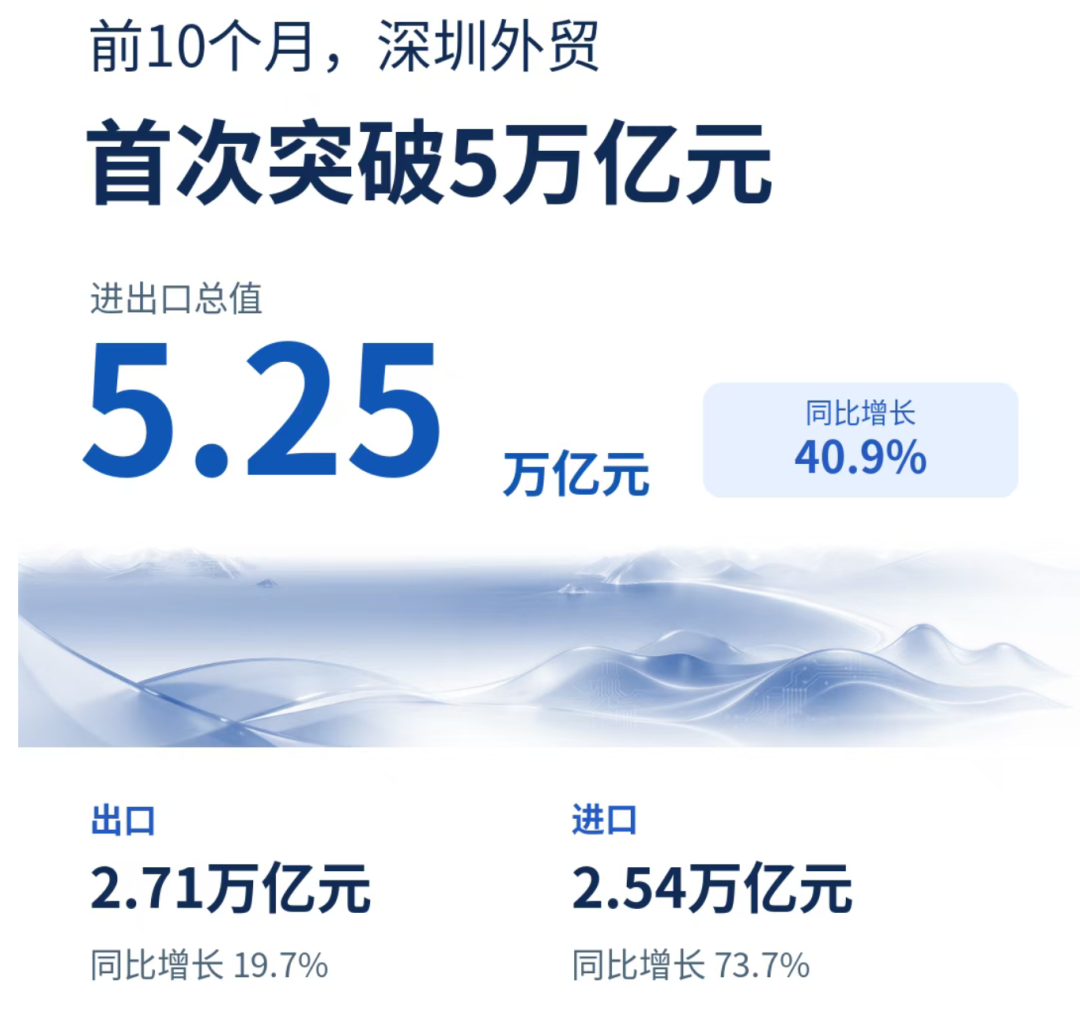
Today, the weight of this window is very different. According to Shenzhen Customs statistics, in the first 10 months of this year, Shenzhen's total imports and exports reached 5.25 trillion yuan, up 40.9% year on year, making it the first city in mainland China whose foreign trade exceeded 5 trillion yuan.
The city's position on China's foreign trade map is also quietly being rewritten.
In 1993, Shenzhen's total exports surpassed Shanghai for the first time, rising to first place among large and medium-sized cities nationwide. Since then, Shenzhen's export value has ranked first in the country for 33 consecutive years. For a long time, the country maintained a division of roles in which "Shanghai is the first city for foreign trade, Beijing is the first city for imports, and Shenzhen is the first city for exports."
The first turning point occurred in 2024. That year, Shenzhen's total foreign trade surpassed Shanghai, making it the first city for foreign trade in the mainland. Unlike before, Shenzhen's current round of foreign trade expansion is a "two-way explosion" of exports and imports. A city known for exports is simultaneously becoming a major buyer of goods from around the world.
According to Shenzhen Customs, in the first 10 months of this year, Shenzhen's exports reached 2.71 trillion yuan, up 19.7%; imports reached 2.54 trillion yuan, up 73.7%. Imports have become the main driver of this round of growth.
What is Shenzhen buying so frantically? The answer is: AI computing power hardware.
Data shows that much of what Shenzhen buys back consists of "hard currency" such as chips, GPUs, memory modules and core server components—the means of production essential for the development of the AI industry. In the first three quarters, Shenzhen's import and export scale of AI-related components such as integrated circuits ranked first in the country, contributing more than 60% of the city's foreign trade increment.
The city's ties with the Asia-Pacific are also particularly close. In the first three quarters of this year, Shenzhen's imports and exports with other APEC economies reached 3.23 trillion yuan, up 40% year on year, accounting for nearly 70% of the city's total foreign trade value; Shenzhen enterprises' actual investment in other APEC economies reached 4.1 billion US dollars, accounting for more than 60% of the city's total outbound investment by enterprises; during the same period, it also received 33.2 million visitors from other APEC economies.
Goods go to the Asia-Pacific, money is invested in the Asia-Pacific, and people come to the Asia-Pacific.
2 Why Shenzhen Can Always Create New Things
If the foreign trade figures are the result, what supports them is a market network woven by hundreds of thousands of enterprises.
According to statistics, private enterprises contribute as much as 74.2% of Shenzhen's foreign trade, while Jiangsu contributes less than 50% and Shanghai less than 40%. This means that what the world sees in Shenzhen is not a few large state projects, but an industrial ecosystem that tens of thousands of enterprises have spontaneously grown in the market.
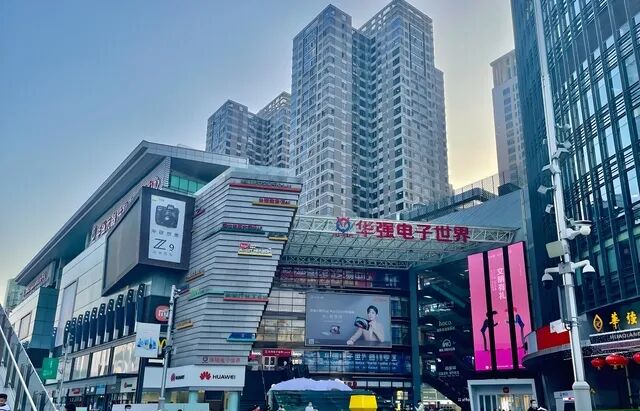
The density of this network is most intuitively reflected in Huaqiangbei. This block of only 1.45 square kilometers is packed with 35 specialized markets and more than 115,000 business entities, where more than one million types of electronic components can be found.
In September this year, at a science and technology achievement exhibition during an Asia-Pacific media forum, a pair of AI glasses was displayed on a "one-meter booth" in Huaqiangbei. It can perform simultaneous interpretation in 150 languages and can also take photos and record meeting minutes—how long does it take to make such a pair of AI glasses? Only 4 days.
Such a "one-meter booth" is not a simple workbench, but a miniature model of the innovation efficiency of Shenzhen's intelligent hardware industry, and also a concrete expression of the "Shenzhen cycle." In a small space, it condenses and presents links such as appearance design, structural development, electronic solutions, prototype production, scale production and product going global—this is the strength of Shenzhen's industrial chain.
The same logic is being replicated in the robot industry. The area around Liuxian Avenue in Nanshan District is called "Robot Valley," where about 28 square kilometers gather more than 200 industrial chain enterprises, including more than 25 humanoid robot complete-machine enterprises, 32 specialized and sophisticated "little giant" enterprises and 15 listed companies.
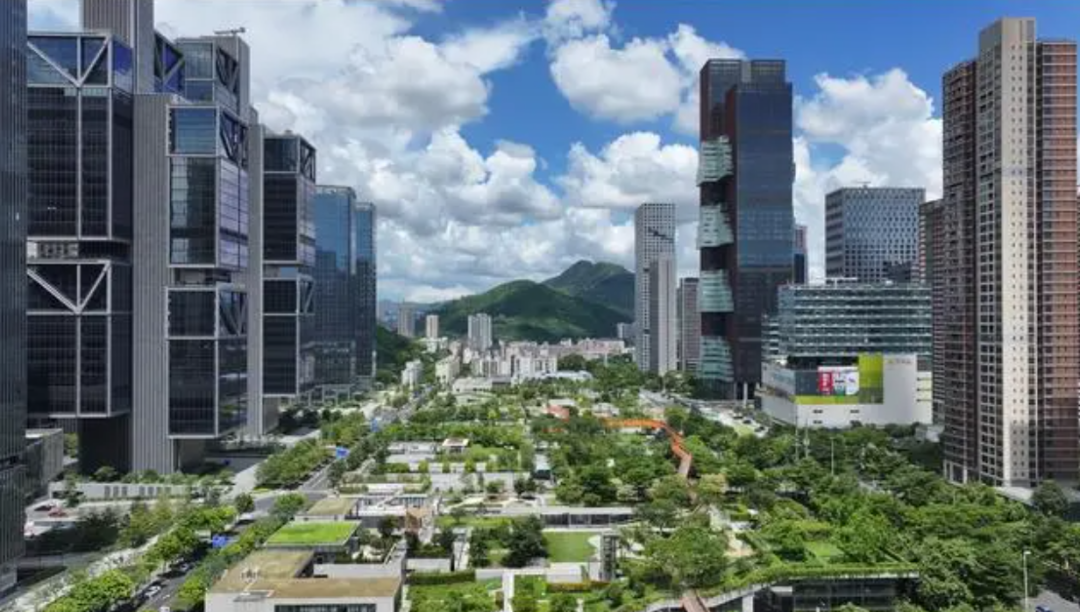
More critical than scale is the supply chain. In March this year, Wang Qian, founder of Xvar Robot, said at a talk at Tsinghua University that there is probably no second place in the world like Shenzhen, where 70%-80% of a robot's parts can be secured within a one-kilometer radius in 30 minutes.
Data shows that in 2025, the total output value of Shenzhen's robot industry has approached 250 billion yuan (242.6 billion yuan), up one-fifth year on year, ranking first in the country in industrial scale. There are more than 74,000 enterprises related to the local robot industry chain, and core enterprises have exceeded 1,000.
These industries are becoming new calling cards for Shenzhen and Guangdong's exports. Guangdong's exports of drones, 3D printers and digital cameras already account for 95.4%, 85.8% and 78.6% of the country's exports of comparable goods, respectively—the world is coming to know today's China intuitively through one product after another.
3 One Shenzhen, Behind It the Whole of China
The outside world has also noted that the timing of Shenzhen hosting APEC is not easy. According to The Korea Times, some analysts pointed out that as an export-oriented city, Shenzhen has borne the brunt of pressure in an environment of rising trade protectionism.
But perhaps this is exactly what Shenzhen wants to show: in a world full of uncertainty, how a city can continue moving forward through openness, innovation and cooperation.
The most intuitive example is the regional synergy between "Shenzhen and Hong Kong."
Walking into today's Shenzhen, you can feel an extreme "international speed." At the new Huanggang Port, which operates 24-hour customs clearance, self-service inspection through the APEC dedicated channel takes as little as 20 seconds; and taking the high-speed rail from Hong Kong West Kowloon to Futian takes only 14 minutes. Along with this efficient connection comes the spectacular surge of "stay in Hong Kong, meet in Shenzhen."
This is a visible regional synergy effect.
Beyond daily life scenarios, from the Hetao Shenzhen-Hong Kong Science and Technology Innovation Cooperation Zone gathering nearly 500 technology enterprises, to the classic model in which Hong Kong provides international financing and Shenzhen is responsible for industrializing and landing results, the Greater Bay Area is undergoing deep integration.
With the advantage of Hong Kong as an international financial center, Shenzhen's hard-tech enterprises can obtain a steady stream of global capital; and Shenzhen's strong advanced manufacturing foundation can, in turn, quickly bring Hong Kong's scientific research results to the market.
Beyond the Greater Bay Area, the in-depth promotion of building a unified national market is providing more support for Shenzhen's industrial development.
At present, in developing artificial intelligence, the whole world lacks computing power, and Shenzhen is no exception. According to data from the Industry Research Department of the Shenzhen Artificial Intelligence Industry Association, by the end of 2025, Shenzhen's total computing center scale will exceed 18,000P, with 54,000P under construction. This computing power can meet only 30%-40% of demand. More computing power is allocated from places such as Shaoguan, Guiyang and Urumqi.
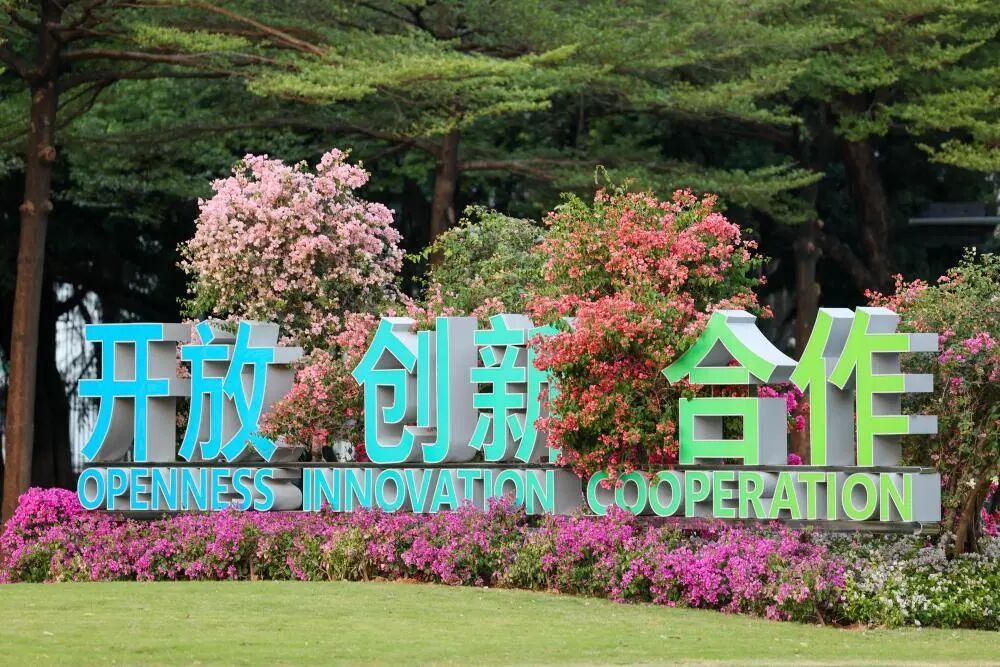
In today's Shenzhen, rose-purple gradient banners can be seen everywhere on the streets, bearing the words "Openness, Innovation, Cooperation"—the three priority areas established by this APEC. Aren't these three words also the best interpretation of Shenzhen's urban character and the best summary of China's attitude?
APEC's arrival in Shenzhen has a clear nodal significance in history. But more meaningful than the event itself is the "prism effect" of the city of Shenzhen.
Over the past two days, many people around the world have been asking: where exactly does the future of technology lie? Shenzhen's answer is: only through openness can one integrate into global industrial chains and achieve win-win results; only through innovation can ideas quickly become products; only through cooperation can regional barriers and the boundaries between the virtual and the real be broken down.
Because Shenzhen's development achievements themselves are the best proof of the correctness of the three attitudes of "openness, innovation and cooperation." When the world reaches a crossroads, what this "city of miracles" reflects is not only its own achievements, but also China's composure and resolve in steadily marching toward the future.
In 1994, Window of the World said to the Chinese people who came to Shenzhen: "Give me a day, and I'll give you the world."
In 2026, what Shenzhen says to the world that comes here may be another sentence: give me a chance, and I'll let you understand China.
*Disclaimer: The content of this article represents only the author's views. Markets carry risks, and investment requires caution. Under no circumstances does the information or opinions expressed in this article constitute investment advice to anyone.
The Shenlan Finance new media cluster originated from the Shenlan Finance reporter community and has a history of 16 years. It is a well-known domestic financial new media outlet. Its accounts focus on China's most valuable companies, frontier industry development and emerging regional economies, providing value content for investors, listed company executives and the middle class. Welcome to follow.
-
![]()
October Auto Sales Inventory: Four Carmakers Exceed 70% of Annual Targets
-
Li Shufu's "Relentless" Bet on the Methanol Market
-
Why Has AI Office Work Become the Competitive Focus for Industry Players?
-
![]()
Voyah Secures MIIT Batch 412 Production Access Qualification, Formally Bids Farewell to Operating Under Dongfeng's Umbrella
-
Tencent also cannot achieve the "impossible trinity": traditional business growth, AI business breakthroughs, and positive net cash flow
-
Anthropic Goes Public: A $1.4 Trillion Public Stress Test
-
![]()
Shenzhen: Letting the World Understand China
-
![]()
Survival Is Already Hard Enough—So Why Talk About "Brand Upward Mobility"?