Consumers Have Fallen Out of Love with Tesla—So Why Are Automakers Still Copying Its Homework?
 11/19 2026
 330
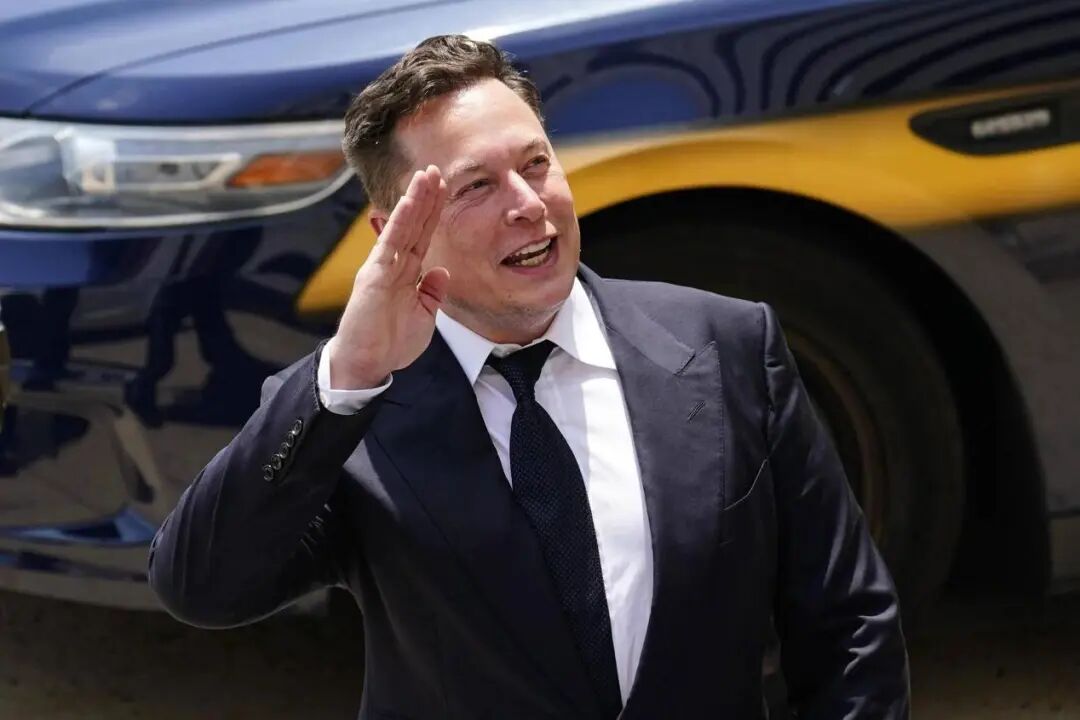
As we enter the AI era, Musk has shifted his focus to Robotaxi, AI, and robots, while cars have become something of a stale topic. But in October, Tesla's domestic sales dragged the company's cars—which had faded from public discourse—back to the center of controversy in the auto world.
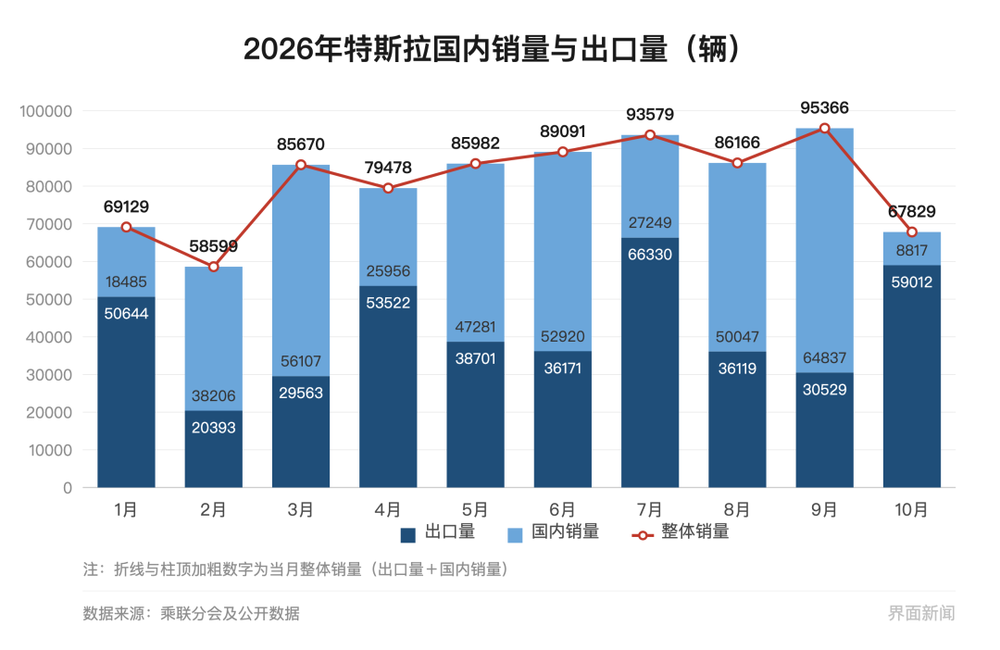
According to Dongchedi rankings, Tesla's domestic retail sales in October 2026 came in at just 8,817 units, down 66.1% year-on-year—the lowest single month since July 2022 and the fifth consecutive month of year-on-year decline. Model Y retail sales stood at 7,807 units, a drop of more than 42,000 from September's 50,359, with its ranking falling from No. 1 among all models to No. 66; Model 3 managed only 1,010 units.
The all-new Model Y Performance All-Wheel Drive version also drew questions from some longtime fans, who felt the product upgrades lacked sincerity.
As the undisputed authority in the new energy vehicle space, Tesla's automotive business no longer seems glamorous. In 2025, Tesla delivered 1.636 million vehicles globally, down about 8.6% year-on-year. In Q3 2026, Tesla's total revenue was $28.046 billion, down 0.2% year-on-year and 0.7% quarter-on-quarter from Q2.
Automotive business revenue accounted for $20.56 billion of that, down 3% year-on-year, significantly dragging down overall revenue.
A shift in corporate direction is certainly one factor, but ultimately, the years-long Tesla "worship" in the auto world is beginning to end.
01. Consumers Have Fallen Out of Love—But Have Automakers?
Tesla officially attributed the October sales decline to sales rhythm.
It is understood that the first month of each quarter for Tesla China (January, April, July, and October) is usually a concentrated export month, with vehicles mainly shipped abroad. The company only makes a full-throttle sprint in the domestic market in the last month, and with the year-end sales push, a large number of delivery plans fall in November and December.
But from the consumer's perspective, the Tesla "worship" in China's auto world is indeed rapidly fading.
Recall that Tesla was once regarded by car owners as the epitome of high-end, technology, and geek culture.
In 2014, at Tesla's first delivery ceremony in China, the 15 customers included industry heavyweights such as Charles Chao, Li Xiang, and Yu Yongfu. According to a survey by Gasgoo, that year's Tesla user profile was dominated by IT professionals, entertainment workers, and finance professionals, accounting for 26%, 25%, and 22% respectively.
Later, even when the Model 3—aimed at the mass market and volume sales—debuted, Tesla owners still retained a unique sense of identity pride, like Apple devotees who look down on Android users, considering themselves pioneers of new technology and the discerning minority who understood the trends of the times.
But now, this sense of class superiority is nearly gone, and Tesla has shed its identity halo, returning to being an ordinary car that meets daily transportation needs. According to the "Tesla Market Competitiveness Analysis Report (2026 Edition)" released by Tengyi Research Institute, in 2025 nearly 70% of Tesla's new buyers cited commuting to and from work as their primary reason for purchase.
From flaunting identity to daily commuting, Tesla seems to have completed a top-down descent in value in the consumer market.
This has led to a significant decline in "Tesla fan" loyalty. Data from Tengyi Research Institute shows that from 2023 to 2025, Tesla's intended loyalty was only 30%, with as many as 70% of users showing intentions to switch. AITO, NIO, Li Auto, and other emerging high-end Chinese brands attracted nearly 50% of Tesla's intended defectors, becoming the biggest beneficiaries of Tesla repurchase opportunities.
In 2025, on the strength of the M9, M8, and M7, AITO ranked first among brands attracting Tesla defectors, accounting for nearly 9%.
In the past two years, Tesla has been struggling to find its next pioneering product that can uphold its tech halo.
But reality has repeatedly fallen short:
In November, Cybertruck announced production would cease in 2027; its subversive appearance did not translate into market competitiveness. The second-generation Roadster's flying show generated a long-absent round of discussion globally, but questions about when it will land and when it will be commercialized have put Tesla in an awkward position.
Interestingly, although consumers have repeatedly weakened their worship of Tesla, automakers still like to elevate brand positioning and vehicle value by benchmarking against Tesla. At the beginning of this year, in the "Hurun China Brand List" released by the Hurun Research Institute, Tesla's brand value still ranked first in the Chinese market.
For this reason, "benchmarking Tesla" has always been a tacit marketing shortcut for domestic automakers, with item-by-item comparisons in sales, customer base, appearance, price, parameters, and configurations. Currently, a large number of automaker executives pay even more attention to Tesla's automotive business than Musk himself.
Take Lei Jun as an example. In fact, in 2025, Xiaomi SU7 had already surpassed Model 3 in the Chinese market, with deliveries about 29% higher. But by 2026, according to statistics from "Huxiu Auto Group," in the first half of the year alone, Lei Jun mentioned Tesla cars again in at least three scenarios.
Even though "Jiemian News" reported that some foreign media predicted Xiaomi Auto's domestic sales in 2026 are expected to surpass Tesla.
Consumers have fallen out of love with Tesla, but automakers have not.
Or rather, Tesla—whose automotive business is not what it used to be—has not completely eliminated its "threat" to the entire auto industry.
On July 30, 2026, Tesla became the world's first pure electric vehicle company to surpass 10 million cumulative vehicle production. Delivery data shows that Tesla's global vehicle deliveries in the first half of 2026 exceeded 830,000 units, and by the end of Q2 this year, the scale of pending orders on hand reached its highest value since 2023.
As of the end of June, Model Y's global cumulative sales exceeded 5 million units; Model 3's global cumulative sales exceeded 3 million units. CleanTechnica statistics show that from January to May 2026, Model Y ranked first in global new energy vehicle sales with 408,000 units, while Model 3 sold 164,000 units in the same period, ranking third on the global list.
Believers have dispersed, but the yardstick remains. By comparison, local automakers can only step on the old idol as they rush toward their own distant destinations.
02. How to Further "Defeat" the Industry Idol?
Currently, Tesla's position in the global automotive track remains difficult to shake. CleanTechnica statistics show that in the first half of this year, global electric vehicle sales grew only 4% year-on-year to 9.41 million units. At the brand level, BYD and Tesla firmly occupy the top two spots on the sales list.
But beyond BYD, leading brands such as Chery, Geely, and Changan have also made the global market their core means of hedging against the domestic stock era, with export data collectively surging in the first half of the year; Changan's overseas business share of total sales rose to about 33.6%. This means domestic automakers need to study how to further "defeat" Tesla.
For now, domestic automakers are insisting on technological breakthroughs while accelerating new product iteration, hoping to stimulate consumer desire through high-frequency launches. For example, after Tesla FSD became a key selling point for car sales, BYD also launched God's Eye, Geely launched Qianli Haohan, and Changan launched Tianzhu Intelligence.
At the same time, the "cost-effectiveness" strategy has always been an important means for Chinese automakers to enter the global market.
A survey by British car website Carwow shows that 49% of surveyed drivers included Chinese brands in their purchase candidates, with cost-effectiveness as the primary reason. In same-class model comparisons, a Chinese-brand electric vehicle has a European market starting price of 27,000 euros, 3% cheaper than same-class European automaker models.
On the other hand, Tesla's strategic focus shift and product iteration gap have given domestic automakers an excellent breakthrough opportunity.
In May, Tesla's Model S line, which debuted 14 years ago, and Model X line, which debuted 11 years ago, were discontinued, with next-generation replacement models yet to truly succeed. Chinese automakers not only maintain a high-frequency launch rhythm but also design new products for segmented markets to dilute the mindshare advantage Tesla once established in the global market through product pioneering.
For example, BYD's Dolphin G developed specifically for the European market; Hongqi's Global SUV designed specifically for European buyers; XPeng MONA L03, from design and R&D to validation, anchored to global market aesthetics and usage standards, with its intelligent cockpit system launching the overseas version cockpit operating system XOS 6.
Currently, the direct feedback from this series of actions is very positive.
According to European new car registration data compiled by the European Automobile Manufacturers' Association (ACEA), in Q2 2026, BYD, SAIC, Geely, Chery, and Leapmotor collectively registered 435,900 vehicles, up 71.8% from the same period in 2025, accounting for about 11.7% of the European new car market, surpassing Japanese brands in quarterly total for the first time.
After April this year, in addition to BYD and SAIC, three Chinese automakers—Geely, Chery, and Leapmotor—were also included in ACEA's mainstream automaker list. Of course, Chinese brands' main models in Europe are concentrated in the mid-to-low price segment, with a clear generational gap in brand premium capability compared to Tesla and luxury brands, and the mindshare barrier for upward breakthroughs has not been fully opened.
But the old idol has truly fallen.
Tesla's global sales have not yet reached an alarming level, but its global reputation, recommendation rate, trust level, and coolness factor are far from what they used to be. In particular, Musk's image and reputation are declining; third-party statistics show that in 2025, the proportion of negative reports about Musk was as high as 96%.
In mature consumer markets in Europe and America, the founder's image is highly tied to brand reputation, and consumers translate managers' public statements and value stances into judgments of brand trust and goodwill. A report by British brand valuation agency Brand Finance shows that in 2025, Tesla experienced significant declines in some key indicators in the European and Canadian markets.
In the United States, Tesla's "recommendation score" also fell to a historic low of only 4.0 points (out of 10).
In 2023, this indicator was once as high as 8.2 points.
The encirclement spreading from domestic to global markets certainly cannot yet dissolve Tesla's sales and technological barriers, but its idol halo dominating the global auto world has dimmed. The business world has no win-or-lose thrillers, only a fair fate: all pioneers who open an era will eventually be left behind by the era they themselves initiated.
It shaped the track, raised its competitors, and ultimately, as the industry moves toward a more mature node, shed all its divinity.
03. Is It Time to End Tesla "Dependency"?
If one sentence were used to describe the current relationship between the auto industry and Tesla, "the halo has faded, but the shadow remains" would be the most vivid and apt.
In April, the "Huxiu Auto Group" published an article titled "Tesla, Reduced to a 'Celebrity Backdrop' in China," pointing out an absurd phenomenon: automakers' constant comparisons with Tesla both "empower" themselves and continuously reinforce Tesla's identity as a "benchmark."
Another meaning of this passage is:
Domestic automakers' product decisions, R&D reviews, marketing narratives, and even capital market valuations are deeply bound to Tesla as the yardstick. Defeating its products is easy, but escaping path dependency on the "pioneer" is something that even automakers who have now successfully "surpassed" Tesla mostly cannot achieve.
Why is this?
Apart from brand voice and market position, the core reason is that Tesla has always played the role of narrative definer in the auto world, always able to personally open new imaginative space before the previous industry wave ends.
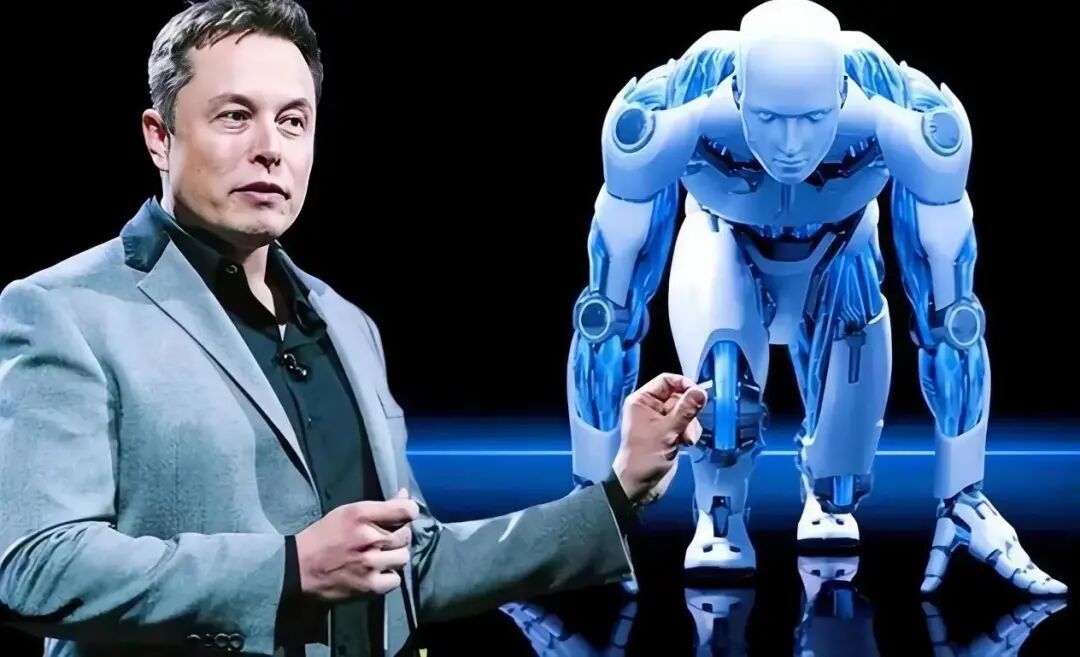
For example, when the tech dividend of cars gradually peaked and the entire industry fell into stock-market involution, Tesla was the first to enter the AI track, redefining automakers' growth boundaries with humanoid robots and Robotaxi, proving that car companies can break out of the ceiling of vehicle manufacturing and become broad AI technology enterprises covering mobility.
As of early June 2026, Tesla's static P/E ratio was about 332-388 times (TTM basis), and dynamic P/E ratio about 200 times. Traditional automakers such as Great Wall Motor and SAIC Group have P/E ratios of only about 14 times, and Huachuang Securities estimates that a leading independent brand's P/E has dropped to 6.8 times.
This ability to continuously create new outlets has created a fault line in the valuation system and strengthened automakers' determination to continue "following" Tesla.
As the industry trend observed by "Gasgoo": from anchoring Model 3/Y for parameter benchmarking at project initiation, to the intelligent driving track collectively targeting FSD as the technical bullseye, to following up with humanoid robot and Robotaxi businesses, local brands are step by step replicating Tesla's growth path.
In the future, regardless of whether automakers defeat Tesla in sales, it will be difficult to end automakers' worship of and dependence on Tesla.
Because their obsession with Tesla is, to some extent, a yearning for narrative following that transcends products.
In the short term, it is about leveraging the benchmark's cognitive momentum to reduce market education costs and quickly elevate brand positioning, such as Xiaomi.
In the long run, the strategy hinges on reusing its proven "car + AI" narrative to command valuation premiums, much as XPeng has done. On June 10, 2026, He Xiaopeng announced that he would personally lead the robotics business, and XPeng's Hong Kong-listed shares rose nearly 7% in response. Meanwhile, 18 mainstream automakers, XPeng among them, have collectively placed their bets on humanoid robots.
Even JPMorgan made it explicit in a report: Musk's vision for humanoid robots, autonomous driving, chips, and AI is the "expectation story" that capital markets value most. This has further spurred domestic automakers to follow Tesla's lead in building long-term tech narratives and opening up imaginative space for long-term valuation.
But the deeper the dependence, the greater the danger.
At present, it is hard to name a single new energy vehicle company that has developed a genuinely new paradigm independent of Tesla.
Industry valuation models from institutions such as Huatai Securities and JPMorgan, for instance, all indicate that the current pricing framework for global smart car companies takes Tesla's SOTP (sum-of-the-parts) valuation method as its foundational template, splitting enterprise value into three components: automotive hardware, software subscriptions, and long-term AI options.
In capital markets, most automakers must likewise be measured against this yardstick.
When the entire industry lives under the same set of standard answers, how much room for genuine innovation remains?
Consumer disenchantment requires only one sales decline and a few competing models, but an industry and its many automakers need long exploration and trial and error. What truly ends the worship of Tesla is not who defeats the Model Y or Model 3, but the entire industry finally daring to answer that question: without Tesla, what should new energy vehicle companies look like?
But before that, all the pursuers must first admit: we have won on sales, but we have not yet earned the right to define the future.
-
![]()
Consumers Have Fallen Out of Love with Tesla—So Why Are Automakers Still Copying Its Homework?
-
![]()
Auto Braking Leader's Performance Keeps Rising, Spends Over 1.1 Billion Yuan on M&A
-
Two-Wheel Drive Plus LiDAR: GAC Trumpchi Yue 7 Smart Driving Edition Lowers the Bar Again—How Many Extra Sales Can It Deliver?
-
Li Yanhong and Baidu May Finally Be About to Catch the "Last Train" of AI
-
![]()
Tencent First, ByteDance Second
-
![]()
Tencent and ByteDance's B2B Battle
-
ZTE's bond issuance to "supplement working capital" behind the scenes: total liabilities hit a record high of 168.5 billion yuan
-
WorkBuddy Tops 10 Million DAU: Office Agents Are No Longer Priced by the Seat