Both Are Highly Popular Boxy SUVs—So Why Does the Trumpchi Yue 7 Sell Worse Than the Battleship 700?
 11/23 2026
 548
The GAC Trumpchi Yue 7 and the Geely Galaxy Battleship 700 are boxy SUVs that launched within the past two months. Both are positioned as mid-to-large new energy SUVs at relatively similar price points, making them natural competitors. Looking at the latest October sales data, the later-launched Battleship 700 is clearly outselling the comparatively cheaper Trumpchi Yue 7.
This raises the question: as two all-new boxy SUVs with the same positioning—and with the Trumpchi Yue 7 launching earlier and costing less—why does the Galaxy 700 sell better? Next, Che Kuai Ping will explore this issue.
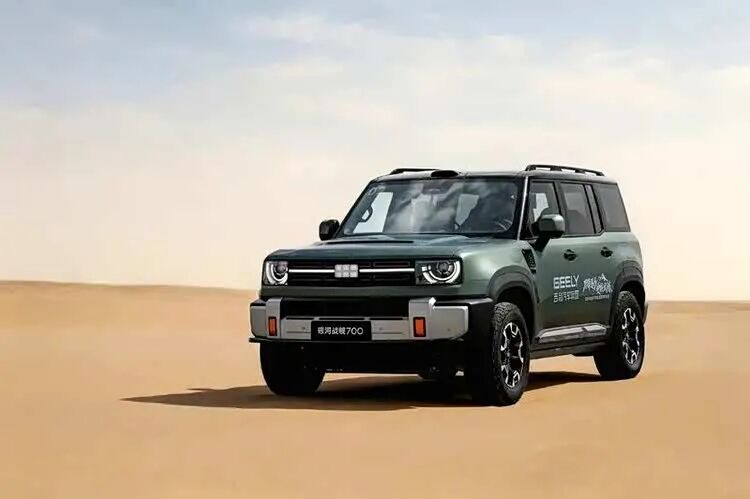
First, a quick overview of the two cars. Let's start with the Trumpchi Yue 7, officially launched on September 22 this year, with six models priced from 169,800 to 225,800 yuan, all equipped with a plug-in hybrid system. The Battleship 700 was launched on October 10 this year, also offering six models priced from 179,800 to 369,800 yuan, all equipped with a plug-in hybrid system.
Judging by appearance alone, both cars feature classic boxy SUV styling and look thoroughly rugged. In terms of body dimensions, the Battleship 700's body length of nearly 5.1 meters gives it a slight edge, while the Yue 7's body length is under 5 meters but its width exceeds 2 meters. Both cars share a 2.9-meter wheelbase, so the actual in-cabin space experience should not differ much.

Having briefly covered the exterior and body dimensions, let's focus on the differences between these two cars in technological and comfort configurations and power performance.
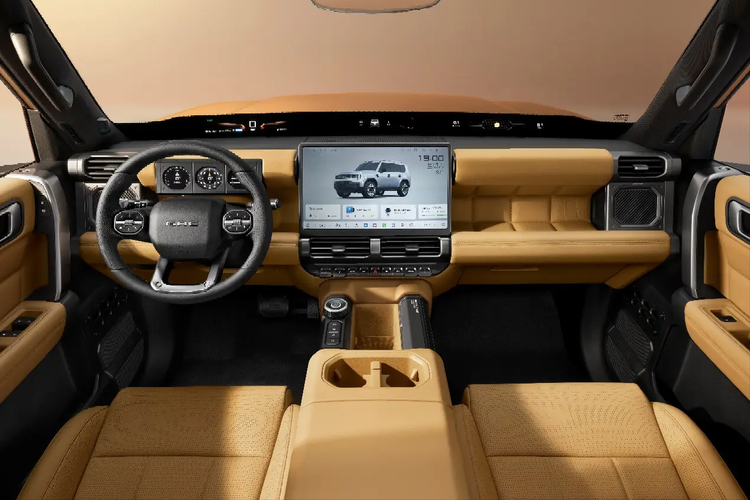
The Yue 7 comes standard across all models with a 15.6-inch central control screen, with the infotainment system powered by the Qualcomm QCM8838 chip and GAC's self-developed ADiGO system. For advanced driver assistance, only three models—the two-wheel-drive LiDAR version, the four-wheel-drive Ultra version, and the four-wheel-drive Satellite Communication version—are equipped with LiDAR. The Qualcomm Snapdragon 8650 smart driving chip delivers 200 TOPS of computing power and supports highway and urban NOA.
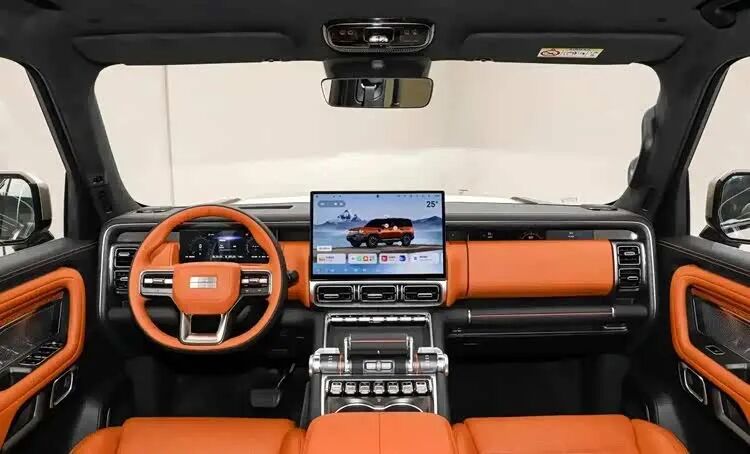
The Battleship 700, by contrast, equips all models with a 15.2-inch HUD head-up display and a 15.4-inch central control screen, with the infotainment system built on the Dragon Eagle 6P chip and the Flyme Auto system. For advanced driver assistance, except for the entry-level two-wheel-drive Explorer version, the other five models are equipped with Qianli Haohan advanced driver assistance and also support highway and urban NOA. Among them, the NVIDIA smart driving chip used in the tri-motor four-wheel-drive Peak version and the Land Ark version delivers computing power as high as 700 TOPS.
In terms of comfort features, the Yue 7 only offers front-row heating and ventilation across all models, and seat massage must be optionally installed. The second-row seats only support electric adjustment and lack ventilation or heating. That said, they do support fore-aft adjustment, so space utilization is better. As for the Battleship 700, except for the entry-level model which lacks seat massage and rear-seat small tables, the front seats have ventilation, heating, massage, and headrest speakers, while the rear seats have ventilation and heating plus more practical rear-seat small tables.
Finally, there is power. The Yue 7 is equipped across all models with a 1.5T engine and a plug-in hybrid system. Except for the entry-level model, the other five models are equipped with CATL power batteries. The entry-level model has a pure electric range of 161 kilometers, while the dual-motor four-wheel-drive version has a pure electric range of 259 kilometers, with the fastest 0-100 km/h acceleration in 4.2 seconds, and it supports fast charging and 6 kW external discharge.
The Battleship 700 is also equipped with a 1.5T engine and a plug-in hybrid system, comes standard across all models with CATL power batteries, and the entry-level two-wheel-drive version has a pure electric range of 305 kilometers. The tri-motor four-wheel-drive version has a maximum pure electric range of 280 kilometers and the fastest 0-100 km/h acceleration in 3.95 seconds, and it also supports fast charging and 6 kW external discharge.


Having read this far, what do you think is the reason the Yue 7's sales are not as high as the Battleship 700's? Feel free to share your conclusions in the comments section.
Copyright statement: This article is original by Che Kuai Ping. Please contact us for authorization before reprinting. Reprinting without permission is strictly prohibited, and any form of plagiarism or misappropriation of text and images is prohibited, otherwise legal liability will be pursued. Some images in the article are from the internet, and the copyright belongs to the original authors. If your work is used, please contact us to claim remuneration or request deletion.
-
![]()
BMW i3 and Lexus TZ Step Up: Joint Venture Brands Are Not Backing Down at the Guangzhou Auto Show
-
Understand This AI Evolution Diagram and You Understand the Essence of AI: 'Intelligence Moves Up, Users Stay Down'
-
![]()
NetEase's Latest Financial Report: High Gross Margin, Low Debt
-
![]()
AI Unemployment Buffer Period
-
![]()
"It's a Bit Late Now," Ma Huateng Said Point-Blank: Tencent Has Reached a Life-or-Death Moment
-
![]()
AI Short Dramas Begin to Impact the Gaming Industry?
-
![]()
Fangchengbao's October Domestic Sales Hit 34,761 Units, Titan 7 Duo Accounts for 68%
-
![]()
GM China October Retail: How Are Buick, Cadillac, and Zhijing Performing?