When the Law Advances One Step, the Devil Advances Ten? EU Moves to Cap Hybrid Imports, Chinese Automakers Pivot to Extended-Range Vehicles
 11/24 2026
 563
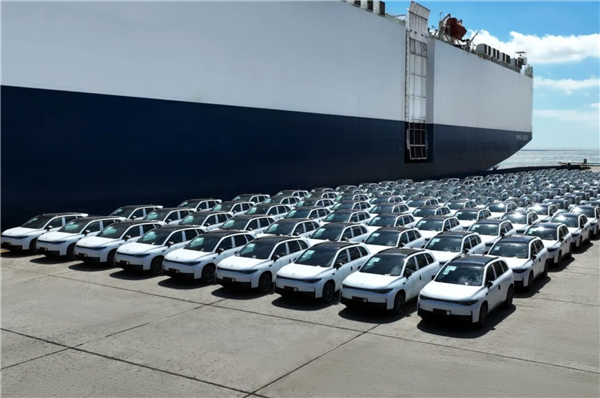
Fast Technology News, November 24: According to Nikkei, the EU plans to impose an import cap on China-made hybrid vehicles—a policy that is prompting Chinese automakers to rethink their European strategies and shift toward exporting more models equipped with extended-range powertrains, which fall outside the quota.
Several executives familiar with the matter revealed that China and the EU reached an agreement in October setting the annual import cap for hybrid models at 350,000 units, with extended-range electric vehicles (EREVs) not counted toward the quota. The quota could take effect as early as December 1 and is still pending approval by EU member states.
Extended-range vehicles use a small engine as a generator to recharge the onboard battery and are classified as pure electric vehicles under the regulatory definition, thereby circumventing the hybrid quota.
Previous reports showed that EU imports of hybrid vehicles from China rose from 46,000 units in 2023 to 302,000 units in 2025, and are expected to reach about 800,000 units this year. The 350,000-unit quota is less than half of this year's expected import volume.
Under the previously disclosed plan, the quota will increase by 6% annually starting from the second year, over a four-year period. To comply with the WTO principle of non-discrimination, the measure nominally applies to all source countries, but the quota allocated to China is no lower than that for any other source.
For this reason, extended-range vehicles are expected to become a new export opening for Chinese automakers. Industry insiders believe that extended-range vehicles appeal to consumers with range and charging anxiety who are reluctant to switch directly to pure electric vehicles.
In October this year, extended-range vehicles already accounted for 8.6% of total domestic sales of electric and hybrid vehicles, while their share in Europe's electric vehicle market is less than 0.5%—indicating significant room for growth.
XPeng, Li Auto, AITO and others have planned to launch more extended-range models in Europe. Leapmotor has already launched two extended-range vehicles in Europe, the C10 and B10, and exhibited the D19 based on its latest extended-range platform at the Paris Motor Show.
However, Chinese automakers' shift to the extended-range route is not without cost. Extended-range vehicles are currently subject to anti-subsidy tariffs in Europe as pure electric vehicles, and in 2024 the EU imposed tariffs of up to 35% on related models.
But analysts also pointed out that even with tariffs, selling extended-range vehicles in Europe can still maintain relatively high profitability. Analysts also cautioned that adjusting the product mix is only a short-term response, and the EU policy's real intention is to push automakers to build factories locally and strengthen Europe's supply chain.
At the automaker level, local production capacity such as BYD's Hungary plant and Chery's Barcelona joint venture factory is already being implemented successively.
-
![]()
When the Law Advances One Step, the Devil Advances Ten? EU Moves to Cap Hybrid Imports, Chinese Automakers Pivot to Extended-Range Vehicles
-
Lingguang Wants to Keep Users Coming Back After the Job Is Done
-
Single-Day Subsidies Exceed Ten Million Yuan: Pinduoduo's "Appeal Compensation" Offers Merchants a Safety Net
-
Jietu Traveler EV Set to Launch on November 24; Official Pricing Predicted to Undercut Presale Figures
-
![]()
Honor 700 Pro Review: A Light Flagship with Over-Tier Specs and an Unmistakable Rear Screen Advantage
-
![]()
Second-Hand Domestic Phones: African Buyers' Alternative to Transsion
-
![]()
Why Are Smart Glasses Bucking the Trend and Growing Exponentially in a Cold Winter?
-
Used Chinese Phones: Africa's Enthusiasts Embrace a Transsion Alternative