Dong Mingzhu Is Pointing the Way Again
 11/27 2026
 325
Author | Gao Linglang Editor | Ai Qingshan
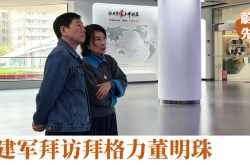
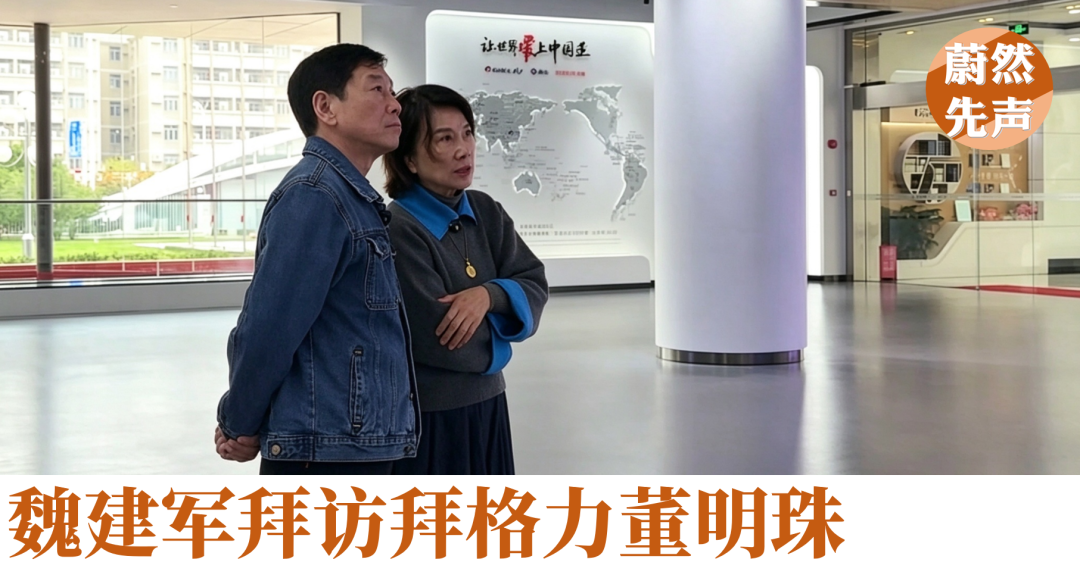
On November 26, Wei Jianjun, chairman of Great Wall Motor, made a special detour to Zhuhai to visit Dong Mingzhu, the leader of Gree Electric.
The two livestreamed the entire visit at the Gree factory, and the tour lasted past lunchtime before wrapping up at the host's prompting. At one point, more than 100,000 viewers were watching concurrently, and the event ultimately drew 1.19 million views and nearly 1.9 million likes.
This handshake is somewhat dramatic given the two people's past relationship. In 2019, Dong Mingzhu publicly criticized Chinese cars as crudely made on a CCTV program. Wei Jianjun, who was in Geneva at the time, fired back from afar, telling her to understand the auto industry before speaking, and adding, "I suggest Dong Mingzhu visit Great Wall when she has time."
Seven years later, it was Wei Jianjun himself who took the initiative to visit. As soon as he walked in, he called her "Big Sister," and the two shook hands with smiles. Their conversation ranged from the industry's current situation to corporate management, while the 100,000 viewers packed into the livestream room were concerned only with when they would go eat.
There is not much worth digging into about this "grand reconciliation" itself. What is truly interesting is what Dong Mingzhu said, what advice she gave, and how Gree itself has been doing when she said those things.
The most heated segment of the livestream came when the two discussed the current state of the new energy vehicle market.
Speaking about the industry's current situation, Wei Jianjun did not spare the market's feelings. In his view, many companies in the industry are actually shipping at a loss, and their books are still turning thanks only to cash flow support.
Once car prices fall, the only option is to squeeze upstream suppliers' payment terms and profit margins. Once the supply chain cannot bear it, quality control will sooner or later run into problems. Once a vicious cycle forms, it is very hard for any company to truly hold on.
At the same time, cars are depreciating so fast that ordinary owners find it hard to accept. Something that was originally a major household asset can now lose most of its value in two or three years.
Viewed in the context of Great Wall's own situation, these words carry a certain visceral pain.
According to Great Wall Motor's 2026 third-quarter report, the company's net profit attributable to shareholders in the first three quarters was only 3.826 billion yuan, down more than 55% year-on-year, and net cash flow from operating activities was only 6.219 billion yuan, shrinking by nearly 70% year-on-year. In terms of market value, Great Wall has shrunk from a peak of HK$358.8 billion to about HK$46.6 billion, evaporating more than HK$300 billion.
Just five days before visiting Gree, Wei Jianjun had completed another livestreamed learning session in Xuchang, Henan, with Pang Dong Lai founder Yu Donglai. At the time, he openly acknowledged the reality that Great Wall had fallen from first in the industry to ninth, and said that mockery from competitors had never stopped.
After hearing this description, Dong Mingzhu put it even more strongly. The essence of a car is a product directly tied to life safety, and it cannot be rapidly iterated like a fast-moving consumer good; manufacturers must always remain clear-headed. She even directly labeled those automakers propped up by state subsidies and price wars as "industry pests," saying those that should be eliminated should be eliminated.
She also proposed a thorough review of how much state subsidy each automaker has received. Wei Jianjun chimed in beside her, saying that some companies have received more subsidies than Great Wall itself earns.
After saying all this, Dong Mingzhu gave Wei Jianjun a somewhat surprising piece of advice: he should consider extending the product line into agricultural equipment, such as tractors. Wei Jianjun said that Great Wall currently indeed has no agricultural products and that he would seriously study this direction.
Just the day before this meeting, Gree had concluded its first extraordinary general meeting of shareholders in 2026, with the core topic being dividends. At the meeting, shareholders pressed whether the company could set a stable minimum dividend payout for the next three years, the implication being doubts about Gree's current business direction.
Such doubts are not unfounded. According to Gree Electric's 2026 third-quarter report, the company's revenue in the first three quarters was 126.544 billion yuan, down more than 8% year-on-year, and net profit attributable to shareholders was 17.274 billion yuan, down nearly 20% year-on-year. The domestic air conditioner market as a whole contracted, with total household air conditioner sales in the industry down 8.4% year-on-year, and the decline widening to 15.1% in the third quarter alone.
Gree's strategy is to insist on not engaging in price wars, focus on the mid-to-high-end market, and prefer shrinking shipments to easily cutting prices. This choice has its rationale, but the result is that revenue scale has clearly fallen back.
Against this backdrop, for a company whose main business is under pressure and whose shareholders are questioning dividend stability to advise another automaker to open up an agricultural machinery track is a kind of "mutual learning" that outsiders can judge for themselves.
Another topic in the livestream that sparked considerable discussion was talent poaching. Both said that key employees a company has spent years cultivating are often poached away by competitors with high salaries, and the loss is hard to make up.
This complaint has its truth, but the most highly liked response in the comments section followed simple logic: if you cannot keep people, first see whether pay has kept up with the market. Relying solely on training costs and emotions is ultimately not very persuasive.
This trip to Zhuhai was just one stop in Wei Jianjun's recent dense schedule. Within five days, he visited Pang Dong Lai and Gree successively, and both livestreams triggered large-scale public attention, achieving considerable topic impact.
Yu Donglai's core advice to him was not to be kidnapped by rankings and to do himself well. Dong Mingzhu's advice was to make tractors. Two prescriptions with completely different styles. As for which path is more suitable for Great Wall at this moment, perhaps only the next financial reports will tell everyone the answer.
Disclaimer: The content of this article is for reference only. The information or opinions expressed herein do not constitute any investment advice. Readers should make investment decisions cautiously.
-
Another Stinging Reality Check: iPhone 18 Pro Sales More Than Double the Combined Total of All Domestic Flagship Phones
-
![]()
Li Auto Officially Announces New Cars to Get Facelifts Every Two Years — Is China's Auto Facelift Wave Coming to an End?
-
![]()
Dong Mingzhu Is Pointing the Way Again
-
![]()
Why Is There No "Pinduoduo Narrative" in the AI Era?
-
![]()
Wall Street's "Big Short" Investor Suddenly Boosts Chinese Holdings -
![]()
Memory Price Hikes, Spec Cuts, and Incremental Upgrades: The Smartphone Spec War Hits a Memory Wall
-
AI Is Rewriting the Pricing Logic of Office Software — Kingsoft Software's Bid for the Enterprise Productivity Entry Point
-
![]()
Priced from Over 300,000 Yuan with L3 Architecture: Is the Xiangjie V8 Gunning for the Tengshi D9's Lunch?