Collaborating with XIOPM: Unveiling Huawei's Ambitious Optics Strategy
 09/21 2026
 330
330
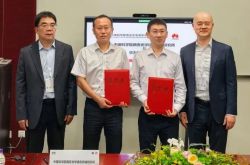
Recently, Huawei inked a strategic cooperation pact with the Xi'an Institute of Optics and Precision Mechanics (XIOPM), with both entities zeroing in on 'AI + Optics' as their primary focus. Huawei has committed to offering 'top-priority support' in terms of computing resources and AI expertise.
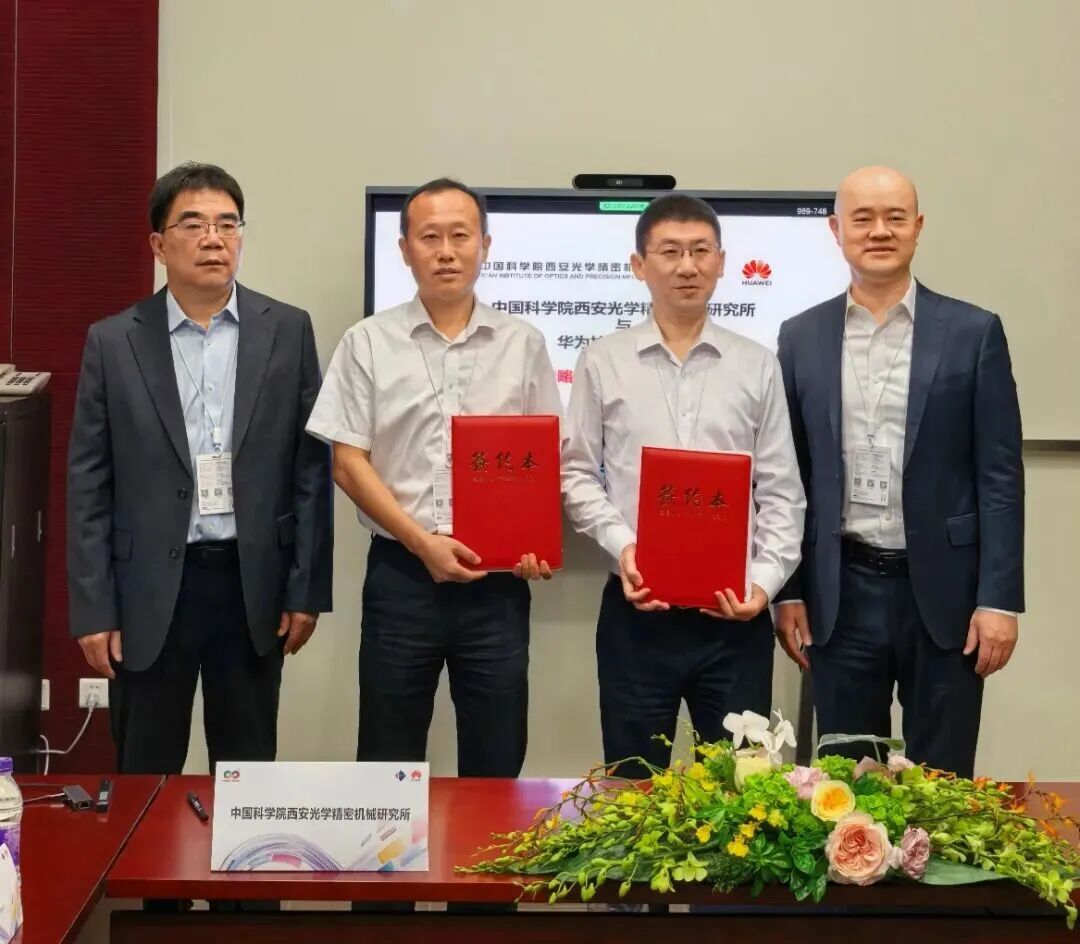
In truth, this collaboration transcends a mere industry-academia-research alliance; it signifies a pivotal stride in Huawei's optical strategy.
On September 17, at the Huawei Connect 2026 conference, Huawei unveiled the Ascend 960, the world's inaugural super node leveraging Near-Package Optics (NPO). This innovative solution replaces the 48,000 800G pluggable optical modules initially required with 5,500 self-developed Hi-ONE optical engines. According to Huawei, this switch reduces system power consumption by over 550 kilowatts and enhances system availability to 99.8%.
Wang Tao, Huawei's Deputy Chairman and Rotating Chairman, clearly articulated that, in contrast to Co-Packaged Optics (CPO), which grapples with challenges like low yield rates and exorbitant maintenance costs, NPO strikes a superior balance between maintainability and performance, positioning it as 'the premier solution at present.'
The commercial implications of NPO extend well beyond optimizing a single product parameter. It's reshaping the longstanding supply dynamic between optical module producers and chip manufacturers. Under the conventional pluggable framework, optical module manufacturers supply complete products, which equipment/system manufacturers procure based on standardized interfaces.
NPO, however, brings the optical engine closer to the chip. While still fully supplied by optical module manufacturers, the design specifications of the optical engine are now dictated by system architecture. Leading domestic manufacturers, including CIG, YOFC, and Accelink, have already developed the capability to supply NPO optical engines. Yet, securing an early foothold within Huawei's defined specification system hinges on early engagement in Huawei's technical definition process.
One of Huawei's strategic maneuvers is to concurrently drive standardization. In July, under the auspices of the Global Computing Consortium (GCC) and hosted by the Open AI Infra Community (OAII Community), Huawei, alongside over 20 industry chain partners like China Mobile Research Institute, JD Cloud, Baidu, and the China Electronics Standardization Institute, launched the OPEN NPO project and unveiled China's inaugural NPO optical interconnect multi-source agreement.
As per the plan, the inaugural version of the technical specification will be rolled out in the third quarter of 2026, with large-scale commercialization anticipated in the first half of 2027. By opening up the NPO interface standards, Huawei is relinquishing some short-term control but, in the long run, fostering alignment between the domestic optical module industry chain and Huawei's defined technical path.
Morgan Stanley, in its research report, perceives the fusion of Huawei's 'Tao's Law' with technologies like NPO and 3D folding as the fundamental rationale underpinning the exponential growth of the AI optical transceiver industry, projecting a hardware integration enhancement of over 100 times by 2035.
Moreover, Huawei's optical strategy encompasses strategic investments in upstream optical chips. Huawei Hubble has invested in Miral Opto-Semiconductor, which specializes in indium phosphide high-speed optical chips for 800G/1.6T optical module applications, aiming to bridge a critical gap in domestic high-speed optical chips. Hubble also holds a 4.04% stake in Vertilite, which is expanding its VCSEL business from 3D sensing to high-speed optical communications.
The rationale behind this strategic positioning is evident: The scalability of NPO ultimately depends on the capacity and yield of upstream optical chips. Whoever commands upstream optical chips dictates the pace of cost reduction.
TrendForce predicts that the combined market size of NPO and CPO will skyrocket from roughly $100 million in 2025 to over $39 billion by 2030, with NPO spearheading the growth from 2026 to 2028. Facing such a vast market, Huawei requires more than just suppliers; it necessitates technology partners capable of co-defining the specifications for the next generation of optical engines.
For the optical industry, Huawei's strategic moves convey a clear message: The competition in optical interconnects for AI computing infrastructure is shifting the optical supply chain from the 'module level' to the 'chip level' and 'standard level.'
The large-scale commercialization of NPO heralds the commencement of this transition. The inclusion of research institutions like XIOPM in Huawei's strategic cooperation roster underscores that success in this competition hinges on extending beyond manufacturing prowess to encompass foundational research and technical definition capabilities.
-
![]()
RoboX’s Breakthrough Year: From Hype to Reality
-
![]()
Nitto Denko Pours $160 Million into New Factory to Bolster Global Polarizer Strategy
-
![]()
Collaborating with XIOPM: Unveiling Huawei's Ambitious Optics Strategy
-
![]()
Monthly Report | Online Market Analysis of Dash Cams in July: Hikvision Maintains Leadership, DDPai Stands Out Against the Trend, and Panoramic Security Features Reshape the Market
-
![]()
Six Dishes and One Soup: The Launch of AITO Grand Hotel, How Seres Takes Over AITO Starting from a Meal
-
![]()
"China Speed" from an Overseas Perspective: The Coordination Revolution of Manufacturers and Suppliers
-
![]()
Founders Fund Allocates SpaceX Shares to Investors: Commercial Space Industry Hits Trillion-Dollar Valuation, Unlocks Liquidity Avenue
-
![]()
Revealed: Tesla’s Robot Team Conducts Factory Inspections, with Top Group, Sanhua Intelligent Controls, and Others Securing Major Orders!