Revealed: Tesla’s Robot Team Conducts Factory Inspections, with Top Group, Sanhua Intelligent Controls, and Others Securing Major Orders!
 09/21 2026
 484
484
On September 21, sources within the industry chain confirmed that Tesla’s robot team had begun factory inspections last week at several supply chain companies, including Top Group, Sanhua Intelligent Controls, and Joyson Electronic. The scope of these inspections extends beyond Ningbo, covering cities in the Yangtze River Delta such as Hangzhou and Shanghai. All three companies are already established automotive suppliers to Tesla.
Orders were already placed prior to these inspections. According to the sources, these companies had received orders for Tesla’s humanoid robots even before the inspections commenced, with the only variation being in the quantities ordered. The inspections are aimed at evaluating the quality and compliance of the production lines, ensuring that operations can commence swiftly thereafter. In manufacturing terminology, factory inspections serve as a pre-qualification step before mass production, followed by small-batch trial production, yield enhancement, ongoing cost reduction, and several other stages before volume production can begin.
This round of inspections coincides with a substantial order of approximately 5,000 units. This marks Tesla’s first large-scale production order in the thousands, following the production of hundreds of trial units. The combined signals from these inspections and orders indicate that Optimus is transitioning from engineering prototypes to replicable manufacturing processes.
The most critical components of robots are their joints. According to disassemblies conducted by multiple institutions, linear actuators, rotary actuators, and dexterous hand motors collectively account for approximately 60% of Optimus’s material costs. Top Group is responsible for assembling linear and rotary actuators, Sanhua focuses on joint modules, and Joyson produces domain controllers. These three companies have leveraged their years of experience in manufacturing electromechanical components for automobiles and applied it to the robotics sector.
It is understood that Top Group’s joint actuators and dexterous hands have been supplied to leading manufacturers such as Zhiyuan and Unitree. Sanhua, utilizing its advantages in thermal management, develops integrated joint modules in collaboration with clients including Unitree and Ubtech. Joyson’s domain controllers have also been supplied to Zhiyuan and Yinhe General. The precision manufacturing capabilities of the automotive supply chain have proactively met the demands of the robotics industry.
The third-generation Optimus does not continue to rely on the supply chain system of its predecessor, potentially rendering the designated qualifications acquired over the past two years obsolete. New suppliers must re-establish their credentials in core areas such as joint modules, lead screws, and sensors. Tesla aims to directly transfer the precision and yield achieved in the automotive supply chain, rather than developing a new set of factories. The Gen2 model was once forced to suspend production due to an excessively high damage rate of transmission components, making this lesson particularly relevant for mass production preparations.
Notably, Sanhua Intelligent Controls secured a $685 million order from Tesla in October 2025, with its Mexican factory scheduled to deliver 30,000 actuators monthly starting in 2026. Top Group plans to invest 5 billion yuan to establish a robot electric drive system base, targeting a production capacity of 300,000 units in the second quarter. Joyson’s domain controllers have been supplied to local manufacturers such as Zhiyuan and Yinhe General. The long-term target cost per robot is set between $20,000 and $30,000.
This is not Tesla’s first factory inspection in China. Last September, it initiated a round of robot factory inspections in China, with Top Group, Sanhua, Joyson, Zhejiang Rongtai, and Xinquan Automotive on the list. Within a year, the same batch of factories has progressed from being inspected to securing orders and awaiting mass production, at a pace steadier than outsiders had anticipated. The third-generation Optimus features 38 degrees of freedom throughout its body, with hand degrees of freedom increasing from 11 to 22, prioritizing tasks such as factory material handling.
It is reported that Tesla’s Fremont factory has repurposed its original Model S/X production line for Optimus, with a planned annual capacity of 1 million units. The second line at the Giga Texas factory has a long-term target of 10 million units, expected to commence production in the summer of 2027. Musk’s mass production guidance in March set targets of 50,000 to 150,000 units for 2026 and 50 million units for 2030. While these numbers are ambitious, he also tempered expectations in July, stating that the start would be extremely slow due to the novelty of the endeavor.
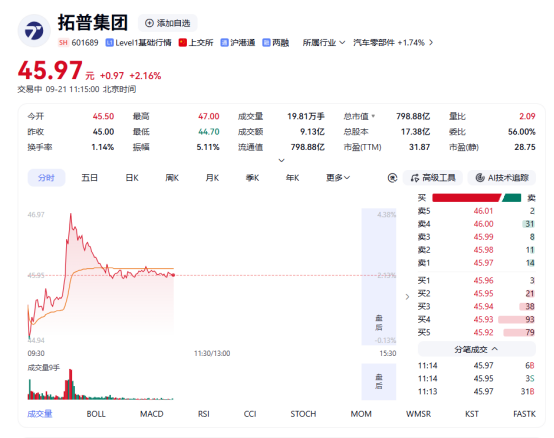
On the morning of September 21, shares of Sanhua, Joyson, and Top Group surged, with multiple stocks in the humanoid robot concept following suit.
As of press time, Tesla had not provided an official response regarding the factory inspections. The commencement of these inspections indicates that the transition node for Optimus from prototypes to mass production is imminent. In the first half of 2026, global shipments of humanoid robots are expected to reach approximately 19,000 units, with Chinese manufacturers accounting for over 97%.
-
![]()
Monthly Report | Online Market Analysis of Dash Cams in July: Hikvision Maintains Leadership, DDPai Stands Out Against the Trend, and Panoramic Security Features Reshape the Market
-
![]()
"China Speed" from an Overseas Perspective: The Coordination Revolution of Manufacturers and Suppliers
-
![]()
Founders Fund Allocates SpaceX Shares to Investors: Commercial Space Industry Hits Trillion-Dollar Valuation, Unlocks Liquidity Avenue
-
![]()
Revealed: Tesla’s Robot Team Conducts Factory Inspections, with Top Group, Sanhua Intelligent Controls, and Others Securing Major Orders!
-
![]()
After Data Security Controversy, Zhipu’s AI Coding Tool ZCode Goes Open-Source, Commits to Monthly Security Audits
-
![]()
Comparison of Industrial Strength Among Beijing, Shanghai, Shenzhen, and Nanjing in China's 6G First Tier
-
![]()
Lei Jun’s 200 Billion: Why Does He Always Make Bold Moves After Trends Emerge, Rather Than Before?
-
![]()
Has Geely Made a Strategic Shift: From Brand-Specific to Group-Wide Charging Networks?