2026 Imaging Flagship Face-Off: Xiaomi, OPPO, Vivo Excel, Apple Lags Behind
 10/27 2026
 475
Each device shines with distinct imaging prowess.
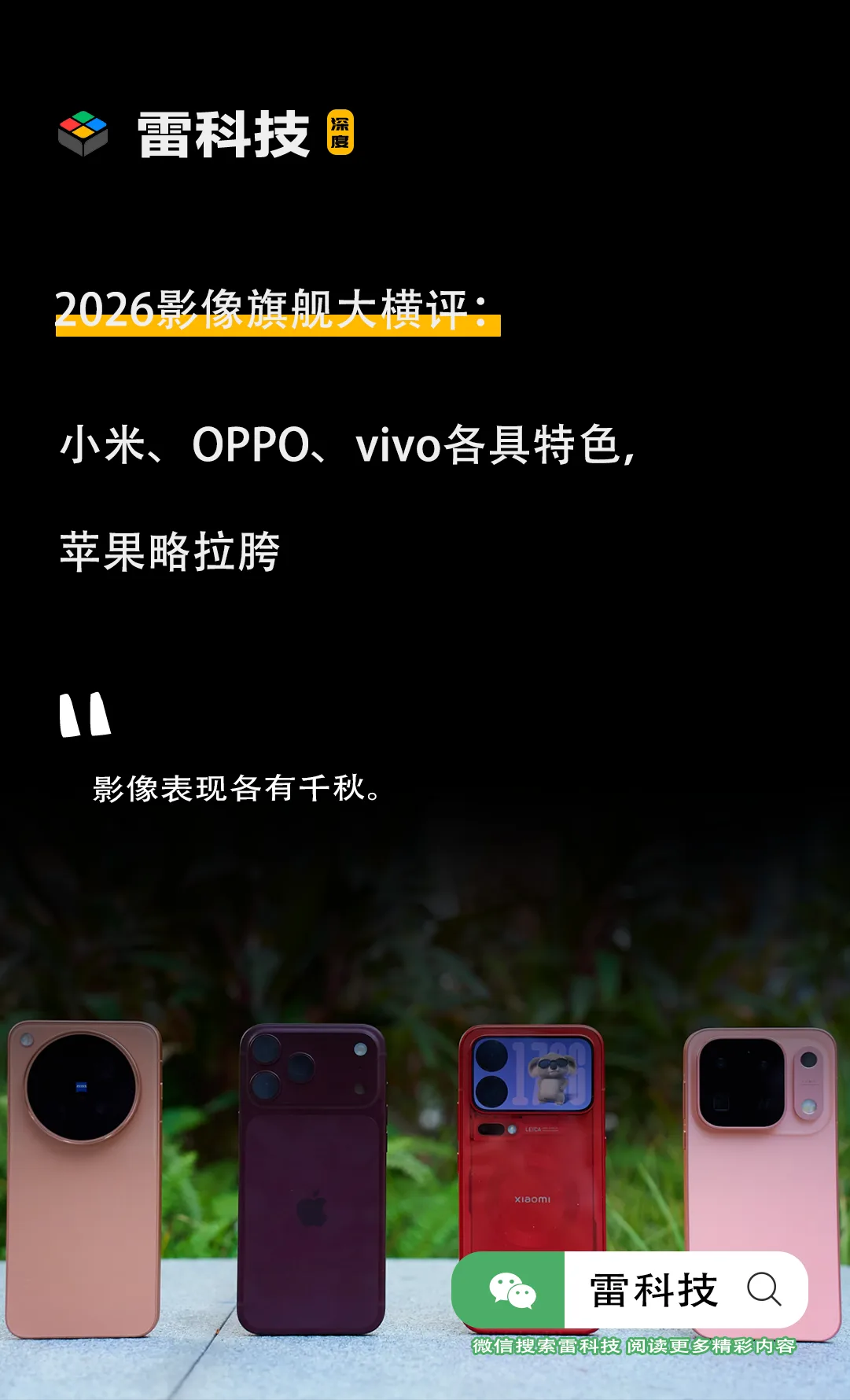
Recently, the Xiaomi 18 Pro Max, OPPO Find X10 Pro Max, vivo X500 Pro Max, and iPhone 18 Pro Max have all made their grand entrances, with each manufacturer pulling out all the stops. Xiaomi continues to forge a strong partnership with Leica for imaging, OPPO boasts three 200-megapixel lenses, vivo further refines its telephoto and video capabilities, and even the traditionally conservative Apple has finally embraced a variable aperture this year.
From hardware configurations to imaging algorithms, these four flagship devices this year offer a plethora of noteworthy upgrades. However, regardless of how impressive the specs are, the actual shooting results are what truly matter.
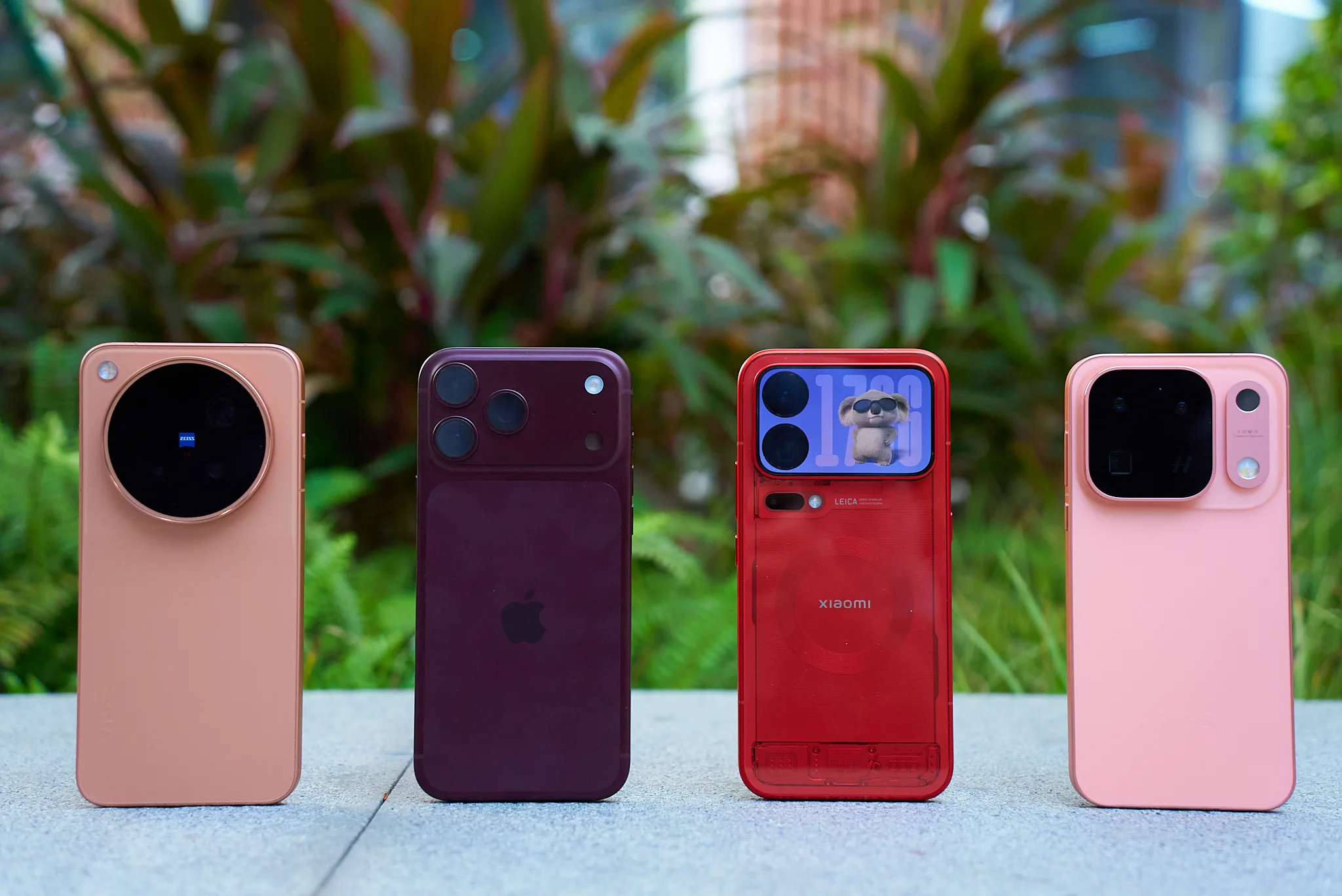
(Image source: Leitech)
So, which of these four phones boasts the best primary camera, and which offers the most practical telephoto capabilities? How much do the burgeoning AI imaging features actually benefit the average user? This time, Leitech (ID: leitech) puts them all through their paces for a comprehensive comparison.
Hardware Face-Off: 200-Megapixel Sensors Abound, iPhone Weighs In Heaviest
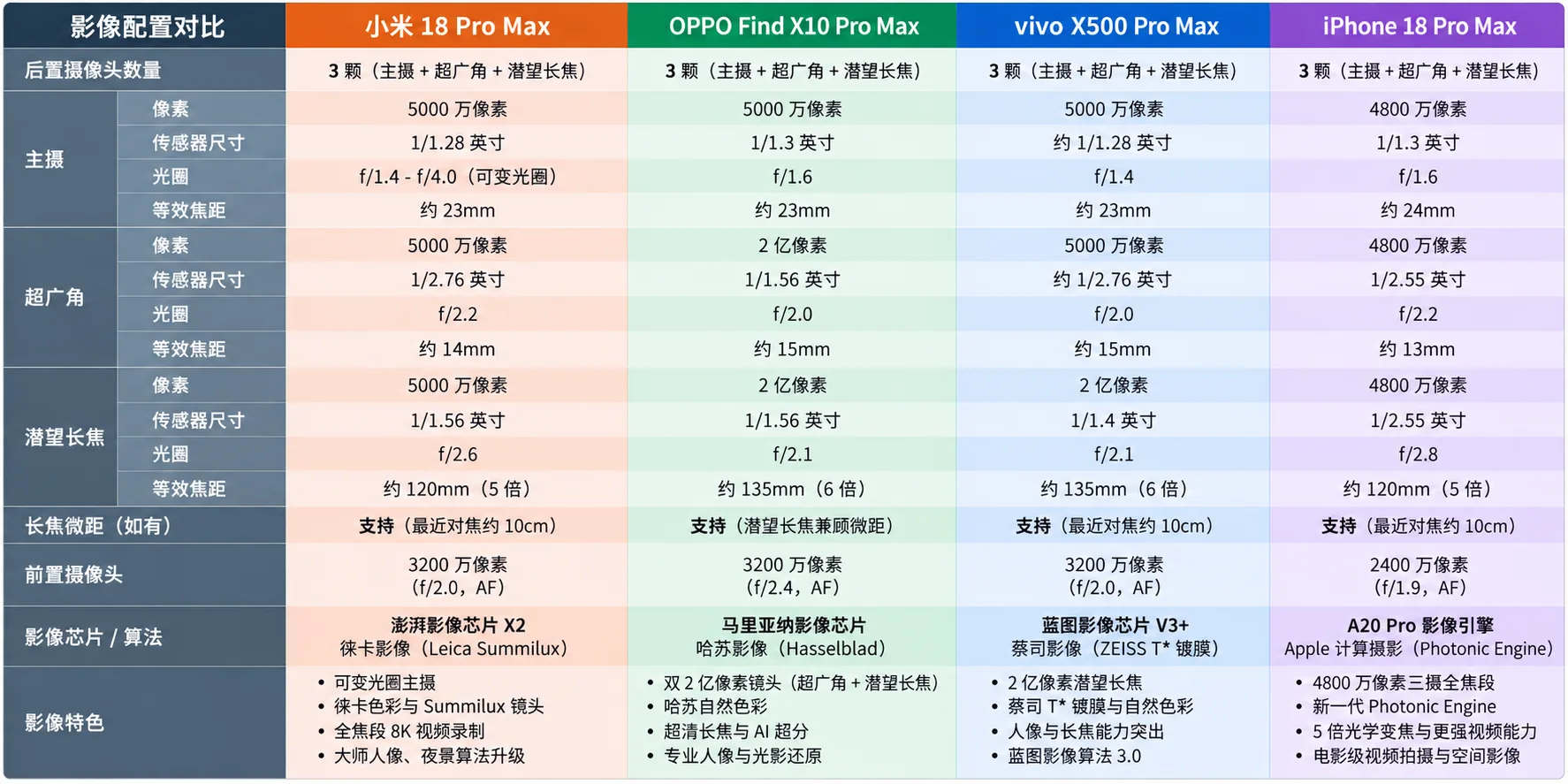
Following tradition, let's first delve into the imaging configurations of the four phones.
(Image source: Leitech Graphics)
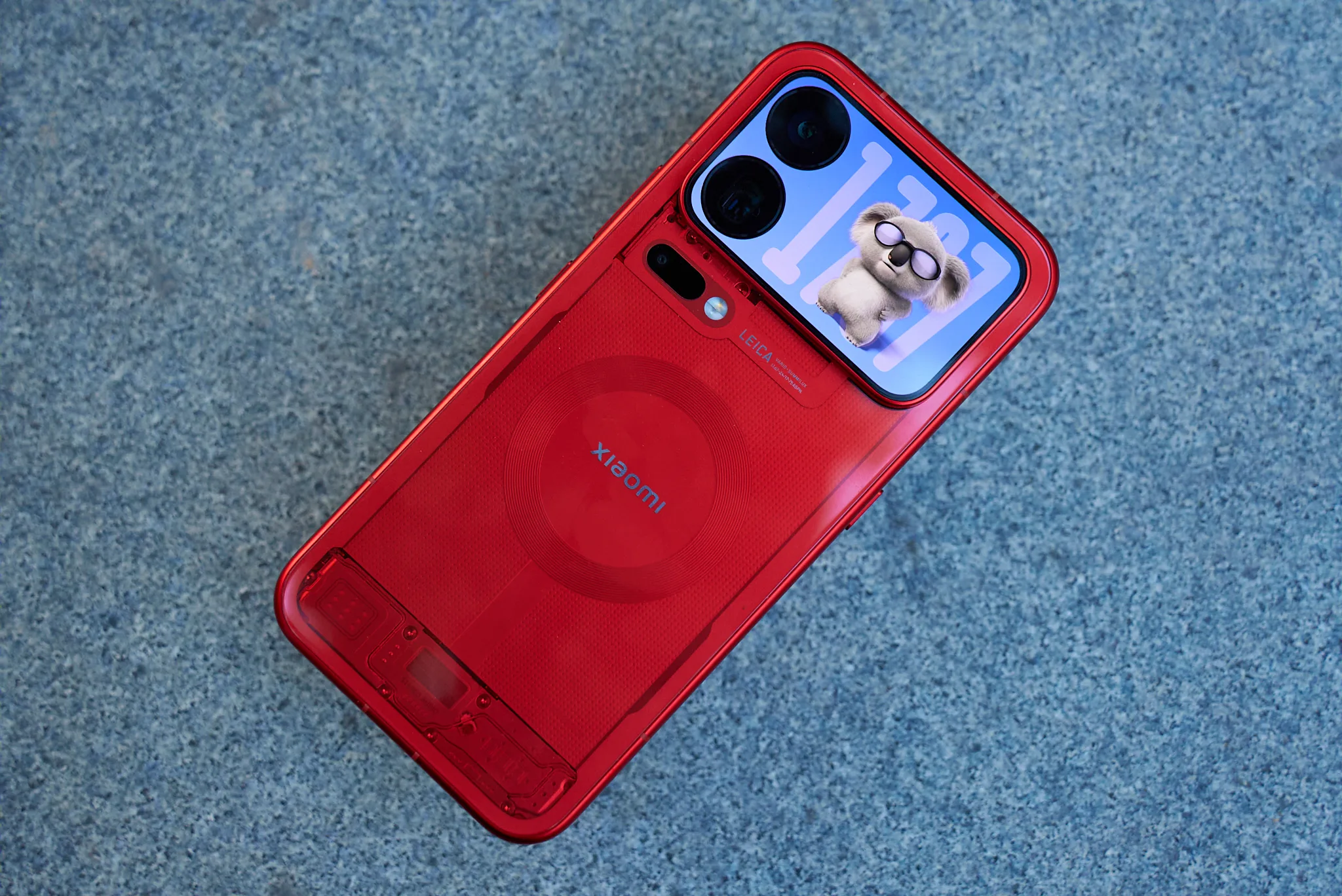
A clear trend this year is that 200-megapixel lenses have emerged as a key upgrade direction for domestic imaging flagships. The Xiaomi 18 Pro Max adopts a dual 200-megapixel setup, while the OPPO Find X10 Pro Max goes a step further by equipping its primary, ultra-wide, and telephoto lenses with 200-megapixel sensors.
(Image source: Leitech)
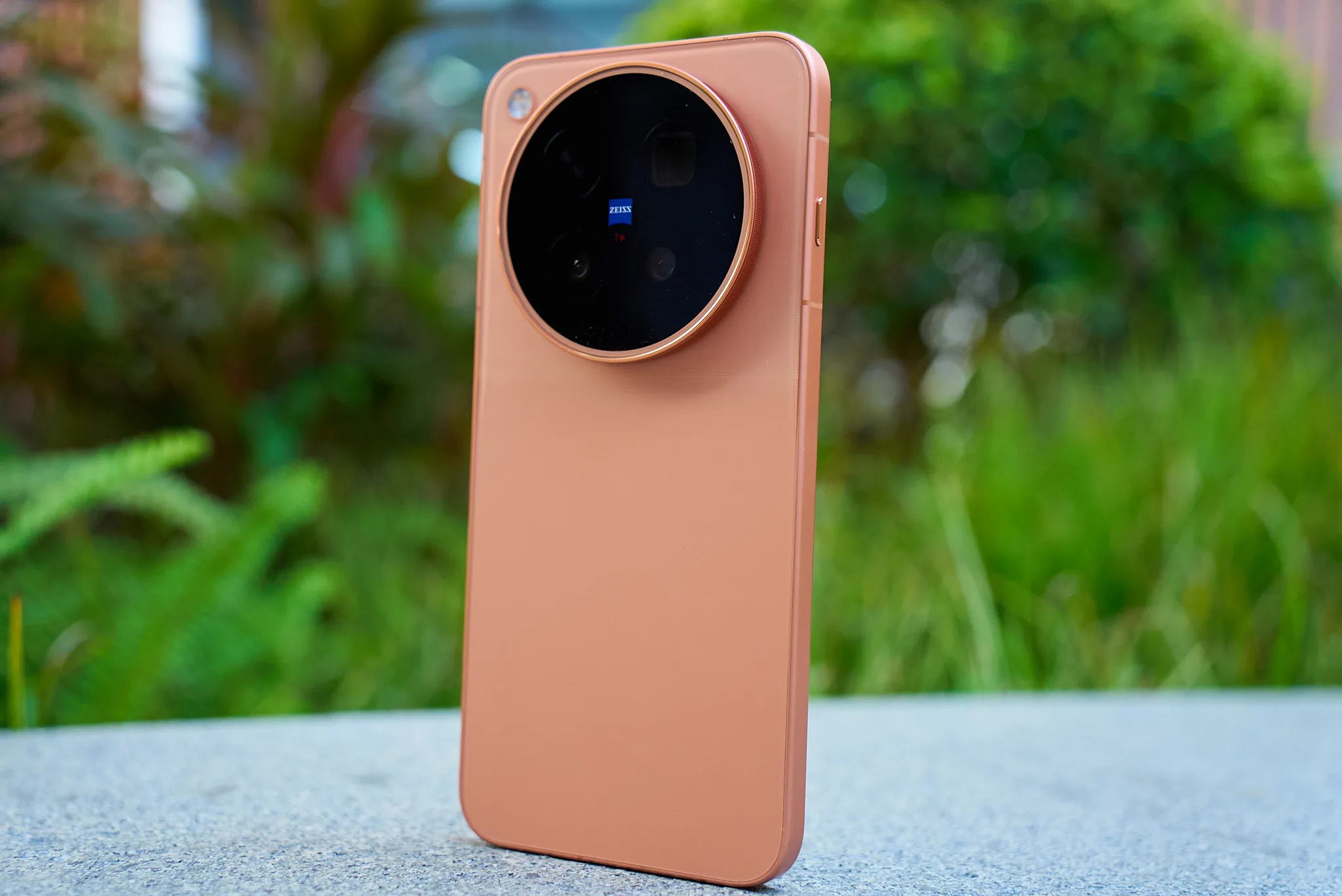
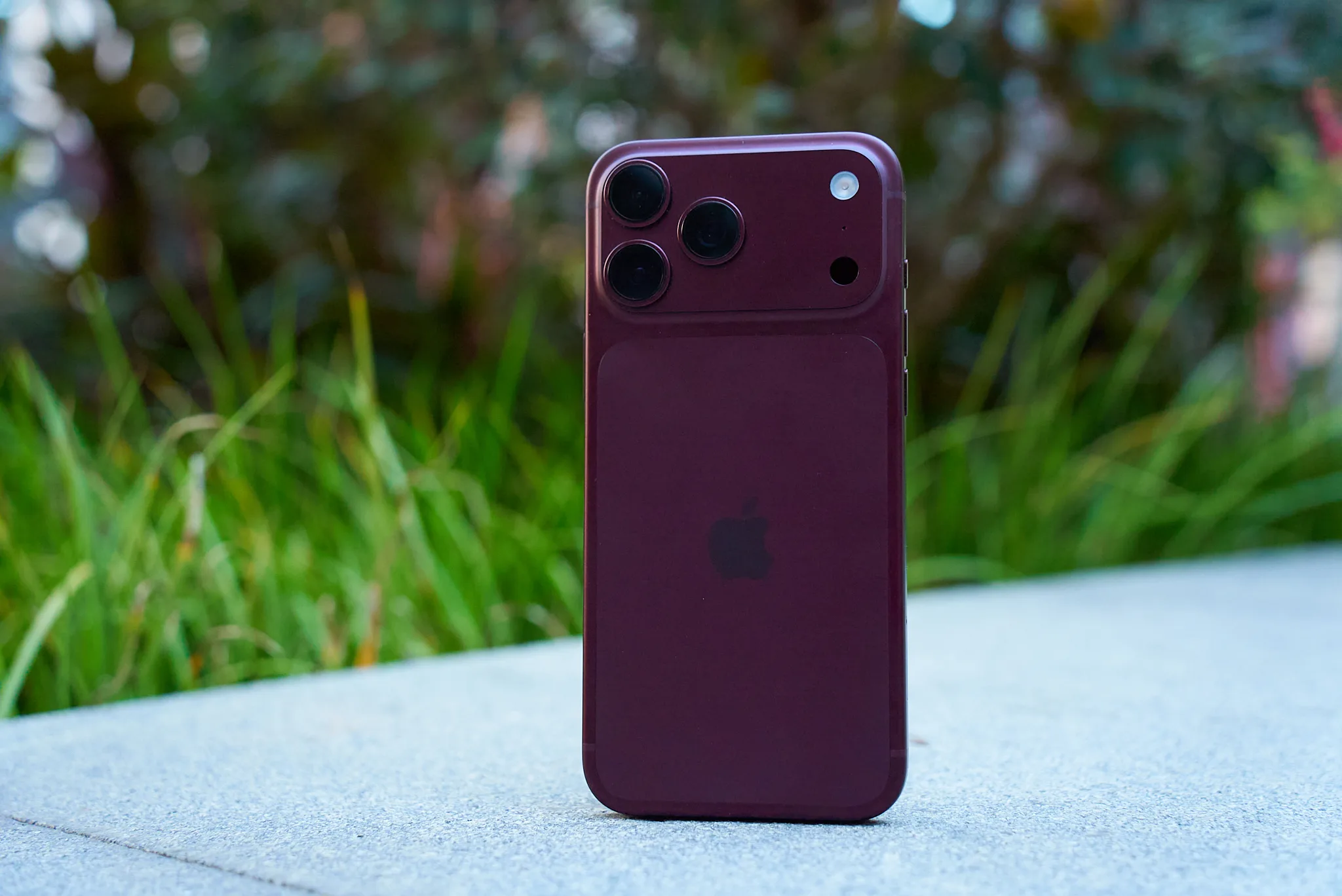
In comparison, the vivo X500 Pro Max and iPhone 18 Pro Max configurations appear less ostentatious. The former continues with a 50-megapixel primary camera paired with a 200-megapixel Zeiss APO super telephoto lens, while the latter sticks with three 48-megapixel lenses.
(Image source: Leitech)
However, pixel count alone doesn't dictate image quality. For instance, the Xiaomi 18 Pro Max features a 200-megapixel Light Master 960L primary camera and a 200-megapixel periscope telephoto lens with a 75mm equivalent focal length. The OPPO Find X10 Pro Max boasts a 70mm telephoto lens and incorporates a second-generation Danxia color reproduction lens to further enhance color performance under complex lighting conditions.
The vivo X500 Pro Max's strength primarily lies in its 85mm Zeiss APO super telephoto lens, which features a 1/1.4-inch sensor paired with 200 megapixels, offering more cropping space for high-magnification shooting.
Apple's approach differs somewhat. While the iPhone 18 Pro Max hasn't adopted 200 megapixels, its primary camera now features a variable aperture ranging from F1.48 to four stops of F4. The addition of a variable aperture allows users to adjust light intake based on the shooting environment and affects the actual depth-of-field performance.
Judging solely by specifications, domestic flagships this year are indeed more aggressive with high-pixel telephoto lenses, but Apple is also beginning to offer more professional shooting features.
Now, let's move on to actual performance.
Beyond imaging hardware, the feel of these four phones in hand also varies significantly.
This time, I specifically weighed the four phones: the vivo X500 Pro Max at 233.6g, the OPPO Find X10 Pro Max at 237.4g, the Xiaomi 18 Pro Max at 244.8g, and the iPhone 18 Pro Max at 260.2g. It's important to note that the iPhone 18 Pro Max had a tempered glass screen protector applied, while the weight data for the other three phones are based on actual measurements from this test. Therefore, these figures don't precisely equate to the bare weights of the four phones.
From the actual measurements, the vivo X500 Pro Max is the lightest of the four, with the OPPO Find X10 Pro Max weighing just 3.8g more—a negligible difference. The Xiaomi 18 Pro Max is 11.2g heavier than the vivo, making it noticeably heftier in hand. As for the iPhone 18 Pro Max, even considering the added weight of the screen protector, it remains the heaviest in this comparison, 15.4g more than the Xiaomi.
(Image source: Leitech)
Some might argue that a weight difference of a dozen grams isn't significant, but for those who frequently shoot with their phones, the difference becomes noticeable. Especially during travel, when you might need to shoot continuously for tens of minutes while constantly lifting the phone, adjusting composition, or switching focal lengths, the burden of the phone's weight gradually accumulates.
Of course, feel isn't solely determined by weight; body width, thickness, bezel shape, and weight distribution also affect the actual holding experience. However, based solely on this weighing, vivo and OPPO have an advantage in portability, with Xiaomi slightly heavier and the iPhone noticeably burdensome.
In my opinion, for users who frequently shoot outdoors, weight is certainly a factor worth considering when purchasing an imaging flagship. After all, no matter how strong the imaging configuration is, if lifting the phone for every shot feels tiring, it will inevitably affect the overall experience.
Primary Camera: Increasingly Similar Image Quality, Colors Make the Difference
Let's start with the primary camera, the most frequently used lens. After all, when shooting street scenes, food, or architecture, most people simply open the camera and press the shutter without switching focal lengths or adjusting parameters.
Moreover, I believe that by 2026, the primary cameras of imaging flagships will have become difficult to distinguish in terms of obvious gaps, especially under adequate lighting. Whether 50 megapixels or 200 megapixels, both can provide rich scene details.
For this comparison, I didn't deliberately seek out particularly complex testing scenarios.
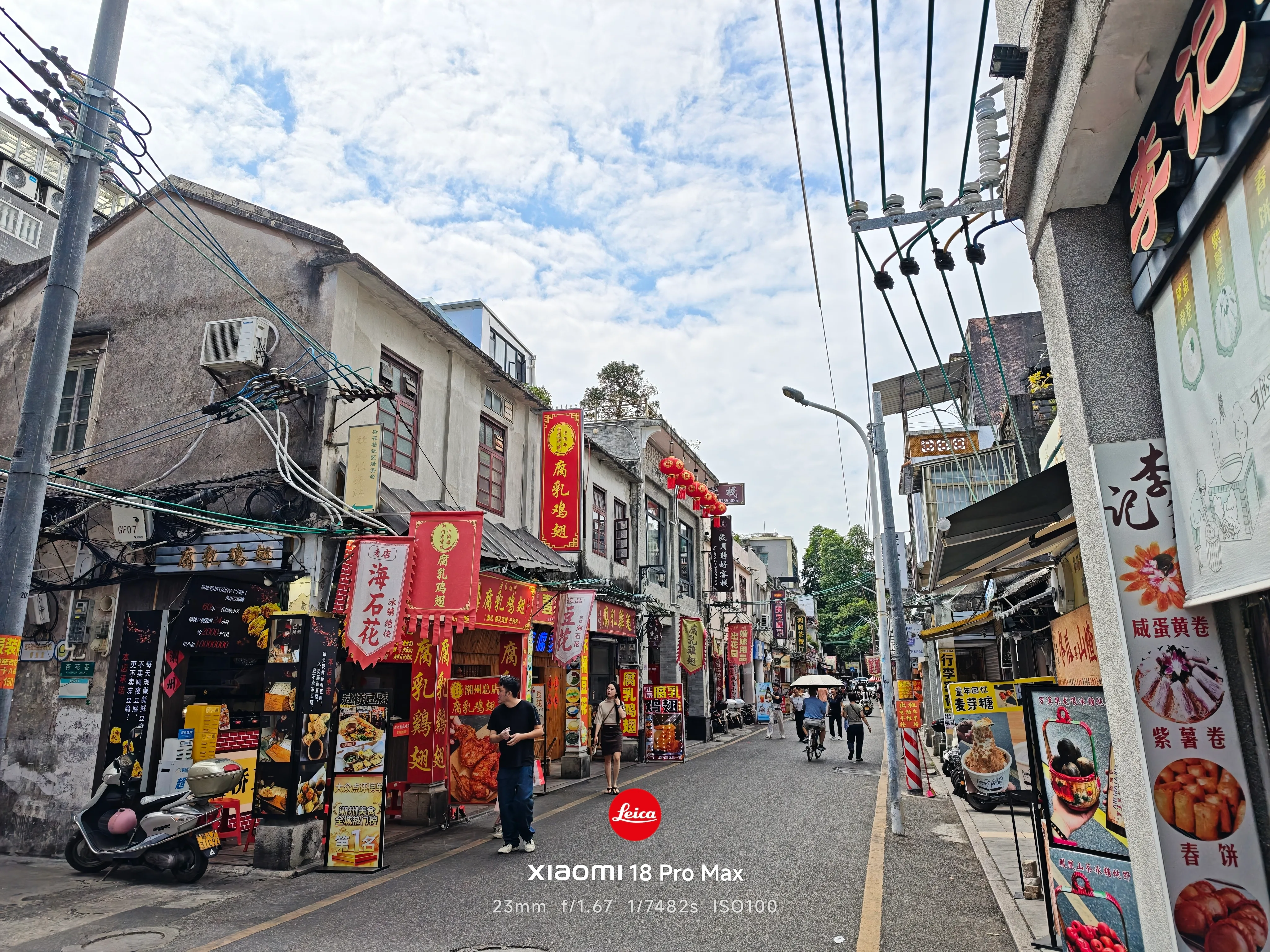
(Image source: Leitech, Leica Vivid mode)
The Xiaomi 18 Pro Max immediately impresses with its brightness. The blue sky is vivid, the red signs on both sides of the street are striking, and the entire photo appears quite transparent. Especially the contrast between the old buildings and the blue sky gives the image a lively feel. Such photos look great even without post-processing, easily garnering positive reactions when shared on social media.
However, Xiaomi's processing also shows clear signs of over-enthusiasm, with overall colors leaning toward being overly pleasing. The blue sky and shop signs are further enhanced—a style that's indeed fitting if you enjoy documenting travel experiences. But for users who prefer photos that closely resemble what the eye sees, some of Xiaomi's colors might appear slightly overly saturated.
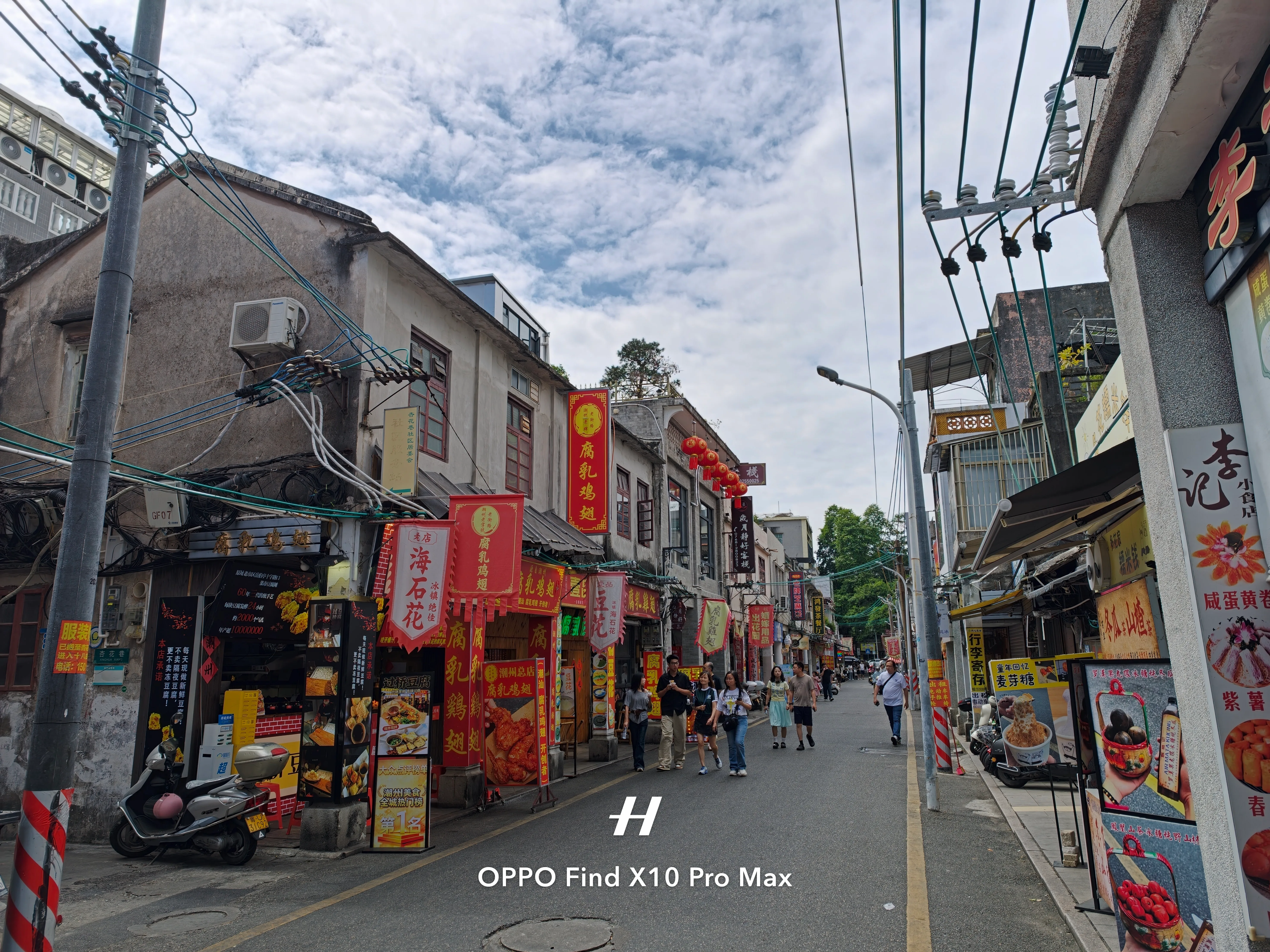
(Image source: Leitech)
The OPPO Find X10 Pro Max performs differently. It doesn't deliberately brighten the entire scene; the wall of the old building on the left retains rich tonal variations, and the clouds in the sky are clearly visible. The signs on both sides of the street still have sufficient color but don't stand out as much as on the Xiaomi, resulting in a relatively natural overall look.
OPPO's strength lies in not "beautifying" the old buildings in the scene. Part of the charm of these old districts comes from the wall's texture, eaves' shadows, and the slightly cluttered atmosphere of the streets. If the algorithm brightens all shadows and flattens the walls, the image would lose some of its appeal.
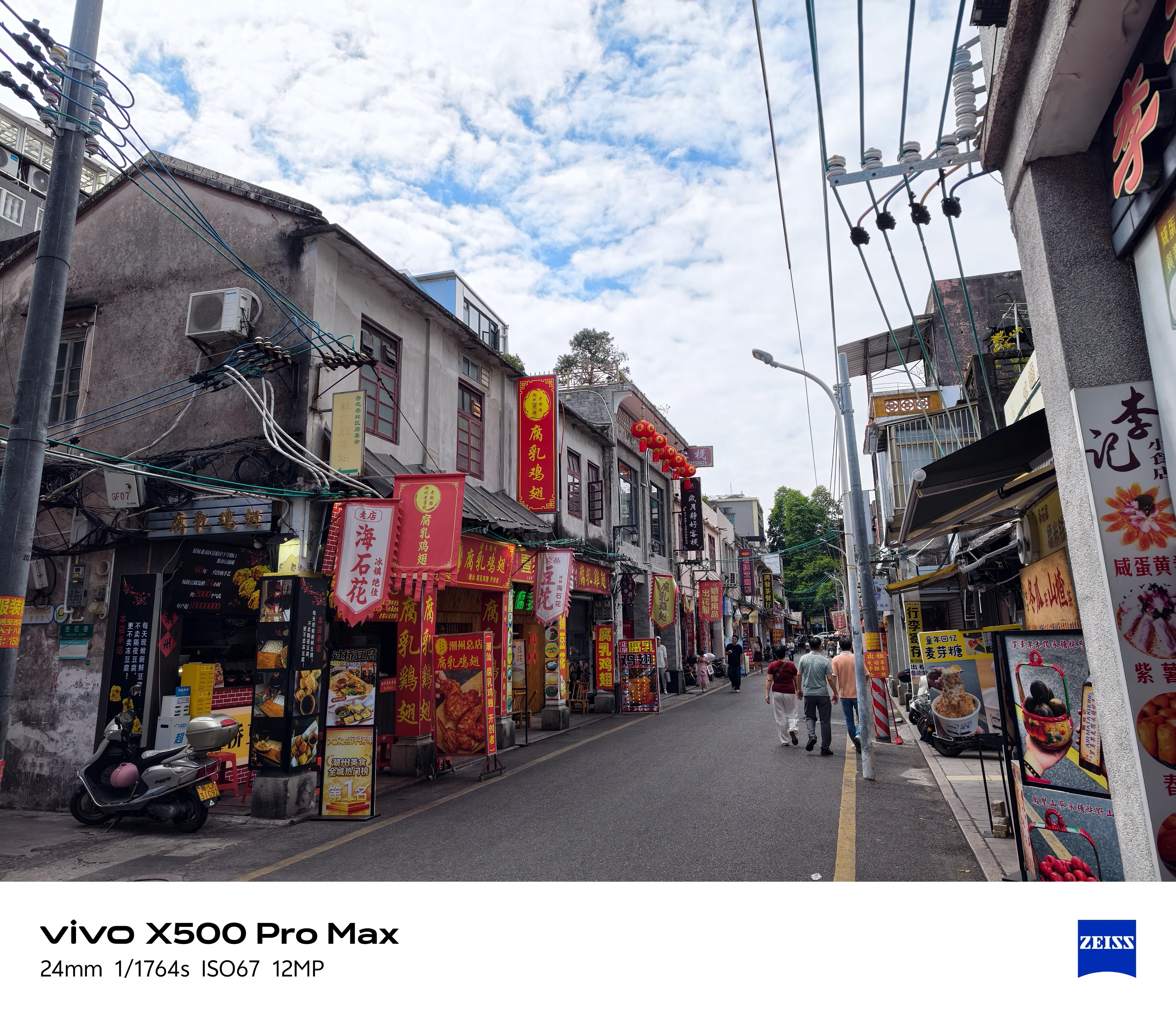
(Image source: Leitech)
The vivo X500 Pro Max takes a more aggressive approach. Among the four phones, vivo's overall brightness is noticeably higher, with the blue sky, red signs on both sides of the street, and various building decorations appearing more vivid. Especially in the shadow areas of the old building and shops on the left, vivo clearly applies more aggressive brightening, making details hidden in shadows easier to see and giving the entire photo strong visual impact.
However, I feel vivo's tuning is somewhat overdone this time. First, color saturation is high, with some red signs and the sky appearing overly vivid. Second, slight purple tints appear in local areas of the image, especially on buildings and roads, making colors look unnatural. Such photos are eye-catching at first glance but reveal traces of algorithmic processing upon closer inspection.
As for the iPhone 18 Pro Max, its performance genuinely surprised me.
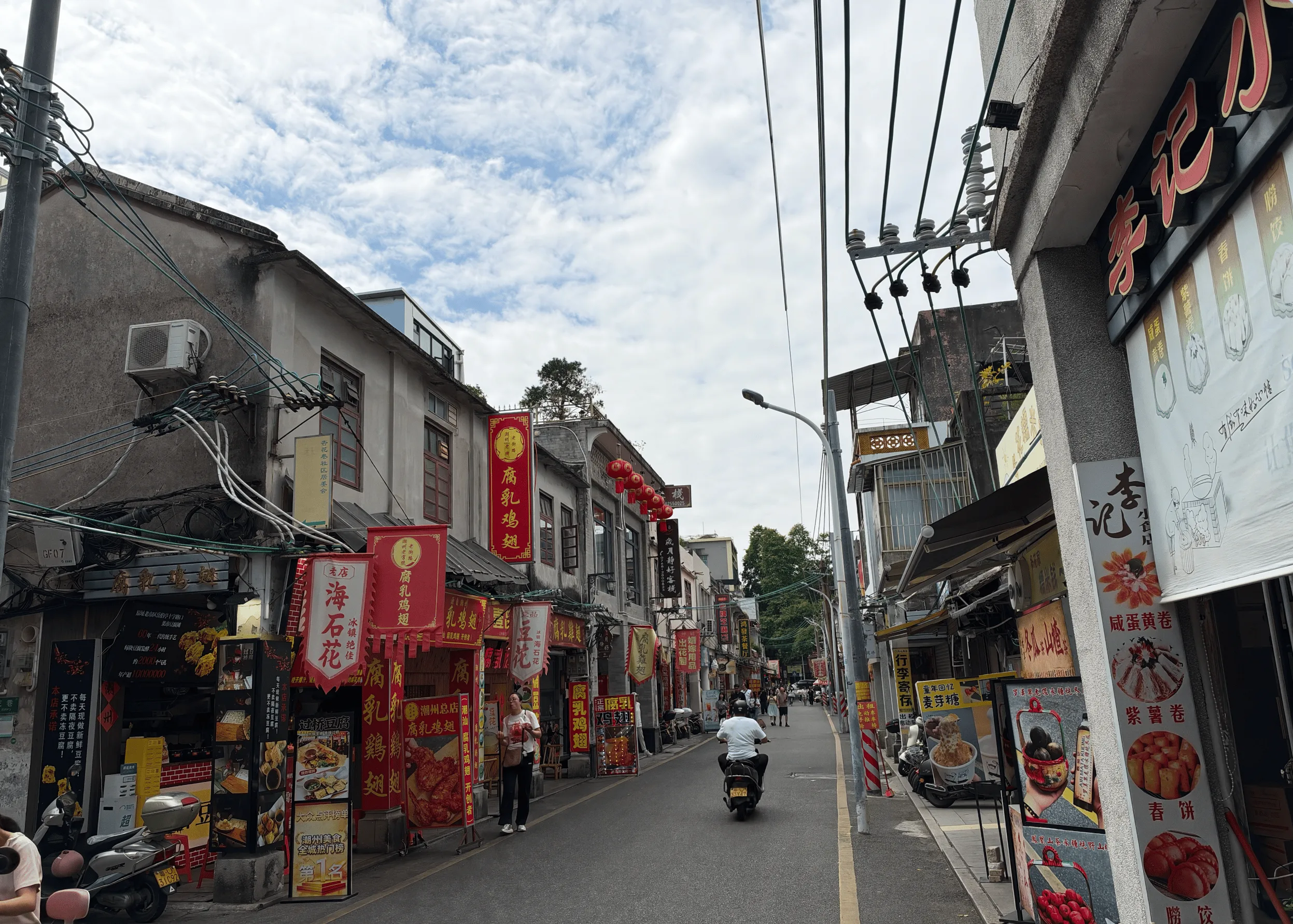
(Image source: Leitech)
From the sample, the iPhone's overall exposure is noticeably lower than the other three phones, with the sky appearing somewhat gray and the red signs on both sides of the street lacking vibrancy. Especially when compared to the Xiaomi, the difference in overall feel is striking—the iPhone's photo seems covered in a layer of gray.
Of course, this doesn't mean the iPhone lacks advantages. Upon closer inspection of building wall textures, wires, and shop signs, relatively complete details are still visible, and the image doesn't suffer from obvious over-sharpening. However, for average users, the first impression after taking a photo is the overall feel, and in this sample set, the iPhone genuinely falls short.
It should be noted that the four phones' photos weren't taken at the exact same moment, so lighting conditions vary slightly between images. Therefore, this sample set is more suitable for comparing each brand's overall color style and exposure tendencies rather than definitively ranking dynamic range or resolution.
When looking solely at this street scene, the differences among the four phones are quite apparent. The vivo X500 Pro Max has the highest brightness and saturation, making the photo appear most vivid at first glance, though some colors seem slightly exaggerated. The Xiaomi 18 Pro Max emphasizes tonal contrast, creating a more atmospheric overall feel. The OPPO Find X10 Pro Max handles the scene relatively naturally, without obviously pursuing high brightness or saturation. As for the iPhone 18 Pro Max, its direct output this time is genuinely unimpressive, with the image appearing noticeably gray and lacking the transparency of the other three phones.
Next, let's examine close-up shots of red bean desserts.
The differences in this set are quite pronounced, with food colors, pearl luster, and overall brightness varying significantly.

(Image source: Leitech)
The Xiaomi 18 Pro Max's photo most easily stimulates appetite. The red beans appear rich in color and glossy on the surface, with the transparent pearls' reflections standing out. The entire photo is quite bright, making the ingredients in the bowl look full and inviting. For casual dining photography, I find Xiaomi's style genuinely appealing.
(Image source: Leitech)
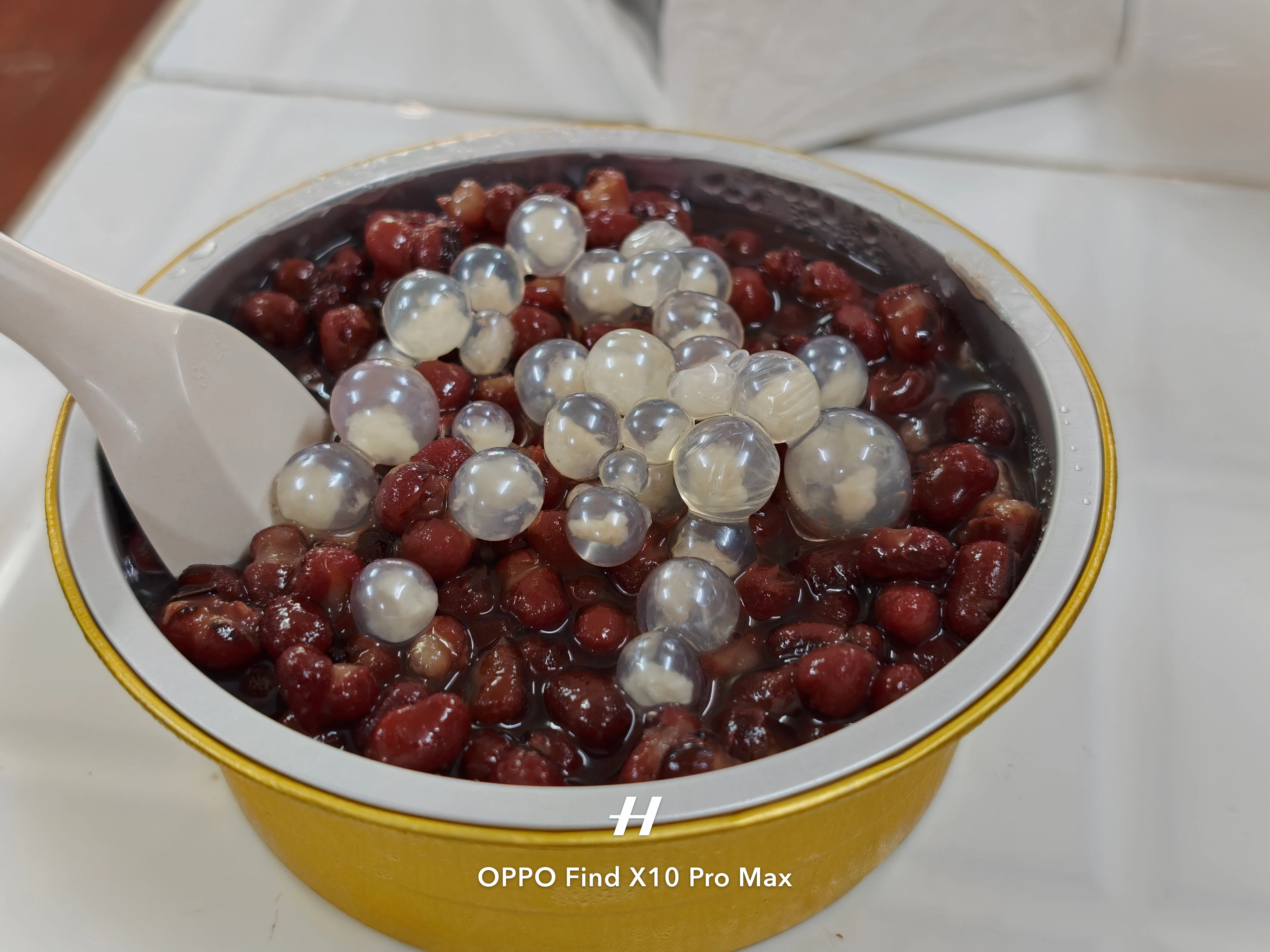
The OPPO Find X10 Pro Max applies relatively restrained processing. The red beans are darker in color, less vivid than Xiaomi's, but the textures on the food surface and the pearls' transparency are well-preserved. However, the entire photo appears somewhat dim, lacking the appetizing quality of Xiaomi's.
(Image source: Photographed by Lei Technology)
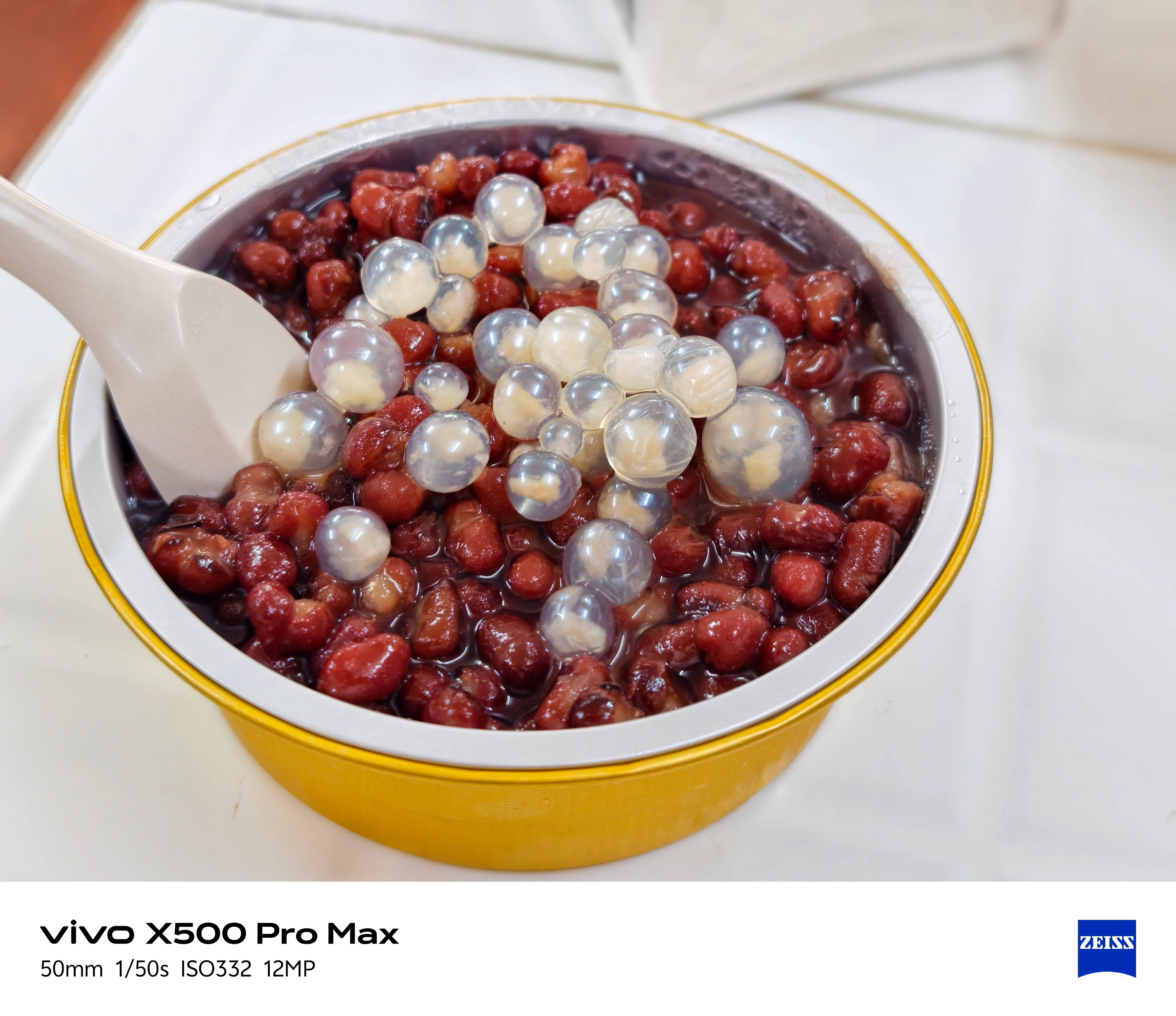
Interestingly, when it comes to the indoor red bean dessert scene, the processing of the vivo X500 Pro Max is different again. Compared to the vibrant street scene just now, the colors in this set of photos are noticeably more subdued. The red of the red beans is not as intense as that of Xiaomi, and the highlights on the surface of the pearls are relatively softer. The overall look is quite natural, but at first glance, it doesn't seem as appetizing as Xiaomi's. This also shows that vivo doesn't simply increase saturation in all scenes; it adopts different processing methods for different subjects.

(Image source: Photographed by Lei Technology)
The iPhone 18 Pro Max still has an issue with underexposure in this set of photos. Although the details of the red beans and pearls are well preserved, the overall colors appear noticeably gray, and the food looks lacking in luster. This difference is particularly evident when compared to Xiaomi's photos.
However, the equivalent focal lengths used in this set of photos are not exactly the same, and some models may employ different cropping methods. Therefore, it's not possible to determine which phone has stronger close-up resolution based solely on these photos.
Considering these two sets of sample photos, the main camera tuning of the four phones indeed has distinct characteristics:
The vivo X500 Pro Max clearly tends to increase brightness and color saturation in outdoor scenes, making the photos look more vibrant. However, occasionally, the colors can appear overly intense.
The Xiaomi 18 Pro Max emphasizes contrast more, resulting in a more pronounced sense of atmosphere
When compared with main cameras, I believe telephoto lenses have seen the most significant improvement in flagship imaging technology over the past two years.
Previously, telephoto lenses on smartphones were more of a supplementary feature. They were adequate for capturing distant buildings or magnifying objects, but once lighting conditions deteriorated, image quality would quickly decline noticeably. Today's flagship smartphones can already utilize the telephoto lens as the primary option for daily photography, with many users even preferring the compositional effects it offers.
During a photography session in Chaozhou, the culturally rich old streets provided an ideal setting for the telephoto lens.
Lanterns adorned both sides of the street, with archways and traditional buildings visible in the distance. If the main camera had been used, the image would have included numerous power lines, road surfaces, and unrelated shops, resulting in a cluttered appearance. Switching to the telephoto lens allowed for a focused composition on the lanterns and buildings, clarifying the image's theme.
Let's first examine this set of sample photos featuring lanterns and archways.
(Image source: Photographed by Lei Technology)
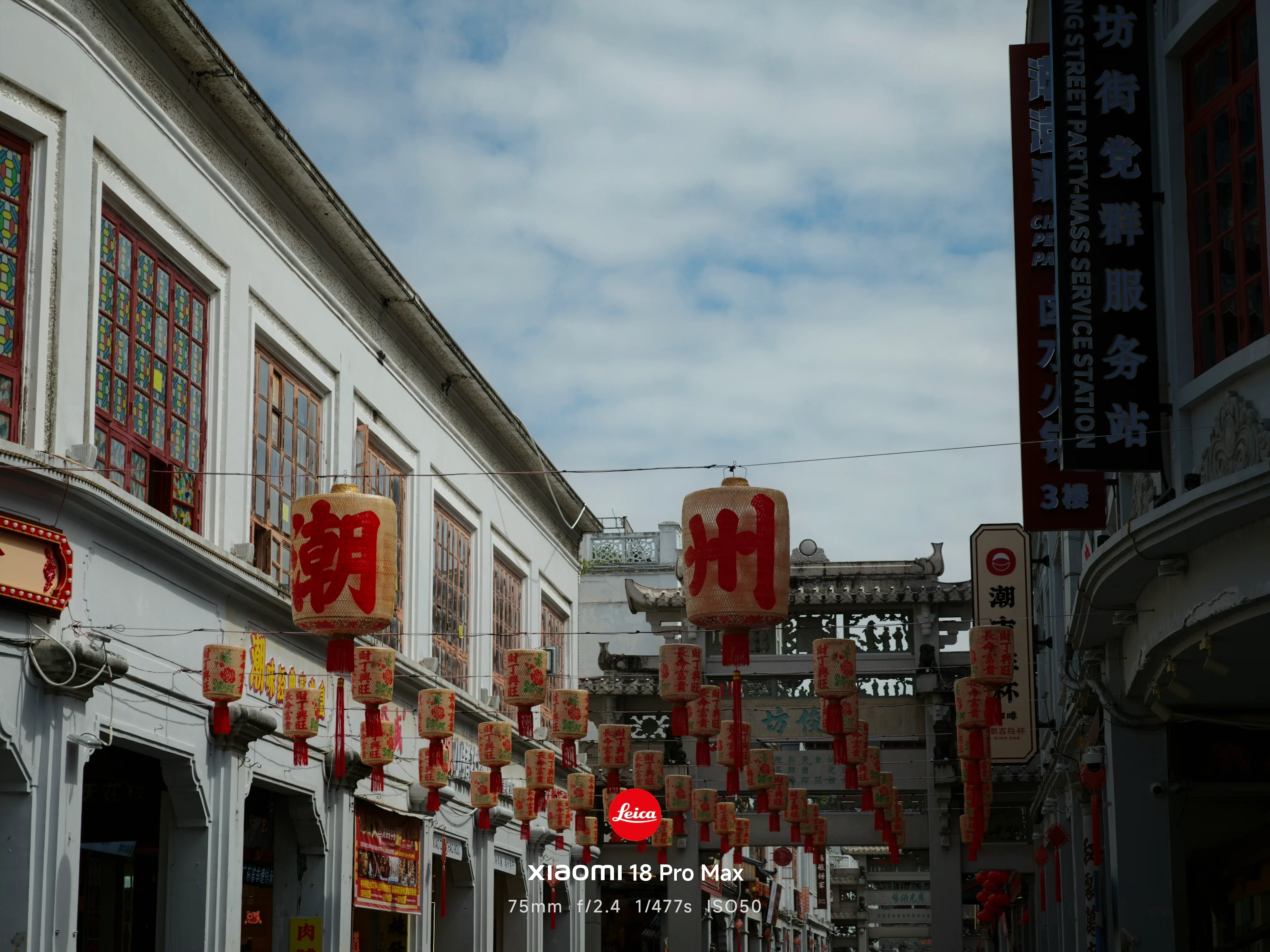
The overall image from the Xiaomi 18 Pro Max is relatively dark, particularly the buildings and shops deeper in the street, which exhibit noticeable shadows. This tone makes the red lanterns stand out more and adds a certain atmosphere to the image. However, upon closer inspection of the darker areas, some details are not easily discernible, or in simpler terms, they lack clarity.
(Image source: Photographed by Lei Technology)
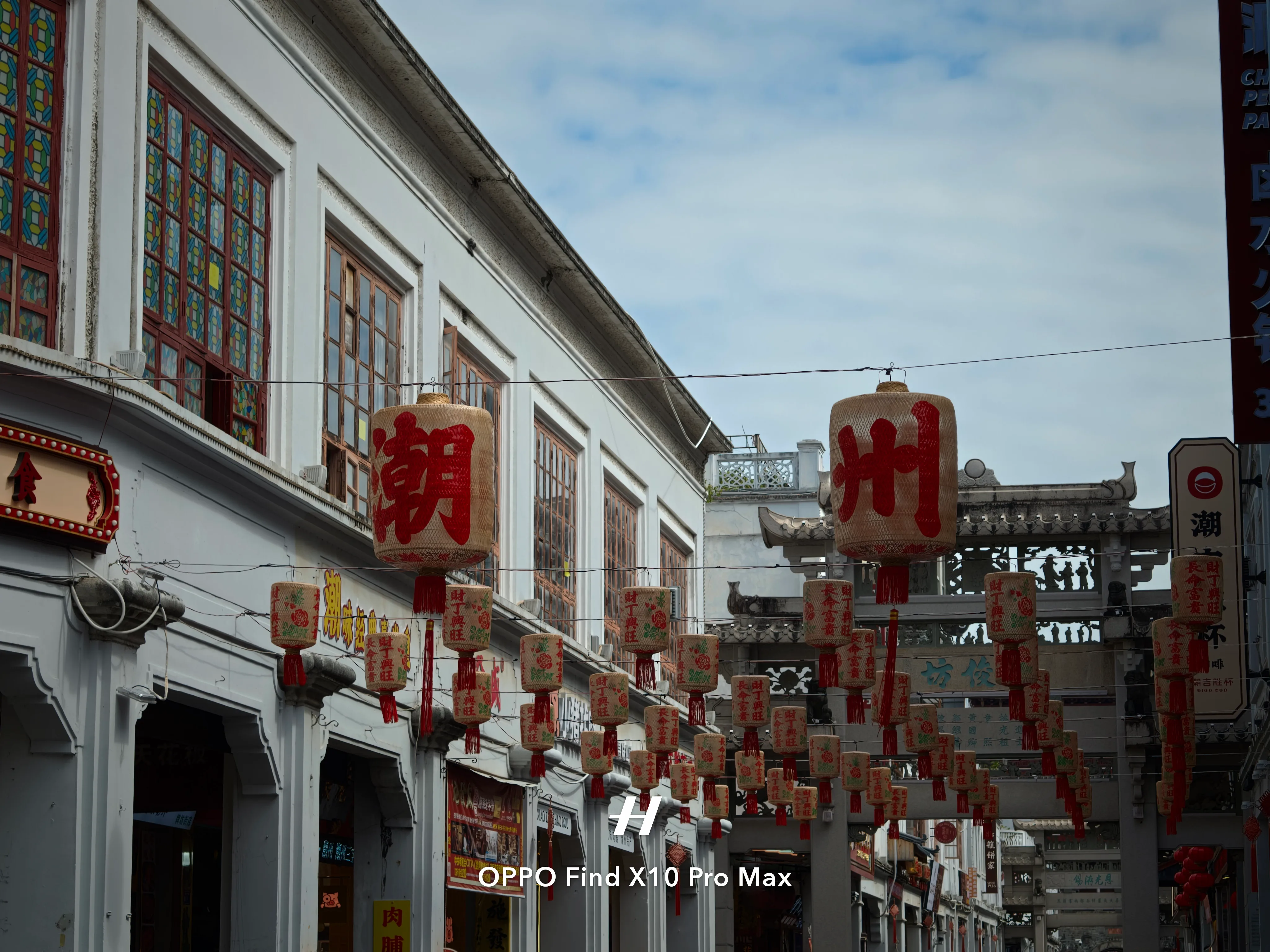
The OPPO Find X10 Pro Max shares some similarities with Xiaomi's approach, maintaining a relatively pronounced contrast between light and dark. However, OPPO's overall processing is more restrained. It handles the sky, white buildings, and red lanterns relatively conservatively, with a natural balance of light and dark in the image, especially the building walls. It doesn't overly enhance dark details in pursuit of brightness, resulting in a comfortable viewing experience.
(Image source: Photographed by Lei Technology)
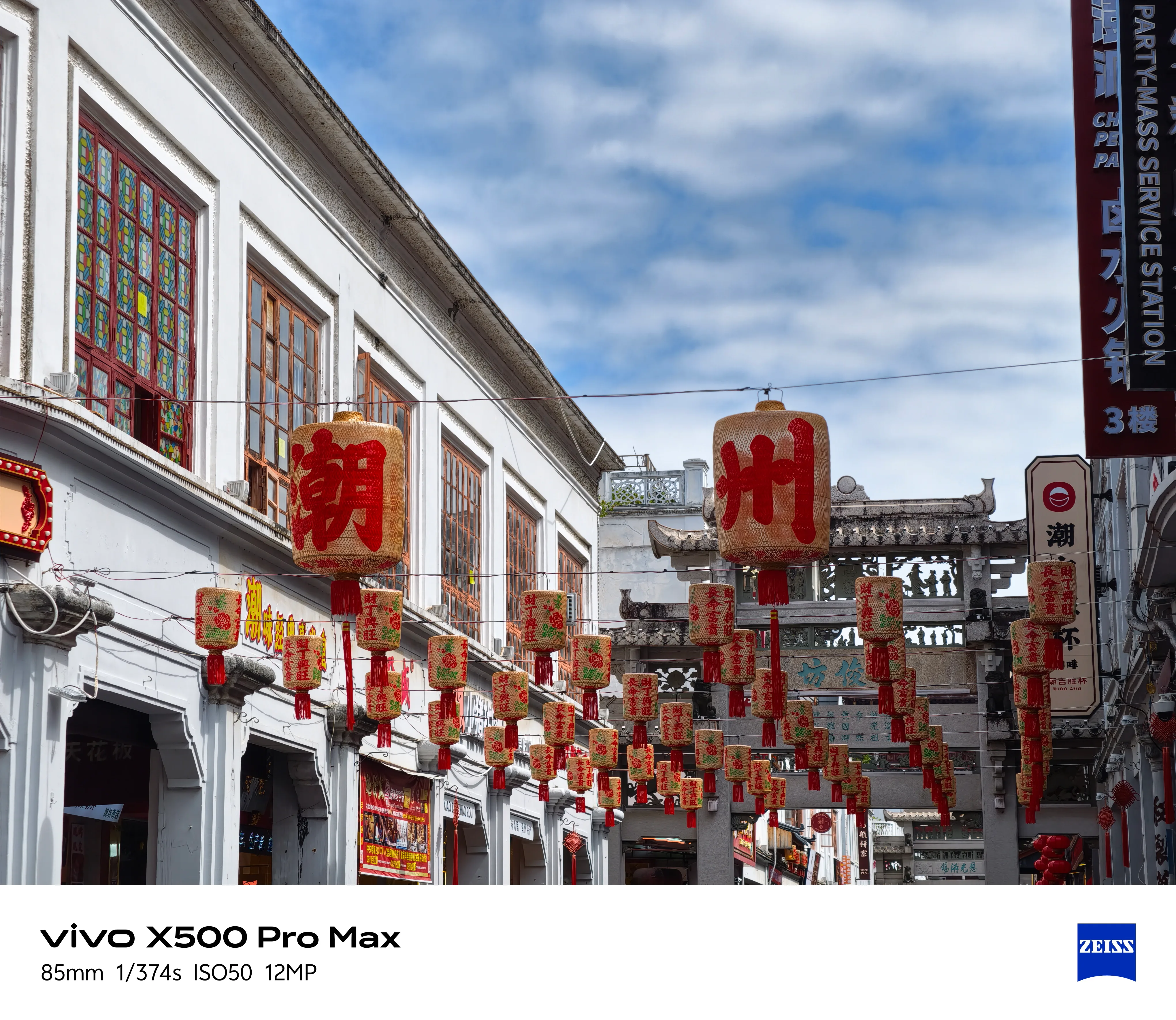
The vivo X500 Pro Max employs an 85mm focal length for shooting, resulting in a noticeably brighter overall image. The walls of the white buildings appear brighter, the red text on the lanterns is more prominent, and some details deeper in the street are easier to discern. Compared to Xiaomi and OPPO, vivo tends to present the image content more directly to users.
(Image source: Photographed by Lei Technology)
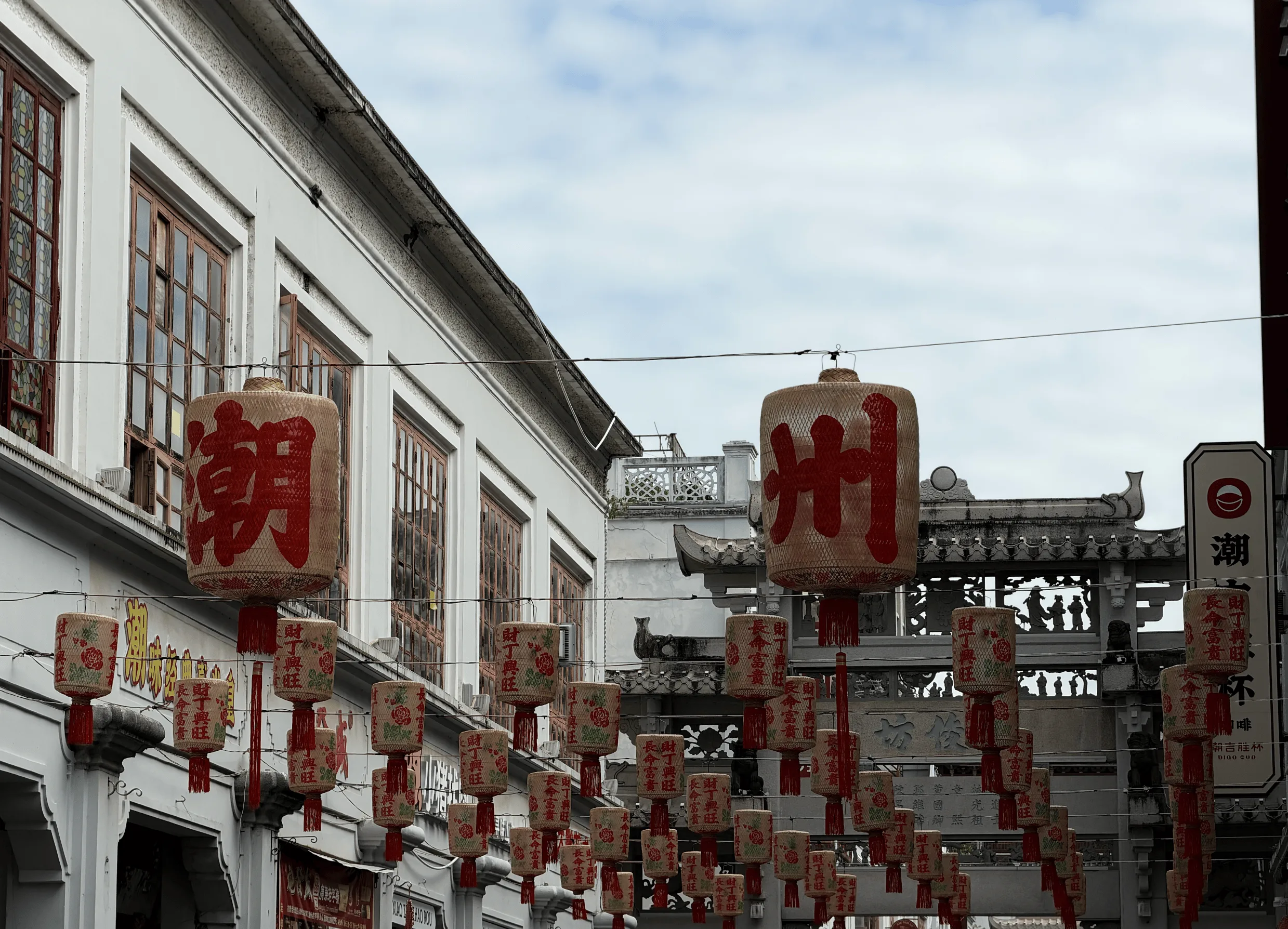
The iPhone 18 Pro Max still exhibits obvious exposure issues in this set of sample photos. The colors of the building walls, sky, and lanterns appear grayish, and the red text lacks the vibrancy seen on the other three smartphones. Although the architectural structures and lantern outlines in the image remain clear, the overall appearance is quite bland.
Now, let's look at the second set of telephoto sample photos featuring buildings.
(Image source: Photographed by Lei Technology)
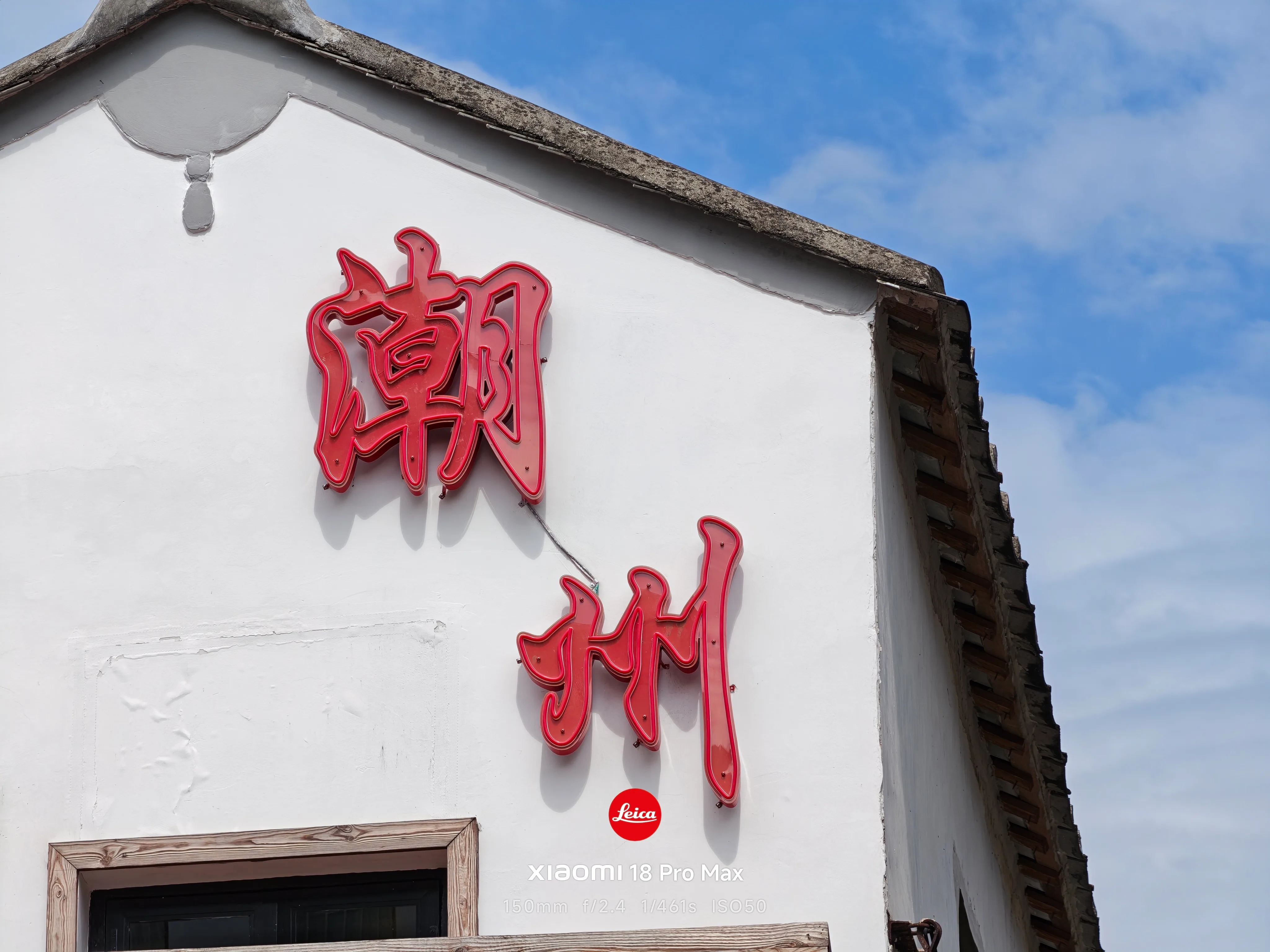
The red text in the Xiaomi 18 Pro Max's image is very vibrant, the white walls appear relatively bright, and the blue of the sky is quite intense. The entire photo has a strong visual impact. Especially the contrast between the red signboard and the white walls makes the subject stand out prominently.
(Image source: Photographed by Lei Technology)
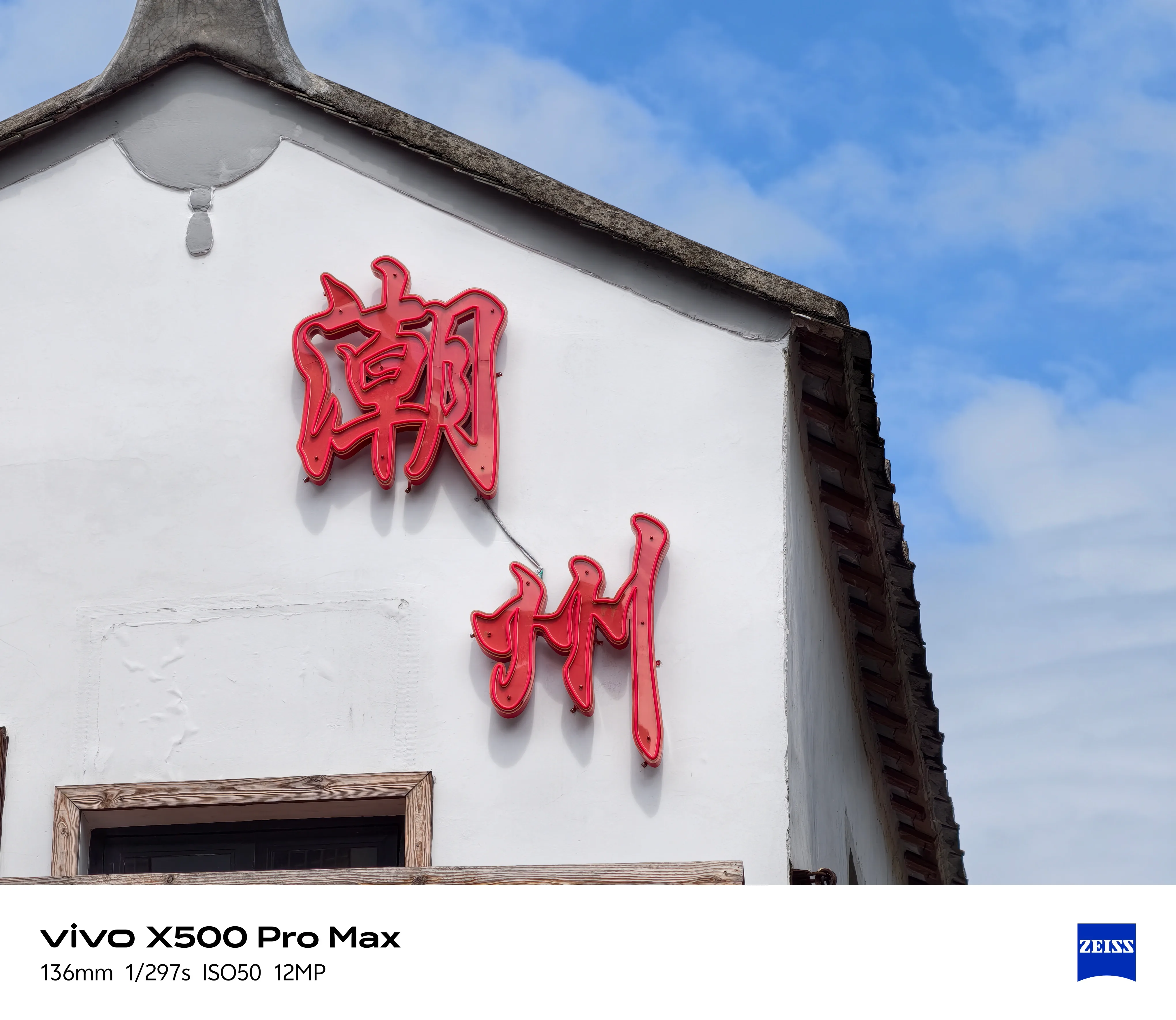
The performance of the vivo X500 Pro Max in this set differs from that in the previous lantern sample photos. Although it clearly favors high brightness and high saturation in street scenes, when facing large areas of white walls, vivo does not deliberately increase the brightness. The color of the red text is also relatively subdued. Compared to the Xiaomi 18 Pro Max, vivo's sky is not as vibrant, and the balance of light and dark between the white walls and eaves is more natural. It can be seen that vivo's tuning does not always pursue vibrancy; there are still noticeable differences in its processing in different scenes.
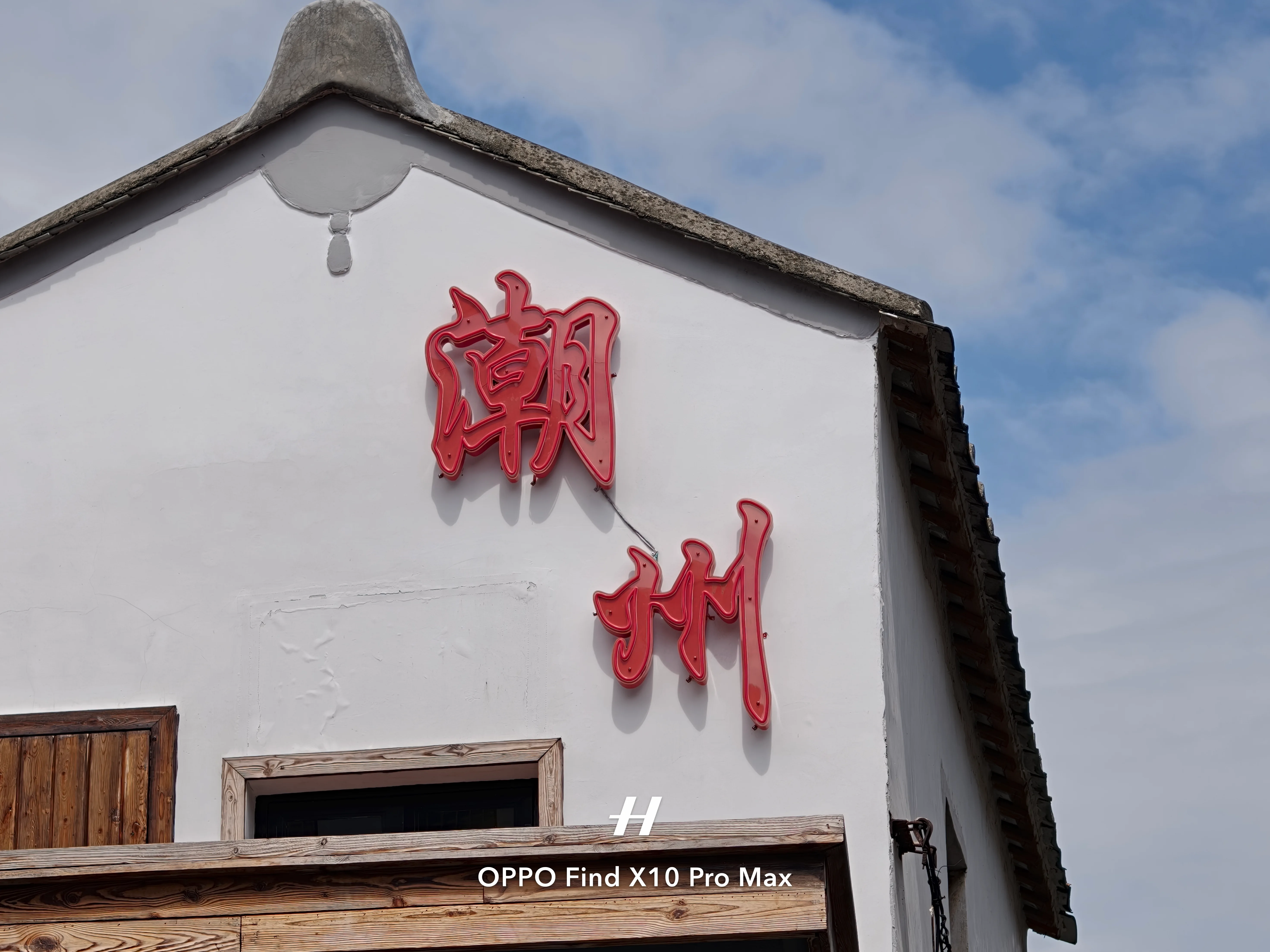
(Image source: Photographed by Lei Technology)
The photos from the OPPO Find X10 Pro Max combine some characteristics of both. The red text is still quite prominent but not as intense as Xiaomi's. The white walls retain a more natural variation in brightness, and the color of the sky is also quite comfortable. Personally, I quite like how OPPO handles this set of buildings, as it makes the subject stand out enough without making the entire photo overly vibrant.

(Image source: Photographed by Lei Technology)
The photos from the iPhone 18 Pro Max are noticeably grayish. Although the white walls are not severely overexposed, the overall brightness and colors are quite conservative, and the red signboard lacks the expected vibrancy. Compared to the other three smartphones, its photos look quite bland and lack that eye-catching element.
If we only consider these two sets of telephoto sample photos, I believe OPPO's overall tone is quite appealing, vivo performs well in terms of brightness and subject visibility, and Xiaomi has the most vivid color style. As for the iPhone, its out-of-camera performance does not have an advantage this time.
AI Imaging Becomes Standard, OPPO and Apple Lean Towards 'Authenticity'
After discussing hardware and real-world shooting, let's take a look at another important competitive direction for this year's flagship smartphones—AI imaging.
In the past, when mentioning AI photo editing on smartphones, people mainly thought of removing passersby, extending photo edges, or improving image clarity. However, this year, manufacturers clearly have more ideas. Especially Xiaomi, OPPO, and vivo have started to let AI directly participate in the shooting process.

(Image source: Photographed by Lei Technology, original image)
To see how different the AI photo editing is among the four flagship smartphones, I specifically chose a seaside landscape photo and imported the same original image into the four smartphones, optimizing it through their respective AI photo editing functions. The content of this photo is actually quite simple: blue sky, white clouds, seawater, and rocks by the shore. However, precisely because of this, the AI's adjustments to colors and lighting will be very apparent. Especially the blue of the sky, the layers of the clouds, and the dark areas of the rocks—slightly overdoing it can easily lead to a failure.

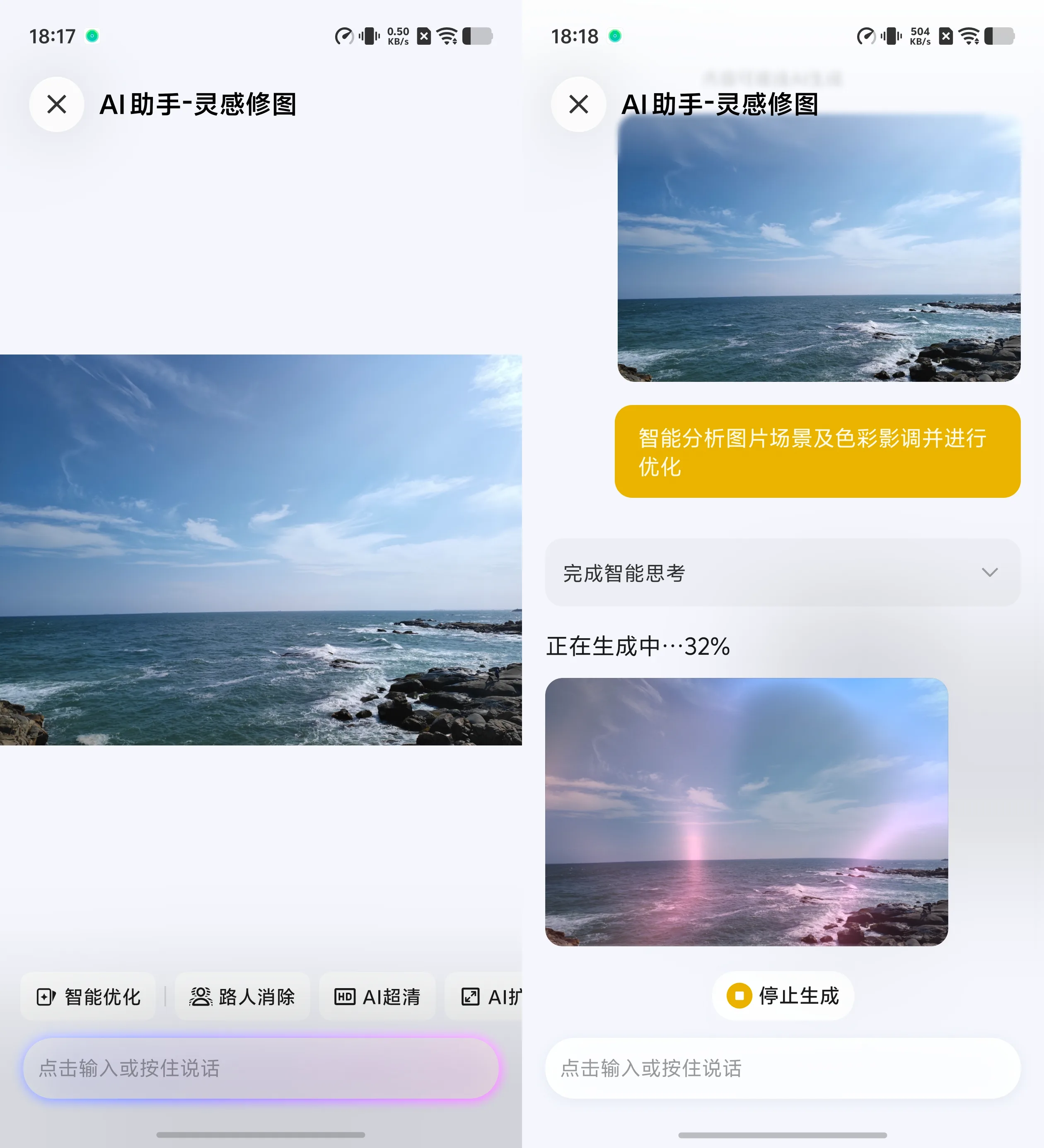
(Image source: Photographed by Lei Technology, vivo)
Let's first look at the vivo X500 Pro Max. It noticeably increases the saturation of the sky and seawater, especially the sky in the top left corner of the image, where the blue is much more intense than in the original. The color of the sea surface also tends more towards dark blue, and the contrast between the waves and the seawater is more pronounced. The overall look is indeed more vibrant, but some blues also appear somewhat overly intense, continuing vivo's style of favoring high saturation seen in previous real-world shots.

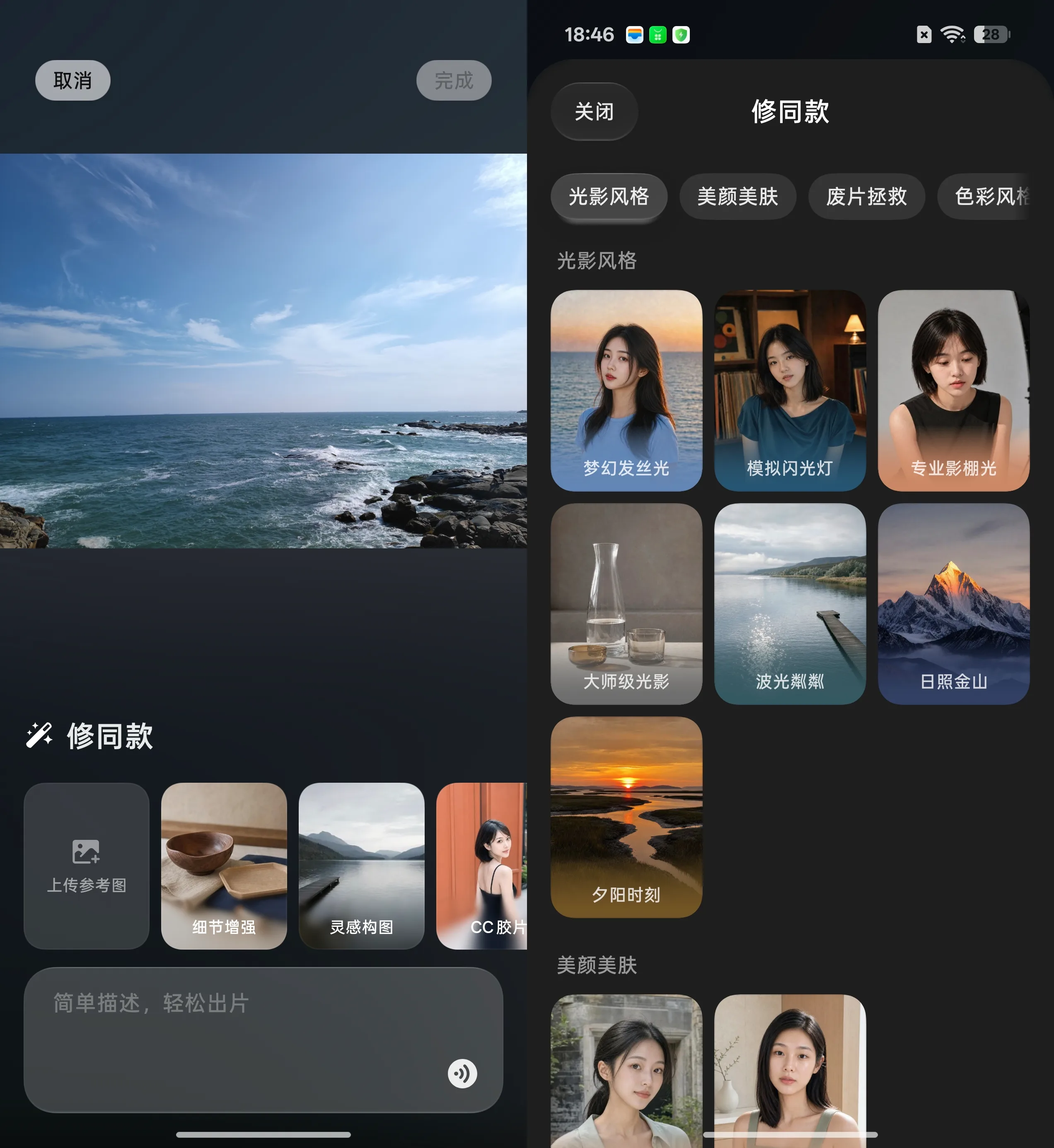
(Image source: Photographed by Lei Technology, OPPO)
The OPPO Find X10 Pro Max's processing is relatively conservative. It doesn't noticeably increase the saturation of the sky and seawater like vivo does. Instead, it mainly adjusts the overall brightness and the colors of the sky, making the photo look more refreshing. Especially the clouds on the right and the waves near the rocks basically retain their original balance of light and dark without any particularly noticeable over-sharpening issues. Personally, I quite like this processing method. Of course, if you hope AI photo editing can bring very obvious changes, OPPO's processing might seem somewhat conservative.
In comparison, the AI photo editing of the Xiaomi 18 Pro Max is quite aggressive.

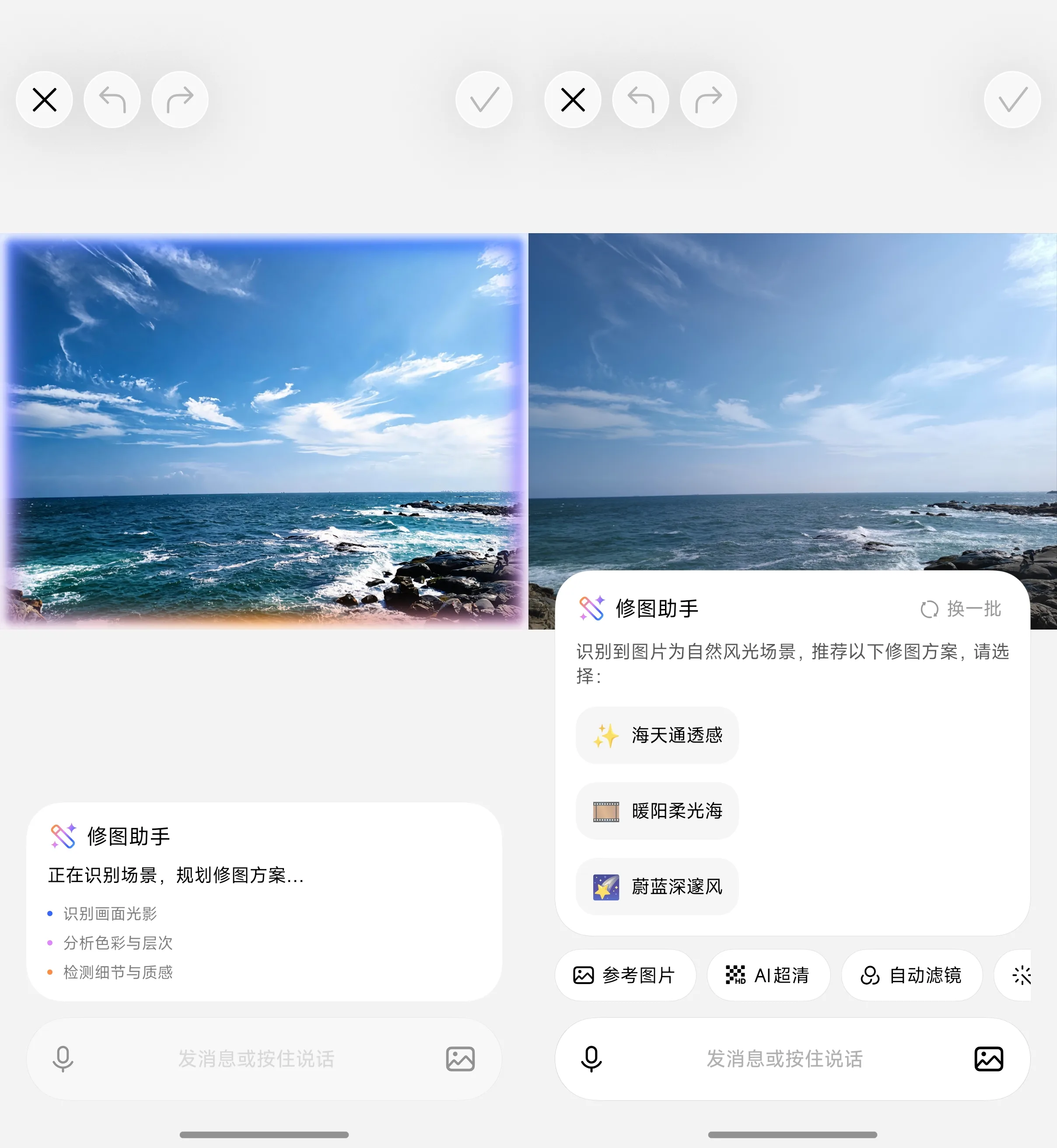
(Image source: Photographed by Lei Technology, Xiaomi)
It noticeably increases the contrast and color saturation of the entire image. The sky becomes darker blue, the outlines of the clouds are more prominent, and the seawater even takes on some bluish-green hues. Especially the waves and clouds on the right—the highlights are further enhanced, and the entire photo has a strong visual impact.
However, the problem lies here. The highlights of some waves and clouds already appear somewhat harsh, and the originally quite natural balance of light and dark has also changed noticeably. In simpler terms, it looks 'obviously AI-generated.'
Finally, the iPhone 18 Pro Max.
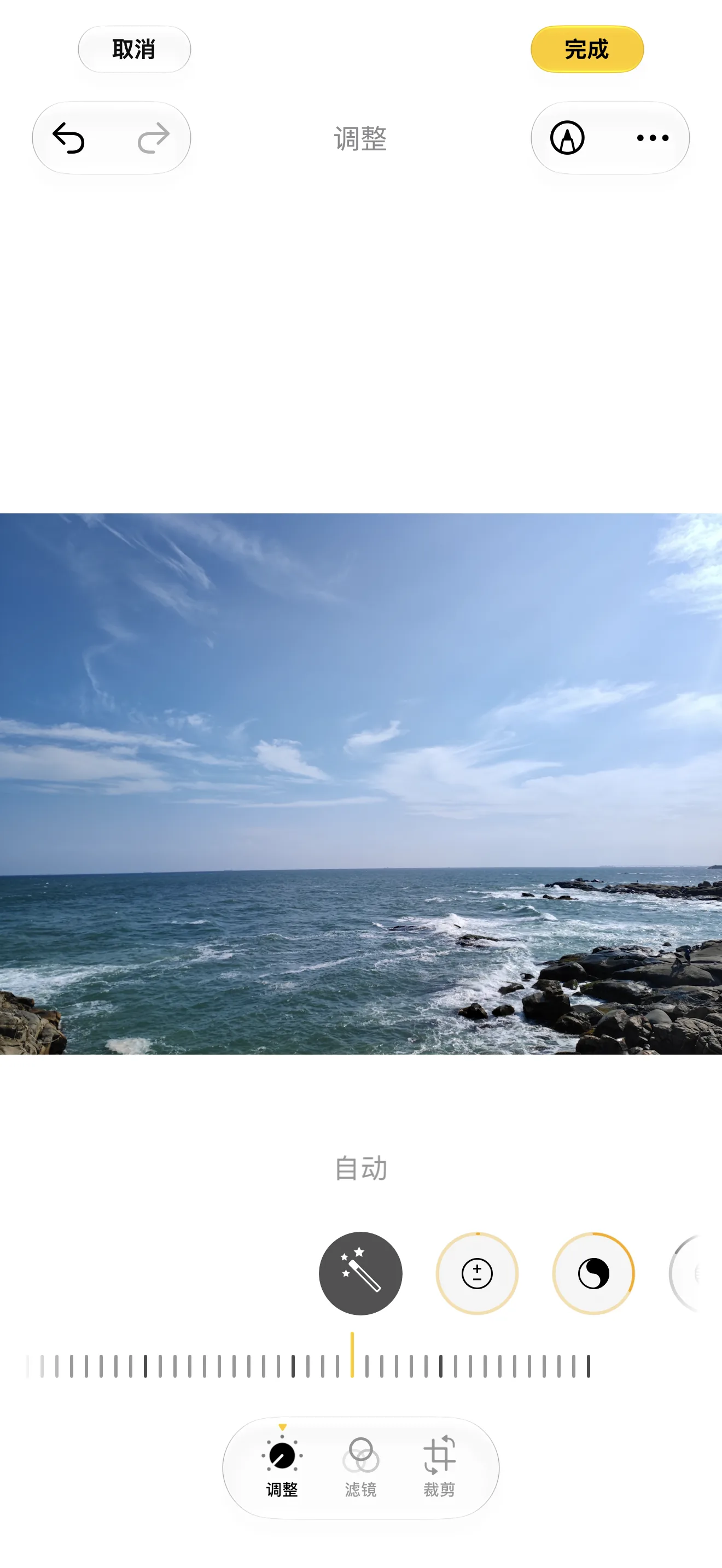
(Image source: Created by Lei Technology)
Here, I need to clarify first that Apple does not provide a conversational AI intelligent color grading function that is exactly the same as the three domestic flagship smartphones. Therefore, I used the 'Auto' adjustment feature that comes with the Photos app. This function belongs to traditional automatic image optimization and, strictly speaking, cannot be directly equated with generative AI photo editing. However, we can still see how Apple would process the same photo.

(Image source: Photographed by Lei Technology, Apple)
From the final result, iPhone's adjustments are quite limited. The colors of the sky and seawater are basically the same as in the original image, mainly improving the overall balance of light and dark in the image. The details of the rocks and waves on the right have not changed noticeably, and the overall look is quite natural.
Comparing the four photos side by side, the differences are quite apparent. Xiaomi applies the most significant adjustments, making the photos visually striking but also more prone to over-processing. Vivo also leans towards vibrant colors, particularly enhancing the blues of the sky and sea. OPPO and Apple, on the other hand, remain closer to the original image, with a relatively natural overall style.
In addition to the final editing results, the three domestic flagship models also differ in their operational approaches. The Vivo X500 Pro Max tends to have AI actively analyze photos and then offer corresponding optimization suggestions. The Xiaomi 18 Pro Max supports adjusting the lighting and layers of the image through text commands, allowing users to directly describe their desired effects.
In contrast, the OPPO Find X10 Pro Max's 'AI Photo Editor' offers significantly more options. It can recommend different editing plans based on the photo content. For example, for these seaside photos, it provided options like 'Clarity of Sea and Sky' and 'Warm Sunlight Soft Sea.' Additionally, OPPO has introduced a 'Same Style Editing' feature, allowing users to upload reference images or directly select system-preset style templates.
Xiaolei believes that the biggest advantage of OPPO's feature set is the abundance of choices and its intuitive operation. For users who are not well-versed in photo editing, simply selecting a preferred style allows for quick adjustments. Users with a certain photography foundation can further refine the results using reference images or text commands. At least from the perspective of feature richness and operational convenience, OPPO stands out the most among the four flagship models this time.
Besides post-editing, the three domestic flagship models this year have also started to incorporate AI into the shooting process.
For example, the Xiaomi 18 Pro Max's 'AI Assisted Shooting' provides suggestions on composition and poses based on the scene. It also includes the 'Legendary Moment' large-scale imaging model and cloud-based ultra-clear image enhancement to further improve the lighting and details of photos. The OPPO Find X10 Pro Max assists users in selecting appropriate framing and focal lengths through 'LUMO Inspirational Composition,' while the Vivo X500 Pro Max's 'Blueprint Smart Imaging Camera' offers scene recognition, composition recommendations, and color grading suggestions.
In comparison, Apple's current 'AI Imaging Features' still remain in the post-editing stage. Although Apple Intelligence supports functions like photo removal in some regions, it has not yet provided a complete experience similar to the domestic flagship models in terms of AI composition and shooting guidance.
Overall, OPPO has an edge in terms of the richness of AI photo editing features and operational experience, while Xiaomi and Vivo each have their own unique strengths. However, Xiaolei believes that at this stage of AI imaging development, simply making photos look better or clearer can hardly be considered a selling point anymore. Instead of adding more editing templates, Xiaolei hopes that these AI composition features can be accurate enough to genuinely help users find the right angle when taking travel photos.
After all, for ordinary users, being able to capture a satisfying photo with the press of the shutter is obviously more appealing than spending ten or more minutes editing afterward.
Summary: Among these options, OPPO offers the most well-rounded performance, while Xiaomi and Vivo excel in their respective areas.
After conducting this comparison, Xiaolei observed that the four smartphones exhibit significant differences, particularly in their immediate shooting results during daily photography and the AI-powered imaging experience.
Based on this comparison, if we solely consider daily photography, Xiaolei would personally recommend the OPPO Find X10 Pro Max. Its performance across several real-world shooting scenarios was consistently reliable, and it boasts a rich array of AI-driven photo editing features. The Xiaomi 18 Pro Max and Vivo X500 Pro Max also have their unique strengths; the former caters to users who favor vibrant color tones, while the latter excels in specific telephoto shooting situations.
The iPhone 18 Pro Max, however, falls somewhat short of expectations. Although its imaging hardware is no longer subpar, at least in this daytime direct shooting test, issues such as underexposure and lackluster colors detracted from its overall impression.
For the average user, an imaging flagship smartphone must ultimately prove its worth through its photographic output. No matter how impressive the specifications may be, if the shooting results fail to meet expectations, they hold little value.
Source: Leitech
The images featured in this article are sourced from the 123RF royalty-free image library. Source: Leitech
-
![]()
Wow! OpenAI Makes Significant Investment in Lab to Combat Emerging Viruses Using AI
-
![]()
NamiWork Steers Clear of Direct Clash with Tech Titans, Targets Challenging AI Market
-
![]()
SAIC Audi: The Sole Beacon of AUDI!
-
![]()
2026 Imaging Flagship Face-Off: Xiaomi, OPPO, Vivo Excel, Apple Lags Behind
-
ByteDance Incorporates CapCut International Edition into ChatGPT
-
![]()
Annual Production Capacity in Phase I to Hit 50,000 Units! Weijing Optics Unveils Mudanjiang Production Base
-
![]()
Net Profit Loss Shrinks by 35.52% in First Three Quarters of 2026, Yet Costar’s Stability Remains Elusive
-
![]()
Massive Exchange Losses! Lens Technology’s Profits Plummet in First Three Quarters—Will the iPhone Duo Mark a New Turning Point?