Is Self-Driving Ready for Your Daily Commute?
 01/04 2026
 706
706
Can I buy a self-driving car now? Is it safe to rely on it for my commute?
On December 23, Beijing officially issued China's inaugural batch of dedicated license plates for Level 3 autonomous driving vehicles. The BAIC Arcfox Alpha S (Level 3 version) secured three plates—Jing AA0001Z, Jing AA0733Z, and Jing AA0880Z—granting it legal road access.
Just three days prior, on December 20, Chongqing issued the nation's first license plate of this kind—Yu AD0001Z—officially granted to Changan Automobile by the Chongqing Municipal Public Security Bureau Traffic Management Corps.
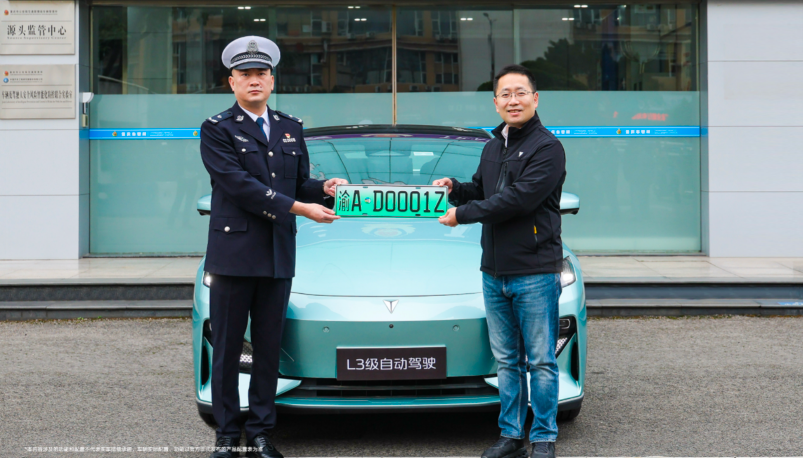
Image source: Changan Automobile
Earlier, the Ministry of Industry and Information Technology had announced the first batch of approvals for Level 3 conditional autonomous driving models in China. The Changan Shenlan SL03 and BAIC BluePark Arcfox Alpha S (Level 3 version) were selected to initiate pilot programs in designated areas of Beijing and Chongqing.
Industry analysts view this as the dawn of a new era—the "compliant commercialization" of autonomous driving in China, marking its official entry into the Level 3 phase. However, for everyday consumers, the pressing questions remain: Can Level 3 autonomous driving solve daily commuting woes? Is it available for purchase now? And most importantly, is it safe?
Not a "One-Size-Fits-All" Solution
For consumers, the allure of Level 3 autonomous driving lies in the promise that "drivers don't need constant vigilance." Yet, this doesn't equate to "complete relaxation." According to SAE International's J3016 standard, Level 3 represents conditional automation. Under predefined conditions, the system can handle dynamic driving tasks—steering, acceleration, braking—without requiring the driver to continuously monitor the environment. However, the driver must be prepared to take over promptly when the system requests intervention.
The Ministry of Industry and Information Technology's announcement reveals that Changan's approved Level 3 pilot vehicles can operate in single-lane traffic on highways and urban expressways during congestion, with a maximum speed of 50 km/h. This functionality is currently limited to sections like Chongqing's Inner Ring Expressway, New Inner Ring Expressway, and Yudu Avenue. Meanwhile, Arcfox's approved vehicles can achieve autonomous driving in single lanes on highways and urban expressways at speeds up to 80 km/h, with functionality restricted to routes like Beijing's Jingtai Expressway, Airport North Line Expressway, and Daxing Airport Expressway.
In essence, the current speed limit for Level 3 autonomous driving is 80 km/h, with operation confined to designated highways and expressways without automatic lane changes. These constraints have sparked debate: With higher hardware costs, the system's operational speed and flexibility lag behind human drivers.
Indeed, these are realistic challenges for Level 3 autonomous driving in its infancy. To ensure absolute safety, automakers impose significant limitations on the ODD (Operational Design Domain), such as prohibiting use in rainy conditions, requiring nighttime observation, and mandating disengagement in construction zones. However, this is a necessary phase for industry maturation.
"The state's timely launch of Level 3 autonomous driving pilot programs is a pivotal step in advancing the industrialization of intelligent driving," stated Zhang Yongwei, Chairman of the China EV100 Forum. He emphasized leveraging pilot programs to establish technical linkages, identify technological gaps, advance product certification, and clarify road access standards for vehicles that pass testing—the core objectives of these initiatives. Simultaneously, regulatory frameworks must evolve to address issues like traffic liability and insurance claims for autonomous vehicles on public roads. These efforts should drive the implementation of standards, regulations, and policy frameworks through pilot programs, achieving a dual breakthrough in technological validation and regulatory access. Only by completing dual pilot programs for road access and product approval can a solid foundation be laid for the current stage of intelligent driving development. In Zhang's view, a gradual and scientifically sound approach to aligning technological validation with policy supervision is essential for the steady development of autonomous driving. In other words, without "restricted Level 3," "unrestricted Level 4" will never arrive.
Changan's Level 3 autonomous driving system has undergone rigorous real-world testing in Chongqing's complex terrain, accumulating over 5 million kilometers. The testing scenarios encompassed 191 categories of elements, exceeding national standards by 10 times, with 36% of scenarios classified as extreme and 49% of scenario elements surpassing national benchmarks—all while maintaining a "zero accidents, zero violations" record.
BAIC BluePark's investor relations activity record disclosed that product approval for Level 3 autonomous driving models involves multiple stages, including initial review, competitive evaluation, testing, and safety assessment. The company has completed all approval procedures and obtained permission. However, the testing licenses are temporary and limited to road testing, with a certain time gap before formal market launch and road access approval.
According to the Notice on Conducting Pilot Programs for the Access and Road Access of Intelligent Connected Vehicles issued by the Ministry of Industry and Information Technology and three other ministries in November 2023, in the event of violations or accidents while the autonomous driving system is activated, pilot automotive manufacturers and pilot users must provide supporting materials to relevant departments within a specified timeframe. Failure to do so results in assuming accident liability.
Professor Zhu Xichan from the School of Automotive Studies at Tongji University issued a clear reminder: The recently issued licenses are not for "hands-free, eyes-free" universal road access for ordinary consumers but are testing permits limited to certain roads in demonstration zones. There is still a considerable gap before mature Level 3 mass-produced models become directly available to users. He further predicted that private users might not be able to purchase legally roadworthy Level 3 autonomous vehicles until at least 2027-2028.
Multiple Automakers Accelerate Deployments
Although only two models have been announced by the Ministry of Industry and Information Technology so far, multiple automakers have already initiated real-world testing of Level 3 vehicles.
BYD has collaborated with the Shenzhen Transportation Bureau and other departments to launch comprehensive real-world testing of mass-produced Level 3 autonomous driving in Shenzhen, completing over 150,000 kilometers of verification on actual roads. The testing covered Shenzhen's open high-speed roads, including scenarios such as rainy weather, nighttime driving, and construction zones. BYD became one of the first nine enterprises approved for Level 3 autonomous driving access and road access pilot programs by the four national departments in 2024.
VOYAH Automobile has obtained intelligent connected vehicle road testing licenses jointly issued by relevant departments in Wuhan, with its Level 3 conditional autonomous driving entering real-world testing phases. As of now, VOYAH has completed 110,000 kilometers of actual road testing and 900,000 kilometers of simulation testing.
Hongmeng Zhixing recently collaborated with the Shenzhen Transportation Bureau and other relevant departments to initiate real-world testing of Level 3 conditional autonomous driving in Shenzhen. Unlike conventional R&D testing, this program aims to validate the safety and product maturity of the Level 3 system for ordinary users through real-world roads and user data, providing practical evidence for national Level 3 policy implementation.
XPENG Motors has secured Level 3 autonomous driving road testing licenses in Guangzhou and initiated regular Level 3 road testing. These licenses are primarily used for conditional autonomous driving testing on Guangzhou's intelligent connected vehicle testing high-speed roads. Notably, at the 2025 XPENG Tech Day, XPENG unveiled its second-generation VLA software with Level 4 autonomous driving capabilities, expected to enter mass production and vehicle installation in the first quarter of 2026. XPENG also announced that it will launch mass-produced models with both hardware and software meeting Level 4 standards in 2026.
Today, autonomous driving technology continues to advance, with the industry undergoing two key transformations: On one hand, automakers, suppliers, and other enterprises have achieved technological capabilities for Level 3 conditional autonomous driving; on the other hand, the cost of intelligent driving hardware and software has significantly decreased. Under the concept of "equal access to intelligent driving," the price threshold for advanced intelligent driving has been lowered to unprecedentedly affordable levels.
For automakers, the core competition of Level 3 is no longer about whether autonomous driving can be achieved but whether users can confidently use it. With continuous technological advancements, gradually relaxed policies, and clearer liability divisions, Level 3 will ultimately drive the transition of intelligent driving from "pilot road sections" to consumers' "daily commutes," achieving gradual popularization. Zhang Yongwei predicted, "By 2026, the penetration rate of Level 3 and above autonomous passenger vehicles will achieve a breakthrough, potentially reaching 10% by 2030." This suggests that within a few years, ordinary consumers may genuinely experience "semi-autonomous" driving convenience during their commutes.
-
![]()
Registered Capital Slashed to 372 Million Yuan! Yutong Optical Finalizes Industrial and Commercial Change Registration
-
![]()
Zhuque-3 Successfully Lands, and 'Time Traveler' Secures Another ¥100 Million in Funding: China's Commercial Space Industry Experiences a 'Dynamic August'
-
![]()
Autohome Faces a Shrinking Window of Opportunity
-
![]()
Even a Titan Like Musk Has Faced Setbacks in Fulfilling Promises
-
![]()
AI Office: The End of the Racing Era, Context Becomes the Key to Success
-
![]()
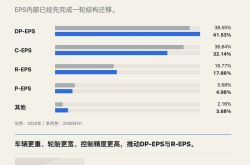
Domestic Vehicle Chassis Revolution ②: The Steering Wheel Remains, But Mechanical Connections in the Steering System Are Decreasing
-
![]()
Exploring MiniMax Design: Can Video Editing Be as Simple as Speaking?
-
![]()
Why Can SenseTime Achieve Profitability While CloudWalk Still Faces Challenges, Despite Both Adopting Large Models?