The Intelligent Driving Battle Arrives at CES2026: NVIDIA Challenges Tesla Head-On, Chinese Automakers Make a Collective Breakthrough, and AI Emerges as the Only Solution!
 01/07 2026
 477
477
Global Giants Compete on the AI Intelligent Driving Track!

On January 6 (local time in the U.S.), CES2026 officially opened its doors. Global tech giants gathered in Las Vegas for this annual tech extravaganza. The Leitech reporting team has traveled over 11,000 kilometers to the scene, bringing you in-depth, professional, and multi-dimensional coverage throughout the event.
As AI large models continue to permeate various industries, companies' technological philosophies are undergoing profound transformations. Especially in the field of autonomous driving, a disruptive technological revolution is quietly unfolding.
After reviewing the exhibition plans and lineups, we found that multiple companies will bring their latest achievements in autonomous driving. Automotive brands like Great Wall and Geely will showcase their newest assisted driving technologies, while Leapmotor and Qualcomm will introduce entirely new cross-domain integration solutions, among others.
All these signs indicate that autonomous driving technology is about to witness unprecedented breakthroughs and innovations.
Just before the opening of CES2026, the latest developments in autonomous driving were announced in advance. As a member of the Leitech CES reporting team, Dianchetong takes you on an exclusive sneak peek.
NVIDIA Unleashes Alpamayo, Targeting Tesla's FSD!
As in previous years, NVIDIA founder and CEO Jensen Huang kicked off CES2026 with a keynote speech.
Before the speech began, NVIDIA announced on social media that 'no new GPU products will be unveiled at this CES.' For the first time in five years, NVIDIA broke its tradition of launching hardware at CES, focusing all attention on software and system capabilities for autonomous driving and physical AI. Huang's 'secret weapon' was none other than Alpamayo, the first open-source physical AI inference model designed for autonomous driving scenarios.
'This is the world's first AI for autonomous vehicles that can think and reason,' Huang declared confidently during his speech.
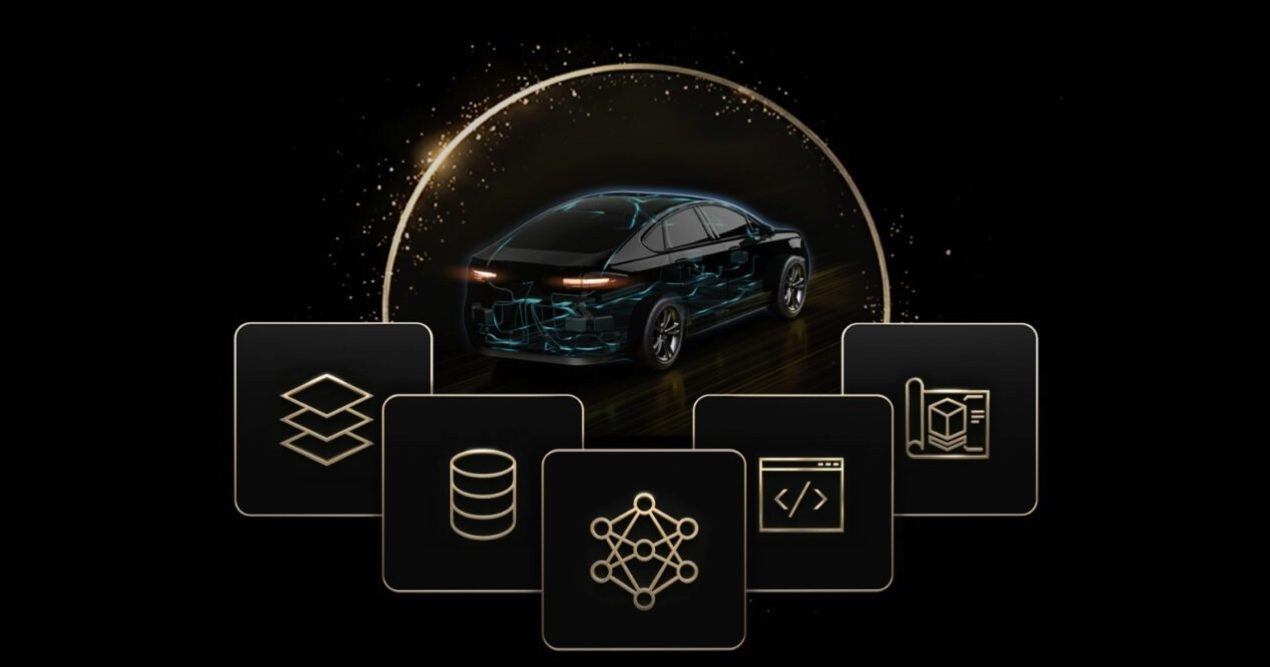
Image Source: NVIDIA China
The model, which NVIDIA calls 'the ChatGPT moment for physical AI,' boasts core strengths in chain-based reasoning capabilities under the VLA (Vision-Language-Action) architecture. Unlike traditional autonomous driving systems that merely perform mechanical operations like 'object detection-path planning,' Alpamayo can process complex road condition video inputs, generating not only driving trajectories but also explaining the logic behind its decisions.
More critically, NVIDIA explicitly positions Alpamayo as a 'powerful tool for solving long-tail problems,' which represent the biggest bottleneck for autonomous driving technology deployment.
The so-called 'long-tail problems' refer to edge driving scenarios with extremely low probability and rare occurrences but can directly cause system failures or even safety accidents when they do happen.
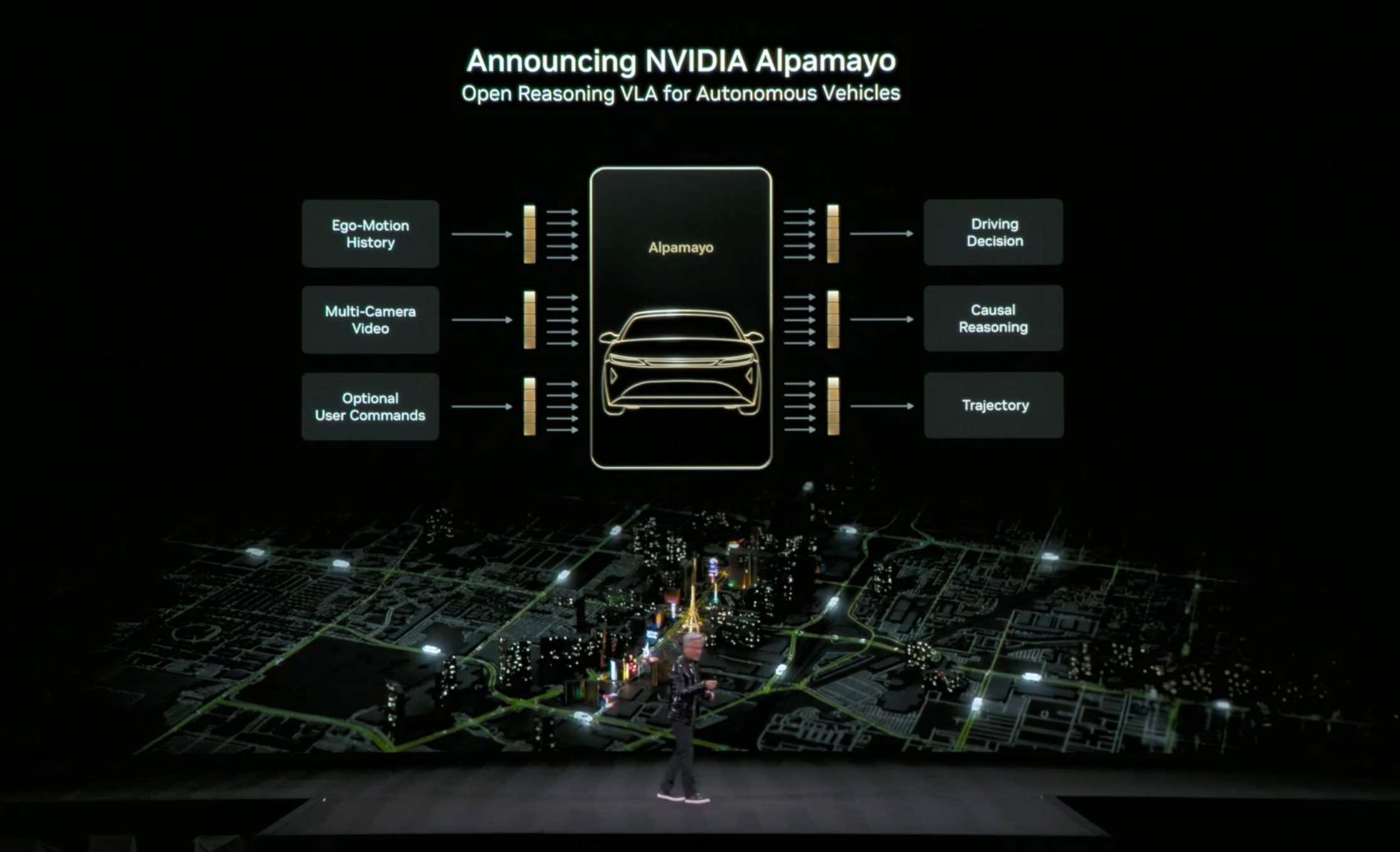
Screenshot: NVIDIA Official Livestream
As a longtime 'rival' in the autonomous driving arena, Tesla founder Elon Musk quickly responded to NVIDIA's moves: 'Well, this is exactly what Tesla is doing. They'll find it's easy to reach 99%, but solving the distributed long-tail problems is incredibly difficult.'
Tesla's FSD system relies on training with massive amounts of real-world driving data, using neural networks to learn various driving scenarios and address potential long-tail problems. This technology stack is entirely developed and used in-house by Tesla, with a closed data loop serving only its own vehicle iterations—a typical closed system.
In contrast, NVIDIA aims to become 'the Android system for autonomous driving,' lowering industry development barriers through an open ecosystem and empowering global automakers and developers, taking a completely different path from Tesla's closed system.
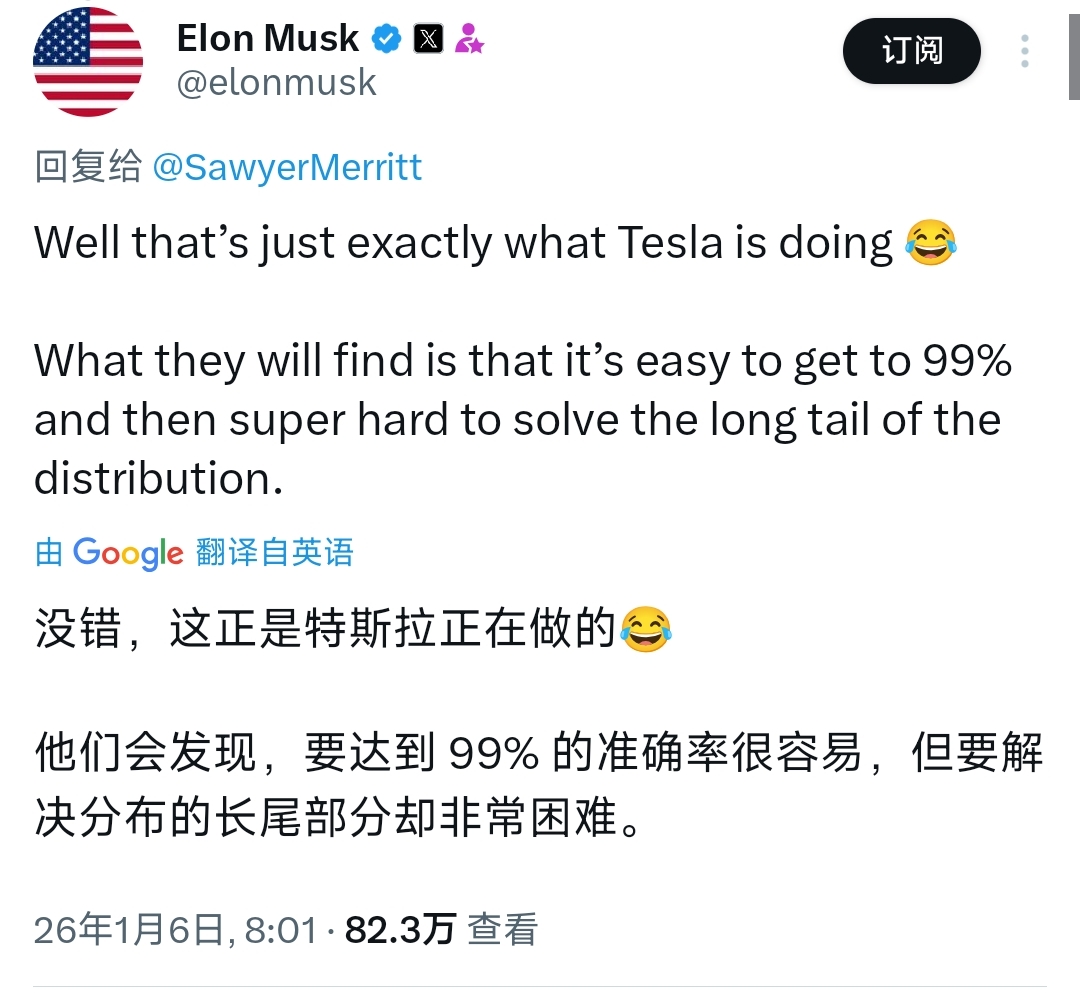
Screenshot: X@Elon Musk
Huang expressed strong confidence in Alpamayo, revealing during his speech that the 2025 Mercedes-Benz CLA models will fully integrate NVIDIA's complete autonomous driving technology stack. According to the plan, the first vehicles equipped with this system will hit the U.S. market in the first quarter of this year, arrive in Europe in the second quarter, and begin rolling out in Asian markets in the second half of the year.
On one side stands NVIDIA, attempting to 'overtake on curves' by bypassing data barriers through open ecosystems and physical AI inference models. On the other side is Tesla, relying on closed systems and massive data training. This software-hardware battle is not just a competition between two giants but may determine the future technological direction of autonomous driving.
AI Will Dominate the Intelligent Driving Trend at CES2026
Whether it's Tesla's iterative FSD system within its closed ecosystem or NVIDIA's deployment of the Alpamayo model through its open approach, AI remains the core engine driving autonomous driving forward.
AI is not just a bonus for autonomous driving but a necessity. This industry consensus was vividly demonstrated at CES2026, with Chinese automakers' collective breakthroughs becoming a standout feature of this transformation.
Geely Auto Group preemptively announced its latest achievements just before CES2026: Based on the powerful WAM model core, Geely's comprehensive AI technology system has been fully upgraded to Version 2.0. Compared to Version 1.0, the core changes in the comprehensive AI 2.0 system include architectural iterations toward 'agentification' and 'engineization,' making the technology more standardized and collaborative.
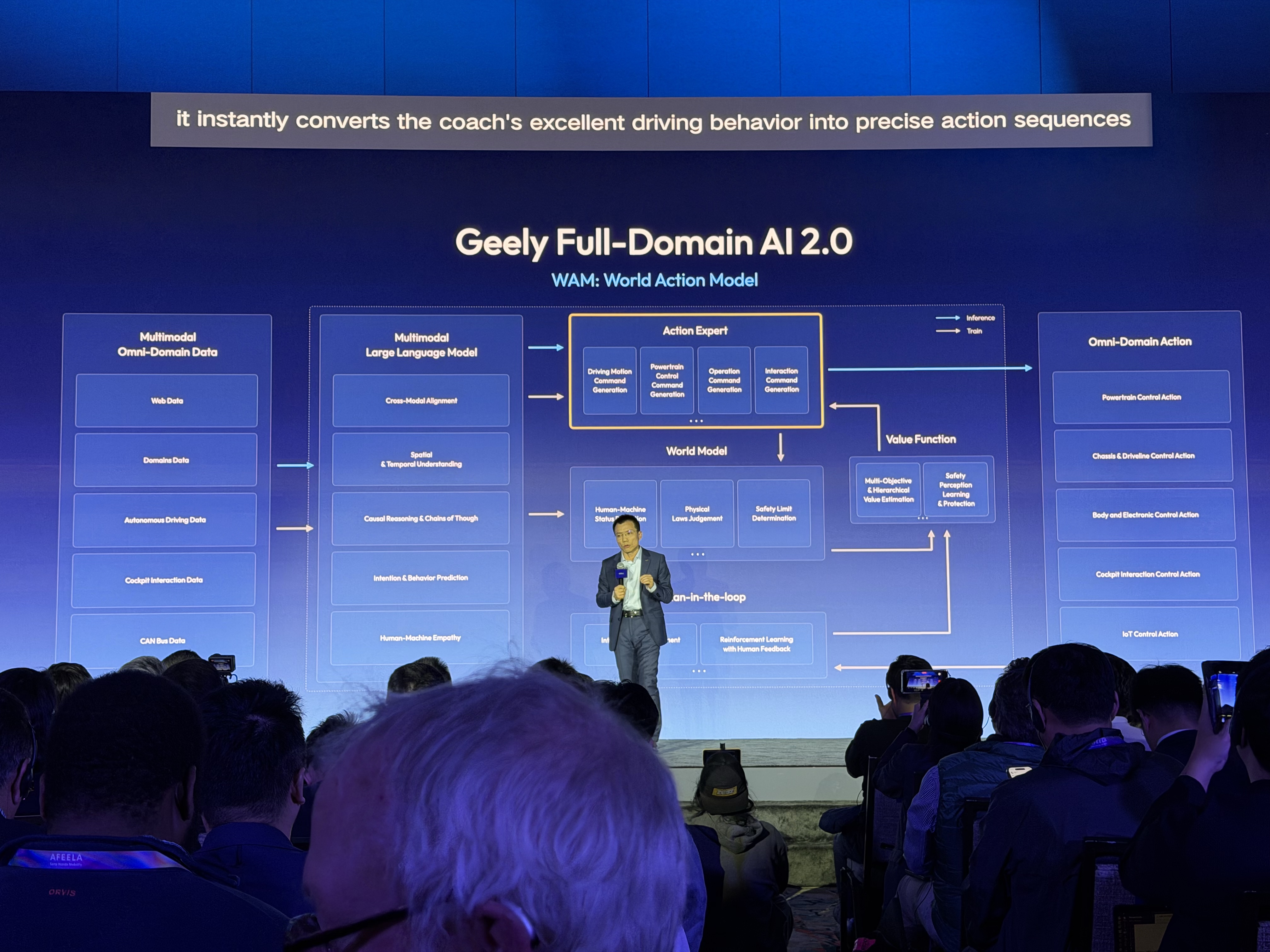
Image Source: Leitech On-Site Filming
The benefits of this technological system upgrade are directly reflected in the comprehensive renewal of Geely's core intelligent driving system, 'Qianli Haohan G-ASD.' From automated data labeling for collection to iterative optimization of algorithm models, and then to capability leaps in AI large models, this system has undergone a full-link technological reconstruction. Relying on the comprehensive AI 2.0 technology foundation, Qianli Haohan G-ASD now possesses full-stack deployment capabilities from Level 2 to Level 4 autonomous driving, achieving a leapfrog breakthrough from 'assisted driving' to 'high-level intelligent driving.' The official boldly proposed a technological vision of a 'wise life form.'
Beyond the vision, Geely provided a clear implementation timeline: By 2026, pending regulatory approval, it will gradually roll out highway Level 3 assisted driving and low-speed Level 4 autonomous driving functions to the market while officially launching commercial Robotaxi operations.
Chinese automakers' intelligent driving breakthroughs extend beyond Geely. Great Wall Motors, confirmed to participate in CES2026, will also bring cutting-edge achievements such as the ASL 2.0 intelligent agent and VLA full-scenario large model. AI can be considered the 'soul' of these two technologies—the former achieves spatial intelligence and proactive decision-making through AI, while the latter completes multi-modal end-to-end closed loops with AI. Together, they drive autonomous driving from being an 'assistive tool' toward becoming an 'AI driver.'
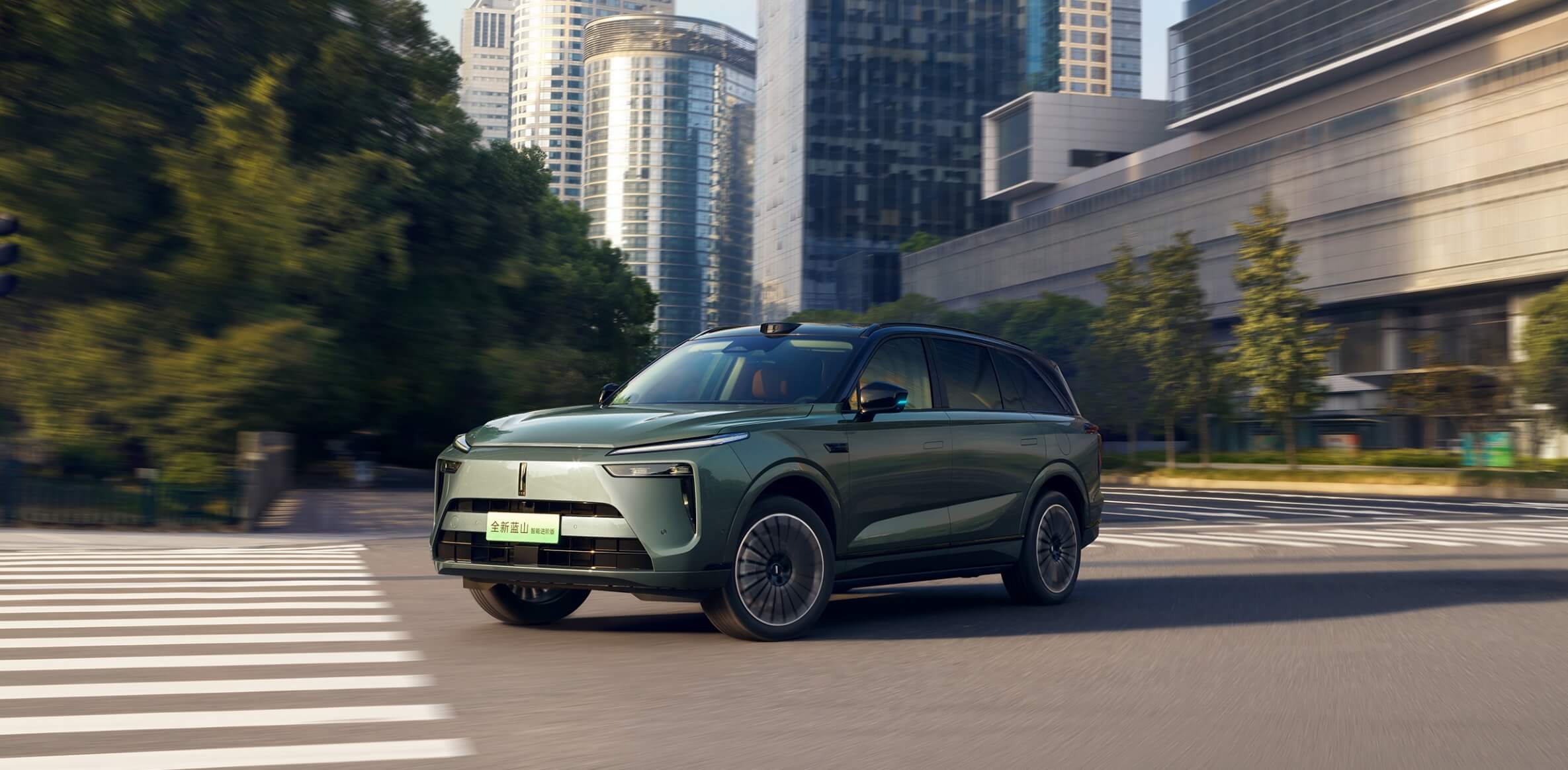
Image Source: Great Wall Motors Official
Meanwhile, Leapmotor, in collaboration with Qualcomm Technologies, unveiled the world's first cross-domain integration solution powered by dual Snapdragon automotive platform Supreme Editions.
With this dual-chip configuration, the central domain controller not only supports real-time collaborative operation of core functions like intelligent cockpits, driving assistance, and body control but also simultaneously runs full-modal AI large models for the cockpit and VLA multi-modal models for driving assistance.
This robust AI computing power enables the system to efficiently process multi-sensor data from 13 cameras and LiDAR, achieving stable Level 2 assisted driving and over 30 advanced functions. It also makes deep collaboration between intelligent cockpits and driving assistance possible, using AI to bridge scenario perception and user needs, ensuring a smooth and safe travel experience.
Clearly, AI is the core of this cross-domain integration solution and the key rely on (yītuō - relying on) for Leapmotor and Qualcomm's technological breakthroughs.
The intensive efforts by automakers like Geely, Great Wall, and Leapmotor not only repeatedly confirm AI's core value in intelligent driving but also show us that AI-driven autonomous driving is no longer just a future concept in laboratories but is steadily making its way into our daily lives.
What is certain is that under the spotlight of CES2026, we are witnessing not just technological competitions among companies but the accelerated arrival of an intelligent mobility era—with AI as its most core driving force.
Epilogue
One cannot help but marvel at how automakers' efforts in autonomous and assisted driving at CES2026 have exceeded Dianchetong's expectations. Without flashy conceptual hype, it's all about substantial technological breakthroughs and deployment plans:
On one side, NVIDIA has thrown down the Alpamayo open-source model, offering a brand-new technological path to solve autonomous driving's 'long-tail problems.' On the other side, Chinese automakers like Geely and Great Wall have made collective strides, achieving intelligent driving capability leaps through comprehensive AI upgrades and cutting-edge large model deployments.
Though these may seem like different technological directions, they all firmly lock onto the same core keyword: AI.
Market demands for assisted driving are diverse: Urban commuters need urban area NOA (urban Navigate on Autopilot) capable of handling congestion following and intersection avoidance; long-distance self-driving users rely on stable and reliable full-scenario assisted driving to relieve fatigue; novice drivers crave 'backup' functions for low-speed parking and narrow road meetings; while operational Robotaxis require extremely safe Level 4 autonomous driving to support commercial operations.
These differentiated needs once trapped the industry in a dilemma of 'parallel multiple solutions and high R&D costs.' However, the rise of AI large models is providing precise solutions to these challenges—not only lowering R&D barriers and accelerating the deployment of high-level intelligent driving from premium models to more vehicles but also enabling more consumers to enjoy the convenience of intelligent mobility, truly realizing technology's core value of serving diverse travel needs.
Leitech's largest-ever CES reporting team has assembled on-site in Las Vegas, USA. We will present the technological innovations at CES2026 through in-depth observations, high-end dialogues, technical analyses, new product experiences, exhibition Vlogs, and other multi-dimensional forms. We will also pay special attention to Chinese brands' dynamics at CES, comprehensively showcasing China's technological strength on the global stage. Stay tuned!
By the way, the Leitech CES2026 reporting team has also established in-depth cooperation with Zhihu this time. Regarding the topic of 'autonomous driving' at CES2026, we will engage in in-depth discussions on Zhihu. Welcome to search for 'CES' on Zhihu and follow us.
(Cover image source: NVIDIA official livestream)
NVIDIA, Leapmotor, Qualcomm, Geely, Great Wall, autonomous driving
Source: Leitech
All images in this article come from the 123RF licensed image library.
-
![]()
Enflame Tech's IPO Journey: Navigating Over 5.9 Billion Yuan in Losses and Soaring Debt in Q1 This Year
-
![]()
Trillion-Yuan Giant Li Shufu 'Streamlines': Could Levc Be the Casualty?
-
![]()
AI Competes for Electricity and Generates Power in the Gobi Desert
-
![]()
The First Batch of Victims of the AI Bubble: Programmers
-
![]()
ByteDance, DJI, and Xiaohongshu Secure Top Three Positions Among China’s Fastest-Growing Unicorns
-
Tesla's in-car voice system in China is finally learning to 'understand human language'
-
![]()
Foreigners Are Amazed: Chinese Electric Vehicle Drive Systems Unveil Innovative 'Poses'
-
![]()
700,000 Brothers and the Future of Robots: Behind JD.com's 'Nirvana Plan'