From a 700% Surge to 80%: Why Biren Hasn't Mirrored Moore Threads' and MetaX's Explosive Growth
 01/04 2026
 705
705
By Yang Jianyong
Today, Biren Technology made its debut on the Hong Kong Stock Exchange, with its shares rocketing up by 80% on the first trading day, pushing its market capitalization to HK$84.6 billion (around RMB 76 billion). Yet, its revenue for the first half of 2025 stood at a mere RMB 58.9 million, with losses mounting to RMB 1.6 billion.
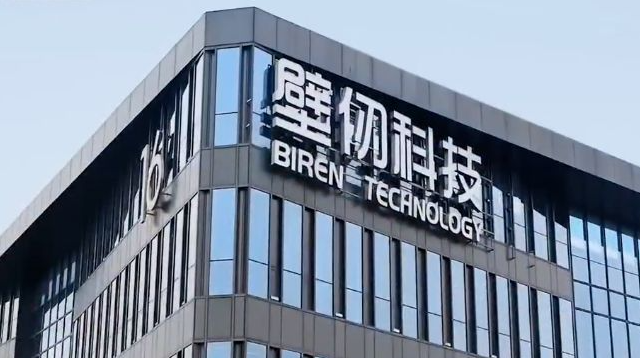
With a First-Day Surge of Just 80%, Biren Falls Short of Matching Moore Threads' and MetaX's Spectacular Rise
Following in the footsteps of Moore Threads and MetaX, Biren Technology has emerged as the latest GPU chip startup to go public, albeit amidst generally inflated valuations. After initial spikes, the market valuations of Moore Threads and MetaX have seen a significant downturn, plummeting by nearly 40%.
Moore Threads, hailed as China's first homegrown GPU stock, created a stir in the capital market, with its shares soaring up to 500% on the first day. In the following trading days, its market capitalization peaked at RMB 442.2 billion but has since dropped to RMB 276.3 billion, marking a loss of over RMB 160 billion or a 37.5% correction.
MetaX's shares experienced an even more dramatic surge, peaking at 755% on the first day, with a market capitalization of RMB 358 billion. However, its market value reached its zenith on the listing day and subsequently faced considerable volatility, declining by over RMB 120 billion or 35% from its peak.
Against the backdrop of a cumulative market capitalization reduction of nearly RMB 280 billion for Moore Threads and MetaX, coupled with Biren Technology's relatively high pricing, the trading on its first day of listing was relatively muted. Biren failed to replicate the multi-fold surges witnessed with Moore Threads and MetaX, as overall valuations remain lofty, with current market capitalizations vastly outstripping revenue scales and profitability.
For the entire year of 2025, Moore Threads is projected to generate revenue between RMB 1.2 billion and RMB 1.498 billion, indicating a year-over-year growth of 177% to 241.65%. It anticipates losses ranging from RMB 730 million to RMB 1.168 billion, with cumulative losses surpassing RMB 5 billion from 2022 to 2024.
MetaX is expected to generate revenue between RMB 1.5 billion and RMB 1.98 billion for the full year of 2025, representing a year-over-year growth exceeding 100%. It forecasts losses between RMB 527 million and RMB 763 million, with cumulative losses amounting to RMB 3.05 billion from 2022 to 2024.
Biren Technology reported only RMB 58.9 million in revenue for the first half of 2025 but incurred losses of RMB 1.6 billion. From 2022 to 2024 and the first half of 2025, its cumulative losses exceeded RMB 6.3 billion.
GPU Valuation Bubble Starts to Deflate; Rational Assessment of Long-Term Potential Vital
In the era of AI large models, the global semiconductor market landscape is undergoing a transformation, shifting from general-purpose GPU computing to GPU-accelerated computing and fueling rapid growth in the global semiconductor market.
Biren Technology, Moore Threads, and MetaX form the backbone of China's domestic GPU chip industry, poised to carve out a niche in the AI chip market dominated by giants like NVIDIA. Consequently, they have become the center of attention in the capital market and highly coveted investment targets.
Regrettably, despite these three companies' vigorous efforts to benchmark against NVIDIA in product development and the market's high expectations for domestic chips, the risks associated with high valuations cannot be overlooked. The market capitalization reduction of over RMB 280 billion for Moore Threads and MetaX serves as a stark reminder.
As significant players in the GPU sector, they marvel at the power of capital while also raising concerns about a potential bubble. Now, Biren Technology has become the third domestic GPU chip company to go public, without experiencing multi-fold surges on its first day. Investors are clearly more discerning, given the precedents set by Moore Threads and MetaX.
Biren Technology's relatively subdued first-day surge may indicate that the domestic GPU sector is transitioning from capital exuberance to a 'bubble-deflating' phase, with the market reassessing technology implementation and profitability expectations.
These companies must also navigate multiple challenges, including technological iteration, software and hardware ecosystems, profitability, and international competition, which pose risks to their high valuations and are likely to trigger significant volatility. Additionally, their revenue scales struggle to justify market capitalizations in the billions, coupled with persistent losses.
Raising Nearly RMB 17 Billion to Bolster Competitiveness Through Sustained R&D Investment
Given that the chip industry is capital-intensive, substantial and continuous investment is essential to enhance competitiveness in the chip market.
From 2022 to 2024, Moore Threads invested RMB 3.81 billion in R&D, accounting for roughly 626% of its cumulative revenue over the past three years. From 2022 to the first half of 2025, Biren Technology invested a cumulative RMB 3.38 billion in R&D. MetaX invested over RMB 2.4 billion in R&D over the past three and a half years.
The chip industry is marked by high investment and long development cycles. The substantial R&D expenditure has resulted in revenue that is unable to cover R&D costs, leading to significant losses over the years.
Furthermore, domestic GPU chip manufacturers face competitive disadvantages compared to chip giants like NVIDIA and AMD. To strengthen their position in the GPU market, Moore Threads raised nearly RMB 8 billion to enhance its competitiveness. MetaX also raised RMB 3.9 billion to support the continuous iteration and upgrading of its core product lines and boost its overall competitiveness.
Biren Technology raised HK$5.583 billion (approximately RMB 5 billion) for intelligent computing solutions, including upgrading existing GPU chips, developing next-generation GPU chips, and software platforms, as well as establishing a commercial sales and marketing team for intelligent computing solutions.
Against the backdrop of the rising popularity of domestic AI chips, the nearly RMB 17 billion raised by these three companies is expected to enhance chip technology and improve software and hardware ecosystems, aiming to support the growth of China's domestic GPU chip industry.
Finally
Efforts to block domestic companies from purchasing high-performance NVIDIA chips are aimed at curbing the development of China's AI industry. However, this external pressure has accelerated the process of domestic substitution, aiming to break free from reliance on high-end chips and foster historic development opportunities for domestic chip manufacturers.
Nevertheless, it is crucial to remain vigilant about the risks associated with high valuations while reaping the benefits of domestic substitution. A rational assessment of long-term development potential is particularly important.
Yang Jianyong, a contributor to Forbes China, expresses his personal viewpoints. He is dedicated to in-depth analysis of cutting-edge technologies such as AI large models, artificial intelligence, the Internet of Things, cloud computing, and intelligent hardware.
-
![]()
Registered Capital Slashed to 372 Million Yuan! Yutong Optical Finalizes Industrial and Commercial Change Registration
-
![]()
Zhuque-3 Successfully Lands, and 'Time Traveler' Secures Another ¥100 Million in Funding: China's Commercial Space Industry Experiences a 'Dynamic August'
-
![]()
Autohome Faces a Shrinking Window of Opportunity
-
![]()
Even a Titan Like Musk Has Faced Setbacks in Fulfilling Promises
-
![]()
AI Office: The End of the Racing Era, Context Becomes the Key to Success
-
![]()
Domestic Vehicle Chassis Revolution ②: The Steering Wheel Remains, But Mechanical Connections in the Steering System Are Decreasing
-
![]()
Exploring MiniMax Design: Can Video Editing Be as Simple as Speaking?
-
![]()
Why Can SenseTime Achieve Profitability While CloudWalk Still Faces Challenges, Despite Both Adopting Large Models?