Raising $500 Million in Financing: How Close Is Moonshot AI to the True 'Safe Zone'?
 01/09 2026
 635
635
Is This Timely Assistance or Just a Cherry on Top?
Authored by Investor.com | Wu Wei
Amidst the frenetic activity of the large language model arena, Yang Zhilin and his team at Moonshot AI find themselves at a particularly precarious juncture. In early 2026, a financing announcement once again stirred the slumbering primary market, thrusting Moonshot AI into the public spotlight. According to public reports, Moonshot AI has successfully completed a Series C financing round, raising $500 million, with the company's post-investment valuation projected to reach $4.3 billion (approximately RMB 31 billion). Founder Yang Zhilin, in an internal letter, revealed that the company's cash reserves now exceed RMB 10 billion, effectively crowning Moonshot AI as the 'cash king' in China's large model sector.
However, beneath this financial veneer, shadows loom. The latest third-party data indicates that Kimi, once a strong contender in the industry, has witnessed its monthly active users (MAU) plummet from a peak of 36 million in October 2024 to the current range of 10-15 million. Meanwhile, industry giants such as ByteDance (Doubao), Tencent (00700.HK), and Alibaba (09988.HK) are steadily encroaching on the consumer AI market, leveraging their ecological and traffic advantages. Additionally, up-and-comer DeepSeek has emerged as a formidable competitor with its 'ultimate energy efficiency ratio.'
Amidst this dichotomy of 'resource stockpiling' and 'lagging performance,' and with rivals like Zhipu AI and MiniMax gearing up for IPOs, Moonshot AI faces a daunting decision.
From 'Prodigy' to 'Arbitration Quagmire': The Founder's Controversial Background
The narrative of Moonshot AI commences with an unwavering belief in Artificial General Intelligence (AGI) held by China's foremost AI intellectuals. However, its journey has been marred by unprecedented legal controversies.
Company founder Yang Zhilin boasts a resume that aligns with the 'genius archetype.' A graduate of Tsinghua University's Computer Science Department with a Ph.D. from Carnegie Mellon University, he has held positions at Google Brain and Meta AI, contributing significantly to research that reshaped the AI landscape, such as Transformer-XL and XLNet. In March 2023, following the global surge of ChatGPT, Yang Zhilin made a decisive return to China to establish Moonshot AI.
Unlike his contemporaries who were eager to identify industry landing scenarios, Yang Zhilin exhibited an extreme 'technological imperative' from the outset. He eschewed discussions on commercialization or vertical sectors, instead focusing relentlessly on long-text processing capabilities (Long Context). This singular focus on underlying technology endowed Moonshot AI with a high technological premium in its early stages.
However, as the company's valuation soared, a shareholding dispute from Yang Zhilin's past emerged as a significant concern. Public reports indicate that in late 2024, five former shareholders of Yang Zhilin's previous venture, 'Recurrent AI' (including GSR Ventures and Wanwu Capital), initiated arbitration proceedings at the Hong Kong International Arbitration Centre (HKIAC). The crux of the dispute lies in allegations that Yang Zhilin engaged in a 'golden escape.'
Former shareholders contended that Yang Zhilin did not secure formal written exemption from the Recurrent AI board when launching Moonshot AI, violating non-compete and non-solicitation agreements. More explosively, Zhang Yutong (Yang Zhilin's senior schoolmate and early investor), a former partner at GSR Ventures, was accused of privately holding approximately 14% of Moonshot AI's shares through certain arrangements while serving as a director of Recurrent AI, without disclosing this to the fund.
This incident raised doubts from GSR Ventures' managing partner Zhu Xiaohu, who argued that such actions severely compromised the interests of early investors. Although Moonshot AI subsequently attempted to resolve the matter discreetly through share issuances or cash compensation, asserting that 'the arbitration does not impact company operations,' this 'founder credibility' game undoubtedly cast a shadow over the company's compliance.
The 'Crown' of Valuation and Cash: A Non-Conformist Financing Path and Core Strengths
Among the 'AI Six Little Tigers,' Moonshot AI has showcased unique strategic resilience. The company is not only the fastest to secure financing but also the only leading player to explicitly state that it is 'not in a rush to go public.'
From a $300 million valuation in the angel round in June 2023 to a $4.3 billion valuation in the Series C round in early 2026, Moonshot AI's worth has skyrocketed nearly 14-fold in two years. Notably, in the Series A+/B round in February 2024, the company secured over $1 billion in investment led by Alibaba. Alibaba's investment was not solely for computing power output (Alibaba Cloud) but also to secure a foothold in the AGI era.
Amidst market concerns over an AI bubble and cooling financing, Moonshot AI secured strategic investment led by IDG Capital, with Tencent (00700.HK) and Meituan (03690.HK) participating, completing the Series C financing round of $500 million.
Moonshot AI's ability to attract numerous institutions stems from its deep technological focus. The company's defining moment came in March 2024 when Kimi announced support for processing 200,000 to even 2 million words of long text, triggering the emergence of 'Kimi concept stocks' across the A-share market. Its long-text capabilities were not merely technical parameters but represented a qualitative leap in user experience, enabling Kimi to directly read entire professional books, analyze thousand-page financial reports, or process complex codebases. This sense of 'intelligence superiority' allowed Moonshot AI to swiftly establish a technological moat.
Founder Yang Zhilin has a clear vision for Moonshot AI: AGI is a long-cycle, high-investment marathon. The current RMB 10 billion in cash on hand is not for dividends but for defense. According to estimates, the computing power investment required for training the next-generation model, K3, will be several times that of Kimi. The RMB 10 billion reserve ensures that even if primary market financing dries up, Moonshot AI still has at least 24 months of 'pure R&D cycle.'
In the AI field, where top algorithm engineers' annual salaries have soared to the million-dollar level, Moonshot AI's ample cash will also be crucial for maintaining the morale of this 'special forces' team.
Ecological Encirclement and Traffic 'Roller Coaster': The Fatal Limitations of Independent Applications
However, capital backing and technological moats cannot alleviate Moonshot AI's traffic anxiety. As technological dividends level out, Moonshot AI is undergoing a brutal transition from a 'technological war' to an 'ecological war.'
Kimi's initial popularity stemmed from the scarcity of consumer AI products. However, by 2026, this advantage has dissipated. Alibaba's Tongyi Qianwen, Baidu's (09888.HK) Wenxin Yiyan, and open-source leader DeepSeek have all achieved coverage of tens of millions of tokens, forming their own barriers in logical reasoning and mathematical capabilities through reinforcement learning. When 'long text' is no longer the sole differentiator, Kimi's appeal as an independent gateway has begun to wane.
According to authoritative data from QuestMobile and others, Kimi's MAU has dropped from a peak of 36 million to the current ten million level, a decline exceeding 50%. This phenomenon underscores a harsh reality: without an ecosystem, Kimi finds it increasingly difficult to retain users in today's increasingly homogeneous competition.
Furthermore, Kimi's 2024 explosion relied heavily on monthly advertising expenditures reaching tens or even hundreds of millions (including short video information streams, offline Focus Media, etc.). However, as major players entered the market and initiated 'price wars,' its customer acquisition cost (CAC) may have surged from the initial RMB 10 to over RMB 50. To preserve the 'RMB 10 billion cash' for R&D, Moonshot AI had to slash marketing budgets. Without relying on social and office scenarios, Kimi's traffic naturally struggled to grow.
It should be noted that compared to major players, Kimi's disadvantages lie not just in funding and technology but also in ecosystems. ByteDance's 'Doubao,' leveraging Douyin's vast traffic, has solidified its MAU above 160 million, achieving a closed loop of search, entertainment, and AI, while attempting new ventures into hardware. Tencent Yuanbao is directly embedded within the WeChat and QQ ecosystems, fragmenting usage scenarios originally belonging to Kimi through 'search' and chat summarization features.
Among competitors in the same arena, Zhipu AI has officially applied for a Hong Kong IPO, planning to use secondary market funds for large-scale B-end ecosystem expansion; MiniMax has deeply cultivated overseas social markets, achieving substantial cash flow, with its Hong Kong IPO also seemingly inevitable.
In contrast, Moonshot AI lacks distribution channels like DingTalk (Alibaba) or Enterprise WeChat (Tencent) on the B-end and lacks traffic gateways like Douyin or WeChat on the C-end. Even with RMB 10 billion in cash, Moonshot AI still needs to rent computing power from and buy traffic from major players.
This $500 million Series C financing is not merely a cherry on top for Moonshot AI but more akin to a 'strategic lifeline.' The completion of the Series C financing proves that capital markets are still willing to bet on Yang Zhilin's technological intuition but also intensifies the exit pressure behind it. If the K3 model fails to achieve 'generational-level' leadership in the second half of 2026, then this RMB 10 billion in cash may merely extend its solitary voyage before becoming an appendage of major players.
Currently, Moonshot AI is caught in the paradox of 'extremely abundant cash' and 'extremely anxious traffic.' For Yang Zhilin, avoiding an IPO means avoiding short-term performance scrutiny from capital markets to pursue pure technological singularities. However, the reality is that China's competitive environment is far more fragmented and brutal than the U.S. environment where OpenAI operates.
Throughout internet history, there are numerous examples where 'technology-first' approaches ultimately reduced to 'accessories for major players.' Whether this RMB 10 billion gold brick stacked by Moonshot AI will smash open the door to AGI or gradually become a sunken island amidst major players' ecological encirclement remains to be seen. The answer does not lie in the RMB 10 billion on the balance sheet but in whether Kimi can find that irreplaceable reason for users in the next technological iteration. (Produced by Thinker Finance) ■
Source: Investor.com
-
![]()
Registered Capital Slashed to 372 Million Yuan! Yutong Optical Finalizes Industrial and Commercial Change Registration
-
![]()
Zhuque-3 Successfully Lands, and 'Time Traveler' Secures Another ¥100 Million in Funding: China's Commercial Space Industry Experiences a 'Dynamic August'
-
![]()
Autohome Faces a Shrinking Window of Opportunity
-
![]()
Even a Titan Like Musk Has Faced Setbacks in Fulfilling Promises
-
![]()
AI Office: The End of the Racing Era, Context Becomes the Key to Success
-
![]()
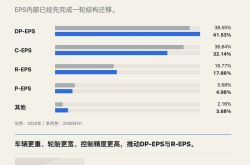
Domestic Vehicle Chassis Revolution ②: The Steering Wheel Remains, But Mechanical Connections in the Steering System Are Decreasing
-
![]()
Exploring MiniMax Design: Can Video Editing Be as Simple as Speaking?
-
![]()
Why Can SenseTime Achieve Profitability While CloudWalk Still Faces Challenges, Despite Both Adopting Large Models?