China's Autonomous Delivery Vehicles: Are They Reshaping Europe's 'Last Mile'?
 01/09 2026
 673
673
Seizing New Opportunities and Penning New Chapters: As the New Year Unfolds, the Autonomous Delivery Industry Witnesses Fresh Developments.
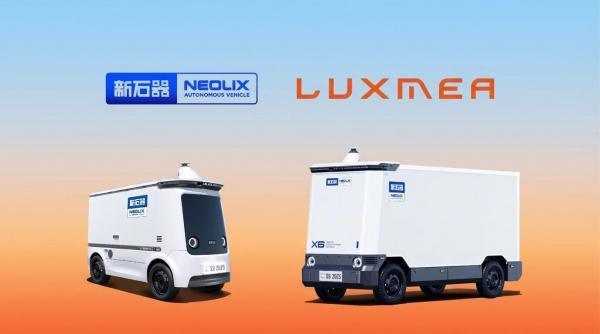
On January 4th, Jiemian News reported that Neolix has forged a strategic partnership with Luxmea, a European provider specializing in electric freight and mobility solutions.
Through this collaboration, both entities will concentrate on urban and last-mile delivery scenarios within the European market, leveraging AI technology as the cornerstone to jointly construct an efficient, intelligent, and sustainable 'last-mile' logistics ecosystem.
In recent years, as domestic manufacturers of autonomous delivery vehicles have accelerated their deployment in specific domestic settings and their business models have become more defined, they have started to seek opportunities abroad.
The inaugural deployment of Jishi Z5 autonomous delivery vehicles by Jishi Intelligence, in collaboration with DigiTrans GmbH, a pivotal platform in Austria's local transportation and logistics sector, in the Linz region, serves as a prime example of the overseas expansion of autonomous delivery vehicle manufacturers.
Similarly, Neolix's recent collaboration epitomizes this burgeoning trend.
I. Chinese Autonomous Delivery Vehicles Vie for Market Share in Europe
Geographically, China, the United States, and Europe constitute a tripartite industrial landscape, with China assuming a dominant position in the autonomous delivery vehicle sector for unmanned logistics, thanks to its expansive e-commerce market and robust policy support.
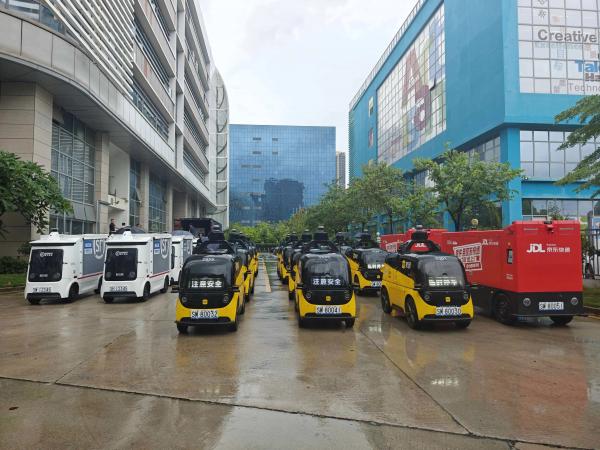
Looking ahead, according to forecasts by third-party agencies, the global autonomous delivery market is projected to surpass $50 billion by 2030, with China's market size accounting for over 40% of the global share (citing Cover News reports).
Some assert that 2025 marks the inaugural year for China's autonomous delivery vehicles, with market demand soaring. Based on the number of nationwide express logistics outlets, China Merchants Securities estimates the market potential for autonomous delivery vehicles at approximately RMB 468 billion.
However, the market surge has also lured numerous new entrants, intensifying competition. This newly emerging blue ocean market is swiftly exhibiting signs of a red ocean, in stark contrast to the relatively gradual pace of development abroad.
According to Beiqing.com, 'From a supply standpoint, the global unmanned logistics vehicle sector is still in its developmental stages. While representatives from Europe and the United States, such as Waymo and Nuro, lead in technology, their high per-unit costs make large-scale replication challenging in the short term.'
Meanwhile, China's autonomous delivery industry has achieved a pivotal leap from regional pilots to large-scale deployment, emerging as the fastest-moving, lowest-cost, and most extensively implemented representative in the global market.
Additionally, Europe has long grappled with high labor costs.
According to Eurostat data, in 2024, hourly labor costs across EU countries ranged from EUR 10.6 (approximately RMB 82.68) in Bulgaria to EUR 55.2 (approximately RMB 430.56) in Luxembourg, with an EU average of EUR 33.5 (approximately RMB 261.30). The structural pain points of high labor costs and limited manual delivery time closely align with the core value proposition of autonomous delivery vehicles in reducing costs and increasing efficiency.
Furthermore, driven by the EU's carbon neutrality goals, logistics and delivery need to transition from fossil fuel-powered vehicles to zero-emission alternatives. Without air conditioning and entertainment systems, autonomous delivery vehicles boast lower carbon emissions than electric vehicles, rendering them highly compatible with the EU's green development path.
Based on this, Chinese autonomous delivery vehicle manufacturers are capitalizing on their advantages in technological iteration, cost control, and scenario adaptation amassed through large-scale domestic operations to target structural opportunities in the European market and embark on a systematic expansion.
Entering Europe is not a mere replication of the domestic model but a process of deep localization and compliance.
Companies typically opt to establish partnerships with European local enterprises or influential Chinese brands in Europe, making adaptive modifications for local European conditions. Neolix's collaboration with Luxmea exemplifies this strategy.
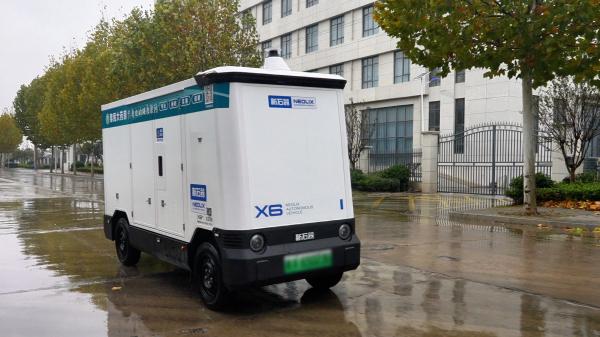
As a brand under Baodao Vehicle Industry, Luxmea has carved out a niche in Europe's sustainable urban transportation sector. Its electric cargo bicycle solutions have a mature application foundation in station-to-customer last-mile delivery scenarios, precisely meeting the niche needs of urban logistics. Currently, over 550,000 electric bicycles developed by Luxmea are in use across Europe, serving numerous mainstream logistics-related customers.
Through this collaboration, both parties will engage in resource synergy. Neolix will contribute its global commercialization experience and vehicle-grade product matrix, while Luxmea will provide local channels, supply chains, and customer resources. Adopting a hybrid delivery model of 'autonomous vehicles (for trunk transportation) + electric cargo bicycles (for last-mile customer delivery)' will significantly enhance delivery efficiency in the European market.
Neolix informed 'Delivery Guide' that 'we will continue to deepen our European presence through localized strategic partnerships. We have already joined forces with local leaders such as Luxmea and Portugal's Salvador Caetano Auto. In the future, we will replicate the 'technology + local partner' model to expand into key regions like Germany, France, and Northern Europe, with plans to deliver over 50,000 autonomous vehicles overseas by 2027.'
Despite the promising market outlook, Chinese autonomous delivery vehicle manufacturers still confront a series of practical challenges in achieving long-term, large-scale development in the European market.
II. Autonomous Delivery Vehicles in Europe: Confronting Numerous Challenges
Autonomous delivery vehicles need to navigate diverse scenarios such as public roads and community campuses during daily operations, and their autonomous driving and environmental perception capabilities inevitably involve the real-time collection of large amounts of environmental and user data.
This characteristic exposes them to various regulatory constraints related to data security and autonomous driving when entering the European market, which boasts stringent data regulations.
As Neolix founder Yu Enyuan stated, 'Compliance requirements in Europe and the United States are higher. They have requirements for technical standards and the entire organizational structure of the company, and even requirements for code traceability. How to openly and transparently gain recognition from American or European enterprises for these Chinese companies going overseas is our next goal to explore.'
It is reported that the EU has introduced the General Data Protection Regulation (GDPR) and the Artificial Intelligence Act, requiring enterprises to meet stringent standards in risk management, transparency, technical documentation, and human supervision.

Furthermore, variations in relevant legislation and implementation progress among EU member states further complicate compliance strategies and the difficulty of local adaptation.
Faced with this complex regulatory environment, autonomous delivery vehicle manufacturers need to elevate data security issues to a strategic level. In addition to paying attention to national-level laws and regulations, they must closely monitor industry documents and classify and grade relevant data.
Meanwhile, another key challenge cannot be overlooked: social acceptance.
A 2025 paper titled 'Autonomous delivery robots: differences in consumer’s acceptance in the USA, Europe, and Asia' published in the Journal of Urban Mobility points out that in Europe and the United States, cost considerations and risk perceptions of technological reliability have a more significant impact on consumer acceptance, while in Europe and Asia, social factors also significantly influence the speed of technological adoption.
These differences reveal that acceptance is not a one-dimensional technological assessment but is deeply rooted in the economic structures, cultural psychologies, and institutional environments of different regions.
In Europe, consumers are more sensitive to the trade-off between efficiency and personal privacy, so acceptance is often predicated on clear economic benefits and safety guarantees. Additionally, stringent data protection regulations and robust labor rights awareness necessitate that technological promotion must first address public issues such as social equity and employment impacts.
At a deeper level, the differences in social acceptance reflect different societies' varying responses to the narrative of 'technological progress.' How to integrate technology into existing social relationship networks and public service systems is a question that all autonomous delivery vehicle manufacturers going overseas must answer.
III. The Key to Future Success Lies in Systematic Localization
It is foreseeable that as technological iteration and cross-cultural experience accumulate, these regional differences are gradually being blurred.
However, the core logic of technological localization remains unchanged: autonomous delivery and broader automation technologies, in their final form, are not just products in the engineering sense but also the result of social choices and negotiations.
Take Neolix as an example. Its developed Neolix-VA visual action large model and mapless global intelligent scheduling system can not only adapt to complex road conditions such as rural dirt roads and variable weather but also eliminate reliance on high-precision maps, completely resolving the issue of obtaining cross-border qualifications for high-precision maps and reducing data security and compliance risks, facilitating further expansion into overseas markets.
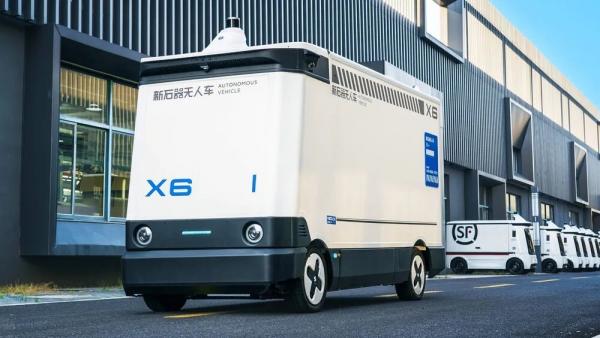
Globally, whether in Asia, Europe and America, or other emerging markets, despite varying levels of social acceptance, regulatory pace, and scenario pain points, the demand for 'more efficient, more flexible, and lower-cost' last-mile delivery solutions is highly consistent.
This means that automation technologies, represented by autonomous delivery, are becoming an infrastructure option for the next generation of urban and regional logistics.
Their promotion no longer hinges solely on technological breakthroughs but on the systematic adaptation among technology, scenarios, and humanities.
From express delivery to retail, and from closed campuses to open roads, diverse scenario demands can no longer be met by isolated technologies or single-purpose solutions.
Combining the proven technologies and large-scale operational experience of domestic autonomous delivery vehicle manufacturers with the scenario expertise and regulatory understanding of foreign local enterprises is key to constructing solutions that comply with local regulations and possess high adaptability.
This integrated model constitutes a replicable practice template for 'technology + local ecosystem' collaboration, facilitating the global implementation and evolution of China's autonomous delivery vehicles.
Therefore, for autonomous delivery vehicle manufacturers with a global presence, the strategic focus becomes clearer: while remaining committed to intelligence, they must place deep localization at the core.
In the future, those who can find the optimal balance between 'global vision' and 'local wisdom' will lead the next wave of industrial transformation amid the inevitable tide of intelligence.
-
![]()
Registered Capital Slashed to 372 Million Yuan! Yutong Optical Finalizes Industrial and Commercial Change Registration
-
![]()
Zhuque-3 Successfully Lands, and 'Time Traveler' Secures Another ¥100 Million in Funding: China's Commercial Space Industry Experiences a 'Dynamic August'
-
![]()
Autohome Faces a Shrinking Window of Opportunity
-
![]()
Even a Titan Like Musk Has Faced Setbacks in Fulfilling Promises
-
![]()
AI Office: The End of the Racing Era, Context Becomes the Key to Success
-
![]()
Domestic Vehicle Chassis Revolution ②: The Steering Wheel Remains, But Mechanical Connections in the Steering System Are Decreasing
-
![]()
Exploring MiniMax Design: Can Video Editing Be as Simple as Speaking?
-
![]()
Why Can SenseTime Achieve Profitability While CloudWalk Still Faces Challenges, Despite Both Adopting Large Models?