An AI Chip Firm Separated from SenseTime Secures 3 Billion Yuan in Funding
 01/30 2026
 846
846
AI Capital Bureau - Shi Tao
On January 22, Sunrise, an AI chip company operating within SenseTime's ecosystem and led by SenseTime co-founder Xu Bing, confirmed that it has secured nearly RMB 3 billion in cumulative funding within just one year of its inception. This funding scale is notably significant in the current landscape of hard-tech venture capital investments. 
The AI Capital Bureau posits that Sunrise's financing, as a hardware asset spun off from SenseTime's '1+X' strategy, is not merely an isolated corporate event. Rather, it signifies two pivotal shifts in China's AI computing power market: firstly, a structural shift in large model computing demand from 'training' to 'inference'; secondly, domestic chip companies are striving to establish vertical niches beyond NVIDIA's ecosystem by leveraging industrial capital.
The Inevitable Spin-off: Transitioning from 'Internal Supply' to 'Neutrality'
Sunrise traces its origins to SenseTime's internally developed smart chip and architecture division, with its STUP business progress consistently highlighted in SenseTime's financial reports.
For SenseTime, in-house chip development initially served as a defensive cost-control measure. During the early stages of AI algorithm commercialization, the procurement of NVIDIA GPUs constituted a substantial portion of revenue. To mitigate computing costs, SenseTime established a dedicated team in 2018, which successfully tape-out two chips, S1 and S2, primarily to support its smart city and commercial operations.
However, with the advent of the AI 2.0 era, computing power has evolved into a universal infrastructure for the entire industry. The SenseCore infrastructure, built on early GPU procurements, became SenseTime's competitive advantage. Yet, developing the chip business posed a critical decision: as a chip division, relying solely on the parent company presented dual challenges:
Limited market potential: Serving only internal demands fails to justify the high costs associated with advanced manufacturing tape-out, which often run into tens of millions of dollars.
Identity conflict: As a subsidiary of an algorithm company, selling chips to other algorithm firms or downstream clients becomes challenging due to potential competition. 
Consequently, spinning off into an independent entity became imperative for commercialization. Following SenseTime's '1+X' strategy, Array Technology was separated, and in July 2025, Sunrise was established as its subsidiary, led by Xu Bing, with industry veterans Wang Yong and Wang Zhan serving as co-CEOs.
While retaining SenseTime's core attributes in its equity structure, Sunrise acquired a relatively neutral market identity, enabling it to secure external capital and provide products and computing services to the entire industry. Furthermore, leveraging SenseTime's expertise in domestic computing power adaptation, Sunrise's future valuation logic extends beyond that of a traditional chip company, positioning it as a computing solution provider with a comprehensive software-hardware ecosystem.
Capital Profile: Industrial Capital-Driven 'Order Reservations'
An analysis of Sunrise's disclosed investor list reveals a distinct 'industry-oriented' capital structure, sharply contrasting with the pure financial VC-led chip investment landscape of recent years.
Beyond financial investors like IDG Capital and Paradigm Intelligence, the list includes prominent industrial giants: Huaxu Fund under Sany Group, Chia Tai Robotics under Charoen Pokphand Group, GCL Technology, and state-backed Hangzhou Data Group.
This 'CVC (Corporate Venture Capital) + State Capital + Leading VC' combination signals a clear intent: investors value not just the chip technology but its real-world industrial deployment capabilities.
The involvement of Sany Group, Chia Tai Robotics, and others effectively secures future application scenarios for Sunrise—embodied intelligence and industrial automation. As large models extend into the physical world, industrial and humanoid robots drive demand for edge-side high-computing-power, low-latency chips. Industrial capital infusions aim to ensure supply chain stability and gain foundational computing power influence in the new wave of intelligent transformation.
The AI Capital Bureau believes that for Sunrise, these 'order-backed' funds offer stronger risk resilience than pure financial investments.
Market Positioning: Differentiating from NVIDIA, Focusing on Inference
Sunrise also adopts a pragmatic, differentiated technical strategy.
The global AI chip market currently follows a 'one-superpower-many-strong' pattern, with NVIDIA dominating the 'training' segment through its CUDA ecosystem. For domestic startups, directly competing with NVIDIA in large-scale training clusters offers limited prospects for success.
Sunrise has placed its bets on the 'inference' segment.
Industry consensus holds that once large models transition from foundational training to application explosion, over 90% of computing demand will stem from inference—every user dialogue and generated image. Inference chips prioritize cost-effectiveness, energy efficiency, and low latency over raw peak computing power. 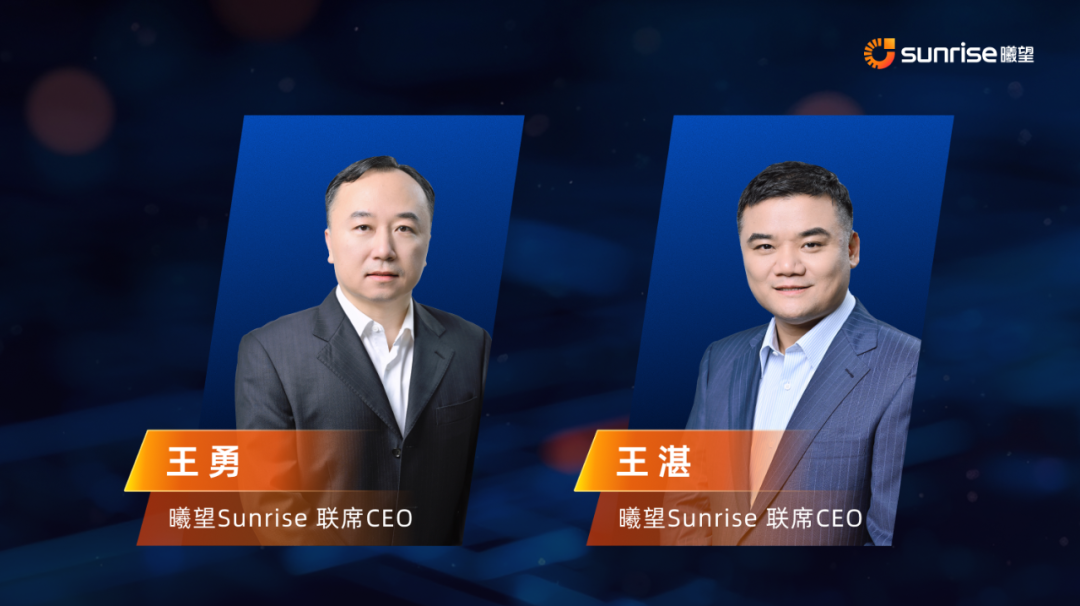
Sunrise's core financing objective is to develop inference GPUs based on new architectures, aiming to reduce large model deployment costs. This represents a massive substitution and incremental market. If training chips are 'nuclear weapons,' inference chips are 'electricity.' Given urgent domestic substitution needs, achieving extreme inference cost efficiency could secure a substantial market share in China.
Formidable Challenges Remain for Sunrise
The cumulative RMB 3 billion in financing secures Sunrise's entry ticket for tape-out trials and software ecosystem development. However, in the chip industry, capital is a necessary but insufficient condition.
The AI Capital Bureau similarly contends that Sunrise faces daunting challenges: externally, how to breach NVIDIA's CUDA-built software moat; internally, with competitors like Moore Threads and MetaX already listed, and Baidu's Kunlun Core and Alibaba's T-Head accelerating capital market integration, Sunrise must prove the value of an independent third-party chip amid intense competition.
From SenseTime's cost center to an independently financed unicorn, Sunrise's transformation marks a capital operation success. Yet its ultimate survival in the brutal semiconductor elimination race hinges on whether its products can genuinely enable downstream clients to 'deploy' and 'afford' large models. This is no longer a mere financial narrative but a battleground of yield rates, ecosystems, and commercial viability.
The AI Capital Bureau is a professional observation and analysis platform focused on capital market dynamics in the artificial intelligence sector. We closely track AI companies' capital operations, including financing, listings, and mergers and acquisitions, while providing in-depth analyses of industry trends and investment opportunities to offer valuable insights for industry participants. In an era of rapid AI technological advancement and deep capital integration, we strive to bridge AI innovation and capital markets, empowering Chinese AI companies to realize value discovery and growth.
Risk Warning and Disclaimer: The market carries risks; invest cautiously. This article does not constitute investment advice, nor should it serve as operational guidance. Trading risks are borne by the investor.
-
![]()
Registered Capital Slashed to 372 Million Yuan! Yutong Optical Finalizes Industrial and Commercial Change Registration
-
![]()
Zhuque-3 Successfully Lands, and 'Time Traveler' Secures Another ¥100 Million in Funding: China's Commercial Space Industry Experiences a 'Dynamic August'
-
![]()
Autohome Faces a Shrinking Window of Opportunity
-
![]()
Even a Titan Like Musk Has Faced Setbacks in Fulfilling Promises
-
![]()
AI Office: The End of the Racing Era, Context Becomes the Key to Success
-
![]()
Domestic Vehicle Chassis Revolution ②: The Steering Wheel Remains, But Mechanical Connections in the Steering System Are Decreasing
-
![]()
Exploring MiniMax Design: Can Video Editing Be as Simple as Speaking?
-
![]()
Why Can SenseTime Achieve Profitability While CloudWalk Still Faces Challenges, Despite Both Adopting Large Models?