Seedance 2.0 Takes Center Stage: A Decade of Dam-Building by Video Platforms, Overturned by AI in a Flash?
 02/11 2026
 575
575
Have you all caught a glimpse of the AI-generated videos from Seedance 2.0 circulating these past few days?
It's as if, without a keen eye, future video-watching will resemble a game of 'Spot the Difference'—only this time, we're searching for which pixel conceals 'reality'.
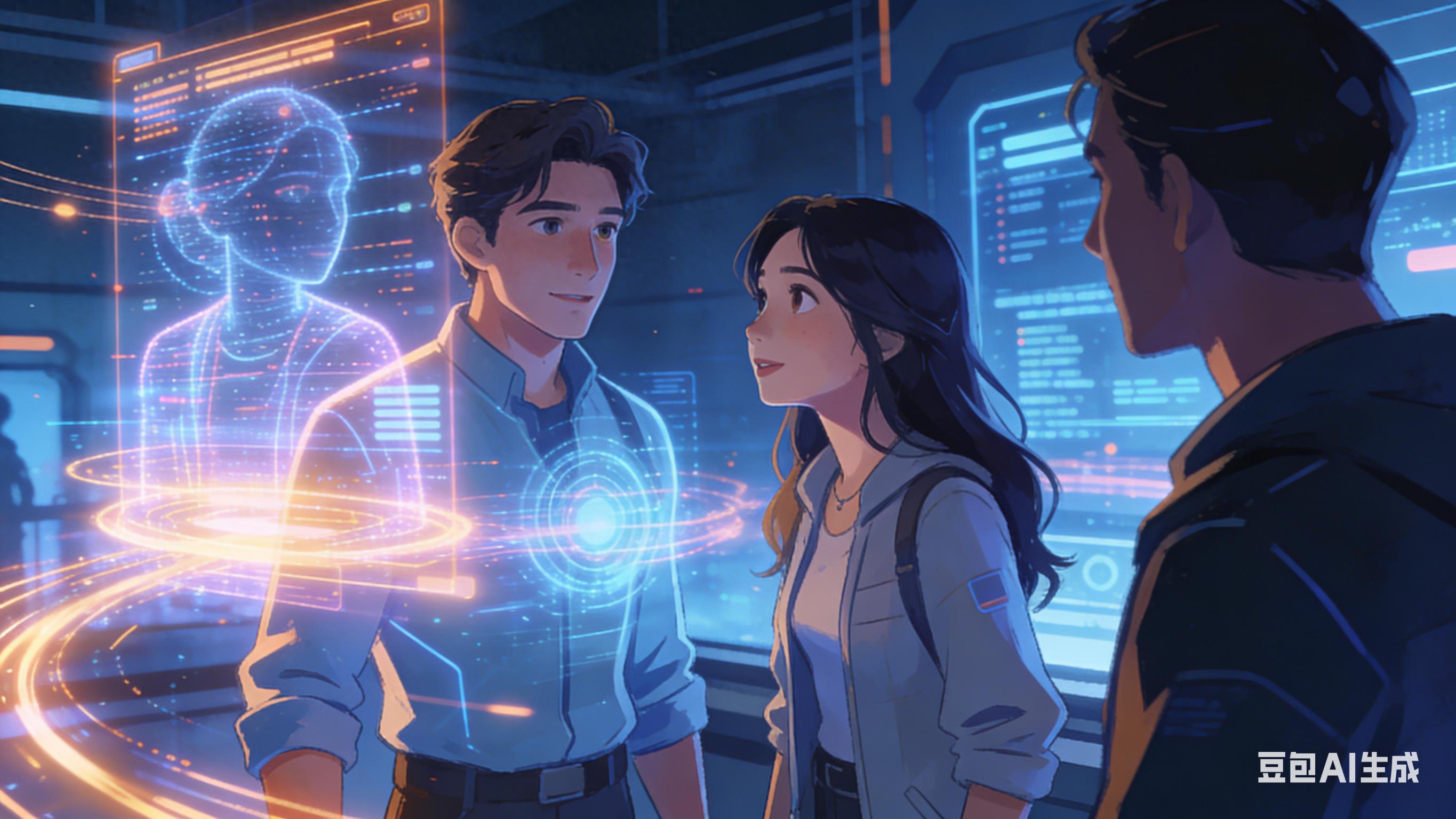
While this notion may be slightly unsettling upon deeper reflection, from the perspective of technological progress in the AI sector, we must acknowledge:
Seedance 2.0 is truly remarkable!
From this, we can foresee that the film and television industry is on the brink of transformation (or significant upheaval), and the short-drama market is poised for explosive growth (and fierce competition).
Long-video platforms, laughing one moment, may find themselves reaching for tissues the next.
Why is that the case?
The floodgates opened by Sora in the past are now surging back with Seedance 2.0...
1. Short-Drama Onslaught: My One Minute vs. Your Entire Day
Let's begin with some not-so-surprising yet exciting news: compared to Sora and its contemporaries, Seedance 2.0 can assist long and short dramas in becoming even more 'streamlined'.
In the past, shooting a fantasy drama meant waiting for the perfect cloud, gust of wind, or snowfall, which could turn a screenwriter's hair gray. Now, after filming in front of a green screen, AI directly generates a Penglai Paradise, with even the feathers of the cranes distinctly visible.
As for costs? The budget that once sufficed for a single episode can now cover an entire season, plus two sets of emoji packs.
However, the downside is—when everyone can harness AI to create Avatar-level special effects, special effects lose their exclusivity.
Previously, professional and sophisticated content production was itself a barrier to entry, a testament to iQiyi's financial clout.
But now, Seedance 2.0 has democratized the film and television industry.
The fire-breathing dragon you invested hundreds of millions in versus the 'fire-grilled skewers' dragon I generated in one minute with AI might only differ by a sprinkle of cumin when viewed on a small phone screen.
What does this imply? One of the long-video platforms' core competitive advantages has been reduced to a mere ditch that everyone can leap over.
Even more harsh is that when short dramas become more refined, who bears the brunt of the impact?
Isn't it long-form drama and film?
By then, the tolerance of long-drama viewers will also diminish; any minor flaw might lead to relentless criticism.
After all, if even the 'lesser' short dramas can excel, and you've spent a fortune and hired numerous stars only to produce something mediocre?
Being criticized is the least of your concerns; being ignored is the real peril.
2. Have Long-Video Platforms Taken a Wrong Turn After Sora?
Actually, normally speaking, long-video players shouldn't be in a panic.
No matter how formidable Seedance 2.0 is, Sora provided a two-year warning. Shouldn't long-video platforms have stockpiled resources and fortified their defenses by now?
For instance, focusing on the ability to craft compelling stories, recruiting more screenwriters who can 'captivate audiences with a single line,' and delving into 'emotional economics'...
These are the true scarce resources in the AI era.
But here's the perplexing part:
When Sora emerged, long-video platforms did roll up their sleeves and charge in, only to find themselves in a labyrinth called 'AI Film and Television Industrialization'—practicing saddle-carving skills all night, only to discover the world had started selling cars.
For instance, according to the Tianyancha APP, in March 2024, iQiyi signed a strategic cooperation agreement with Enflame Technology to jointly explore the application of AIGC in film and television content production.

Subsequently, Liu Wenfeng, then CTO of iQiyi, shared the initial applications and effectiveness of generative AI in iQiyi's content creation across three stages: planning, production, and promotion.
Key words: film and television production and promotion.
Last year, iQiyi first held a 'Living with AI' short film creation contest and then launched the 'Peter Pau · iQiyi AI Theater,' providing comprehensive guidance and support to participants from the photography master, covering everything from voiceovers to camera work, from screenplays to tools...
Although this involved storytelling to some extent, the overall focus remained on 'how to shoot better,' which is now the main battlefield that Seedance 2.0 has just trampled...
Even more disheartening is that despite all these efforts by iQiyi, cost reduction and efficiency improvement are indeed commendable, but they don't establish a sufficient core competitive barrier, do they?
Can't Tencent Video and Youku do the same?
Do you think that by setting up a stage and defining the performance manual, the audience will obediently buy tickets? With Seedance 2.0, the audience can now jump into the game themselves.
This is not even a dimensional competition; it's more like iQiyi and others have been building dams by the river, but Seedance 2.0 brings the entire ocean...
3. So, Will Long-Video Platforms Perish?
No, but they will undergo a transformation.
Just as cinemas weren't wiped out by television, and television wasn't wiped out by video websites—long-video platforms will also find new ways to thrive.
So, let's boldly predict what the future iQiyi might look like:
70% AI-assisted 'efficiency dramas' to swiftly meet demand
20% carefully crafted 'flagship dramas' to uphold platform prestige
10% experimental 'crazy dramas' for viewers tired of clichés
And technologies like Seedance 2.0 will ultimately teach the industry a lesson: when everyone wields a sword, swordsmanship no longer matters; what matters is why you draw your sword.
AI can generate the perfect picture, but it can't generate 'why this story deserves to be told';
It can calculate the most popular plot points, but it can't calculate 'why this character lingers in our minds';
So, the real challenge for long-video platforms isn't technology, IP, or even user engagement—it's whether they can still find those 'dreamers' willing to polish a single line for three days;
Whether they can tolerate those 'mavericks' who don't adhere to the script;
Because in this era where AI can shoot everything, the last scarce commodity is precisely those human traits that are least like AI:
Our vulnerability, our imperfections, and those emotional fluctuations that cannot be predicted by algorithms.
Next time you encounter a hit from a long-video platform, don't just fixate on its special effects and traffic—see if it leaves a moment you'll cherish years later.
Did it create a character that feels 'so human'?
Did it bravely tell a story that's 'not so smart' but 'very moving'?
After all, if all content in the future is a flawless AI-generated work, then human 'imperfection' might be the most precious luxury.
PS: This article wasn't generated by AI, but after writing it, I suddenly wasn't sure anymore...
Is it surreal? This is just the beginning.
-
![]()
Silicon-Based OLED Pioneer Unveils Financial Results: H1 Shipments Outpace Entire 2025 Volume
-
![]()
AI's First "Lost Summer"
-
![]()
Zeiss Makes Another €2.2 Million Bet: Will Eye Tracking Be the Next Big Thing in the Smart Glasses Industry?
-
![]()
RUNTO Ranking | Global Top TV ODM Factories' Shipment Figures for July 2026
-
![]()
Dealer Service Operational Prowess | How After-Sales Managers Can Harness Efficiency and Expertise to Secure Trust in the New Energy Era
-
![]()
Xiaohongshu: Navigating Through the AI Anxiety Storm
-
The Foundation of AI is Being Built
-
![]()
Huawei and Apple Embrace Change, Samsung Steps Back: Is Variable Aperture Technology a Game-Changer?