When Stephen Chow Meets Seedance: The Breakthrough and Challenges of AI Videos
 02/13 2026
 424
424
The starting whistle for a 100-meter sprint.
"Investors China" Lead | Wu Wei
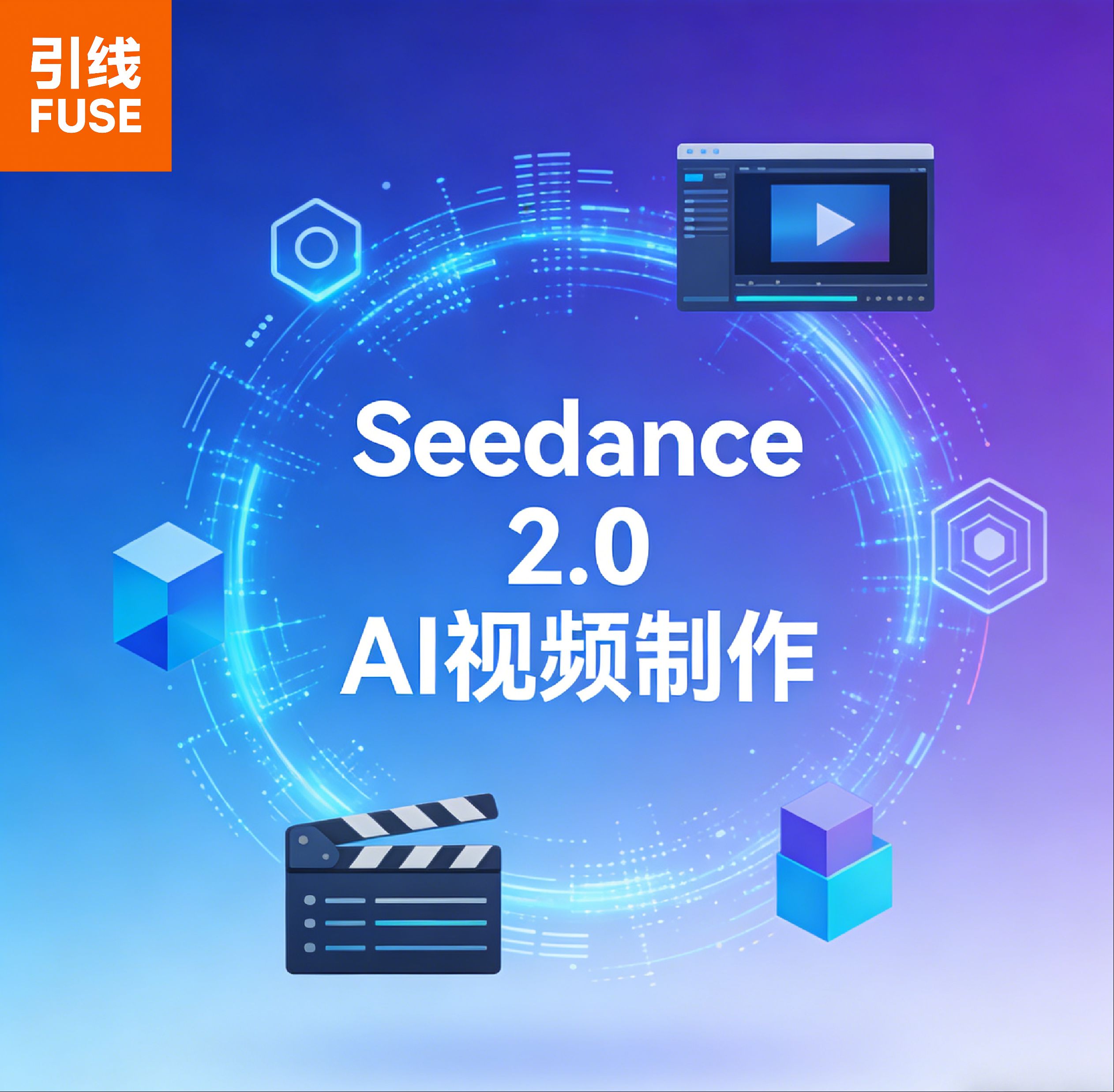
In February 2026, when Feng Ji, the producer of "Black Myth: Wukong," lamented on social media that "the infancy of AIGC is over," he was sharing ByteDance's newly launched next-generation AI video generation model, Seedance 2.0.
This wasn't just another overblown moment in the tech world. Seedance 2.0, hailed by industry insiders as a revolutionary product, not only transforms static images into smooth, cinematic-quality short films but also, notably, tackles the long-standing issue of audio-visual disconnection in AI-generated videos. This technological leap quickly reverberated through the capital markets. On February 10, fueled by news of its public beta release, A-share film and television media and AI application sectors surged, with multiple stocks reaching their daily limits.
However, just days after the public beta of Seedance 2.0 commenced, the celebration came to an abrupt halt. On February 9, ByteDance suddenly removed the highly popular "real-person reference" feature from Seedance 2.0. The stark contrast between the official silence and market excitement alerted keen observers: Seedance 2.0 is not just a technological marvel but a carefully calculated commercial strategy laden with risks.
Why has Seedance 2.0 ignited the market now? What commercial ambitions underlie its seemingly "free" offering? And what costs will the industry bear when "dream-making" becomes inexpensive?
The Aesthetics of Innovation: From 'Gacha Games' to 'Director's Engine'
The revolutionary impact of Seedance 2.0 lies in its breakthroughs in two critical areas of AI video generation: controllability and coherence.
Over the past year, whether using foreign platforms like Runway or earlier models like Sora, generating videos felt like playing a "blind box" or "gacha game"—you input text, and AI randomly generated footage, with quality left to chance. Seedance 2.0, however, is regarded by the industry as the first true "director-level engine."
According to official technical details, Seedance 2.0 supports mixed input of up to 12 files, including text, up to nine images, videos, and even audio. This means creators are no longer at the mercy of luck but can precisely control video composition, lighting, and even subtle facial expressions by uploading storyboards and reference images. Its "native audio-visual synchronization" capability is particularly remarkable—lip movements, ambient sounds, and music align perfectly during generation, ending the era of "silent films."
This technological leap directly translates into staggering productivity gains. Test data from a renowned visual effects team shows that producing a two-minute high-quality sci-fi short film with Seedance 2.0 costs approximately 330.6 yuan. In traditional filmmaking, similar effects could cost tens of thousands or more. For dynamic comic (manhua) production, cycles shrink from a week to three days, with labor costs plummeting by 90%.
This "game-changing" disruptive power quickly rippled through secondary markets. On February 10, China's A-share AI application and film sectors surged. The market logic is clear: if content production costs approach zero, companies with IP and distribution channels will see explosive profit margins.
Yet, technological advancements often come with risks. Seedance 2.0's exceptional understanding of complex movements sparked a "fan-creation" frenzy within 48 hours of its internal testing, flooding platforms like Douyin and X (formerly Twitter) with videos generated using popular IPs like "Naruto" and "Ultraman." This unauthorized "remaking" gave ordinary users the thrill of directing but also alarmed copyright holders.
The Low-Barrier Strategy: ByteDance's 'Ecosystem War'
Even before Seedance 2.0, multiple AI video models existed in the market. However, foreign platforms like Runway and Midjourney adopted costly subscription models. Why does ByteDance dare to make Seedance 2.0 "free" or set extremely low usage barriers?
This is no act of charity but a strategic move leveraging "computational redundancy" and "data hegemony."
First, timing was crucial. Early February 2026 coincided with the Chinese Lunar New Year, the peak season for short-video consumption and viral traffic. ByteDance aimed to turn hundreds of millions of users into free "product testers" and "viral spreaders" during the holiday.
Second, cost confidence. Unlike startups renting expensive GPU resources, ByteDance relies on its "Volcano Engine," housing Asia's top GPU clusters. This infrastructure synergy, combined with extreme optimization in model inference, slashes per-video generation costs far below competitors. This enables ByteDance to wage a protracted "price war," squeezing smaller startups.
Deeper still lies the data strategy. In the AI era, user behavior is invaluable. Every click on "regenerate" and every prompt tweak by hundreds of millions of users essentially provides RLHF (Reinforcement Learning from Human Feedback) annotations for Seedance 2.0. Through its "free" strategy, ByteDance builds an efficient data flywheel: users get free computational power, while ByteDance acquires feedback data to iterate models weekly, erecting unassailable barriers.
The AI video landscape has entered a "clash of titans" red ocean. Kuaishou's (1024.HK) "Kling 3.0" remains strong in physical simulation, posing the most direct threat to Seedance. Tencent (0700.HK) is testing its Hunyuan model via WeChat Channels' closed loop. Alibaba (9988.HK) focuses on "digital humans" for e-commerce. Meanwhile, unicorns like Shengshu Tech's Vidu and MiniMax's Hailuo AI compete in niches.
But ByteDance's ambitions stretch further. By integrating Seedance into "CapCut" and "Jimeng," it's building a super-closed loop: "AI generation → AI editing → platform publishing." Within this loop, tools are free, but users' time, creativity, and eventual traffic monetization remain trapped in the ecosystem.
The Sword of Damocles: The Hidden Challenges Behind the Celebration
Despite its grand ambitions, Seedance 2.0's technological sprint collided with "compliance" red lines.
The February 9 removal of the "real-person reference" feature was no accident but ByteDance's "emergency hedging" against escalating legal and ethical risks. This incident reflects three deep challenges in AI video commercialization.
First, the "minefield" of portrait rights. Seedance 2.0's most controversial capability is its hyper-realistic "real-person replication." Users can generate natural dynamic videos from a single photo.
Recently, an incident where Seedance 2.0-generated content triggered a public statement from Stephen Chow's agent (Chen Zhenyu) became an industry milestone. It signaled that top IPs now recognize AI as not mere homage but direct plunder of their commercial value.
Such cases have precedents internationally. OpenAI was warned to remove the voice character "Sky" for resembling Scarlett Johansson; Universal Music (UMG) launched copyright crackdowns against AI-generated Drake covers. ByteDance's emergency removal aims to avoid such "personality rights" legal quagmires.
Beyond portrait rights, the "original sin" of Seedance 2.0's training data poses stealthier risks. As TikTok and Douyin's parent company, ByteDance owns the world's largest short-video database. While this fuels model training, it sparks massive legal controversies.
Do users implicitly authorize platforms to use their uploaded Douyin videos for AI training? If future laws shift to strict "copyright confirmation" systems, ByteDance could face mass lawsuits like The New York Times' suit against OpenAI, even risking "algorithmic deactivation."
Notably, the "rights confirmation paradox" in commercialization affects monetization. Currently, multiple rulings by the U.S. Copyright Office and Chinese courts lean toward denying copyright for purely AI-generated content. This creates a commercial paradox: ByteDance plans to charge B-end clients via Volcano Engine. But if an ad agency pays for a Seedance 2.0 promo film, only to find competitors freely copy it without infringement, B-end willingness to pay will plummet.
Seedance 2.0's debut marks AI video's transition from "technical showmanship" to "industrial application." Leveraging its computational hegemony and ecosystem closed loop, ByteDance aims to redefine visual content production and execute a brilliant "land grab" via free strategies.
However, the "Stephen Chow incident" and "feature removal" serve as warnings to all AI giants: technological evolution far outpaces societal contract updates. Future industry battles will shift from algorithm labs to negotiation tables with legal and regulatory bodies.
For ByteDance, Seedance 2.0 is a double-edged sword—capable of conquest yet prone to self-injury. Balancing "computational hegemony" and "copyright protection" will determine whether this product becomes the next TikTok or a fleeting technological firework. (Produced by Siwei Finance) ■
Source: Investors China
-
![]()
Silicon-Based OLED Pioneer Unveils Financial Results: H1 Shipments Outpace Entire 2025 Volume
-
![]()
AI's First "Lost Summer"
-
![]()
Zeiss Makes Another €2.2 Million Bet: Will Eye Tracking Be the Next Big Thing in the Smart Glasses Industry?
-
![]()
RUNTO Ranking | Global Top TV ODM Factories' Shipment Figures for July 2026
-
![]()
Dealer Service Operational Prowess | How After-Sales Managers Can Harness Efficiency and Expertise to Secure Trust in the New Energy Era
-
![]()
Xiaohongshu: Navigating Through the AI Anxiety Storm
-
The Foundation of AI is Being Built
-
![]()
Huawei and Apple Embrace Change, Samsung Steps Back: Is Variable Aperture Technology a Game-Changer?