"The Dream of Jensen Huang": Will AI Truly Enhance the Well-being of Blue-Collar Workers?
 02/13 2026
 446
446

On January 21, at the Davos World Economic Forum, Jensen Huang asserted that plumbers, electricians, and construction workers would soon command "six-figure annual salaries" due to the burgeoning demand for data centers that operate and train artificial intelligence.
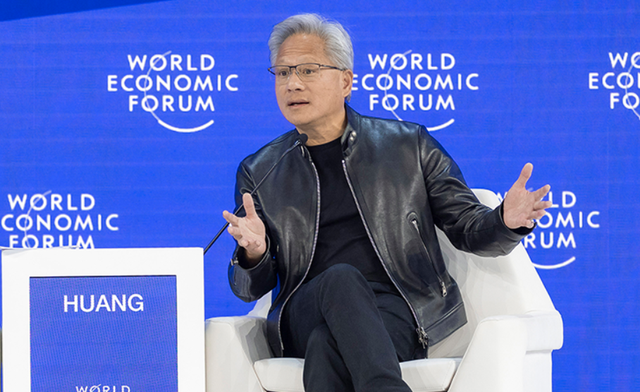
I've often observed a "bigwig exaggeration syndrome" within the current AI landscape. It manifests as influential figures making increasingly bold claims, while the public eagerly listens. This particular statement was swiftly distilled by numerous domestic media outlets into: "Jensen Huang predicts plumbers and electricians will soon earn $100,000 annually." The sentiment was so strong that netizens began to wonder aloud: Is it too late for me to switch careers and become an electrician?
The question of whether AI infrastructure can truly elevate blue-collar jobs to six-figure USD annual salaries may require time for verification. However, this "dream of Jensen Huang" brings to light a crucial topic: when discussing AI's impact on employment, the majority of media seem to implicitly focus on white-collar professions such as programming, design, and product management. But what about the impact on blue-collar work? Should manual laborers be as concerned about AI as their white-collar counterparts, or can they confidently embrace Jensen Huang's optimistic outlook?
Let's delve into this topic through real-world cases we've investigated.

A closer examination reveals two layers of meaning in Jensen Huang's perspective. Firstly, infrastructure construction, exemplified by AI data centers, will significantly boost employment demand for blue-collar roles such as electricians, plumbers, and maintenance workers associated with data centers. This phenomenon is said to have already been evident in America's ambitious "Stargate" project.
According to data from the U.S. Bureau of Labor Statistics, the annual shortage of electricians in the U.S. exceeds 80,000 positions, with data center electricians being the most sought-after. Reports indicate that skilled electricians capable of working in U.S. data centers already command salaries exceeding $200,000 annually, far surpassing most white-collar incomes.
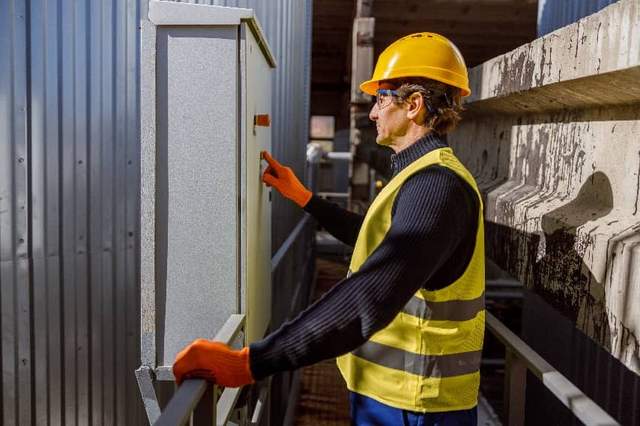
If AI infrastructure indeed creates numerous blue-collar positions and elevates related compensation, that's one aspect. Behind this lies AI's differential impact on various job sectors, painting a broader picture. While data center electricians face shortages and record-breaking salaries, Silicon Valley has witnessed its first wave of AI-related layoffs. Major tech companies have been laying off product managers, project managers, and software engineers in waves. The contrast between these two phenomena resembles a silent drama of our times.
This leads us to Jensen Huang's second implication: AI may replace many white-collar roles while having a much lower replacement rate for blue-collar jobs.
A popular saying goes, "Originally, we thought humans would write poetry while AI did the work; now it's AI writing poetry while we humans sweep floors and wipe tables." But if we reinterpret this phrase, does it imply that if I'm already in manual labor, AI will generously leave me alone?
From a practical standpoint, this notion holds some merit. In the U.S., while AI causes significant white-collar unemployment, demand and income levels for blue-collar roles in electrical work, plumbing, and equipment maintenance are rapidly increasing. In China, we also observe a surge in demand for relatively blue-collar positions with technical thresholds, such as network equipment maintenance.
Beyond the basic logic of "AI targets white-collar but spares blue-collar," we can see AI strongly empowering blue-collar work in various ways.
Consider this counterintuitive reality: vocational education often embraces intelligent technologies first. Our visits to numerous vocational technical colleges reveal that compared to traditional universities adhering to ivory tower educational norms, vocational schools face stronger employment and enrollment pressures, making them more decisive and flexible in adopting intelligent technologies. Skills training and vocational education for blue-collar work have become the first to engage with AI technologies. For example, a technical school in Shandong incorporated learning and operation of intelligent equipment into its "plastering" course—a subject seemingly unrelated to AI.
Moreover, AI technologies can tangibly improve working environments for blue-collar jobs. We once interviewed a warehouse manager who mentioned that for years, he needed to walk about 30,000 steps daily. After AI replanned warehouse layouts and staff movement paths, this dropped to around 10,000 steps per day, significantly enhancing the work environment.
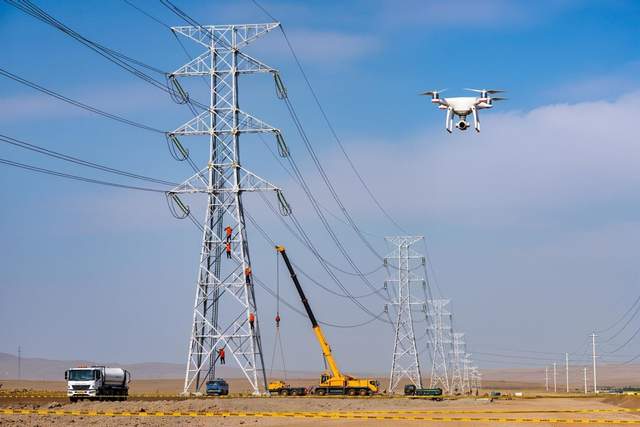
For years, China has widely promoted AI replacement in various high-risk jobs, achieving remarkable results. For instance, supported by AI inspection systems, many tower-climbing inspection tasks no longer require ascending towers. After AI autonomous mining technologies matured, numerous mines reduced or eliminated underground operations. The value of AI in these areas cannot be overstated.
Another noteworthy perspective is that AI technologies can drive standardization of many services and evaluation systems. For example, implementing AI service certification systems in the housekeeping sector ensures service quality no longer relies solely on subjective impressions. Many friends around me previously avoided housekeeping services due to frequent disputes over lack of standards. But after AI promoted service standardization, young people's acceptance of housekeeping services increased dramatically.
From these angles, AI seems truly to be enhancing blue-collar work. But wait—the opposition hasn't spoken yet.

When discussing how blue-collar work benefits in the AI era, a common viewpoint is that AI will create numerous blue-collar positions while providing massive new tools for blue-collar jobs. Examples include drone operators, intelligent equipment maintenance, and data center electricians.
But hold on—discussing whether something will happen without considering timelines is purely irresponsible. These jobs sound great, but where are they? How should a young person just entering society find a job in a data center? How can food delivery riders transition into drone pilots? These theoretically possible scenarios weave beautiful visions in short videos and social media. But the reality is that for most people struggling to earn a living, AI remains just a distant dream.
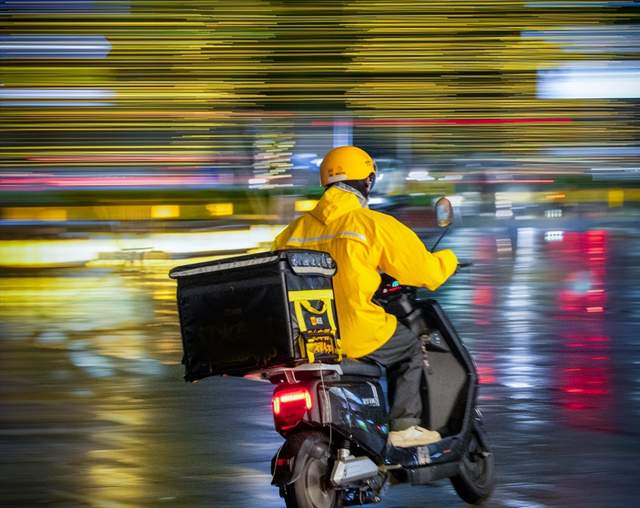
While jobs and opportunities created by AI remain unseen, AI's alienation of blue-collar work is already evident. The most well-known example is how AI algorithms exploit food delivery riders, couriers, and ride-hailing drivers through platform systems. As algorithmic capabilities improve, AI's control over these jobs' work rhythms and efficiency strengthens. Although prominent conflicts were addressed when "food delivery riders trapped in algorithms" became a visible social issue, conversations with platform workers reveal that algorithmic exploitation often shifts—easing in one area while intensifying in another. Workers' resentment and anger continue to escalate.
AI not only squeezes blue-collar labor efficiency but also presents an omnipresent, increasingly strict surveillance. In some factories, smart helmets and ID badges join AI cameras to form a monitoring network so strict it's alarming. Workers' rest, drinking, and bathroom breaks are all recorded and calculated, making labor processes extremely transparent. This plunges happiness to rock bottom while psychological stress escalates exponentially.
When workers haven't mastered AI but capital can easily embrace this technology, AI often becomes a tool for exploiting blue-collar workers. Furthermore, the narrative that "AI only creates new blue-collar jobs without replacement" isn't without flaws. For example, in manufacturing, as unmanned production lines, dark factories, and industrial robot adoption increase, this traditionally labor-intensive sector is rapidly transforming, with employment numbers continuously declining. The resulting job risks must be taken seriously.
So, is AI good or bad for blue-collar workers?
The truth likely lies in both. The benefits and challenges everyone receives from this era have never been identical.

After interviewing a sufficient number of AI-related professionals across different occupations, our foundational view is that intelligence's impact on careers is indeed intense, but this impact is also extremely complex and nuanced. Taking blue-collar work as an example: on one hand, AI relatively protects physical, skilled, and hands-on occupations; on the other, AI impacts manual laborers through platform algorithms, monitoring systems, and unmanned factories. After acknowledging this coexistence, we conclude that blue-collar work in the AI era will inevitably exhibit these three overall characteristics:
1. New career divides.
To some extent, AI reduces the cost for humans to learn and master work skills. But viewed another way, AI itself represents a learning cost. Data center electricians for AI facilities may indeed be in short supply, but this role requires understanding knowledge from AI, IT equipment, electrical systems, and even cooling technologies. Intelligence is becoming a new divider in blue-collar work. Those who can quickly master intelligence-related knowledge and skills while willing to engage in blue-collar work will gain numerous career advantages. But for most traditional blue-collar workers with low education, advanced age, and weak learning abilities, the intelligence threshold may become an insurmountable gap.
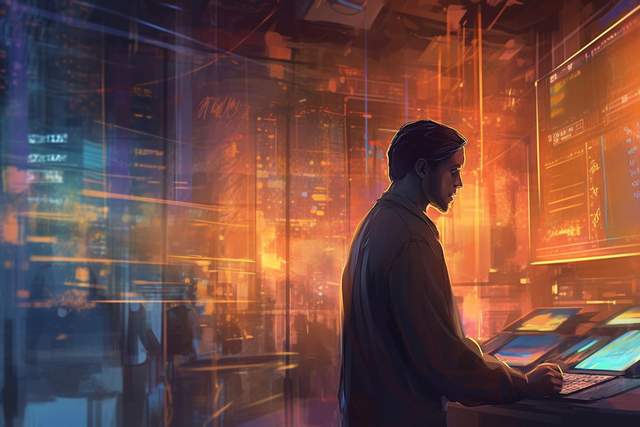
This hides a contradiction: after mastering AI, data analysis, IT infrastructure, and other capabilities, would I still want to engage in blue-collar work? Or could my work even be defined as traditional blue-collar anymore? This question may require reexamination and resolution at the sociocultural level.
2. "Deskilling" is a double-edged sword.
Another significant impact of AI on blue-collar work is human deskilling. Many media reports describe how in some modern factories, workers can now operate following guidance from AR glasses' intelligent systems, requiring no independent thinking, skill mastery, or technical expertise. We experienced this firsthand at a water treatment station in southern China. After intelligent upgrades, workers only needed to monitor screens rather than participate in inspections personally. When faults occurred, AI would automatically report and initiate response protocols—meaning even screen monitoring became unnecessary.
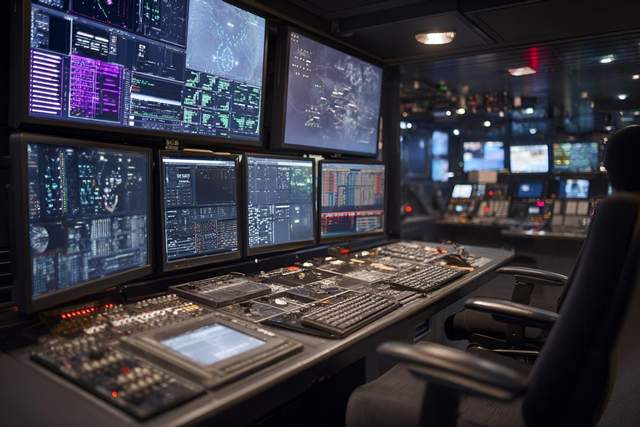
While deskilling lowers entry barriers and learning costs for blue-collar work, it also erodes workers' sense of dignity and irreplaceability. This psychological terror of feeling insignificant and constantly replaceable may trigger more severe socialized career crises.
3. The "blue-collar" concept is inherently complex.
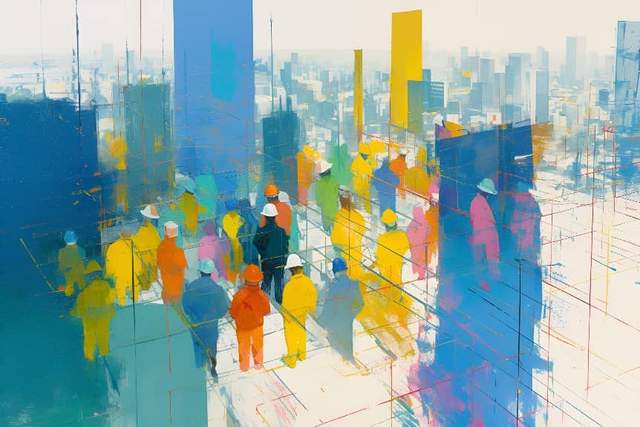
Dividing laborers into mental and manual categories has always been overly simplistic, and the AI era exposes this simplicity even more starkly. While electrician demand grows in the U.S., manufacturing workers may face unemployment simultaneously. In China, while large-scale coal mine automation improves miners' safety and comfort, it inevitably reduces mine employment, potentially forcing miners to work in smaller mines with worse safety and working conditions. These complex entanglements make it difficult to simply define AI's impact on blue-collar workers. Internal divisions within the blue-collar category will likely become more pronounced, with some enjoying era dividends while others suffer AI's ruthless impacts.
Writing this reminds me of a range hood cleaning service I ordered this year. I noticed that the two technicians, a man and woman who appeared to be a couple, were talking and singing throughout. Then I realized they were live-streaming while working.
At that moment, I found this scene of ordinary people enthusiastically embracing digitalization truly beautiful. It evoked that sense of progress from our era. But after respectfully seeing them off, I noticed the range hood wasn't cleaned particularly well—apparently live-streaming was quite distracting.
All opportunities lie in our hands, yet seem to slip through our fingers. Change has arrived, but remains elusive.
Will blue-collar workers become happier because of AI, as Jensen Huang suggests? My sincere answer is: the situation is extremely complex.

-
![]()
Silicon-Based OLED Pioneer Unveils Financial Results: H1 Shipments Outpace Entire 2025 Volume
-
![]()
AI's First "Lost Summer"
-
![]()
Zeiss Makes Another €2.2 Million Bet: Will Eye Tracking Be the Next Big Thing in the Smart Glasses Industry?
-
![]()
RUNTO Ranking | Global Top TV ODM Factories' Shipment Figures for July 2026
-
![]()
Dealer Service Operational Prowess | How After-Sales Managers Can Harness Efficiency and Expertise to Secure Trust in the New Energy Era
-
![]()
Xiaohongshu: Navigating Through the AI Anxiety Storm
-
The Foundation of AI is Being Built
-
![]()
Huawei and Apple Embrace Change, Samsung Steps Back: Is Variable Aperture Technology a Game-Changer?