Spring Festival Tech Surge: From WeChat Red Packets to AI Domination – Why Tech Giants Are Capitalizing on This Critical Window
 02/13 2026
 675
675

【Abstract】Every Spring Festival, as millions traverse the country to reunite with family and fireworks illuminate the night sky, a silent yet fierce battle unfolds in the digital arena. Unlike the box office clashes of the film industry during this period, this "cognitive surprise" manifests in the app rankings of every smartphone, with companies vying for every user tap and interaction.
In 2014, Tencent leveraged WeChat's Spring Festival red packets to catapult mobile payments from a niche service to a national phenomenon within months, reshaping China's payment landscape through a social game that engaged the entire nation.
Today, amidst a different technological landscape, the same surge in nationwide traffic presents a golden opportunity. To date, Doubao, Yuanbao, and Qianwen have made significant investments, using red packets and interactive campaigns to capture industry attention. Embodied AI companies like Unitree and Galaxy General have also spent heavily to secure spots on the Spring Festival Gala, while Li Auto, Didi, and others have integrated autonomous driving technologies into core scenarios such as New Year goods delivery and travel reunions, achieving nationwide cognitive penetration.
So, why are tech companies betting big on this Spring Festival season, from WeChat red packets to nationwide AI adoption?
The following is the main text:

The "Red Packet Revolution" in the Spring Festival Season
To understand the current cognitive battles of the Spring Festival season, one must revisit the "Red Packet Revolution" that transformed the industry twelve years ago.
During the 2014 Spring Festival, WeChat introduced its red packet feature for the first time. With no complicated operations required, users could simply follow the New Year Red Packet account to claim or share red packets with friends.
At the time, Alipay had already established a dominant position in mobile payments. However, this "Red Packet Revolution" allowed WeChat to catch Alipay off guard by leveraging the unique occasion of the Spring Festival with a simple yet engaging social gameplay.
Official data reveals that from New Year’s Eve to the eighth day of the lunar new year, over 8 million users participated in the red packet activities, with more than 40 million red packets claimed—an average of 4-5 per person. The peak occurred on New Year’s Eve, with 25,000 red packets claimed per minute during the highest traffic period, each averaging under 10 yuan.
This prompted Jack Ma, then Alibaba’s chairman, to remark: "The Pearl Harbor attack was indeed impressive, but fortunately, the Spring Festival will soon be over, and there’s a long road ahead."
Following the "Red Packet Revolution," the Spring Festival season gradually became a fierce battleground for internet companies starting in 2015. Not only did WeChat partner with the Spring Festival Gala to set a record of 11 billion shakes, driving the binding of 200 million bank cards, but Alibaba also became the exclusive interactive partner for the Gala, making the "Five Blessings" campaign a hot topic during the Spring Festival.
This provided a key insight for tech companies: the Spring Festival season is a critical window for nationwide cognitive penetration.
On one hand, the Spring Festival is one of the strongest scenarios for national consensus. Regardless of region, age, or occupation, everyone shares a common behavioral logic: reunion, socializing, and consumption. On the other hand, it is one of the most concentrated periods of leisure time for the public, providing ample opportunity for promoting new applications.
As the most efficient time for social virality, family gatherings and reunions with friends expand social circles exponentially. Especially among tech-savvy groups like educated youth, these social chains achieve a viral effect where one user’s adoption leads to full penetration among their network. The more participants, the deeper the cognitive penetration of the product.
For emerging technologies, the formation of nationwide recognition often has only one "window of opportunity." This means that during the early stages of technological maturity and product launch, the company that first achieves nationwide cognitive penetration can dominate the industry and establish a first-mover advantage.
Thus, whether it’s AI Agents, embodied AI, or autonomous driving, these emerging tech companies are at a critical stage where technologies are maturing, products are launching, and market competition is intensifying. Without established brand recognition, the Spring Festival season inevitably becomes a golden opportunity to reshape perceptions.

AI Agent Red Packets + New Version Dual Monetization
In the 2026 Spring Festival, Tencent, Alibaba, ByteDance, and Baidu—the four internet giants—continue to double down, with the total publicly announced red packet amounts exceeding 4.5 billion yuan.
However, unlike years past when red packets were used to drive bank card bindings, internet companies now aim for AI Agents as the ultimate gateway, hoping to use red packets and other gameplay to attract users and then monetize the traffic.
With the maturation of large language model technologies, AI Agents have evolved from chat tools into all-in-one assistants capable of tasks like copywriting, video editing, and outfit simulation. However, for the general public, AI Agents remain an abstract concept.
Against this backdrop, on January 25, 2026, Baidu Wenxin announced the launch of a 500 million yuan Spring Festival cash red packet campaign to drive user engagement with its AI assistant. On the same day, Tencent Yuanbao announced it would release 1 billion yuan in cash red packets on February 1, leveraging WeChat group chats, Moments, and other social channels to attract users.
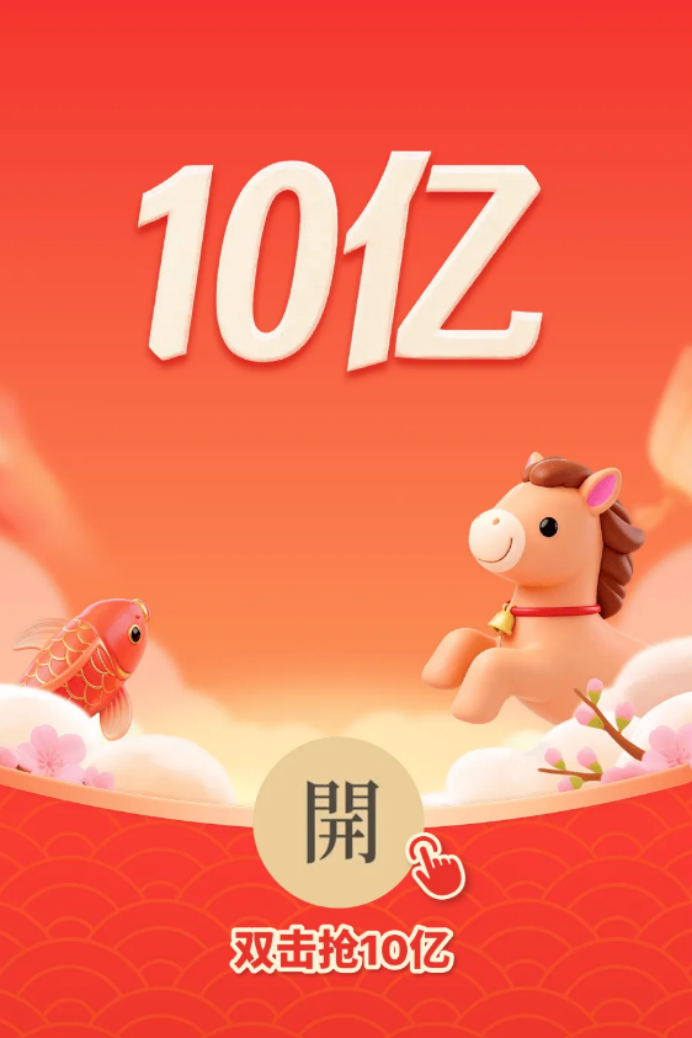
Image source: Tencent Yuanbao official WeChat account
Shortly after, Alibaba Qianwen announced the launch of a 3 billion yuan "Spring Festival Treat" campaign on February 6, encouraging multi-channel consumer spending through vouchers. ByteDance, through its Volcano Engine + Doubao combination, partnered with CCTV’s Spring Festival Gala live broadcast, distributing red packet benefits to users through online activities.
In addition to traditional internet giants, the global model service platform OpenRouter recently launched a mysterious model called Pony Alpha, which quickly topped the platform’s popularity charts within 24 hours, sparking industry buzz. Several domestic large model companies, including Zhipu and DeepSeek, also plan to release next-generation models around the Spring Festival, suggesting the AI sector may see a new climax during the season.

Robots: "Killing Three Birds with One Stone"
While AI Agents focus on interactive engagement to build recognition, robotics companies prioritize visual impact to bring science fiction into reality.
For the upcoming 2026 Spring Festival Gala, five robotics companies—Galaxy General, Unitree Technology, Magic Atom, Songyan Dynamics, and Dreame Technology—have announced partnerships as robotics domain collaborators for the Year of the Horse Gala.
Some industry media report that the starting price for appearing on the 2026 Spring Festival Gala is as high as 100 million yuan, no small sum.
Currently, the embodied AI sector is in a cash-burning phase. For example, UBTECH’s R&D investment has hovered between 400-500 million yuan in recent years, meaning the 100 million yuan spent to appear on the Gala could cover a quarter’s worth of R&D expenses.
Despite this, many companies are willing to invest heavily in the Gala because the embodied AI industry is still in its early commercialization phase.
At present, large-scale deployment of embodied AI remains immature, and the public’s perception of humanoid robots is largely shaped by sci-fi films. Companies hope their products can feel more "down-to-earth." Additionally, the Spring Festival Gala live broadcast demands extreme stability, and robots that perform successfully essentially receive a national-level product certification.
Unitree Technology serves as a typical success story.
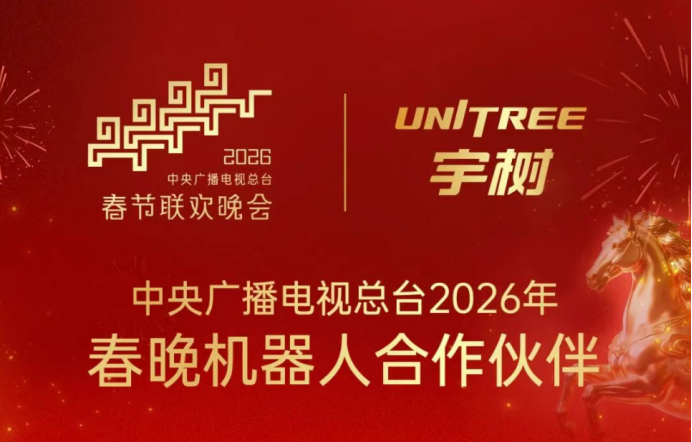
Image source: Unitree Technology official WeChat account
In 2021, Unitree’s robotic ox "Benben" debuted on the Spring Festival Gala stage. Just last year, in 2025, humanoid robots made their first appearance, performing "Yangko B0T" by spinning handkerchiefs and achieving viral fame. Beyond trending topics, the product market and capital markets responded positively.
According to Unitree’s official data, the company shipped over 5,500 humanoid robots in 2025, with over 6,500 units produced. Additionally, Unitree is progressing toward going public, having completed 10 funding rounds to date. Media reports suggest the company’s valuation has surpassed 10 billion yuan, reaching 12 billion yuan after its Series C funding.
Robotics companies’ Gala strategies are essentially long-term cognitive investments. By leveraging visual impact, they raise brand awareness, educate users about humanoid robots, and drive order procurement. During commercialization, they use cash flow to accelerate R&D and sales data to secure financing, achieving a "three-in-one" effect of Gala performance, technology advancement, and capital attraction.

Autonomous Driving: Unmanned Real-World Testing
While AI and robotics companies compete for online recognition, automakers and mobility platforms focus on real-world applications, integrating AI and autonomous driving technologies into core scenarios like Spring Festival travel and New Year goods delivery to enhance user experience.
In the autonomous driving sector, on February 7, Li Auto began rolling out its OTA 8.3 update to users. The upgrade targets Spring Festival travel scenarios and daily usability, introducing 23 new features and 12 experience optimizations.
Updates span intelligent driving, charging, in-car interaction, and entertainment, applicable to models including the Li MEGA, Li L Series, and Li i Series. To address range anxiety during long trips, the new version introduces real-time status displays for Li Auto’s supercharging stations and adds remote charging preheating/precooling for battery electric vehicles.
The Spring Festival is one of the most frequent times for long-distance travel and a critical juncture for users to judge whether intelligent driving is "useful." A smooth trip home can persuade users to pay for advanced driving assistance systems more effectively than any advertisement.
In the unmanned delivery sector, ahead of this year’s Spring Festival, 200 Cainiao autonomous vehicles teamed up with Didi Delivery to launch New Year goods delivery services in Weifang, Shandong. A community group-buying station manager noted that by tapping "autonomous vehicle delivery" on the Didi Delivery app, a Cainiao autonomous vehicle would arrive precisely at the warehouse entrance in under 20 minutes.
Logistics processes, once plagued by year-end capacity shortages, long delays, and high costs, are transforming into streamlined, efficient automated workflows. Behind this "tech substitution" lies not only improved delivery efficiency and reduced operational costs for logistics companies but also the ability for truck drivers and delivery personnel to enjoy the holidays and reunite with their families sooner.
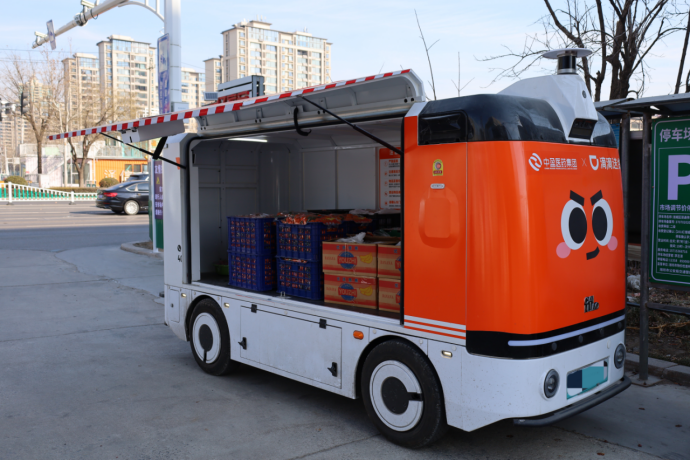
Image source: Didi Delivery, Cainiao Autonomous Vehicles
According to Cainiao’s operational data from the 2025 Spring Festival, only about 30% of couriers could take time off before autonomous vehicle deployment. With autonomous vehicles "covering shifts," this proportion reached 60%. Better holiday policies have also improved stability among logistics workers.
Additionally, Cainiao Autonomous Vehicles and Jishi Intelligence recently announced a deep strategic integration of their autonomous vehicle businesses, with Cainiao becoming a Jishi shareholder through contributions of its autonomous vehicle operations and cash investments.
During the Spring Festival, autonomous driving technologies are validated through real-world applications, while version updates and platform partnerships enhance user experience and credibility. The autonomous driving industry is firing the first shot of the Spring Festival race through unmanned real-world testing.

Epilogue: The Cognitive Battle of the Spring Festival Season
From WeChat red packets kickstarting nationwide mobile payment adoption to the current proliferation of AI Agents, robots, and autonomous driving, the cognitive battles of the Spring Festival season have spanned twelve years.
The essence of these twelve years of cognitive warfare is the struggle to define what users consider "natural" or "obvious."
Just as a decade ago people were unaccustomed to mobile payments and today find manual searches outdated, future generations may view self-driving cars and household robots as inevitable.
However, the Spring Festival season is only the first step in nationwide cognitive penetration. After the brief marketing frenzy, companies must embrace long-termism. Only through sustained effort can the "obvious" perceptions left in users’ minds become the infrastructure of the next decade.
- XINLIU -
-
![]()
Who’s Sounding the Alarm on ‘Rushed Vehicles’?
-
![]()
Over 5.3 Billion Yuan in Losses Over Three and a Half Years! Can Yonyou Reverse Its Fortunes Through Streamlining and AI Transformation?
-
![]()
Baidu AI Adopts Free Model: A Strategic Maneuver in Traffic and Monetization
-
![]()
Silicon-Based OLED Pioneer Unveils Financial Results: H1 Shipments Outpace Entire 2025 Volume
-
![]()
AI's First "Lost Summer"
-
![]()
Zeiss Makes Another €2.2 Million Bet: Will Eye Tracking Be the Next Big Thing in the Smart Glasses Industry?
-
![]()
RUNTO Ranking | Global Top TV ODM Factories' Shipment Figures for July 2026
-
![]()
Dealer Service Operational Prowess | How After-Sales Managers Can Harness Efficiency and Expertise to Secure Trust in the New Energy Era