The Explosive Popularity of OpenClaw: A Look at the Copycats, Most of Whom Are Just Posers
 03/04 2026
 531
531
Amid the Excitement, There’s a Mix of Quality and Mediocrity.
Recently, anyone keeping an eye on AI has surely been inundated with posts about OpenClaw on social media and in chat groups. As an AI agent product showing remarkable potential, it has indeed stirred up the entire industry like a catfish in a pond.
People suddenly realized that agent development isn't exclusive to big corporations—ordinary developers can create agents with the help of AI. So, as has happened many times before in the tech world, opportunistic followers quickly piled on. A dazzling array of agents began to emerge, as if every manufacturer had suddenly mastered the core technology of AI agents overnight.
Some have even compiled a list of five of the hottest open-source AI agents: OpenClaw, ZeroClaw, PicoClaw, NanoClaw, and MemU Bot. Online discussions about these different agents never seem to end. So, the question arises: What sets these agents apart? And what does the future hold for AI agents?
AI Agents: A Diverse Landscape
To be honest, OpenClaw is truly impressive. From its functional design to its application ecosystem, it stands out as the best among open-source agents. Although it has several security issues (because the developers originally intended it for local rather than cloud use), the open-source community has stepped in to address these problems, adding multiple security mechanisms in the latest version.
To compete, other open-source agents have had to differentiate themselves by focusing on three key areas: operational efficiency, operating environment, and security.
ZeroClaw: Extreme Lightweight Design, But Privacy Concerns

Image Source: ZeroClaw
Let’s start with ZeroClaw, developed by the open-source community ZeroClaw Labs. Built using the Rust language, it requires only 5MB of memory to run, making it compatible with extremely low-power microcontrollers and older embedded devices. Its extreme lightweight design allows for a cold start time of under 10ms, and it supports customizable AI personalities to better meet user needs.
In my opinion, ZeroClaw’s strength lies in the smart IoT field. For example, you could integrate it into a smoke sensor, enabling the device to decide on a response plan by combining data from other devices when an odor is detected. However, ZeroClaw relies heavily on cloud computing power, incurring significant additional computational costs and offering a poor user experience when the network is unstable.
For stable use across different scenarios, it’s best to deploy a computing terminal at home to assist with operations. Additionally, ZeroClaw’s application ecosystem is far less developed than OpenClaw’s, meaning many functions require users to solve themselves, necessitating some programming skills. Honestly, when all computation relies on the cloud, user privacy becomes a massive black box—whether you’re willing to trade privacy for convenience is up to you.
PicoClaw: Sacrificing Functionality for Privacy

Image Source: PicoClaw
Next up is PicoClaw, developed by Sipeed. It promotes itself as lightweight and capable of on-device operation, claiming to perfectly protect local privacy and function smoothly even in extreme environments without internet access.
However, PicoClaw sacrifices many features to achieve this. It doesn’t support screen visual recognition or complex GUI automation and lacks large-scale data management capabilities, so don’t expect it to handle tasks like parsing ultra-long documents.
PicoClaw does respond quickly to simple, single-step text commands, but it tends to freeze when faced with multi-step, cross-application tasks, such as extracting data from emails and filling it into a spreadsheet. Thus, it’s mainly suitable for agent needs in older or smaller devices.
What’s most interesting about this agent is that it was almost entirely written and optimized by AI, making it a standard case of “self-evolution” in the open-source community and garnering significant attention.
NanoClaw: Ultra-Streamlined, a “Raw” Version of an Agent
Image Source: NanoClaw
NanoClaw, another rising star, takes lightweight design to the extreme, with core code consisting of just 4,000 lines (or 500 lines in its streamlined version), allowing it to run even on high-performance routers. To achieve this, NanoClaw abandons GUI automation, relying entirely on text commands and structured API calls for interaction.
The downside of this extreme streamlining is that nearly all functionality must be “improvised” by AI, making it practically unusable for ordinary users—only tech experts can handle it. Moreover, finding pre-existing solutions is difficult because NanoClaw’s “raw” nature requires users to first implant corresponding functions into the agent before it can be compatible with applications released by the author.
However, NanoClaw does have one advantage: higher security than other agents, as it compulsory (forces) operation in a sandboxed environment and requires only minimal basic permissions, ensuring it won’t affect the local computer system no matter what.
MemU Bot: An Enhanced OpenClaw, But Security Concerns Remain
Image Source: MemU Bot
MemU Bot, on the other hand, enhances OpenClaw’s long-term memory and user profiling capabilities while integrating the MCP protocol, boasting an application ecosystem comparable to OpenClaw’s and even simpler deployment.
Moreover, MemU Bot is more proactive, offering suggestions based on the user’s current work. But does it have no drawbacks? Of course not. Its main issues are high demands on local device performance and cloud computing power.
Since all long-term memory data is stored locally, scanning and contextual detection slow down its operational efficiency as usage time increases, potentially dragging down device performance. Additionally, its cloud computing power usage is two to three times that of OpenClaw, resulting in very high computational costs.
Furthermore, its excessive permission requirements leave users with almost no privacy, and a breach could lead to significant privacy leaks. Meanwhile, MemU Bot’s core code isn’t fully open-source, exacerbating concerns about its security and privacy.
Which Agent Is Right for You?
After examining these agents, I believe the core consideration is how well the usage cost aligns with actual business scenarios. If you’re an ordinary user simply needing a lightweight personal assistant to auto-reply to messages and organize daily tasks in the background on your phone, an on-device product like PicoClaw might suffice.
It doesn’t require expensive API fees and can run on local computing power alone. In extreme cases, even your phone’s NPU can handle its inference needs. However, the results in such scenarios are only suitable for highly error-tolerant daily pseudo-needs.
In high-demand professional scenarios, the experience with local small models will likely make you want to throw your computer out the window. So, for enterprise users or those looking to use agents for important decision-making data and assistance, cloud-powered agents like ZeroClaw or OpenClaw are better choices.
Although computational costs are high, they’re not unreasonable for a productivity tool. Some users’ expectations of low-cost or zero-cost agent deployment are somewhat unrealistic. Unless you have extremely low or no quality requirements for the agent’s work, accessing cloud computing power remains the low-cost, high-quality option.
For general users, I still recommend OpenClaw first, as it has the most complete ecosystem and is easier to use, with readily available support from peers when issues arise. For tech enthusiasts who enjoy tinkering or have special needs, experimenting with the other agents mentioned above could provide a unique experience.
The Agent Wars: Most Are Just Posers?
Since OpenClaw’s explosive popularity, the agent field has entered a period of rapid development, reminiscent of the earlier “Hundred-Model Wars.” However, the key difference is that the “Hundred-Model Wars” focused on benchmark scores and parameter counts, while the agent wars are about helping users “get things done” more effectively—a fundamental distinction.
Some media outlets describe agent development as simply an upgraded version of AI models, which is inaccurate. The shift from traditional AI large models to true agents involves no significant changes in computational power or model parameters but fundamentally alters underlying scheduling and human-computer interaction logic.
Previous AI large models, no matter how impressive their benchmark scores, were essentially “brains in a jar”—passively receiving information and providing feedback without interfering with the physical world. Agents, however, equip the “brain” with limbs and eyes, enabling AI to understand users’ vague intentions and even autonomously call upon resources, evolve, and discuss task solutions.
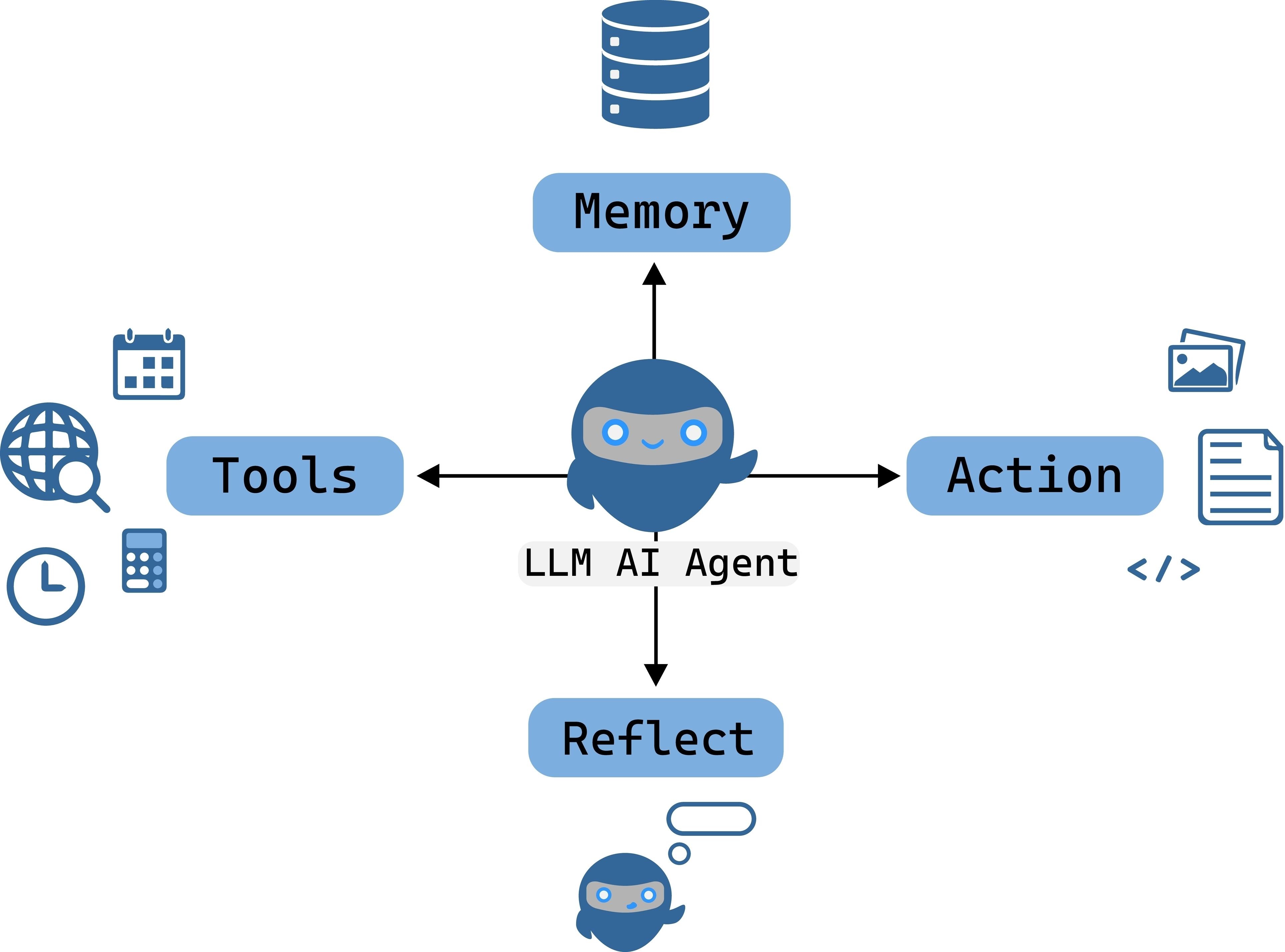
Image Source: Leikeji
If you grant it more authorization, it could even directly operate robotic arms. However, some argue that current agents aren’t truly “intelligent” and are essentially just tools applying a new underlying logic with API interfaces. This viewpoint isn’t entirely wrong, as the true hallmarks of an agent are autonomous task planning, long-term state memory summarization, and self-reflective mechanisms.
While the first two are already seen in OpenClaw and MemU Bot, the third is the most critical. For an agent to operate entirely autonomously without management, it must handle unknown errors and derive methods to resolve or avoid them without user intervention.
I recall a widely circulated quote from OpenClaw developer Peter Steinberger: “I didn’t teach it how to do it; it judged the need and learned on its own.” This led to some misunderstandings. In reality, Peter’s computer had the corresponding API tools installed, so OpenClaw autonomously wrote the call commands based on demand and then replied.
Thus, OpenClaw hasn’t achieved true “creation from nothing”—it still plans and executes based on certain logic. The difference is that users delegate more permissions, allowing it to make more autonomous decisions without waiting for “next step” prompts.
The Future of Agents: Toward Operating Systems
Even so, this is enough to herald a global reshaping of productivity tools. The mass emergence of agents signifies a complete revolution in traditional human-computer interaction, which has persisted for decades. Imagine no longer needing to invest tremendous effort in learning complex software operations—agents can now handle those tedious, repetitive, and mundane tasks for us.
Similar claims were popular when AI large models first appeared, but ultimately, users still had to upload data or text and teach AI step by step, often taking longer than doing it themselves, leading many to abandon the effort. Agents solve this problem—now, we only need to pose a question and wait for an answer, or “teach” it once and never have to intervene again.

Image Source: Leikeji
Interestingly, while browsing agent-related news, I saw many peers claim that agents will disrupt the application ecosystem, rendering “apps obsolete.” Honestly, this seems unrealistic—you can’t have agents improvise an application for every task, as it would consume massive computational power and likely perform worse than stable, years-old apps. Agents simply eliminate manual operation.
Instead of trying to replace all apps, it’s more plausible for agents to become compatible with all apps and eventually replace operating systems. In my view, as agents evolve further, more enterprises will enter the field and push agents toward becoming operating systems, as this essentially involves users ceding advanced permissions for greater autonomy.
Under this premise, building an agent directly as a system is the simplest approach—it inherently has the highest permissions and can address security issues from the ground up. I suspect this is why Peter Steinberger ultimately chose to join OpenAI rather than other companies; OpenAI had already announced its efforts to develop an AI operating system, and their visions likely aligned.
If agents become operating systems, we might truly “free our hands,” obtaining desired results with simple commands. However, the question remains: Do we really want AI to completely control our lives? This is a deeper issue worth pondering.
AI Agent OpenClaw
Source: Leitech
The images in this article are from: 123RF Royalty-Free Image Library
-
![]()
Doubao Work Unveiled! Domestic AI Leaders Fully Commit to the 'Work' Sector
-
![]()
Who’s Sounding the Alarm on ‘Rushed Vehicles’?
-
![]()
Over 5.3 Billion Yuan in Losses Over Three and a Half Years! Can Yonyou Reverse Its Fortunes Through Streamlining and AI Transformation?
-
![]()
Baidu AI Adopts Free Model: A Strategic Maneuver in Traffic and Monetization
-
![]()
Silicon-Based OLED Pioneer Unveils Financial Results: H1 Shipments Outpace Entire 2025 Volume
-
![]()
AI's First "Lost Summer"
-
![]()
Zeiss Makes Another €2.2 Million Bet: Will Eye Tracking Be the Next Big Thing in the Smart Glasses Industry?
-
![]()
RUNTO Ranking | Global Top TV ODM Factories' Shipment Figures for July 2026