xAI: The Most Striking ‘Founding Team Overhaul’ in Tech History! A Mass Exodus of AI Talent!
 04/03 2026
 504
504
As of Beijing Time on March 29, xAI, a prominent AI company in the United States, confirmed that all 11 members of its founding core team have departed, with the exception of the actual controller and major shareholder, Musk. This departure rate stands at a staggering 100%.
In reality, the disbandment of xAI’s founding team unfolded gradually over several months. Key departures commenced in late 2025, including Igor Babuschkin, a pivotal member of the Grok team, and Christian Szegedy, the creator of Inception, who exited earlier in the year.
Subsequently, in January 2026, Greg Yang, the mastermind behind Grok’s architecture, left the company. Jimmy Ba, the brainchild of the Adam optimizer, followed suit in February. March witnessed the final exodus, with core researchers Zihang Dai and Guodong Zhang, the head of Grok Code, Manuel Kroiss, the leader of pre-training, and Ross Nordeen, the last remaining COO (hailing from Tesla’s inner circle), all departing within the same month.
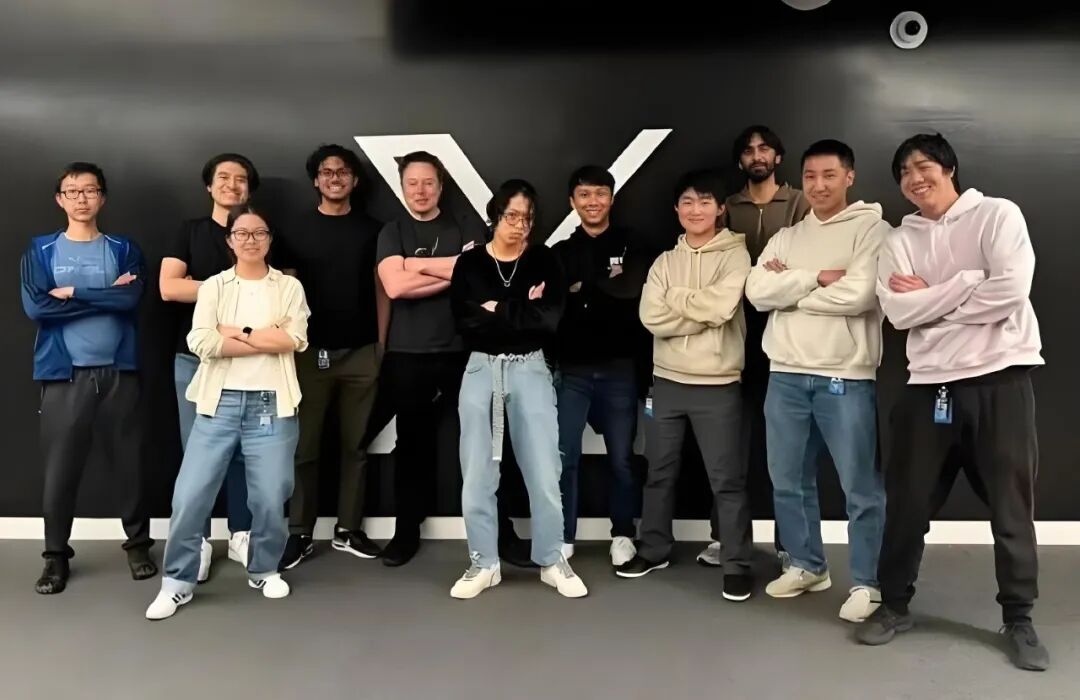
Musk’s complete revamp of xAI’s founding team is in line with his reputation for swift and decisive action, often likened to that of a ‘tyrant’. After all, he famously made a grand entrance into the Twitter office, carrying a sink, to announce massive layoffs following the company’s acquisition. Notably, Twitter was rebranded as X and merged with xAI in 2025.
It’s also noteworthy that xAI was acquired by SpaceX in February, a move typically aimed at preserving the relative stability of the founding team in such acquisitions.
However, all these entities are under the same umbrella: Musk’s.
Given Musk’s authoritative leadership style, the complete overhaul of xAI’s founding team comes as no surprise.
Musk explained that ‘xAI was not built correctly from the outset, so it’s now being rebuilt from scratch.’ Consequently, xAI is on a hiring spree, even reconsidering candidates it had previously overlooked.
The AI sector has always been characterized by high turnover rates, reflecting the fierce competition within the industry. Even core teams that fall short of expectations are not spared. This trend is evident in OpenAI, the sector’s most sought-after and highest-valued company.
OpenAI, boasting a valuation exceeding $800 billion, has also witnessed a remarkable exodus among its founding team. Out of 11 founding members, 9 have left, marking an 82% turnover rate. Nevertheless, the steadfast duo of Altman and Brockman has ensured that its commercialization progress continues to attract investor interest and top talent.
Anthropic, with a valuation second only to OpenAI, currently boasts the most stable founding team. However, out of its 7-member founding team, 5 hail from OpenAI, and none of these 7 have departed yet.
When compared to the staggering turnover rates among founding teams at startups, AI teams at tech giants are no exception.
Let’s begin with Apple. Apple’s AI development has been sluggish, with Siri’s internal development failing to meet expectations. It once partnered with OpenAI but has since adopted a new strategy: Siri will evolve into an AI distribution platform, theoretically enabling it to collaborate with all AI companies. This strategy aligns with Apple’s ecosystem and remains effective as long as iPhone sales remain robust.
Apple’s AI shortcomings have also triggered a mass exodus from its AFM foundational model team. Notably, Ruoming Pang, who was lured away by Meta with a staggering $200 million salary in July 2025, left for OpenAI in February 2026. Additionally, over a dozen core researchers, including Bowen Zhang and Nan Du, have migrated to companies like Meta, OpenAI, and Anthropic.
Next, let’s turn our attention to Google. Google’s AI core can be divided into two major segments. All eight authors of the Transformer architecture have departed: Ashish Vaswani, Noam Shazeer, Niki Parmar, Jakob Uszkoreit, Llion Jones, Aidan N. Gomez, Łukasz Kaiser, and Illia Polosukhin.
Moreover, over 50 core members from renowned projects like DeepMind and Google Brain have also left. This includes Jeff Dean, often hailed as the ‘godfather of Google AI,’ who exited as early as 2024 when Google’s Gemini was outperformed by OpenAI’s ChatGPT. Geoffrey Hinton, known as the ‘godfather of deep learning,’ retired in 2023. DeepMind’s CEO, Demis Hassabis, along with luminaries like Oriol Vinyals, Raia Hadsell, and Ian Goodfellow, have also departed. Talent has similarly flowed to companies like OpenAI and Anthropic.
However, Google’s latest Gemini model has delivered outstanding performance, coupled with its in-house TPU chips and Google Cloud services. Google’s full-stack AI capabilities have been recognized by the market, with its valuation once surpassing Apple’s and ranking second globally, second only to Nvidia.
Meta has been particularly eye-catching, as Zuckerberg frequently dangled multi-million-dollar salary packages in 2025 to poach talent, spurred by the departure of Meta AI’s core team.
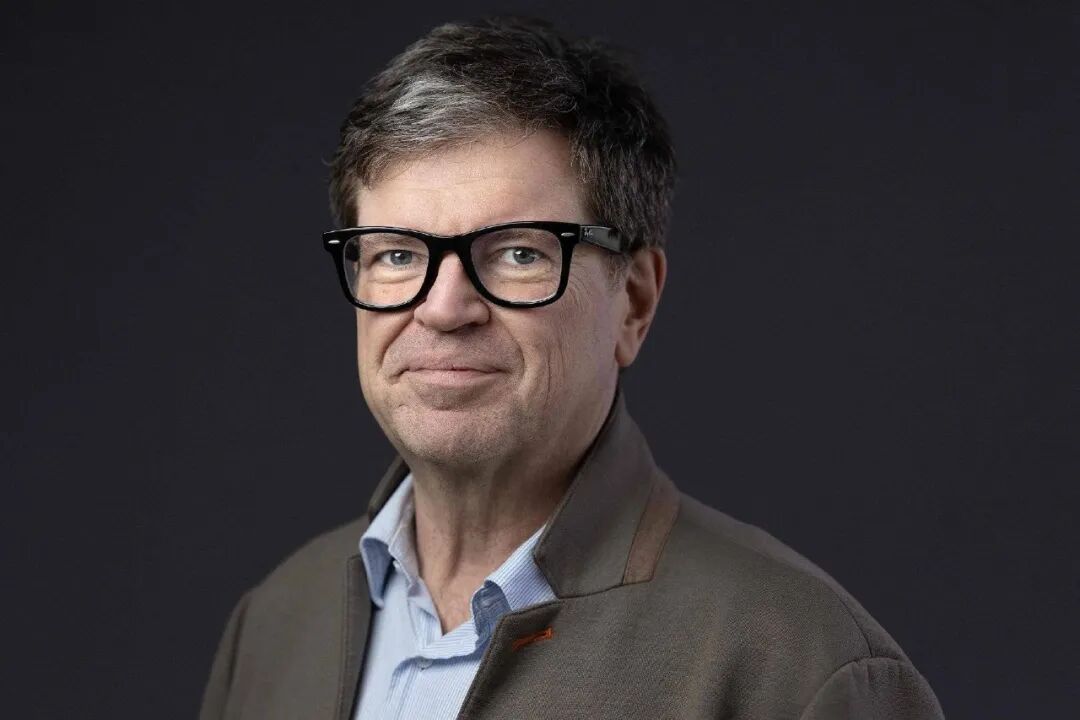
This includes Turing Award winner Yann LeCun, who left to embark on his own venture in December 2025.
Among the other core Llama team members, 11 out of 14 paper authors have left, marking a 78% turnover rate. Hugo Touvron, Xavier Martinet, and Faisal Azhar remain. Guillaume Lample and Timothée Lacroix founded Mistral AI, Armand Joulin joined Google’s DeepMind, and the rest migrated to OpenAI or other startups.
All executives from the FAIR lab have left, and the ‘golden generation’ of computer vision has largely dispersed.
Overall, in the United States, where AI competition is most fierce, except for Anthropic’s core team remaining stable, all other teams—whether at tech giants or startups—have undergone dramatic personnel changes.
On one hand, this may be attributed to the intense competition, where failure to meet expectations leads to resignations. On the other hand, AI talent today comprises highly individualistic professionals, making team cohesion a formidable challenge.
Talent mobility in the AI era far surpasses that of any previous era. Perhaps this fluidity is essential for the rapid iteration of this disruptive innovation technology. Every talent serves as a catalyst in AI’s evolution, burning brightly in one endeavor or dedicating all their abilities in another.
Ultimately, they collectively propel AI’s development, even refining artificial general intelligence (AGI) in the process.
-
![]()
The Allure of 'Acquisition Spree': Li Shufu's Left Turn, Xu Jiayin's Right
-
![]()
Strategic Transformation Yields Results: Phoenix Optics Reports 10.9% YoY Rise in Core Net Profit for H1 2026
-
![]()
Three Key Growth Trajectories Synergize! Crystal-Optech Reports 3.478 Billion Yuan in Revenue for H1 2026
-
![]()
Semi-Annual Report Sparks XPENG Motors Buzz
-
![]()
1.6 Billion Big Order Secured! SeeYA Technology's Revenue Soars by 287.87% in the First Half of the Year
-
![]()
Baidu's Profits Plunge by 68%: Unraveling the Mystery Behind the Numbers
-
![]()
Baidu’s Profits Tumble by 68%! Where Has All the Money Gone?
-
![]()
Hynix’s Taobao Store Shuts Down Abruptly: What Should Customers Do About Warranty Services for Memory Modules?