Complaints Triple: What’s the Future Direction of Intelligent Driving?
 04/03 2026
 551
551
In early 2026, data released by the China Consumers Association drew significant attention across the automotive industry. The figures showed a 237% year-on-year surge in complaints about intelligent driving functions during the third quarter of 2025, with annual complaints about intelligent assisted driving systems soaring by 300% compared to the previous year.
What does a threefold increase in complaints indicate?
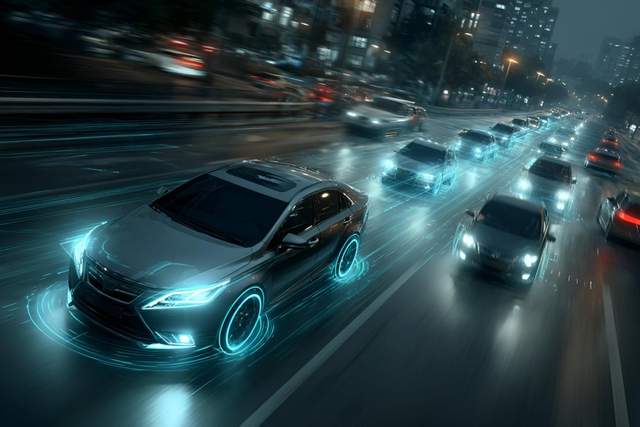
Behind every complaint statistic is a real consumer. These individuals eagerly paid a premium for "intelligent" features, only to encounter unexpected issues during daily use. When marketing claims about intelligent driving don't match real-world performance, and when new technologies fail to deliver on their promises, consumer complaints become the most direct evidence of this disconnect.
So, what controversies lie behind this threefold increase in complaints? Why has intelligent driving shifted from a competitive advantage to a source of frustration for many vehicle owners?
The Gap Between Promotional Claims and Real-World Performance
Visit any major automaker's official website or new energy vehicle showroom, and intelligent driving features are prominently highlighted as key selling points.
Before April 2025, terms like "urban navigation" and "autonomous driving" were repeatedly emphasized, accompanied by carefully crafted promotional videos showcasing near-fully automated driving scenarios. However, when consumers drive these vehicles home and activate these functions during daily commutes, the experience often falls far short of expectations.
Let's explore several common scenarios frequently mentioned in owner complaints.
The first issue is "phantom braking." Many intelligent driving users have experienced this: while driving steadily on a highway with clear roads ahead, the system suddenly triggers an alarm and applies heavy braking, causing the vehicle to decelerate sharply. Occupants are jolted, and rearview mirrors reveal following vehicles swerving to avoid a collision—despite no actual obstacles requiring braking.

The second problem is "lane weaving." Many intelligent driving systems perform adequately on highways with clear lane markings and simple road conditions. However, when encountering faded lane lines, road repair patches, or dramatic lighting changes (such as entering or exiting tunnels), vehicles begin swaying laterally within lanes, unable to maintain stable progress.
Beyond these specific functional issues, consumers face greater confusion due to dramatically different descriptions of intelligent driving levels across automakers. For the same L2-level assisted driving, some companies market it as an "autonomous driving assistance system," while others modestly label it a "driving assistance function." Such naming discrepancies easily mislead ordinary consumers into believing they're purchasing "autonomous driving" capabilities when they're actually getting "assisted driving."
Why does this gap between promotion and reality exist?
From a technical standpoint, intelligent driving functions are typically tested and validated in relatively ideal environments. Whether in closed test facilities or specific urban routes, testing conditions are carefully selected to avoid numerous "edge cases." In real-world daily use, however, those infrequent but genuinely complex road scenarios become the norm. Faded road markings, construction detours, adverse weather, and erratically moving vehicles—situations rarely shown in promotional videos—are daily challenges for users.
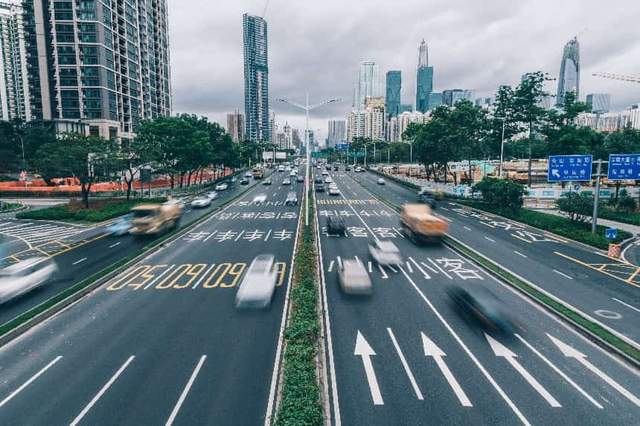
Moreover, intelligent driving technology remains in a transitional phase "from assistance toward high automation." In terms of perception capabilities, although vehicles now equip more cameras, millimeter-wave radars, and LiDAR sensors, the system's recognition and judgment remain imperfect when facing the infinite complexity of real-world scenarios. Regarding decision-making, algorithms must balance safety, efficiency, and comfort while making optimal choices across different scenarios—a challenging trade-off.
Commercially, intelligent driving has become a core differentiator in automakers' competition. In fierce market rivalry, no company wants to lag in this area. When one company uses "advanced intelligent driving" as an attention-grabber, others must follow suit to avoid appearing inferior in consumer comparisons. This competitive dynamic objectively raises promotional "ceilings."
Consumer expectations are continually elevated within this promotional environment. Having spent tens of thousands on intelligent driving options, they naturally anticipate experiences matching the promotions. When reality falls short, disappointment and complaints become inevitable.
However, consumer complaints extend beyond the disconnect between promotion and technology.
The Survival and Demise of Companies in the Intelligent Driving Boom
If the first two issues fall within technical or commercial domains, the third controversy proves more pragmatic and harsh: some consumers who purchased intelligent driving functions find their vehicles remain, but the companies that promised intelligent driving services have vanished.
In 2025, the intelligent driving industry underwent significant consolidation. Suppliers like Wumo Zhixing (Haomo.ai) gradually exited the market due to capital chain ruptures and business restructuring.
For ordinary consumers, intelligent driving isn't a one-time hardware delivery but a service requiring continuous maintenance and updates. When intelligent driving solution providers collapse or halt operations, consumers face multiple dilemmas.
The most immediate impact is interrupted OTA updates. Systems remain stuck on outdated versions, with existing problems unfixed and promised new features never delivered. Moreover, if cloud services depend on the supplier's servers, their shutdown could directly disable certain online functions.
Next comes maintenance challenges. Intelligent driving systems involve specialized hardware like cameras, radars, and domain controllers, typically sourced from specific supplier models. When suppliers halt production, spare parts become scarce. Some owners report that when their vehicle's intelligent driving module malfunctions, 4S stores cannot obtain original supplier parts, leaving repairs indefinitely delayed.

Third is functional depreciation. Consumers paid extra for intelligent driving capabilities, which included future service value. When services terminate, this investment evaporates. In the used car market, vehicles with failed (disabled) intelligent driving functions suffer significant residual value declines.
Who should bear responsibility for this?
Legally, automakers—as vehicle sellers—hold ultimate responsibility to consumers. Even when intelligent driving solutions come from third-party suppliers, consumers establish purchase relationships with automakers. However, when suppliers collapse, automakers face enormous cost and supply chain pressures, making it difficult to independently shoulder all remediation responsibilities.
Industry-wise, rapid development and fierce competition in intelligent driving inevitably involve survival of the fittest. This represents market law, but consumer rights shouldn't become casualties of market fluctuations. How can mechanisms be established to ensure basic intelligent driving functionality for sold vehicles even after suppliers exit? No mature solutions currently exist.
This means consumers selecting vehicles with intelligent driving should evaluate not just the technology but also supplier stability and sustainability.
Intelligent Driving: A Marathon Race
When analyzing the surge in intelligent driving complaints, an objective factor cannot be ignored: changing user bases.
In 2025, China's new energy vehicle (NEV) penetration rate continued climbing. The L2 installation rate in NEVs exceeded 77%, with highway NOA approaching 50%. This means the user group for intelligent driving functions expanded rapidly.
As more people use a function, complaint volumes increase even if problem ratios remain constant. If problem ratios also rise, complaint growth accelerates further.
Data shows 2025's intelligent driving complaint growth rate significantly outpaced NEV sales growth during the same period. This indicates problem probabilities genuinely increased beyond base expansion effects.
Alongside expanding user bases, user demographics shifted. Early intelligent driving adopters were mostly tech enthusiasts with high tolerance for new technologies and better understanding of functional limitations. Now, more ordinary consumers use intelligent driving.
Their technological literacy varies widely, as do their expectations for functional performance. When a technology moves from niche to mainstream, increased complaints become almost inevitable.
This leads to a broader perspective: intelligent driving development essentially represents a marathon from laboratories to real-world applications, from niche tech to mass consumer products.

On this marathon course, we witness fierce market competition as automakers escalate promotional claims to secure intelligence leadership. We see technological iteration challenges, as intelligent driving must overcome countless edge cases to progress from "usable" to "user-friendly." We observe industry consolidation's brutality, as not all participants reach the finish line. We also watch consumer expectations evolve from initial novelty and enthusiasm toward critical examination during actual use.
From this viewpoint, increased complaints represent normal market feedback as technology moves from geek circles to mainstream adoption. This doesn't indicate industry misdirection or technological regression.
It merely shows that in this marathon, intelligent driving still has a long journey toward true "autonomous driving." Along the way, technological refinement requires time, standards and regulations need gradual establishment, and consumer cognition and expectations must continually recalibrate through practical experience.
-
![]()
The Allure of 'Acquisition Spree': Li Shufu's Left Turn, Xu Jiayin's Right
-
![]()
Strategic Transformation Yields Results: Phoenix Optics Reports 10.9% YoY Rise in Core Net Profit for H1 2026
-
![]()
Three Key Growth Trajectories Synergize! Crystal-Optech Reports 3.478 Billion Yuan in Revenue for H1 2026
-
![]()
Semi-Annual Report Sparks XPENG Motors Buzz
-
![]()
1.6 Billion Big Order Secured! SeeYA Technology's Revenue Soars by 287.87% in the First Half of the Year
-
![]()
Baidu's Profits Plunge by 68%: Unraveling the Mystery Behind the Numbers
-
![]()
Baidu’s Profits Tumble by 68%! Where Has All the Money Gone?
-
![]()
Hynix’s Taobao Store Shuts Down Abruptly: What Should Customers Do About Warranty Services for Memory Modules?