Can Huang Renxun’s Last-Minute China Trip Ease NVIDIA’s Growing Concerns?
 05/20 2026
 585
585
Layout | Xiaoxi
Just days ago, NVIDIA CEO Huang Renxun was making bold statements in Los Angeles, asserting, “We can’t supply China with our most advanced chips.” Yet, shortly thereafter, he was spotted in Beijing’s backstreets, donning a “pained expression” after sampling traditional Beijing fermented mung bean juice—a striking transformation that captivated global audiences.
On May 13th, Huang Renxun, initially absent from the White House’s announced list of visitors to China, boarded a plane at the eleventh hour while Trump’s “Air Force One” stopped for refueling in Alaska. Over the next two days, social media was inundated with photos and videos of Huang enjoying a 38-yuan bowl of Zhafangchang Fried Sauce Noodles and giving a thumbs-up while holding a 7-yuan Mixue Ice Cream & Tea in Nanluoguxiang.
 ▲ Note: Image sourced from Daxiang News.
From the political and business intrigues of Washington to the everyday scenes of Beijing’s alleys, was this dramatic CEO performance an olive branch extended by the U.S. to ease chip export restrictions, or a proactive move by a multinational giant to safeguard its own interests? NVIDIA, once “printing money” through technological monopolies, may now be standing at a critical juncture in its fate.
| NVIDIA’s Market Share Plummets to Zero Amid Hidden Performance Concerns |
Why did Huang Renxun rush to Beijing at the last minute? To grasp this, we must look beyond NVIDIA’s multi-trillion-dollar market cap halo and confront the harsh realities it faces in the Chinese market.
Plagued by stringent and escalating U.S. export control policies, NVIDIA is experiencing a precipitous collapse in the world’s largest single market, which once accounted for a fifth of its revenue. Its market share for high-end AI training chips in China has plummeted from a near-monopoly 95% to zero.
Washington initially aimed to “choke” China’s access through physical supply cuts but inadvertently severed NVIDIA’s cash flow.
Around the time of Huang’s visit, the U.S. Department of Commerce seemingly extended an olive branch by announcing the approval of H200 chip exports to 10 Chinese tech giants, including Alibaba, Tencent, ByteDance, and JD.com, with a purchase cap of 75,000 chips per company. However, market feedback was icy—China’s official preliminary list of economic and trade consultation outcomes did not even mention chips.
China’s “rejection” stems from a clear understanding of the U.S.’s intentions behind the easing.
The specially approved H200 chips come with stringent conditions: the U.S. government demands a hefty 25% “toll fee,” amounting to approximately $560 million for 75,000 chips—an unfair trade term. Given recent technological security incidents, Chinese tech companies remain wary of potential risks associated with these specially approved chips.
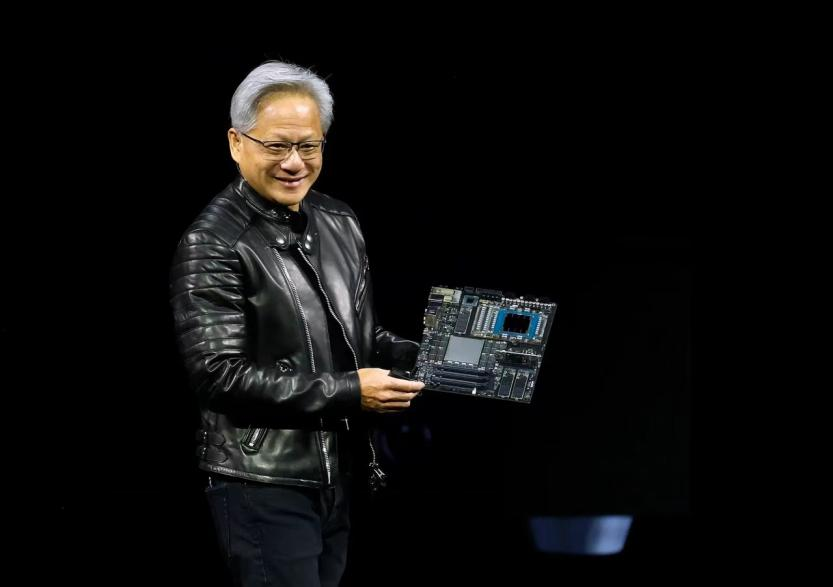
From a technological lifecycle perspective, while the H200 remains powerful, its “prime” is nearing its end. With NVIDIA having already released the more powerful Blackwell architecture and the revolutionary Rubin architecture set for mass production later this year, the H200 has, to some extent, become a previous-generation product.
 ▲ Note: Image sourced from GeekPark.
Purchasing these at high prices while paying substantial “protection fees” inevitably makes Chinese companies question whether they are becoming “chumps helping the U.S. clear inventory.”
Capital markets are highly perceptive. Driven by expectations of Trump’s visit to China, the market once anticipated a thaw in Sino-U.S. relations in AI computing power, leading to an epic seven-day rally in NVIDIA’s stock price, with its market cap surging by over $900 billion, nearing an unprecedented $6 trillion.
However, as news of China’s apparent “rejection” spread, coupled with global inflation concerns triggered by soaring crude oil prices and heightened vigilance over an AI bubble, NVIDIA’s stock plummeted by 4.42% on May 15th.
Hanging precariously, NVIDIA’s trillion-dollar market cap is now under pressure ahead of its May 20th “earnings report.”
NVIDIA’s 2026 fiscal year proxy statement filed with the U.S. Securities and Exchange Commission reveals that Huang Renxun’s total compensation for the fiscal year is $36.3 million, a significant 27% year-over-year decrease, amounting to approximately $13.6 million less. Notably, the equity awards, which constitute the bulk of his compensation, plummeted by 36%.
Despite the company’s market cap reaching record highs and securing its position as the world’s most valuable enterprise, the CEO’s compensation has declined markedly. NVIDIA employs a high-equity, low-cash compensation structure, deeply tying executives’ interests to the company’s stock performance and long-term results. Thus, Huang’s compensation reduction serves as a warning from capital markets about NVIDIA’s slowing growth.
As explosive quarterly growth rates face challenges from high bases and Wall Street analysts continually raise earnings-per-share expectations, NVIDIA is trapped in a “failing to exceed expectations equals failure” valuation nightmare.
Externally, it faces the complete loss of the Chinese market and the embarrassment of a lukewarm response to “special approval” easing. Internally, it contends with Wall Street’s pressure on its lofty market cap. Huang’s urgent visit to China is essentially an ice-breaking mission aimed at easing growth anxieties.
| Domestic Ecosystems Continue to Break Through, Computing Power Hegemony Faces Disintegration |
Huang’s anxieties stem not only from internal challenges but also from the substitution wave in China’s AI industry. The U.S. initially aimed to lock China’s AI in a backward era by cutting off high-end chip supplies but clearly underestimated China’s resilience and systemic engineering capabilities in the global industrial chain.
After all, computing power is not just a competition of transistor density on a single silicon chip; it’s a comprehensive battle involving energy, networking, cooling, and system scheduling.
While single-point chip manufacturing processes cannot quickly bridge gaps in the short term, China has chosen a “heavy industry computing power” route with local characteristics to break through. Leveraging the world’s leading power generation capacity, ultra-high-voltage grid transmission networks, and new infrastructure coordination capabilities, China uses systemic stacking to compensate for single-card performance deficiencies.
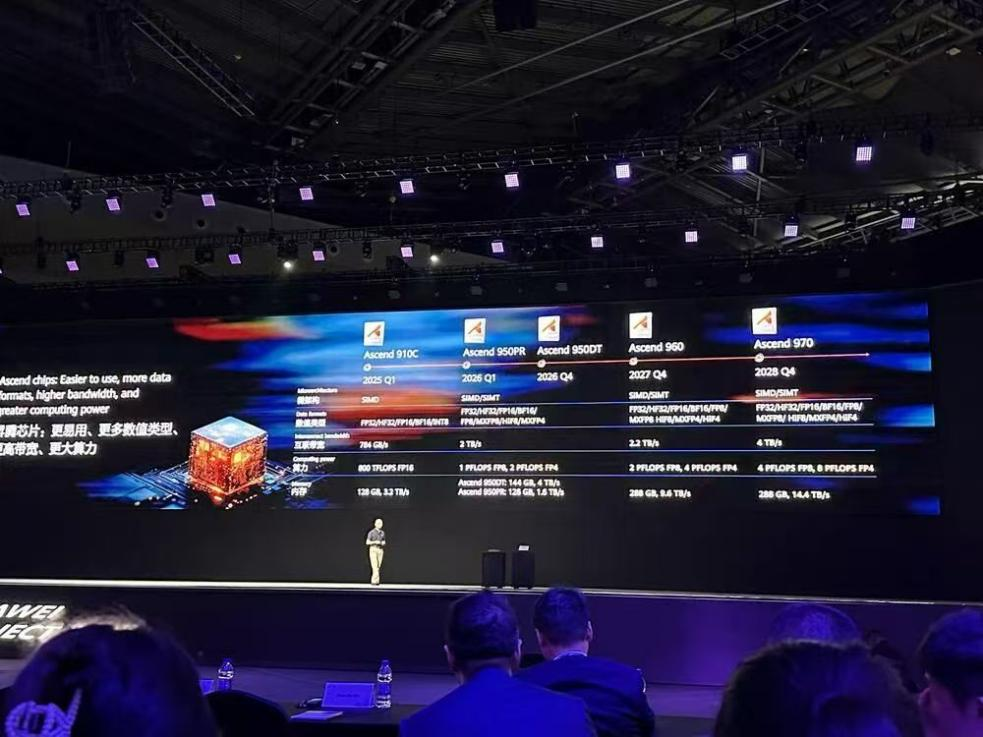
Domestically, not only have flagship products like Huawei’s Ascend 910C/950PR emerged, which can rival the H200 in certain scenarios, but domestic accelerators such as Biren Technology’s BR100, Pingtouge’s Zhenwu 810E, and Moore Threads’ C500 are also making significant strides in their respective verticals.
 ▲ Note: Image sourced from Financial Associated Press.
As the large model battle enters the application deployment phase, the trend of “selling Tokens” has begun sweeping the global AI industry. Cost-effective local computing power bases have enabled Chinese tech giants to not only win the computing power price war domestically but also embark on a journey to export Tokens globally.
However, the competition over chips and computing power is just the first step. NVIDIA’s deepest moat is its monopoly over the CUDA software ecosystem, which has dominated global AI developers for over a decade.
CUDA is like the Windows operating system of the AI era. Over the past decade, AI scientists and algorithm engineers worldwide have become accustomed to coding and calling library functions in a CUDA environment. The migration costs and risks of abandoning familiar toolchains for a new underlying architecture are prohibitively high for any commercial company.
But U.S. sanctions have compelled Chinese companies to embark on a new exploration of software ecosystems.
In the technical report of DeepSeek’s latest-generation trillion-parameter model, DeepSeek V4, the team spent months rewriting hundreds of thousands of underlying operators to eliminate absolute dependence on CUDA. They successfully migrated the large model’s training and inference base to Huawei’s Ascend NPU and CANN Next software stack on a large scale and smoothly.
This represents not only a complete replacement of hardware devices but also a “power grab” of the underlying software ecosystem. After migration, combined with compression algorithms like DeepSeek’s pioneering MLA, its measured single-card inference performance reached 2.87 times that of NVIDIA’s H20, while the total deployment cost was about one-third of NVIDIA’s solution.
In a deep April interview, Huang Renxun admitted with slight concern that “models like DeepSeek running first on Huawei’s chips” would be a “catastrophic moment.”
Now, the scenario he feared is not only happening but has also become a consensus in China’s AI industry. As Chinese large models are forced to develop full-stack capabilities independent of CUDA, NVIDIA stands to lose not only hardware orders but also the standard-setting power for the future global AI ecosystem.
| A New Global Competitive Landscape: How Will NVIDIA Respond? |
Due to U.S. technological barrier policies, the global AI computing power base is being increasingly divided into two parallel standard systems: one is the Western technology stack centered on NVIDIA’s CUDA, dominating developed markets; the other is an emerging technology stack characterized by “restricted chips + system interconnection + algorithm optimization + independent software ecosystems” from Chinese companies.
As China’s autonomous AI ecosystem continues to mature iteratively, this cost-effective, supply-chain-supported, and open-source technology system will not confine itself to the Chinese market.
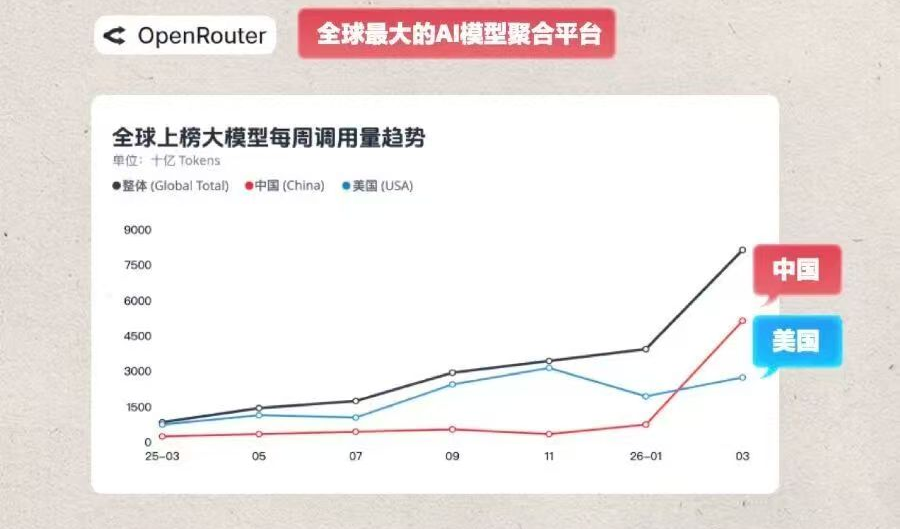
According to OpenRouter platform data, since March 2026, AI large model invocations contributed by China have frequently surpassed those from the U.S. in top global communities, becoming a driving force for intelligent transformation in regions like the Middle East’s wealthy funds, Southeast Asia’s emerging markets, and Global South countries in Latin America and Africa eager for digital transformation but with limited budgets.
 ▲ Note: Image sourced from 21st Century Business Herald.
In the past, NVIDIA could easily achieve global technological dumping by relying on generational technological advantages, “earning money effortlessly” without any substantial competitors.
But now, the golden age of global dominance has ended. The two technology systems will engage in a fierce global standard competition, spanning from underlying chip interfaces and operator libraries to upper-layer AI agent protocols, with competition permeating every aspect.
Facing this unavoidable century-defining transformation, Huang Renxun knows that traditional computing power resale logic can no longer satisfy Wall Street’s appetite. At this year’s GTC conference, he began promoting grander narratives like “AI factories,” arguing that AI has transcended the mere training era and fully entered the age of agent-based intelligence for inference.
As AI evolves from simple Q&A to intelligent agents capable of autonomous thinking, tool invocation, and cross-application task execution, the number of Tokens consumed will skyrocket hundreds or thousands of times. To support this exponentially exploding computational demand, the world must invest trillions of dollars in building new AI factories on top of existing data centers.
By igniting an inference computing power tsunami, Huang Renxun attempts to prove that NVIDIA’s growth ceiling is far from being reached, thereby sustaining capital markets’ fervent belief.
On the other hand, returning to this visit to China that has sparked countless speculations, Huang’s contrasting, flexible posture represents a highly astute strategic maneuver in response to subtle shifts in industrial power dynamics.
He understands better than anyone that China’s AI ecosystem’s complete detachment from CUDA is a gradual process. Intervening before the two technology universes become completely isolated and incompatible aims not to restore NVIDIA’s 95% monopoly but to maintain a limited market presence, extend goodwill, and as much as possible rally Chinese tech giants and developers.
Even if it only delays the speed at which China’s AI ecosystem completely breaks free from NVIDIA’s system, keeping some Chinese companies reliant on NVIDIA’s advanced architectures for multimodal and ultra-large model training buys time for NVIDIA.
In reality, the true focus of NVIDIA’s future trajectory lies not in whether Huang Renxun boarded Air Force One’s gangway during this visit or whether the U.S. Department of Commerce’s politically calculated old card export quotas ultimately materialize.
After the old era of “winning effortlessly while closing eyes” has passed, finding new moats and survival rules in the new landscape is the ultimate question the trillion-dollar empire’s helmsman must answer.
Image sourced from the internet. Rights reserved for the original author.
-
Insta360 Faces Domestic NPE Lawsuit: Hunted Abroad, Ambushed at Home?
-
Ofilm Teams Up with ADSensE to Propel Large-Scale Deployment of All-Solid-State LiDAR Powered by ADS6311 Chip!
-
![]()
Loss of 2.5 Billion Yet Facing Strong Demand for Shares? Another Battle for Control of Lianchuang Electronics
-
![]()
Huawei’s Enjoy Series Flies Off the Shelves, Prompting Xiaomi to Double Down on Budget Smartphones
-
![]()
Beijing Hyundai's Top Executive Criticizes Industry Disorder: Certain Brands Treat Customers as Beta Testers
-
![]()
The domestic mobile phone market has declined for five consecutive quarters! Huawei defies the trend with significant growth: maintains its top market share
-
Annual Revenue Surpasses 3 Billion: An Automotive Trim 'Little Giant' Makes Its Debut on the Beijing Stock Exchange
-
![]()
The Space Force Wants to Spend $30 Billion on Rocket Launches: Is Trump Doubling Down, and Is SpaceX the Big Winner?