Humanoid Robots Now Have a 29-Character "Digital ID"!
 05/22 2026
 493
493

This is the 63rd original article from the Thinking AI Club.
Approximately 1639 words in total, with an estimated reading time of 5 minutes.
On May 11th, the Hubei Humanoid Robot Innovation Center announced the official opening of registration for "digital IDs" for humanoid robots.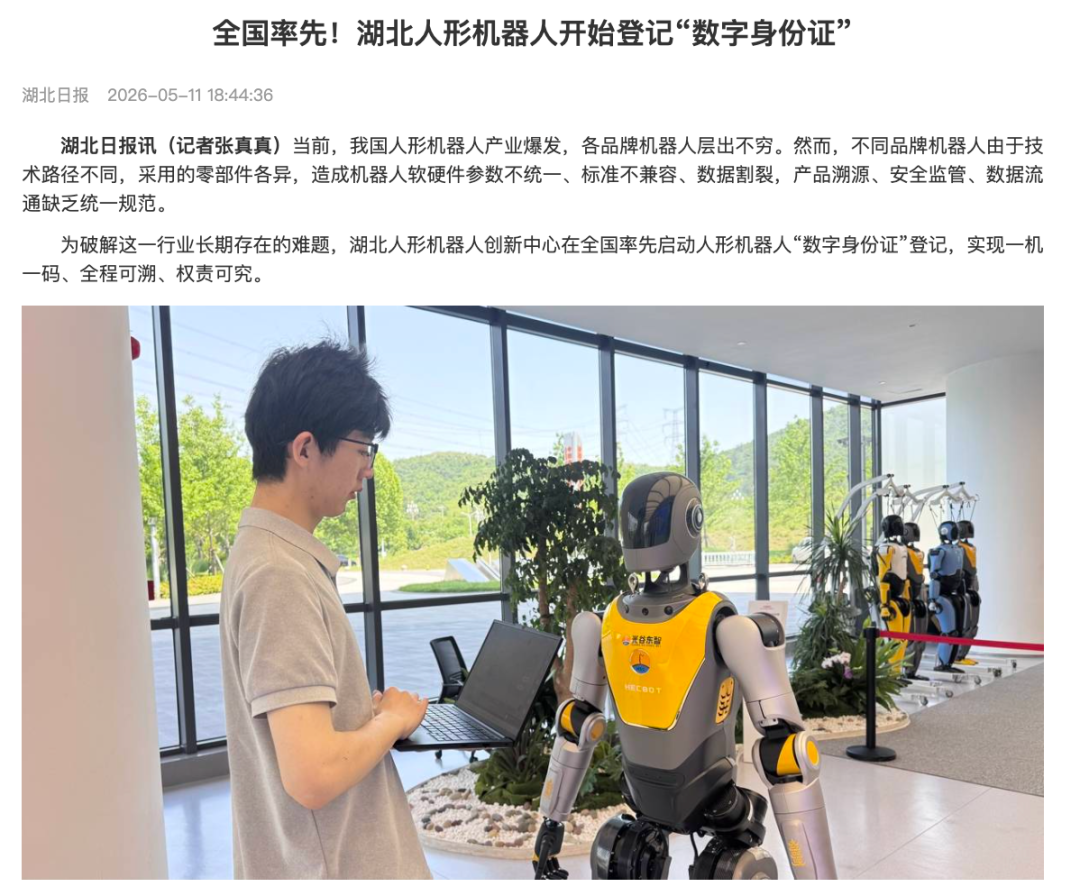
This may sound a bit futuristic—robots requiring ID cards? However, upon closer inspection, it becomes evident that there's more to it than meets the eye, with industry-wide challenges and opportunities lurking beneath the surface.
Why Do Robots Need an "ID Card"?
Humanoid robots have been gaining significant traction over the past two years. There are now over 140 domestic enterprises producing complete machines, and out of every 10 humanoid robots sold globally, more than 8 are manufactured in China.
Yet, challenges have arisen. Despite the buzz, the industry faces four persistent pain points:
Firstly, there's a lack of clear identification. Robots from different brands and models lack a unified coding system, making it impossible to distinguish one from another when they are mixed together.
Secondly, responsibility is ambiguous. When a robot malfunctions, manufacturers often blame improper use, users point to quality issues, and maintenance teams cite aging parts—each side trying to shift the blame.
Thirdly, data is non-interoperable. Deploying a robot in a new scenario requires fresh testing and registration, which is both time-consuming and costly.
Fourthly, there are regulatory blind spots. Without a unified identity management system, regulators cannot access crucial information about robots' operational status or safety data.
In essence, humanoid robots were like "unregistered" individuals—with unclear identities, ambiguous responsibilities, and restricted circulation. The "digital ID" pilot in Hubei aims to "register" these robots and tackle these issues at their core.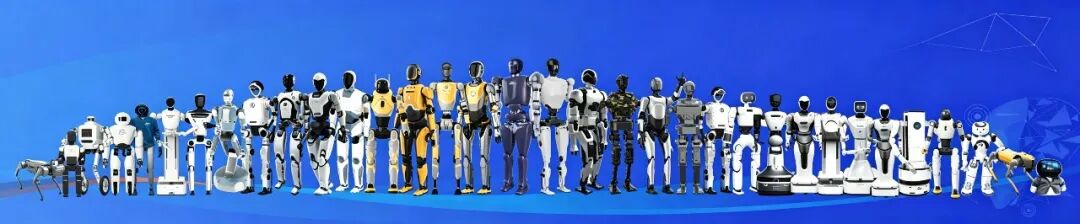
What Does This ID Card Look Like?
According to Liu Chuanhou, the Chief Operating Officer of the Hubei Humanoid Robot Innovation Center, the "digital ID"—officially known as the full lifecycle identity ID certification—comprises 29 characters divided into four parts: national code, enterprise code, product model code, and serial number.
These four segments serve as the robot's "genetic code," comprehensively covering core information such as the manufacturer, hardware parameters, intelligence level, and factory registration.
But that's just the static information—the real power lies in dynamic recording.
With this ID, the robot's full lifecycle dynamic information—including maintenance records and usage scenarios—can be traced in real-time. Instant access is provided to joint wear, battery status, operational accuracy, and more.
In other words, from the moment a robot leaves the factory, every operation, maintenance task, and repair is recorded in its "digital ID." The entire lifecycle is transparent, fully traceable, and accountability is clear-cut.
What Are the Benefits of the Digital ID?
There are at least three major advantages:
Firstly, it eliminates disputes in fault tracing.
When a robot malfunctions, scanning its ID retrieves operational logs, pinpointing whether the issue stems from quality or misuse—and assigning responsibility accordingly.
Secondly, it facilitates more efficient cross-platform circulation.
When a robot is redeployed from a factory to a mall or transferred between enterprises, its performance history can be verified by scanning its ID. This eliminates redundant testing and significantly boosts reuse efficiency.
Thirdly, it has significant implications for second-hand robot trading.
Buyers can fully understand a robot's "service history"—including how long it has been used, its level of wear, and how many repairs it has undergone—finally providing a basis for second-hand transactions.
As of May 11th, the Hubei Humanoid Robot Innovation Center has completed the filing, application, and coding tests for the first batch of 8 enterprises and their products, including leading local companies like Guanggu Dongzhi, Granro, and Hubei Qiling. Once national standards are officially released, these robots will be officially "licensed" for operation.
This Is Just the Beginning.
While Hubei isn't the first to consider robot ID cards, it is the first to implement them.
This move is backed by a significant context: On June 1, 2026, the Ministry of Industry and Information Technology's first embodied AI industry standard, YD/T 6770—2026 Artificial Intelligence—Key Foundational Technologies—Benchmark Testing Methods for Embodied AI, will officially take effect.
Hubei's pilot essentially serves as a "dress rehearsal" for this national standard—testing processes at the provincial level to ensure a seamless nationwide rollout once the standard is released.
Liu Chuanhou emphasized that beyond its regulatory significance, the "digital ID" holds greater value in data. By leveraging this ID, compliant circulation and efficient utilization of data across robot production, operation, and usage scenarios can be promoted. This accelerates the construction of a dynamic closed loop for "data collection-rights confirmation-trading-application."
In simpler terms, when a robot's full lifecycle data can be recorded and analyzed, the entire industry can truly "come alive"—not just the robots, but the data too, forming a complete industrial ecosystem.
What Does This Mean for Ordinary People?
Some might dismiss this as an "industry-internal matter" with no relevance to them.
But consider this: Humanoid robots are destined to enter factories, malls, and even homes.
Without unified identity management, there would be no way to verify a robot's quality, repair history, or safety risks—just like buying a car without knowing its maintenance record.
With a "digital ID," at least buyers can feel confident and use robots with peace of mind.
More importantly, unified industry-wide "identity standards" enable effective regulation.
Otherwise, waiting to regulate humanoid robots until they become as ubiquitous as smartphones would come at a much higher cost.
This reminds me of the early days of new energy vehicles when a lack of unified standards led to chaos. Only after regulatory measures caught up did the industry enter a healthy development phase. Humanoid robots are following the same trajectory.
Thus, Hubei's move to "register" robots may seem minor, but it's actually setting rules and laying foundations for the entire industry.
When the industry truly takes off, this step may prove far more significant than many realize.
All content is sourced from publicly available information and organized for sharing.
Written casually in my spare time, representing only my personal views.
-
Ofilm Teams Up with ADSensE to Propel Large-Scale Deployment of All-Solid-State LiDAR Powered by ADS6311 Chip!
-
![]()
Loss of 2.5 Billion Yet Facing Strong Demand for Shares? Another Battle for Control of Lianchuang Electronics
-
![]()
Huawei’s Enjoy Series Flies Off the Shelves, Prompting Xiaomi to Double Down on Budget Smartphones
-
![]()
Beijing Hyundai's Top Executive Criticizes Industry Disorder: Certain Brands Treat Customers as Beta Testers
-
![]()
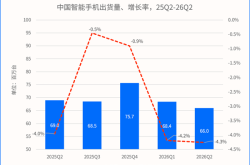
The domestic mobile phone market has declined for five consecutive quarters! Huawei defies the trend with significant growth: maintains its top market share
-
Annual Revenue Surpasses 3 Billion: An Automotive Trim 'Little Giant' Makes Its Debut on the Beijing Stock Exchange
-
![]()
The Space Force Wants to Spend $30 Billion on Rocket Launches: Is Trump Doubling Down, and Is SpaceX the Big Winner?
-
![]()
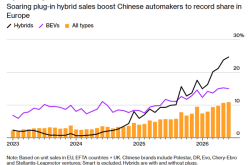
Going Crazy! One out of Every Three Plug-in Hybrids Sold in Europe is a Chinese Vehicle