SEER Robotics Passes IPO Hearing: How Valuable Is the 'First Robot Brain Stock?'
 06/08 2026
 555
555
Abstract: Controller + Software + Robots + Accessories
Source: Chaoyang Capital Theory
According to common business logic, companies can be broadly categorized into product-based and platform-based models.
Product-based companies earn money from manufacturing, such as Apple, Kweichow Moutai, and Tesla;
Platform-based companies earn money from connections, such as Amazon, Alibaba, JD.com, and Meituan.
Currently, in the booming robotics sector, players are adopting diverse strategies.
Some, like Unitree, ZhiYuan, and Geek+, have gained fame through product-first approaches.
Others, like NVIDIA and Inovance Technology, focus on platform-based strategies, avoiding full-robot production and instead providing 'foundational infrastructure'—NVIDIA with AI computing power and development tools, and Inovance with upstream general-purpose technology platforms for the industrial chain;
Amid this competitive landscape, Shanghai SEER Robotics has chosen to become a 'platform-based' embodied AI robotics company.
On June 7, SEER Robotics passed its IPO hearing on the Hong Kong Stock Exchange, poised to become the 'first robot brain' stock.
From brain to chassis, from controllers to software and delivery robots, SEER Robotics has transformed itself into the platform leader in the industrial chain over five years.
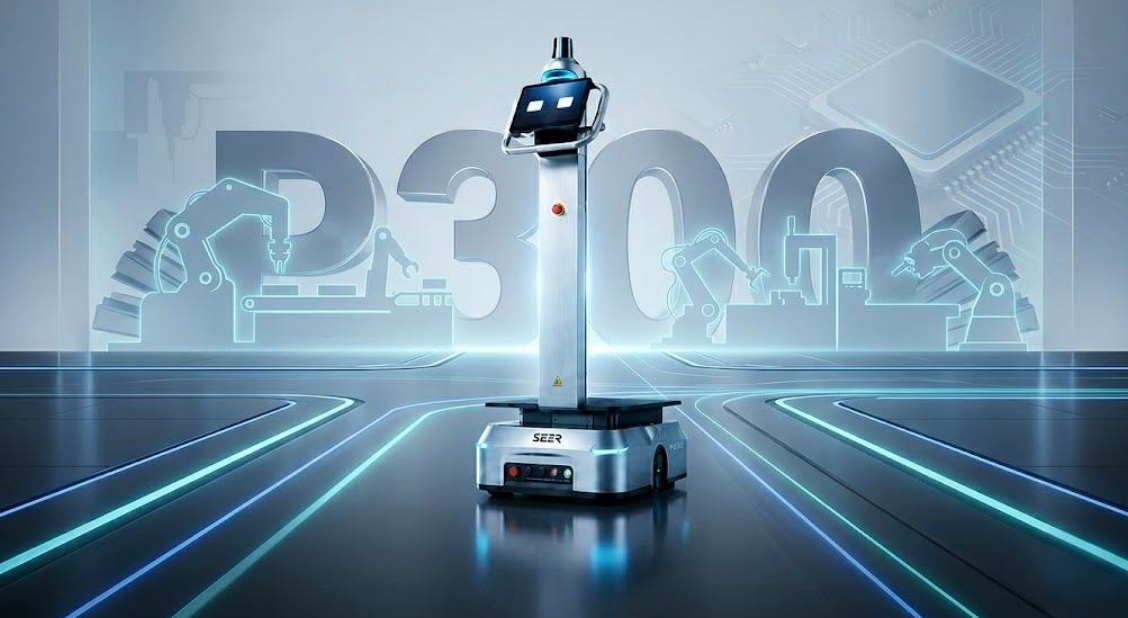
Centered on its robot brain controller, SEER built an ecosystem of 'controller + standard chassis,' proposed the 'One Brain, One Chain' strategy, launched the SEED digital software platform, and unveiled the AI delivery robot P300 just days ago.
In 2025, SEER Robotics achieved RMB 442 million in revenue.
According to CIC data, SEER ranked first globally and in China by robot controller sales volume in 2025, holding market shares of 24.8% and 45.2%, respectively.
Why is SEER Robotics, a platform-based embodied AI enterprise, more attractive? And how valuable is the 'first robot brain stock?'
SRC Technology Foundation Paves the Way
The origin of SEER Robotics' story lies in the bold gamble of another passionate young entrepreneur.
Founder Zhao Yue's journey—'abandoning medicine for engineering'—has been widely covered by media. After five years of medical studies at Zhejiang University, he withdrew to re-enroll in the university's School of Control Science and Engineering, focusing on robotics.
Such 'starting over' determination is fitting for someone who would build a global leader.
In 2013, 2014, and 2017, Zhao led his team to three consecutive RoboCup Robot Soccer World Championships.
This means that before SEER Robotics' official founding in 2020, the founding team had already accumulated expertise in key technologies like mobile robot algorithms and motion control.
In 2020, this championship-winning team founded SEER Robotics, with core members including Zhao Yue, Ye Yangsheng, and Wang Qun.
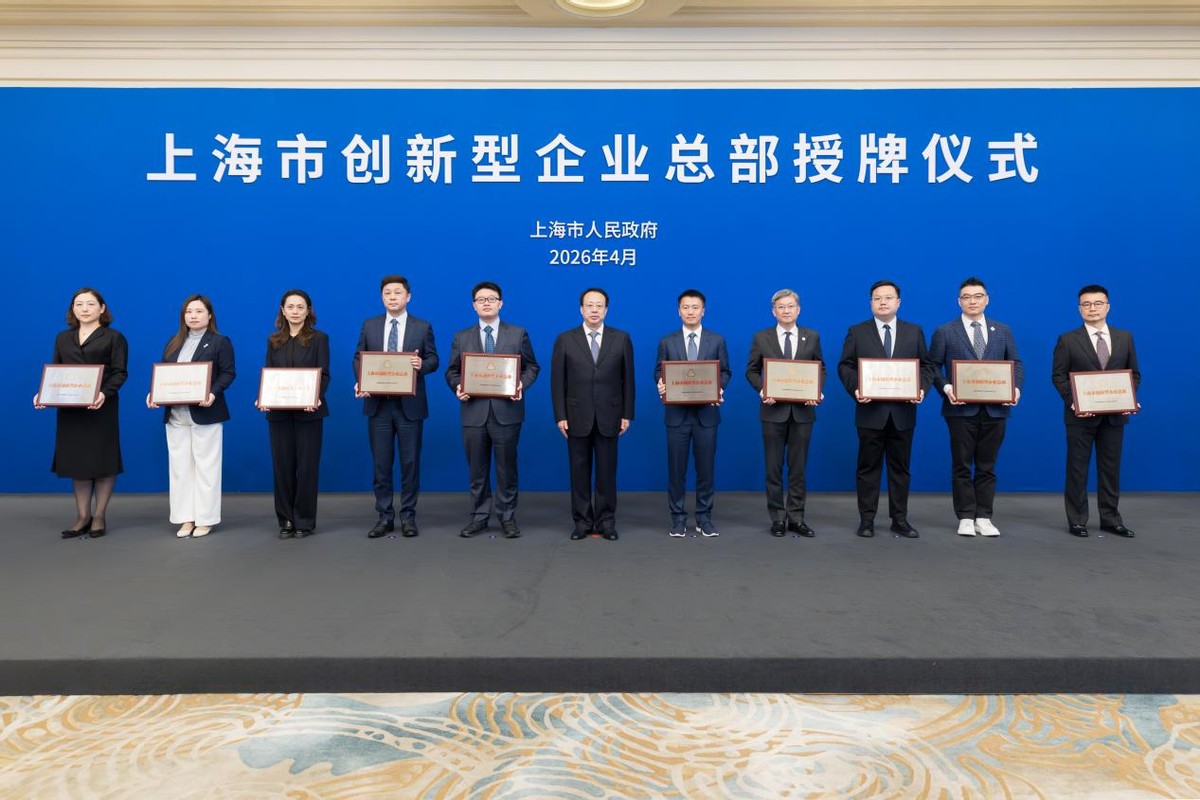
Fifth from left: Zhao Yue, Founder & CEO of SEER Robotics
In its founding year, SEER launched its first-generation SRC series core controllers, leveraging prior technical accumulation.
SRC stands for SEER Robotic Controller, SEER's robot controller.
SRC is not just hardware but an 'integrated hardware-software' mobile robot technology foundation.
By integrating Vision-Language-Action (VLA), reinforcement learning, end-to-end navigation, and Simultaneous Localization and Mapping (SLAM), it controls various sensors and actuators to enable autonomous operation of intelligent robots; the software issues task commands to robots through unified communication interfaces using multiple intelligent scheduling and optimization algorithms, achieving efficient collaboration among various intelligent robots.
From a hardware perspective, SRC is a highly integrated circuit board incorporating multiple computing cores like CPU, GPU, and MCU, along with industrial-grade communication interfaces including CAN, RS485, Ethernet, and IO.
From a system software perspective, SRC is a unified robot operating system featuring SEER's self-developed real-time OS kernel and middleware, integrating all algorithms and functional modules for autonomous robot movement.
From a functional algorithm perspective, SRC comes preloaded with a full stack of capabilities including multi-modal perception and localization, intelligent planning and control, and cloud connectivity and scheduling, eliminating the need for secondary development.
For example, as a technology foundation, SRC encapsulates all the underlying hardware, operating system, core algorithms, and safety capabilities needed to transform an industrial vehicle into an autonomous mobile robot within a single controller.
From an industrial chain perspective, the controller serves as the robot's 'brain,' responsible for perception, localization, decision-making, and motion control.
Upstream, it connects to core components like sensors, servo motors, and reducers; downstream, it interfaces with complete machine manufacturers and system integrators. Although accounting for only 10%-20% of a complete machine's cost, it represents a technically demanding segment.
The question arises: Why did SEER choose to start with such a technically intensive approach?
The answer lies in SEER's forward-looking vision within today's robotics landscape.
Source: SEER Robotics Prospectus
Currently, the traditional robotics industry predominantly adopts a vertically integrated model where complete machine manufacturers develop controllers in-house and sell complete machines, resulting in incompatible systems across brands and creating 'automation islands' that significantly raise technical barriers and costs for robot development.
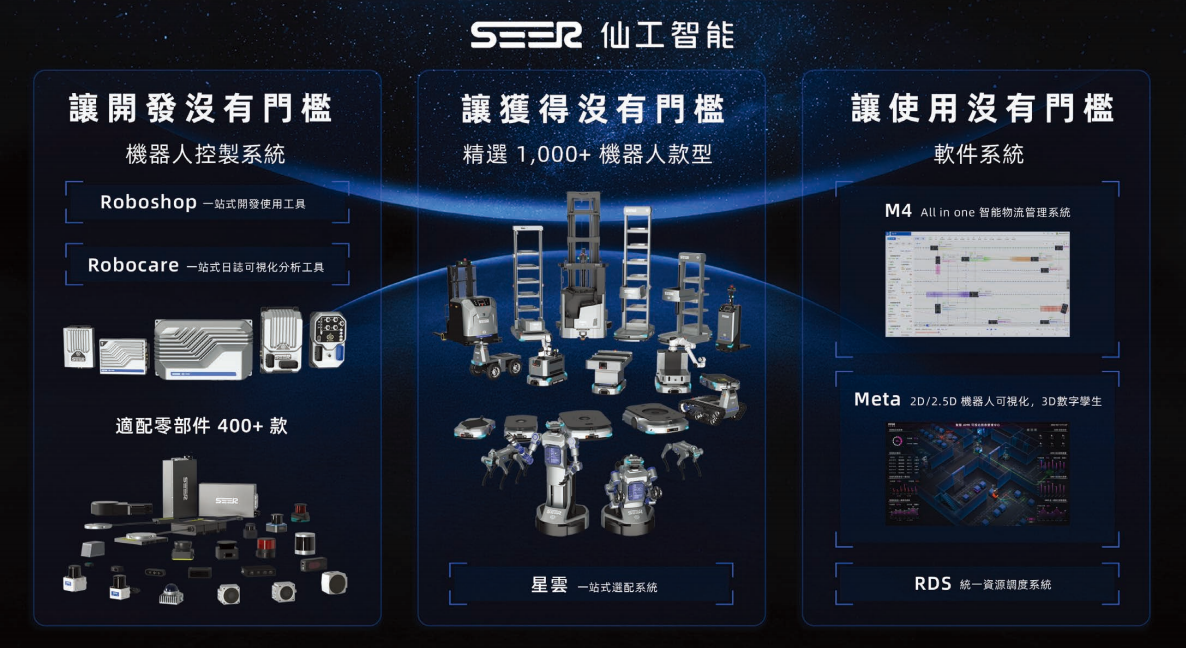
SEER's slogan—'Making development barrier-free'—reflects its approach of providing standardized controllers and open software toolchains, enabling integrators and end customers to rapidly build customized robots like 'building blocks' without complex bottom layer algorithm programming from scratch.
This is particularly crucial for SEER's focus on industrial scenarios, which are highly fragmented. Developing complete machines for each scenario from scratch would be cost-prohibitive.
SEER's SRC core brain, through software-defined motion models and navigation strategies, allows integrators to quickly 'assemble' robots tailored to specific scenarios, dramatically lowering technical and financial barriers for AMR manufacturing.
According to SEER's prospectus, by the end of 2025, its SRC series controllers had been adapted for over 400 mainstream components, covering core hardware like LiDAR, depth cameras, and motor drivers, enabling rapid delivery of over 2,000 robot SKUs.
By choosing this 'less traveled' path, SEER has established technical and scale barriers as an open platform.
One-Stop Open Platform Bridges Gaps
With the SRC series controllers as its technological foundation, SEER has forged ahead in subsequent business development, overcoming obstacles with innovation.
According to CIC data, SEER ranked first globally in intelligent robot controller sales for three consecutive years (2023-2025), with its global market share rising to 25%.
But the champion is not complacent and excels at preparing for challenges.
Currently, with the proliferation of open-source algorithms and improved AI chip performance, along with domestic leading enterprises moving toward 'vertical software-hardware integration,' the underlying technologies for controller hardware are becoming increasingly standardized and homogenized, making it harder to build moats solely through hardware standardization.
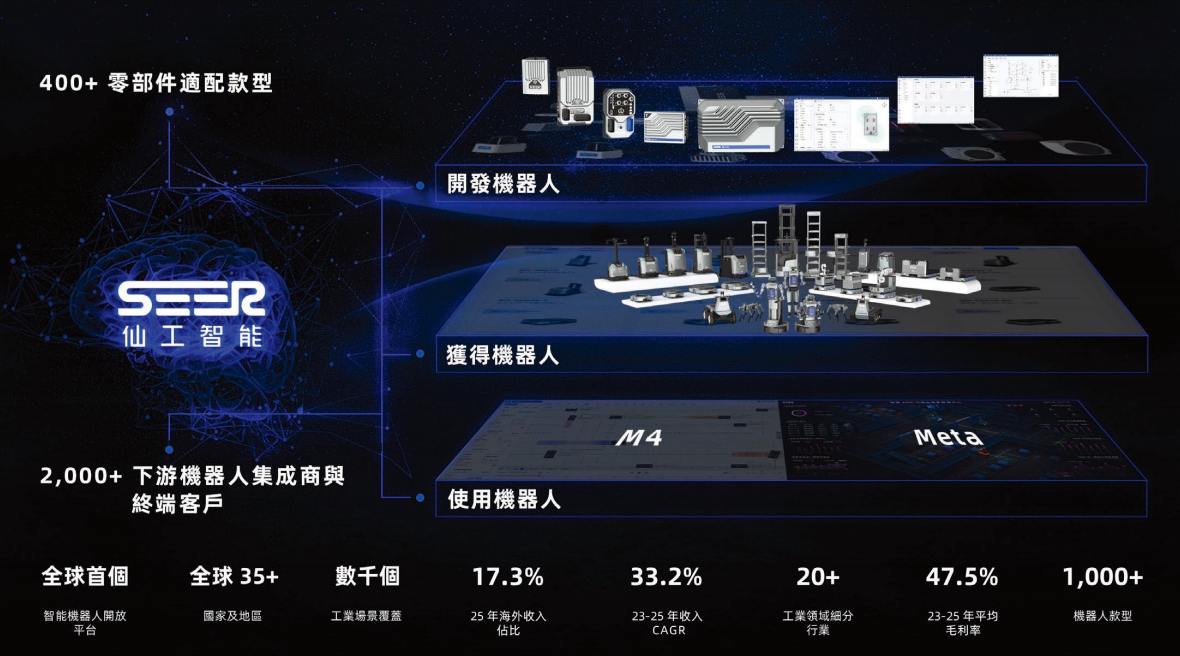
Thus, SEER has begun refining a new business model, pioneering the launch of a large-scale intelligent robot open platform in the industry, offering one-stop solutions encompassing controllers, software, robots, and accessories.
Source: SEER Robotics Prospectus
For integrators, SEER provides core components centered on its SRC controller, supplying manufacturers who want to build autonomous mobile robots (AMRs) but lack underlying control technologies, helping them rapidly and cost-effectively develop various specialized robots.
For end customers in industries like semiconductors, automotive, and new energy, integrators can incorporate SEER's products into broader automation solutions by adding components, software, and custom engineering to meet specific application needs.
For these two customer types, SEER has built an open collaboration ecosystem, partnering with upstream sensor manufacturers (e.g., LiDAR, vision cameras), motor drives, batteries, and other core component vendors for product adaptation and certification, ensuring controller compatibility with mainstream components on the market and offering customers flexible choices.
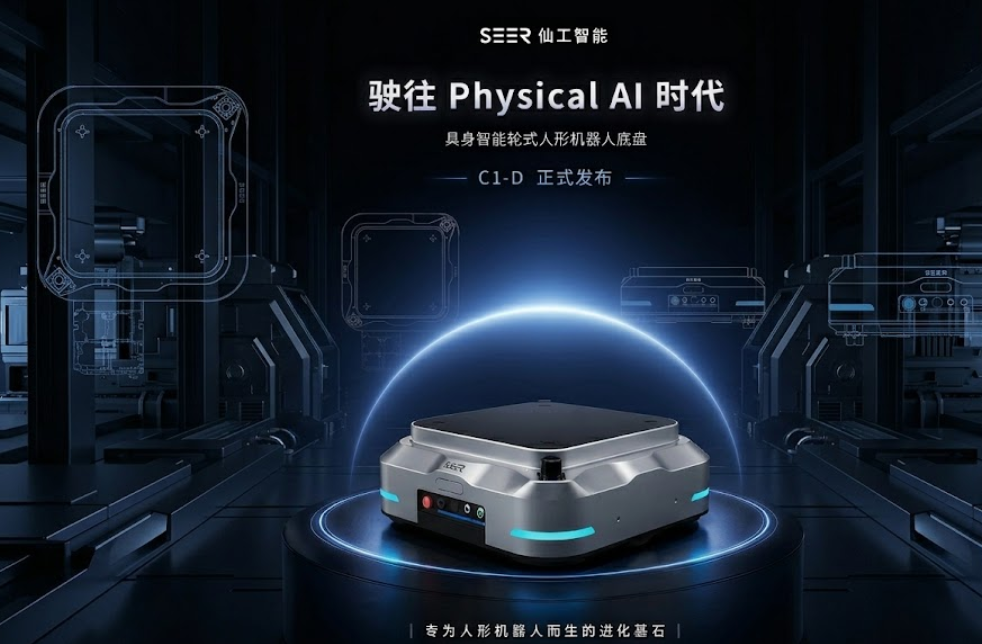
For end-user factories seeking 'out-of-the-box' solutions, SEER recently launched the AI delivery robot P300 and wheeled humanoid robot chassis, enabling 'embodiment' for all things.
Source: Company Website
The higher and longer-term value of such a one-stop ecosystem platform lies in the leverage effect it brings SEER, centered on data.
While individual robots have limited intelligence, when hundreds or thousands of robots across a factory or even an industrial chain operate on the same brain platform, collective learning and optimization become possible. Anomalies encountered by one robot can quickly translate into algorithm updates benefiting all robots.
The brain serves as the data entry point and evolutionary engine for this collective intelligence.
In other words, as the robot's decision-making hub, the controller aggregates full-chain data from perception, planning to execution. Serving thousands of customers across numerous industrial scenarios, SEER has accumulated irreplaceable algorithm training data and multi-scenario adaptation experience, creating a 'data flywheel' effect.
From one to many, expanding infinitely.
To date, SEER has connected over 2,100 integrators and end customers, reaching 35 countries and regions globally, covering over 20 vertical industries including 3C, automotive, automation equipment, new energy, semiconductors, construction machinery, and biopharmaceuticals, forming an initial industrial ecosystem.
Hong Kong Stock Ambitions: How Valuable?
After all this, how valuable is the 'first robot brain stock?'
On May 28, SEER updated its prospectus with data through the end of 2025, providing an objective basis for analysis.
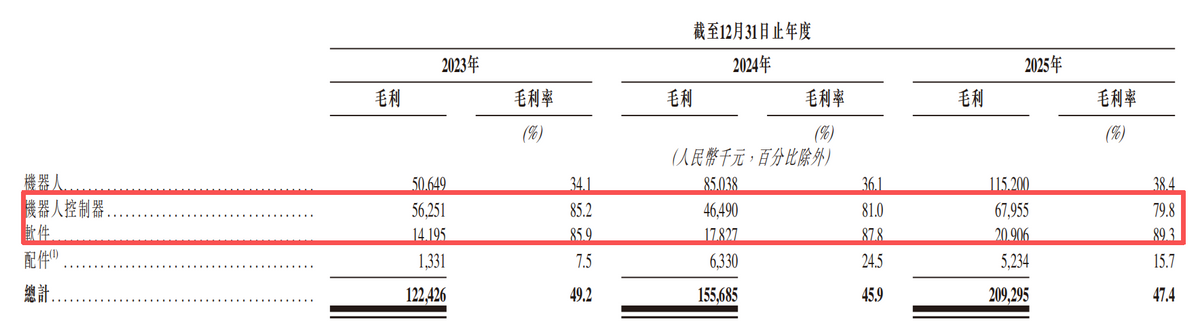
In terms of fundamentals, SEER's revenue reached RMB 249 million, RMB 339 million, and RMB 442 million in 2023, 2024, and 2025, respectively; gross profit was RMB 122 million, RMB 156 million, and RMB 209 million; gross margins were 49.2%, 45.9%, and 47.4%.
Revenue grew steadily during the reporting period, with a compound annual growth rate of 33.2%, and gross margins remained at relatively high levels—impressive stability for a tech innovation company operating officially for just five years.
Notably, gross margins for robot controllers and software services averaged over 80%, quite strong within the intelligent robotics industry.
Source: Company Prospectus
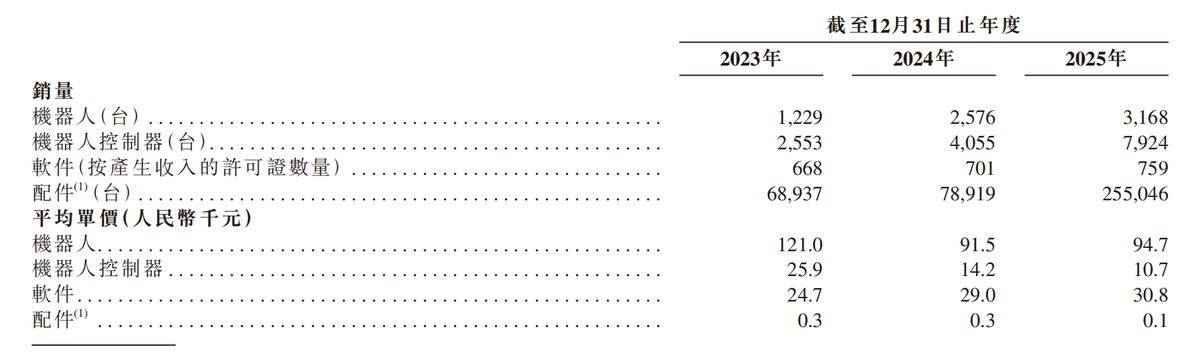
At the market level, SEER's sales volumes for robots, robot controllers, software, and accessories have all shown year-over-year growth.
In 2025, robot sales reached 3,168 units, controller sales 7,924 units, and accessory sales exceeded 250,000 units.
Source: Company Prospectus
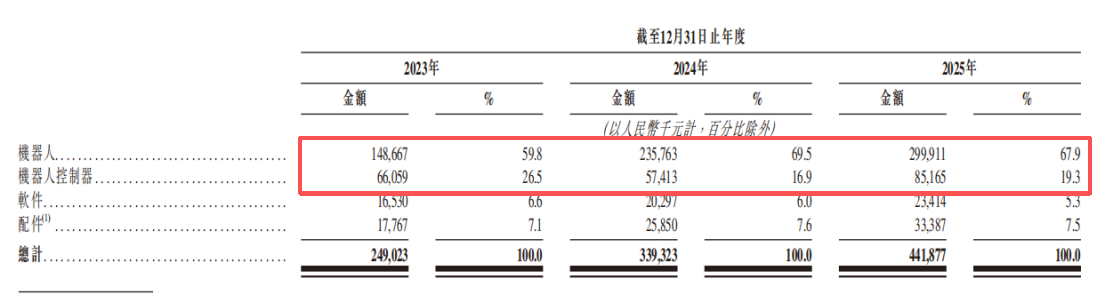
However, note that in terms of revenue composition, SEER's robot revenue share has increased while controller revenue share has declined.
Source: Company Prospectus
The reason, as analyzed earlier in Chaoyang Capital Theory, lies in controller market intensification, price declines, and industries prioritizing cost control under efficiency drives, naturally seeking savings where possible.
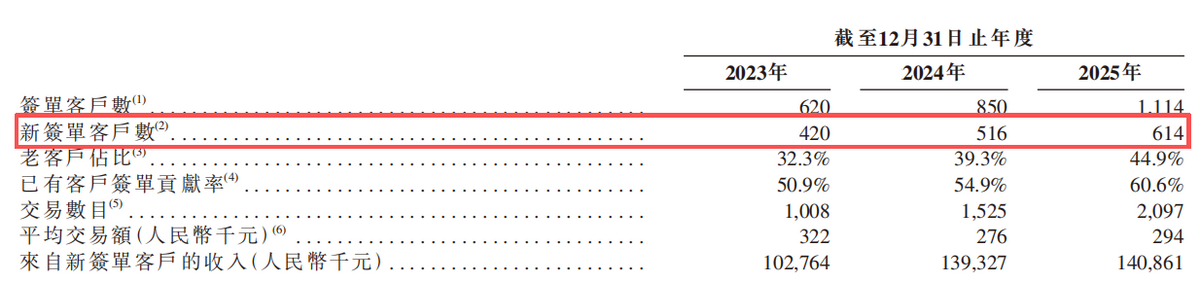
Yet even against this backdrop, SEER acquired over 600 new customers in the past year while maintaining a customer repurchase rate exceeding 60%.
Customer approval and repurchase rates silently endorse SEER's platform value.
Source: Company Prospectus
For a tech innovation company, we look to the future, which hinges on R&D.
From 2023 to 2025, SEER's R&D expenses were RMB 63.75 million, RMB 71.31 million, and RMB 79.17 million, accounting for over 17% of revenue each year.
Share-based compensation expenses settled in equity during the same periods were RMB 26.8 million, RMB 31.68 million, and RMB 28.8 million, respectively.
Thus, SEER's current strategic losses due to high R&D investment become understandable.
How can a technology-driven enterprise ensure longevity without looking to the future?
This explains SEER's choice to raise funds on the Hong Kong Stock Exchange.
To maintain its 'brain' leadership, SEER needs sustained investment in algorithm iteration, new scenario adaptation, and platform ecosystem construction.
According to the prospectus, SEER's fundraising will primarily support cutting-edge AGI and embodied AI R&D, multi-functional center construction, upstream-downstream industrial chain M&A, global sales system development, and working capital replenishment.
Notably, before the IPO, SEER secured investments from renowned institutions including GLP's Hidden Hill Capital, Ecovacs, IDG Capital, SAIF Partners, and Hongtai Fund, with GLP's Hidden Hill Capital, Ecovacs, and SAIF Partners serving as lead senior independent investors.
Hidden Hill Capital's industrial background aligns highly with SEER's warehousing and logistics scenarios, while Ecovacs brings deep expertise in service robotics—both providing SEER with long-term, stable ecological synergy resources.
According to China Development Report 2025 projections, China's embodied AI industry market size could reach RMB 400 billion by 2030 and surpass RMB 1 trillion by 2035.
IT tangerine ie data shows 132 financing events in the embodied AI sector in Q1 this year, totaling RMB 31.861 billion; for all of 2025, there were 334 events totaling RMB 36.475 billion.
During the favorable window period for embodied intelligence in terms of both policy and capital, SEER (Advanced Robotics and Automation) has seized the opportunity to take a step forward and compete for market development opportunities, which is both a foundation and an instinct.
Zhao Yue once said that the character 'Xian' ( immortal ) in 'SEER (Advanced Robotics and Automation)' represents a person standing on a mountain, symbolizing a far-sighted and excellence-pursuing spirit. The character 'Gong' ( work ) points to the industrial sector, implying the company's commitment to addressing future-oriented industrial challenges.
Judging from its existing achievements and future plans, SEER (Advanced Robotics and Automation) truly lives up to its name.
-
![]()
Smartphone Prices Surge Amid Manufacturer Anxiety
-
![]()
Orbbec Soars to Record Heights, Eyes Further Capital Influx of 980 Million!
-
![]()
Tongding Interconnect Sets Up Shop in Shaoguan with 800 Million Yuan in Registered Capital
-
![]()
Before Kimi’s A-Share Debut, Zhipu Aims to Secure More 'Strategic Funding'
-
![]()
Innovative Leap | Fiber-Pluggable 1470nm Laser Source: Revolutionizing Precision Laser Weeding
-
![]()
73-Day Rapid Listing: Where Does Unitree's Wang Xingxing's 'Sense of Urgency' Come From?
-
![]()
AI Project Mindverse, Backed by Meituan, Faces Data Inflation Allegations Over Its Macaron Product
-
![]()
3000-word In-Depth Analysis | What Makes Physical AI So Magnetic? It Has Captivated Masayoshi Son, Jensen Huang, and Justin Sun All at Once