Transformation, Boarding, and Buying Tickets: Catching the Last Bus with a Leap
 06/08 2026
 473
473
Written by | Hao Xin
Edited by | Wu Xianzhi
'Those who ruined CV have now turned to large models.'
During the AI 1.0 era, Megvii Research Institute gathered a group of young, technically skilled, idealistic, and driven individuals who became the spark for igniting large models.
Former Megvii Vice President Chen Xuesong joined Zhipu, while Zhou Xinyu, responsible for algorithm mass production, co-founded Moonshot AI with Yang Zhilin. Also from Megvii Research Institute, He Weiran is now the head of Kimi's inference system, Zhang Xiangyu is a co-founder of JieYue XingChen, and Yu Gang is the head of JieYue XingChen's voice and AIGC algorithms.
More aggressively, co-founder Yin Qi currently serves as the chairman of both Qianli Technology and JieYue XingChen.
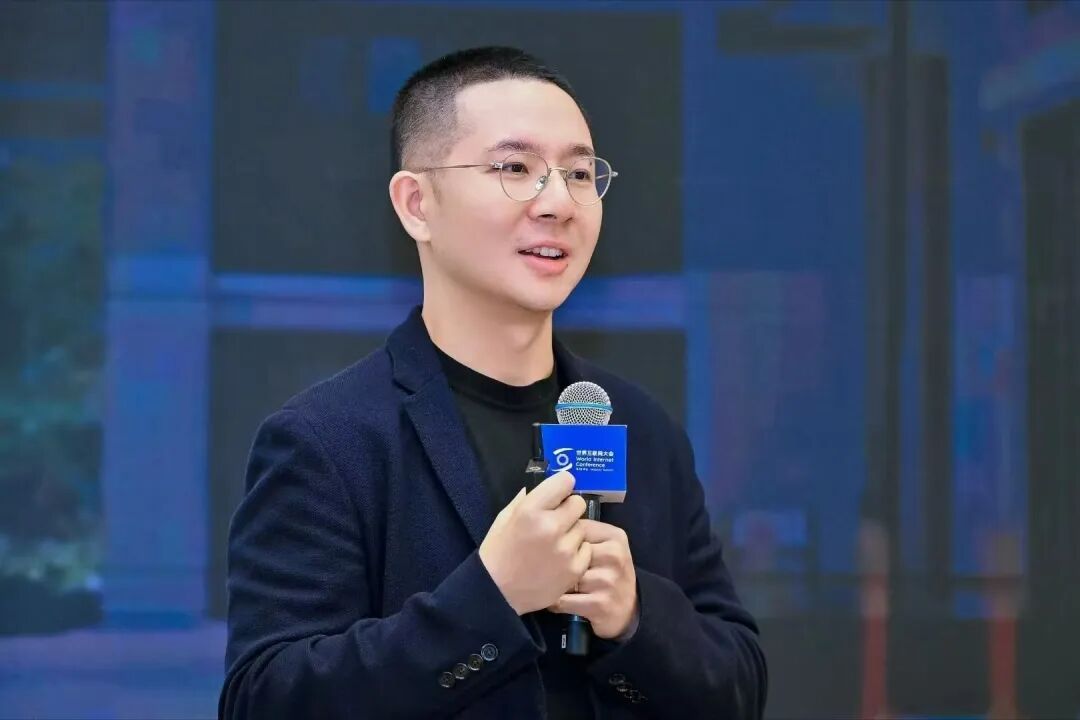
A Megvii veteran told us that those who left Megvii almost tacitly acknowledged the failure of the 1.0 era. 'For them, large models represent a do-or-die second attempt at entrepreneurship.'
Once kindred spirits, they now compete fiercely for their respective companies. Zhipu fired the first shot for listing, with its market value once surging to HK$880 billion. DeepSeek caught the industry off guard by opening external financing, forcing Moonshot AI and JieYue XingChen to accelerate their IPO timelines to compete for the narrowing window of large model dividends.
Currently, JieYue XingChen has a clearer path to listing. It completed its joint-stock transformation in April this year and dismantled its red-chip structure. In May, it secured nearly $2.5 billion in Pre-IPO financing. According to internal documents, the company plans to submit its application to the Hong Kong Stock Exchange before June 30 this year, complete the listing by the end of 2026, and lift the lock-up period by mid-2027.
Anthropic, which has reaped the benefits of Agent and Coding, reached a post-investment valuation of $965 billion in its latest funding round before the IPO. Against this backdrop, the so-called 'third large-model stock' has paled in comparison.
The critical race is on: Who will become the first 'Agent stock'? It must be emphasized that this title is not just nominal but must be reflected in commercialization.
Late Start, Missteps, and a Comeback
Among these companies, JieYue XingChen has the closest ties to Megvii.
During the early stages of Zhipu and Moonshot AI, Megvii provided them with a large number of technical and sales personnel. According to relevant sources, 'Given the limited circle, a simple group chat for recruitment reference checks among a few people can reveal the general situation.'
The uniqueness of JieYue XingChen lies in the fact that its algorithm team and commercialization efforts originated from the Megvii system, receiving deep support from Megvii in its early start a business (entrepreneurial) stages.
According to Megvii insiders, in 2024, a high-level executive from Megvii Research Institute provided technical guidance to JieYue XingChen while still officially employed at Megvii.
Secondly, Yin Qi, a Megvii alumnus, holds absolute control over JieYue XingChen, enabling a high degree of synergy between JieYue's strategic direction and the industrial resources of the Megvii ecosystem.
However, things did not go as planned, and JieYue XingChen's story did not unfold according to the script.

JieYue XingChen remained almost entirely out of sight in its first year, only making its formal debut in March 2024. In 2023, the 'Hundred-Model Battle' unfolded, with public, capital, and developer attention highly focused. Zhipu and MiniMax preemptively released models and launched products, while Moonshot AI, Baichuan Intelligence, and 01.AI quickly captured attention through lightning-fast financing, rapid iteration, and aggressive operations.
Although JieYue XingChen entered the market at the same time, it missed the golden window for market presence and brand recognition in the 'big fish eat small fish' entrepreneurial environment. The pending model releases and insufficient exposure indirectly affected its subsequent financing rhythm. JieYue XingChen completed its angel round financing in 2023, but its Series B financing was only finalized by the end of 2024, a full year later than its peers.
In 2024, JieYue XingChen ended its long silence by successively releasing a series of models, including Step-1, Step-2, and Step-1.5V, establishing its technical position as the 'king of multimodal models.' It also incubated and launched the C-end intelligent assistant 'YueWen' and the role-playing Agent 'MaoPaoYa,' forming an early 'super model + super app' strategy.
Problems soon emerged. Despite having a clear technical label, its C-end applications never became hits. During this period, JieYue XingChen pursued a two-pronged approach: vigorously supporting AI application developers by providing underlying multimodal technical support to create hit apps (most of which were short-lived), while attempting to activate the viral potential of self-developed products like the 'Lyric Rewriter' through community and mini-program efforts. However, the impact remained limited.
Coupled with Kimi's breakthrough and subsequent blockades from DeepSeek and major companies, JieYue XingChen's C-end line essentially failed. A telling event occurred in December 2024 when 'MaoPaoYa' ceased large-scale investment, and its team was merged into the dialogue product 'YueWen' (now renamed 'JieYue AI').
Facing fierce C-end competition, JieYue XingChen made a strategic adjustment: retreating from the C-end and going all-in on 'AI + terminals,' which became its turning point toward commercialization.
In its Series B financing, investors began to shift toward state-owned capital, indicating higher-level resource support. CEO Jiang Daxin also publicly identified 'automotive, mobile phones, embodied AI, and IoT' as the four core terminal scenarios for the first time.
On January 26, 2026, JieYue XingChen reached a dual peak in capital and strategy. On this day, Yin Qi officially joined and became chairman. Other media reports revealed that JieYue XingChen had completed a B+ round financing exceeding 5 billion yuan, setting a new record for single-round financing in China's AI sector.
Yin Qi's arrival filled the missing piece in JieYue XingChen's industrial implementation and commercialization puzzle.
From Multimodal King to AI Terminals
While JieYue XingChen may not be as vocal as Zhipu or MiniMax, it occupies a unique ecological niche: multimodal foundation models, reasoning efficiency optimization, and AI terminal implementation.
To date, JieYue XingChen has released the Step1 to Step3 series models.
The Step1 series positions itself as a native multimodal foundation model, focusing on understanding and generating basic modalities such as text and images. With a relatively small parameter count, it emphasizes foundational multimodal capabilities, suitable for basic tasks like simple image understanding and text-based Q&A, laying the groundwork for subsequent models.
The Step2 series adopts a Mixture of Experts (MoE) structure, emphasizing training efficiency and comprehensive capability enhancement. With a trillion-parameter scale, it is suitable for tasks requiring strong logical reasoning and complex text generation, such as code assistance, literary creation, and complex problem-solving.
The Step3 series positions itself as a new-generation foundation model, focusing on reasoning efficiency, cost optimization, and comprehensive multimodal capabilities. Using innovative system architecture, its reasoning efficiency on domestic chips can reach 300% of DeepSeek-R1's, significantly reducing reasoning costs. It is suitable for scenarios sensitive to reasoning speed and cost, such as intelligent terminal interactions, in-vehicle systems, and real-time multimodal applications, with a greater emphasis on model implementability in real-world business.
JieYue XingChen's newly released Step3.7Flash model claimed multiple first-place rankings on the Artificial Analysis leaderboard, perfectly embodying the synergistic effects of these three elements.
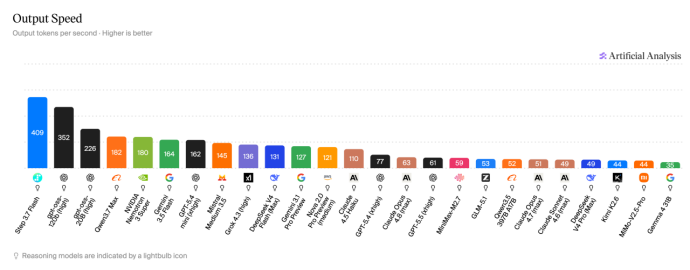
Step3.7Flash natively supports multimodal understanding, enabling it to directly comprehend UIs, charts, and documents. This means Agents can directly 'understand' screens and perform operations, directly embodying the strategic vision of 'AI operating mobile phones.' Using an MoE architecture, it achieves a generation speed of up to 409 tokens/s, with extreme reasoning efficiency and low cost, making massive terminal deployments possible. Designed for production-grade Agents, it is optimized for high-frequency, multi-round terminal interaction scenarios. In end-to-end response time tests, Step3.7Flash completed specified evaluation tasks in just 7.1 seconds, making it suitable for terminals like mobile phones and cars that require rapid responses.
Step3.7Flash is officially defined as an 'Agent production-grade model,' reflecting JieYue XingChen's shift toward Agents.
Photon Planet found that JieYue's current recruitment efforts are highly focused on three practical scenarios: 'Agent + terminal + Coding.' Specifically, these three directions correspond to the closed loop of 'perception-decision-execution' that JieYue XingChen aims to establish.
In the Agent domain, JieYue XingChen is massively recruiting AI Agent system engineers and post-training algorithm talent. In the terminal domain, it focuses on mobile app Agents and in-vehicle intelligent agents, with job descriptions repeatedly mentioning keywords like memory, power consumption, and first-response speed, directly addressing engineering bottlenecks for on-device implementation. In the Coding domain, it hires both AI Coding algorithm engineers and Coding Agent product managers, aiming to enable Agents to truly understand and produce high-quality code.
These recruitment efforts clearly show that JieYue XingChen is no longer satisfied with being a 'multimodal king' but aims to deeply integrate multimodal perception, efficient reasoning, and terminal scenarios to create a truly implementable, scalable, production-oriented Agent system. Step3.7Flash is merely the first salvo in this battle.
Yin Qi's Process of Elimination
Some investors have evaluated Yin Qi, the helmsperson, saying, 'Those who have experienced the 1.0 era have eliminated many wrong options from the start, and that is the beginning of success.'""Eliminating pure technology suppliers and project-based custom To B models. JieYue XingChen focuses on 'AI + terminals,' engaging in deep product-level co-creation with leading clients like Geely and OPPO. The goal is to form standardized, reusable solutions rather than working on a project-by-project basis.
Eliminating vertical tracks reliant on single scenarios or policy-driven markets. JieYue XingChen bets on general-purpose multimodal large models, aiming to cover a wide range of terminal scenarios such as automobiles, mobile phones, and robots. Each scenario is sufficiently large, and they can produce synergistic effects with one another rather than relying on a single track.
Even so, JieYue XingChen is still on a relatively difficult path.

Currently, there are three main approaches in the on-device market. The first involves selling model capabilities, where technology suppliers license efficient on-device models or charge based on usage volume. This model is relatively lightweight, with short delivery cycles and rapid customer expansion. As long as the model performs well enough and consumes low power, it can quickly spread across numerous terminal manufacturers, achieving scale effects.
The second is the platform-style model of major companies, which relies on the computational power, models, and content ecosystems of large corporations, selling services based on Token usage volume while bundling cloud resources. This usage-based commercial model has virtually no marginal costs for expansion and can theoretically serve thousands of developers.
JieYue XingChen belongs to the third category, selling system solutions through deep co-creation and joint development with terminal manufacturers. This means that securing each major client requires months of joint R&D, system adaptation, and business negotiation.
A large model automotive solution person in charge (person in charge) told us that custom To B deliveries are more complex than C-end efforts. Just the OTA version review process alone can take several months to complete. Moreover, To B deliveries have higher requirements because frequent iteration is not feasible, and the first version must achieve high effectiveness.
'A normal large model project delivery cycle of six months is considered stable and production-ready.'
The biggest drawback of this business model is its high value but limited scalability. Suppose JieYue XingChen needs to invest a dedicated team in six months of joint R&D for each major client it serves. In that case, its revenue growth will be linearly related to team size rather than expanding exponentially like an API model. China has a limited number of mobile phone and automotive brands, and the pool of clients that can become deep partners is inherently capped.
More critically, this deep binding does not equate to exclusivity. Geely can still choose to access Doubao or QianWen simultaneously, and OPPO can develop its own on-device models. The system-level embeddings that JieYue XingChen has invested heavily in establishing always face the risk of being replaced or marginalized. Perhaps considering these risks, JieYue XingChen has bound a large number of industrial upstream and downstream enterprises through capital means.
Of course, the boundaries between these three models are not clear-cut, and players in each ecological niche can reach deeply customized collaborations with clients. Regardless of whether they move upward or downward in positioning, they will eventually converge toward choices similar to JieYue XingChen's.
From what we currently understand, the number of AI companies capable of deep customization is still relatively limited. If JieYue XingChen successfully implements its Agent system on millions of cars and mobile phones, the replacement cost will become prohibitively high for clients to turn away. A combination of 'system + data + engineering' is sufficient to form an insurmountable moat.

-
![]()
Smartphone Prices Surge Amid Manufacturer Anxiety
-
![]()
Orbbec Soars to Record Heights, Eyes Further Capital Influx of 980 Million!
-
![]()
Tongding Interconnect Sets Up Shop in Shaoguan with 800 Million Yuan in Registered Capital
-
![]()
Before Kimi’s A-Share Debut, Zhipu Aims to Secure More 'Strategic Funding'
-
![]()
Innovative Leap | Fiber-Pluggable 1470nm Laser Source: Revolutionizing Precision Laser Weeding
-
![]()
73-Day Rapid Listing: Where Does Unitree's Wang Xingxing's 'Sense of Urgency' Come From?
-
![]()
AI Project Mindverse, Backed by Meituan, Faces Data Inflation Allegations Over Its Macaron Product
-
![]()
3000-word In-Depth Analysis | What Makes Physical AI So Magnetic? It Has Captivated Masayoshi Son, Jensen Huang, and Justin Sun All at Once