When AI Dominates 618, Is Human Live Streaming the Ultimate Challenge?
 06/23 2026
 415
415
Editor: Liu Zhicheng
Reviewer: Xu Xu
This year's 618 shopping festival has witnessed AI emerge as the superstar of the e-commerce industry.
Take JD.com as an example. Within four hours of the 618 event's commencement, the number of merchants utilizing JD's digital avatars for live streaming surged nearly sixfold year-on-year, with transaction volumes exceeding 70 million yuan.
Douyin has also rolled out AIGC tools to assist merchants in generating short videos and graphic content.
Taobao, after further integrating with Qianwen's ecosystem, has enabled its app's "Qianwen AI Shopping Assistant" to offer features like AI virtual try-ons, AI discount calculations, and AI-assisted snapping up of discounted items.
Meanwhile, Li Jiaqi's live stream room has, for the first time, introduced an "AI teaching assistant"...
It's clear that, compared to past sporadic efforts, AI is now genuinely taking over the e-commerce landscape comprehensively,
especially in the realm of live-stream commerce. According to data from China Fortune Network and Frost & Sullivan's "China AI Digital Human Industry Development Report, 2025," the overall penetration rate of AI digital human live streaming in the e-commerce live-stream sector has surpassed 60%; in highly standardized sectors like 3C products and daily necessities, the penetration rate exceeds 70%.
Of course, it cannot be denied that in recent years, due to scandals and departures of several major live streamers, as well as macro consumer market pressures, the current enthusiasm for digital humans—which are lower in cost and more "obedient"—in the live-stream commerce sector is understandable.
But the question remains: when digital human live streaming surpasses human live streaming and becomes the new mainstream in the future, will this truly be beneficial for brand merchants?
 The More Advanced AI E-commerce Becomes, the More Valuable Human Live Streaming Becomes?
Why are people willing to try digital human live streaming?
The core reason is simple: the cost is low enough.
Although AI digital humans lack the built-in "buzz and traffic" like Li Jiaqi and others, they have the advantage of being able to live stream 24/7 without fatigue, mistakes, conflicts with brands, or demands for raises...
For brand merchants, this is indeed much more cost-effective than hiring human live streamers.
However, in practice, brands must consider not just cost inputs but also return outputs.
So, apart from Luo Yonghao's digital human going viral last year and achieving a single-session GMV exceeding 55 million yuan, how many brand merchants' digital human live streams have been highly successful? How many have achieved brand breakthroughs through this?
Almost none.
In comparison, although the cost of human live streaming is high, the certainty of returns is also superior.
This has been fully validated by Li Jiaqi, Dongfang Zhenxuan, and Dong Yuhui, among others.
Moreover, from this perspective, as AI digital human live streaming becomes more prevalent in the future, its value to brand merchants seems increasingly less imaginative compared to human live streaming.
Why? When everyone uses digital humans from JD.com, Tmall, etc., for live streaming, how can brands in the same category achieve differentiated competition? If it's just changing faces and backgrounds, there might be some novelty in the short term, but how can users be retained in the long term?
Human live streaming is different. In the era of AI e-commerce, their core advantages have not only persisted but have been further amplified.
First is the attention economy 2.0: the scarcity of fan economy and celebrity IPs.
If in the past, live-stream commerce relied on "the lowest prices online" to attract viewers, in recent years, many top live streamers have been gathering traffic around "variety show-style" and "companionship-style" live streams, such as the bilingual live streaming by Dongfang Zhenxuan, Luo Yonghao's talk show-style live streaming, and the celebrity chat-based live streaming by Yaowang Technology...
So now, people often enter live stream rooms not just to buy things but also to listen to a talk show segment, learn a foreign language, or experience the collective atmosphere of "family members."
Just like celebrities and fans, an emotional connection is established between live streamers and users, providing continuous attraction and appeal.
Whether or not people plan to shop, they are willing to open the live stream room and watch for a while, seeing what their favorite live streamers are selling and chatting about...
This unique fan attention effect is far from being achievable by AI digital humans driven by scripts and industrialized production lines. Even if they can imitate the form of live streaming, it is just a technical replication without barriers or emotional penetration.
Furthermore, from another perspective, when AI digital humans become even more widespread in the future, will the live-stream commerce sector enter an era of "live streamer inflation"?
At that time, will the scarcity value of human live streamers with unique IPs be pushed to unprecedented heights?
Just like iQIYI's attempt to develop an AI artist library may replace many third-rate actors, it will also redefine the value of some excellent actors and veteran performers in the wave of AI proliferation;
In the music industry, has the value of singers like Jay Chou and Eason Chan been diluted in the era of AI composition? No, people are still willing to support their concerts with real money because their voices carry the memories of a generation...
So to some extent, the value imagination of Li Jiaqi, Dong Yuhui, and others has not yet reached the ceiling of live-stream commerce, and Yaowang Technology, with its vast matrix of celebrity live streamers, has even greater growth potential.
After all, every celebrity live streamer is a unique IP, each with their own fan traffic and leaving a deep impression—Jia Nailiang's variety show charm, Cecilia Cheung's era memories, none of which can be generated through algorithmic training. The emotional bonds established between them and their fans over the years are trust assets that AI can never forge.
Therefore, the accelerated implementation of AI digital humans may not be a bad thing for companies like Yaowang Technology.
There may be short-term fluctuations, but when the market logic reverses in the future, the value scarcity of these platforms with a matrix of human IPs will be revalued—when supply expands infinitely, what is truly valuable is always what cannot be mass-produced.
Second is the "premium" value of the trust economy.
Compared to traditional e-commerce, live-stream commerce has a unique advantage: above the platform and brand merchants, there is an additional layer of trust endorsement from third-party influencer live streamers.
This brings two differentiated values that AI digital human live streaming finds hard to possess.
1. Influencer live streamers can not only sell products but also endorse brands with their personal trust.
For example, Perfect Diary and Winona, which were popularized by Li Jiaqi. Even though Huaxizi had some scandals, it still proved that influencer live streaming is a shortcut for brand upgrading.
Another example is the domestic brand Yuze, popularized by Jia Nailiang, and "Xinliangji," which gained popularity through the "Jiao Ge Peng You" live stream room.
Even Dongfang Zhenxuan's evolution from a live stream room to a brand is the most direct proof of the premium value of the influencer's trust economy.
2. They can use trust endorsements to sell high-ticket items.
For example, during this year's 618, Li Jiaqi's live stream room sold Mercedes-Benz cars, and previously, live streamers under Kuaishou's Xinba sold gold jewelry. These are things that AI digital humans cannot achieve.
No matter how well AI scripts are written, they are essentially brand merchants acting as both athletes and referees.
Overall, no new trust increment is brought, making it difficult to achieve new brand growth in an era of oversupply...
Third is the interconnection of consumer voice and brand merchant growth relationships.
Digging deeper, why did live-stream commerce become popular in the past?
The key lies in the fact that human live streamers, especially third-party influencer live streamers, essentially served as the strongest mouthpieces for consumers.
For example, they can actively negotiate discounts with brand merchants, just like bargaining for consumers, gradually shifting people's consumption relationships from passive acceptance to active definition.
This is equivalent to standing on the consumer's side.
However, AI try-ons and AI discount calculations are basically optimal solutions under existing platform discount rules and brand activities, and AI digital humans cannot actively bargain, making their live streaming essentially on the brand's side. In today's context of rising consumer awareness, this undoubtedly lacks market competitive advantages...
Another example is the joint development of personalized new products, like the "Xiaoxigen Lipstick" co-created by Perfect Diary and Li Jiaqi. In this process, live streamers became the most powerful megaphones for consumers to voice their demands to brands—from the past "we buy what brands offer" to now "we want brands to hear and create what we want."
These feedbacks are not things that AI digital humans can actively achieve but are unique values of the era of human live streaming...
 Live-Stream Commerce: Not Overestimating Digital Humans, Not Underestimating AI?
Ultimately, the current threat of AI e-commerce and digital human live streaming is similar to when ChatGPT emerged, and people thought Google and search engine players could be swept into the corners of history.
But in reality, AI is both a challenge and an opportunity for Google; the key lies in how you handle it.
For example, AI has indeed impacted traditional search, but the market did not expect that through the integration of AI, Chrome and search have become even more user-friendly and profitable.
According to data from media outlets like National Business Daily, during the AI wave, even in the second quarter of 2025 when Google's stock price was relatively low, its core search business revenue achieved a strong year-on-year growth of 11.7%.
The key growth driver came from the application of AI technology.
Similarly, when various AI office software and AI drawing software emerged, people also thought Microsoft Office and Adobe had no future.
Among them, Wu Zhao, the former head of DingTalk, even once banned internal employees from writing documents and required them to switch to using AI for follow-ups...
But now, Wu Zhao has left, and Microsoft's cloud services and software revenue have not shown a clear downward trend under the impact of AI.
In China, if we set aside Kling and Seedance, the ability demonstrated by AI in the financial reports of many large companies is also the optimization, upgrading, cost reduction, and efficiency enhancement of traditional service experiences.
For example, Tencent. According to Tianyancha APP, Tencent's financial report in the first quarter of last year mentioned that "with the optimization of AI, the click-through rate of some ad inventories has increased to around 3.0%." (Historical data: banner ad click-through rate is about 0.1%, and information feed ad click-through rate is about 1.0%)
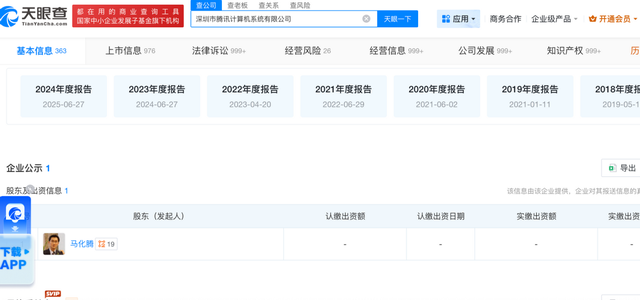
What's interesting here is that people once worried that WeChat might be disrupted in the AI era, and even Tencent lacked confidence, so they experimented with AI social networking.
But in the end, the highly promoted Yuanbao Pai not only failed to make much of a splash but also brought a wave of doubts that Tencent was falling behind in the AI era.
It wasn't until recently that WeChat shifted towards AI Agents, focusing on AI complementary upgrades rather than taking a disruptive creation route, that the overall market welcomed a wave of positive sentiment.
These cases all point to one thing:
Under the current AI narrative logic, the value of reconstructing new industry ecosystems as a "disruptor" is mostly less market-imaginative than activating and upgrading old business models as an "enabler."
In other words, the optimal solution for AI technology and human live streaming now is not opposition but human-machine collaboration and assistance.
Just like in AI healthcare and AI intelligent driving, AI plays an efficiency-assisting role, helping doctors and drivers quickly diagnose and drive easily...
In this regard, according to media sources like Securities Times, during this year's 618, Yaowang Technology integrated AI technology into the pre-, mid-, and post-live streaming processes. Before live streaming, Yaowang Technology's AI was applied to product selection recommendations, quality control inspections, etc., shortening the product selection cycle from 7-10 days to 1-2 days; during live streaming, AI was applied to real-time scene control, bullet screen interaction analysis, advertising, etc., reducing the workload of advertising operations by 80%.
After live streaming, it was applied to product reviews, segment distribution, public opinion monitoring, etc., shortening the live stream review cycle from 3 days to 4 hours and increasing human efficiency by 50%.
In addition, live stream rooms like Qianxun and Jiao Ge Peng You are also actively promoting AI integrated operation strategies.
In contrast, numerous brand merchants appear to remain unresponsive, still indulging (a more natural term than "immersed" in this context) in the belief that AI will revolutionize every aspect of the industry. They seem to be waiting for influential live - streamers to jolt everything back to life with tangible and remarkable outcomes.
Therefore, moving forward, individuals like Li Jiaqi and entities such as Yaowang Technology may need to seize the initiative. They should translate the irreplaceability of live - streaming by real people into quantifiable business stories. This involves redefining the value of "people" from mere cost factors to core assets, thereby paving the way for another decade of growth...
In conclusion: While AI digital humans may indeed push efficiency to new heights, the core of live - stream commerce has never been centered around efficiency. Instead, it lies in the human encounters, the intricate interplay of words, and the establishment of trust.
Thus, after a decade, the golden era for real - person live - streamers might just be commencing. Behind the scenes, a new decade awaits, where efficiency and warmth coexist harmoniously, and algorithms and human emotions move in tandem.
In this landscape, no one will replace anyone. Only those who can subtly and authentically convey goodness in a human - centric manner amidst the mechanical noise will emerge victorious.
-
![]()
【OFweek Weike Cup】Fair Optics Officially Nominated for 2026 Outstanding Contribution Award in Optical Industry Application Solutions
-
![]()
The Competitive Landscape of Financial AI Agents in the 'Long Tail' Market: FinTech Subsidiaries, Financial Leasing, Consumer Finance, AMCs, and Other Players Making Quiet Strides
-
![]()
【OFweek Weike Cup】Fair Optical Officially Enters for the 2026 Optical Industry Annual Innovation Product Award
-
![]()
【OFweek Weike Cup】Wuhan Changjin Photonics Nominated for 2026 Optics Industry Outstanding Component Supplier
-
![]()
【OFweek Weike Cup】Xinyuan Optics Officially Enters for the 2026 Outstanding Contribution Award for Advanced Manufacturing Process Solutions in the Optical Industry
-
![]()
Who Dominates the World Cup: Lenovo, Hisense, or Mengniu?
-
![]()
【OFweek Weike Cup】Shijia Photonics Participates in the 2026 Excellent Optical Component Supplier Award
-
![]()
【OFweek Weike Cup】Dingxinsheng Optics Officially Enters for the 2026 Optical Industry Annual Innovation Product Award