Who Dominates the World Cup: Lenovo, Hisense, or Mengniu?
 06/23 2026
 461
461
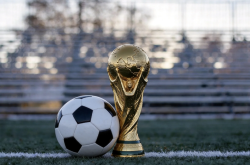
Football legend Franz Beckenbauer once remarked, "What rolls on the green field is not just a football, but gold." The World Cup, recognized as the "world's most powerful marketing IP," remains a vital avenue for brands seeking global recognition.
Scanning FIFA's sponsor list, Yingli Green Energy stands out as the first Chinese company to make a splash. At the 2010 South Africa World Cup, Yingli shone among European, American, Japanese, and Korean brands, boosting its market recognition in Europe. Following a management shakeup at FIFA in 2016, Wanda stepped in as a FIFA Partner, securing a contract through 2030 that covers four World Cups and sparked a wave of Chinese sponsorships.
At the 2018 Russia World Cup, Hisense, Vivo, and Mengniu joined FIFA's sponsorship ranks, alongside three regional supporters—Yadea, Dibaid, and Zhidian Yijing. Together, these seven Chinese companies contributed over $835 million in sponsorship fees, more than double that of the U.S.
For the 2022 Qatar World Cup, the U.S. increased its spending to $1.1 billion, but Chinese companies outdid them again. Wanda, Hisense, Vivo, Mengniu, Yadea, and BOSS Zhipin collectively invested $1.395 billion, maintaining their global lead. Chinese infrastructure, transportation, power, and Yiwu's small commodity chains all garnered international attention.
This year's U.S.-Canada-Mexico World Cup has been dubbed the "Twilight of the Gods" in global football, with 39-year-old Messi and 41-year-old Ronaldo taking the field for the sixth time, marking their legendary careers' ultimate farewell. As the largest World Cup spanning three countries in history, FIFA estimates the commercial scale will exceed $13 billion.
The year China's national football team qualified for the World Cup was probably when Chinese fans felt most confident about them, reminiscent of a period of economic prosperity. Over 20 years have passed, and as the saying goes, even copyright negotiations are now open to bargaining, but as usual, Chinese football failed to make it. Fortunately, Chinese manufacturing continues to dominate:
Chinese referee Ma Ning and the Chinese IP Labubu made a dazzling debut, but even more noteworthy was Lenovo's first appearance at FIFA's top table as a Chinese brand, with Hisense and Mengniu, as "three-time veterans," stabilizing the home appliances and fast-moving consumer goods scenes. Among them, who is the biggest winner?
FIFA's official sponsorship tiers are divided into three levels: FIFA Global Partners, World Cup Sponsors, and Regional Event Supporters.
As a newcomer, Lenovo secured the top-tier position for this tournament: FIFA's first-ever "Official Technology Partner" from China.
Rather than just logo exposure, Lenovo entered with technology, focusing on AI technology dissemination. Before the World Cup kicked off, Lenovo launched a documentary, "AI World Cup." Yang Yuanqing stated, "The 2026 FIFA World Cup, powered by Lenovo's AI technology, will be the most technologically advanced tournament in history."

For this World Cup, over 17,000 Lenovo and Motorola devices and more than 200 engineers were deployed across 16 stadiums. FIFA's technical command center and event operations center ran on Lenovo's servers and AI infrastructure. The 3D modeling for in-stadium refereeing decisions and coach-player analyses also relied on Lenovo's technology.
The 2025/26 fiscal year marks the "start of Lenovo's new AI decade." Financials show annual revenue nearing 600 billion yuan, with AI-related revenue surging 105% year-on-year. Fully transforming into an AI-native company is Yang Yuanqing's flagship goal for Lenovo Group this year.
The World Cup serves as a grand technology validation ground for Lenovo.
Servers, terminals, AI PCs, on-site engineers, digital workplaces, and event operations systems running flawlessly under high pressure is, in itself, a technological roadshow.
If Lenovo can deliver faultlessly in the World Cup's demanding scenarios, it gains globally recognized technology credibility, shedding its traditional "PC hardware vendor" label and directly applying its capabilities to financial, government, industrial, and other industry clients.
Lenovo states its sponsorship goal is to break into the North American commercial PC and AI server markets.
Driving B2B enterprise-level business is Lenovo's core commercial objective.
Currently, its Infrastructure Solutions Group (ISG) is reaping AI dividends and is in a profit-climbing phase, though its full-year profit margin is a thin 0.4%, relying on scale to dilute costs rather than technological barriers.
The World Cup is a highly prestigious benchmark project and an excellent channel to reach high-end clients, potentially marking a turning point for Lenovo's revenue growth. If this $150 million investment can translate into brand recognition and actual profits, it will be worthwhile for Lenovo.
If Lenovo showcases its AI "brain" at the World Cup, Hisense leans more toward being the "eyes" of hardware display.
Hisense has been present at the 2018 Russia, 2022 Qatar, and 2026 U.S.-Canada-Mexico World Cups, binding itself to top-tier events. This time, Hisense is a global official sponsor and the display equipment supplier for the VAR video referee system.
Hisense's RGB-MiniLED TVs entered the referee room, recording every thrilling offside and handball. During every controversial decision, frame-by-frame replays flashed the Hisense logo to global viewers, reinforcing brand presence.
From its initial perimeter board exposure to becoming the dedicated display equipment for this World Cup's broadcast center, Hisense's nearly $100 million investment buys it a "premium brand" identity, breaking through trust barriers and achieving globalization.

Economist Paul Samuelson said, "The two ultimate masters of a market economy are consumers and technology," a quote displayed as a slogan at Hisense's manufacturing bases and R&D centers worldwide.
In 2025, Hisense Group's revenue reached 224.4 billion yuan, with overseas revenue growing 11% year-on-year to 110.7 billion yuan, accounting for half.
Globally, one in every two 100-inch TVs shipped comes from Hisense. However, in terms of gross profit margin, Hisense Visual's domestic market reached 23.58%, while overseas markets were only 12.03%, indicating a mismatch between scale expansion and profit quality.
Hisense's globalization strategy, like most Chinese manufacturing companies, began with OEM rather than a proprietary brand route. In 2006, Hisense proactively shifted to a proprietary brand model, establishing localized operations teams, offline distribution networks, and after-sales service systems in key global markets. It also acquired Toshiba's TV business in Japan and European premium appliance brand Gorenje, quickly addressing brand and capacity shortfalls in mature markets.
By 2025, Hisense's overseas proprietary brand revenue exceeded 80%, largely shedding dependence on OEM.
The narrowing gap in gross profit margins stems from white goods dragging down profits, short-term dilution from localization investments, and brand premiums not yet fully realized.
Hisense's three consecutive World Cup sponsorships aim to leverage the world's most-watched sporting event to elevate brand momentum, shatter overseas markets' perception of Chinese home appliances as "low-end, cost-effective," reclaim product pricing power, and achieve the ultimate leap from scale-based globalization to brand- and profit-driven globalization.
Interestingly, a co-branded ad appeared on perimeter boards: "Hisense and Mengniu are trustworthy; Mengniu and Hisense are simply awesome." This marks the first time two major sponsors have been featured together. What does Mengniu gain?
The World Cup is the world's largest emotional consumption arena and a top-tier strategic battleground for fast-moving consumer goods brands to bind scenes and occupy mindshare. Like Hisense, Mengniu is competing in its third World Cup, with a $75 million equity investment this time.
According to Tianyancha and industry data, China's dairy industry has bid farewell to its "golden era." Excess upstream raw milk supply has driven prices down, midstream dairy companies face inventory backlogs, and downstream demand is weak. Combined with the trend of "room-temperature milk declining and chilled milk rising," Mengniu and Yili's liquid milk business, their bread and butter, is under pressure.
Upon Gao Fei's appointment, Mengniu proposed the "One Body, Two Wings" strategy, with international business as one wing. Under this guidance, Mengniu's overseas revenue surged from 711 million yuan in 2019 to 4.55 billion yuan in 2025, with its share of total revenue rising from 0.9% to 5.53%.
Moreover, overseas business has consistently grown faster than the group's overall average, becoming the most certain second growth curve during the company's adjustment period.
Last year, China's dairy industry saw nearly stagnant overall revenue growth. Mengniu achieved higher gross margins through operational efficiency and management precision, but its net profit margin was less than one-fifth of Yili's, with consistently high expense ratios partly due to heavy investments in top-tier sports IP marketing like the World Cup, channel expansion, and brand building.

The World Cup is a quadrennial, nationwide traffic event. Mengniu launched the theme "No matter who wins, come to Mengniu."
First, the scene is highly compatible with high ROI, allowing Mengniu to reinforce its domestic foundation amid dairy industry competition.
Second, as Mengniu advances into the North American market, being FIFA's first global dairy sponsor helps dispel overseas quality biases against Chinese dairy products and hedge against global expansion uncertainties.
On the field, Lenovo, Hisense, and Mengniu successfully broke through at the World Cup, deeply embedding themselves in the tournament system through technological foundations, core products, and scene marketing, serving long-term brand elevation and business strategies.
Milkground became the World Cup's official cheese partner, Wuliangye secured a Chinese liquor co-branding deal for Greater China, and Pop Mart's LABUBU appeared at the opening ceremony.
Off the field, more Chinese companies are using the tournament as a springboard for global expansion, collectively driving a wave of Chinese brands going overseas.
In Mexico, the primary transportation for fans traveling to and from stadiums consists of 115 new light rail trains manufactured by CRRC. Over 800 new energy shuttle buses, 90% of which are from Yutong and BYD, are in operation. Even the construction machinery used for renovating the Azteca Stadium comes from China's Zoomlion. The "atmosphere-boosting" gear like jerseys, horns, inflatable sticks, and small flags in fans' hands are all made in Yiwu.
Numerous Chinese brands are also participating in World Cup marketing through broadcasts, betting on teams and stars indirectly.
Xiaohongshu doubled down as a rights-holding broadcaster, exploring a new "community × sports" model. Geely Galaxy titled "Grand Banquet of Football Giants," CATL partnered with Migu for broadcasts.
Luckin Coffee partnered with Spain and Portugal, Cotti Coffee secured Argentina's authorization, TCL sponsored Spain, Germany, and Argentina's national teams, and Yili signed five national teams, including Argentina.
Wang Laoji signed Erling Haaland, Dongpeng's hydration brand signed Kylian Mbappé, and Roborock signed Cristiano Ronaldo.
Even Miniso, which didn't hire stars or sponsor officially, precisely targeted young audiences with self-deprecating "frugal marketing," achieving significant exposure on a small budget.
"Being present" is winning. Tech, home appliance, and fast-moving consumer goods brands employ flexible tactics with a unified goal. The curtain on Chinese brands' global expansion has just risen.
From Benyuan Finance
-
![]()
【OFweek Weike Cup】Fair Optics Officially Nominated for 2026 Outstanding Contribution Award in Optical Industry Application Solutions
-
![]()
The Competitive Landscape of Financial AI Agents in the 'Long Tail' Market: FinTech Subsidiaries, Financial Leasing, Consumer Finance, AMCs, and Other Players Making Quiet Strides
-
![]()
【OFweek Weike Cup】Fair Optical Officially Enters for the 2026 Optical Industry Annual Innovation Product Award
-
![]()
【OFweek Weike Cup】Wuhan Changjin Photonics Nominated for 2026 Optics Industry Outstanding Component Supplier
-
![]()
【OFweek Weike Cup】Xinyuan Optics Officially Enters for the 2026 Outstanding Contribution Award for Advanced Manufacturing Process Solutions in the Optical Industry
-
![]()
Who Dominates the World Cup: Lenovo, Hisense, or Mengniu?
-
![]()
【OFweek Weike Cup】Shijia Photonics Participates in the 2026 Excellent Optical Component Supplier Award
-
![]()
【OFweek Weike Cup】Dingxinsheng Optics Officially Enters for the 2026 Optical Industry Annual Innovation Product Award