Purchasing the Casket and Sending Back the Pearl: Meta's Foray into Computing Power Business
 07/03 2026
 399
399
This article is crafted based on publicly accessible information and serves solely as an informative piece. It does not offer any investment guidance.
There exists an ancient Chinese tale. A merchant from Chu journeyed to Zheng to peddle pearls. He crafted a casket from magnolia wood, infused it with the aroma of cinnamon and pepper, embellished it with pearls and jade, adorned it with roses, and lined it with kingfisher feathers. A man from Zheng purchased the casket and returned the pearl to the merchant.
When Han Feizi penned this fable, his intent was to satirize the act of prioritizing the insignificant over the essential. Yet, if we shift our viewpoint and consider it from the Chu merchant's perspective, it also embodies an unplanned business tactic: he initially aimed to sell only pearls but unexpectedly found that the casket he crafted was deemed more valuable than the pearls themselves by others.
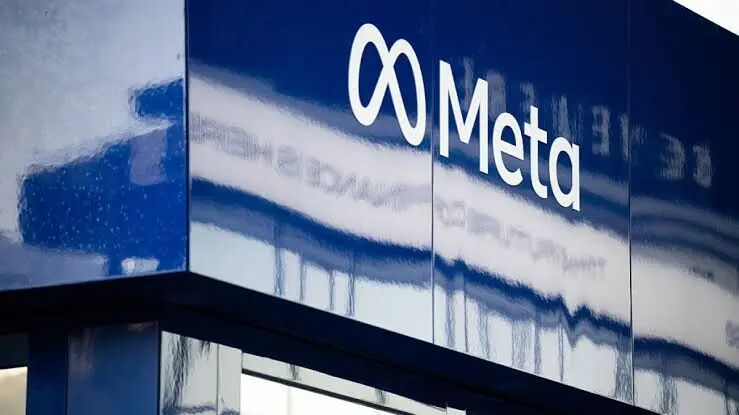
On July 1, 2026, a Bloomberg report unveiled a contemporary rendition of this age-old fable. Meta is establishing a cloud infrastructure business division to vend AI computing power and models to external customers. The provisional name for this venture is Metamate, with an ambition to amass annual revenues of at least $10 billion to $15 billion by the close of 2027.
In essence, the nearly $200 billion Meta has invested over the past two years was initially earmarked to forge a sufficiently vast computing power reservoir for its advertising operations and Llama models. However, this reservoir proved so expansive that it remained largely underutilized most of the time. Consequently, Meta opted to package this idle computing power as a commodity and offer it to companies eager to train AI but unable to procure GPUs. It originally intended to catch a single fish but unexpectedly stumbled upon a lake from which it could vend water. The casket proved so valuable that now some individuals desire only the casket, eschewing the pearl.
What constitutes Meta's pearl? It's advertising, which accounts for 98% of the company's earnings. The Llama series of open-source models serve as the most dazzling adornments on Meta's casket, boasting over 100 million downloads yet yielding no revenue whatsoever—they are purely for displaying craftsmanship.
Would a prudent merchant allocate their entire budget to embellishing the casket for the pearl? Meta's response is affirmative, and it has already done so. Capital expenditures for the entirety of 2025 neared $100 billion, with guidance for 2026 elevated to $125 billion to $145 billion. Free cash flow has been depressed to its lowest ebb since 2014.
The casket grows increasingly exquisite, yet the price of the pearl does not escalate commensurately. Investors persistently pose the same query: when will this casket commence generating its own profits?
Metamate is the rejoinder to this query. It may not be the optimal response, but it is the sole one that can be proffered without shutting down the decoration workshop.
Meta's rationale is straightforward: it has constructed one of the world's largest AI computing power reservoirs, with GPUs experiencing significant idle periods post-supporting internal operations. Rather than permitting this costly heat to languish in data centers, it might as well lease them out by the hour. It's akin to a bakery that erected an industrial-grade baking facility to bake a single cake for itself daily but now discovers the facility mostly idle, so it commences hanging a sign outside: Undertake Outsourcing Baking Business (We Accept Baking Orders).
However, adjacent to this baking facility are three established enterprises that have been operational for over a decade: AWS, Microsoft Azure, and Google Cloud, which collectively command more than two-thirds of the global cloud market. They possess mature customer bases, comprehensive compliance certifications, seasoned direct sales teams, and long-standing relationships with governments and sizable enterprises spanning over a decade.
Meta, a social network company with the motto "Move Fast and Break Things," now must approach the doors of these major clients and declare: Hello, please entrust us with your most sensitive AI training tasks.
This scenario is captivating in itself. Andrew Bosworth, as CTO, has undertaken this task, and Meta is internally assembling a sales team, attempting to utilize open-source Llama as a foot in the door. The rationale is self-consistent: AWS and Azure vend computing power plus their own closed-source models or computing power plus closed-source models from partners. Meta offers computing power plus open-source Llama. For European and Asia-Pacific clients sensitive to data privacy and with stringent compliance requirements, open-source signifies controllability, auditability, and the capacity to deploy privately without being ensnared in a closed-source model from a single supplier.
But open-source also implies something else: Llama itself does not generate revenue. Meta can only accrue earnings through pure computing power leasing. This necessitates exceptionally high scale efficiency and extremely low marginal costs. Meta's confidence stems from its self-developed MTIA chips and years of data center operation experience, but confidence does not equate to a competitive advantage.
The most ingenious aspect lies in the timeline.
Meta has set a target for Metamate to generate annual revenues of $10 billion to $15 billion by the end of 2027. For a company with annual revenues surpassing $200 billion, this figure is not substantial. What truly counts is that this revenue will demonstrate to Wall Street that AI can evolve into a profitable business rather than merely a bottomless cost pit.
A $15 billion revenue stream in itself does not significantly alter the landscape; it is the narrative shift it engenders that matters. If Metamate succeeds, Meta will metamorphose from "a social network company sustained by advertising" to "a technology infrastructure company with an open-source AI ecosystem." Between these two narratives lies a trillion-dollar valuation ceiling.
On the day the news was announced, Meta's stock price ascended in response. Investors are expressing with tangible funds a judgment: when the world's largest AI computing power purchaser transforms into a seller, the underlying logic of the entire industry is subtly shifting. Infrastructure is no longer a production resource exclusive to a single company; it is evolving into a tradable commodity. It's akin to how power companies initially only supplied electricity to their own factories but later discovered that the entire city was awaiting electricity.
When Han Feizi wrote about purchasing the casket and sending back the pearl, he likely never envisioned that this story could elucidate the strategic transformation of a Silicon Valley behemoth. However, the choice made by the man from Zheng does not seem so ludicrous today. He valued the craftsmanship, materials, and design of the casket—elements whose value existed independently of the pearl. When he bought the casket, he was acquiring the underlying infrastructure that others had invested considerable effort in creating.
Meta has discerned that its prowess in crafting caskets is robust enough to vend them separately. This is an adventure that could only transpire in the AI era: the pearl is not valuable, but the casket that enshrines it has become a brand-new asset.

-
![]()
Hardware is the skeleton, AI is the soul, and data integrates the two
-
![]()
China’s AI Industry: A Unified Pivot Towards Monetization?
-
![]()
New Progress! Infineon Completes Acquisition of ams OSRAM's Non-Optical Sensor Business
-
![]()
35 Million Bet on an Optical Future! Tengjing Technology Makes a Move in AR
-
![]()
Why World Models Get Stuck on Construction Roads in Autonomous Driving Applications
-
Alibaba Initiates Cultural Transformation: Is Jack Ma Making a Strategic Comeback?
-
Tianfeng Heads to Hong Kong for IPO with RMB 3.8 Billion in Funds: Xingyu's Cross-Border Foray into Embodied AI Faces Uncertain Future
-
![]()
Mengshi Auto’s High-End Aspirations Dashed: Huawei Partnership Fails to Revive Sales, New Model’s Entry Price Dips Below 300,000 Yuan