Hardware is the skeleton, AI is the soul, and data integrates the two
 07/03 2026
 391
391

Author|Shen Ziyan
Editor|Lv Xinyi
Produced by|AI World
In the past two years, when discussing AI hardware, people often ask: Are hardware companies integrating AI, or are AI companies venturing into hardware?
This question identifies the players but misses the real transformation.
A more accurate observation is: AI is seeking hardware, while hardware is seeking models.
This isn't quite like falling in love—it's more like both sides are missing something.
AI lacks a physical presence.
Large models resemble geniuses confined to a room. They understand everything but don't know where you're standing, how you're feeling, or what's happening at home. Trapped in input boxes, they rely on people to slice life into text, images, and voice clips, feeding them piece by piece.
Hardware lacks a future.
It can weigh you, measure your heart rate, capture first-person views, or record a day's sounds. It's on-site, with eyes, ears, and skin. But once supply chains mature, many hardware products become interchangeable. Specifications are quickly matched, prices plummet, and once sold, their story ends.
So the two sides come together.
AI needs hardware to step into real life, while hardware needs AI to escape being a one-time purchase.
Just because the gaps align doesn't mean a relationship forms.
As they draw closer, the real question emerges: What is truly being revalued—the hardware, the model, or the continuous stream of real-world data?
Hello, this is "AI World."
When AI and hardware unite, data makes them a family.

Plaud CEO Nathan Hsu bluntly stated before NotePin's launch: Many companies still rely on digitized internet data for AI, but real-world scenarios hold vast amounts of data in what people say, hear, and see.
This nearly reveals the underlying motivation for AI hardware's resurgence.
Large models aren't truly data-starved. The internet still offers text, images, videos, forums, comments, papers, and code. The challenge lies in creating new differentiation from these public materials.
Epoch AI estimates that if trends continue, large models will fully utilize existing public human text by 2026–2032. This doesn't mean internet data will dry up tomorrow, but it signals a narrowing space for public web data to sustain general capabilities.
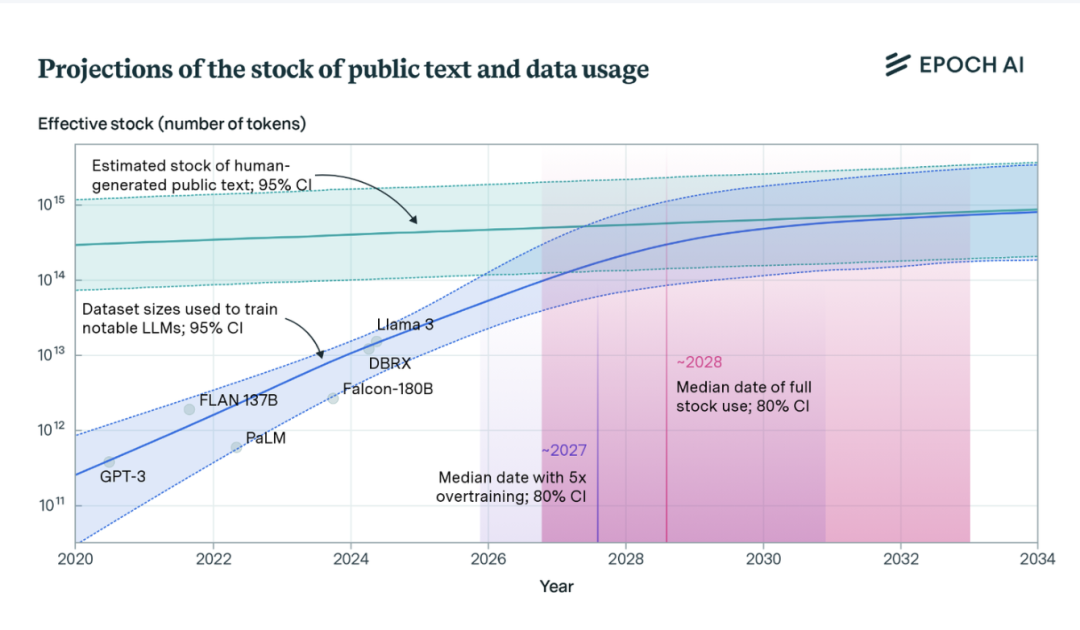
More growth lies beyond the web.
How a person's weight changes weekly, whether they've lost fat or muscle; who made promises in a meeting and whether they followed through; why a child paused in front of a display case or what questions they asked; how someone interacts with the physical world in their kitchen, workspace, factory, or living room.
This data is too fragmented, messy, and mundane. It doesn't automatically appear online or get handed to models.
For AI to evolve from "answering" to "serving," it can't bypass this data.
A simpler example unfolds with a body fat scale in China.
On June 25, Ant Afu launched the "Lose 100 Million Pounds Scientifically" health campaign, offering a smart body fat scale for "9.9 yuan shipping + 1 cent payment." Users paid 30.01 yuan upfront, received the scale, bound it to the Afu App for AI analysis, and got a 30-yuan refund. Within two hours, over 10,000 scales were claimed.
The scale itself isn't revolutionary.
It's a thin hardware business: cheap, easily replaceable, and low-repurchase. Many buyers use it briefly before stashing it under their bed.
Afu's willingness to nearly give the hardware away lies behind the scale.
Connected to the Afu App, users can track 18 metrics like weight, body fat percentage, visceral fat, muscle mass, bone density, and BMI. AI analysis provides health summaries, key concerns, and diet/exercise advice.
This transforms users from "self-reporters" into continuously calibrated subjects.
A user saying, "I've gained weight," is just a statement. The system sees a curve of weight, fat, muscle, and visceral fat changes over time.
Large models aren't short on "eat less, move more" advice. What they lack is whether the person truly ate less, truly moved, and how their body responded. The scale fills this gap.
This curve also pulls users back into the system.
Pure AI tools are easily abandoned—asked once today, forgotten tomorrow. Hardware differs. Each weighing is a data transmission; each AI analysis is a reason to reopen the App. Hardware acts as a hook, turning occasional consultations into ongoing management.
Further back lies vertical data.
A single user's body fat data serves personal weight loss; aggregated, anonymized, and organized health data can enrich health models, chronic disease management, public health research, and insurance risk control. Compliance hurdles remain, but commercial potential extends beyond the scale.
Thus, the scale's true value isn't just its affordability.
It repositions hardware: from a sold device to a gateway for continuous data.
This logic applies elsewhere.
Ray-Ban Meta integrates cameras, voice, and first-person AI into everyday glasses. Controversy arises because the glasses sit too close to daily life—they hear what you say and may see what you look at.
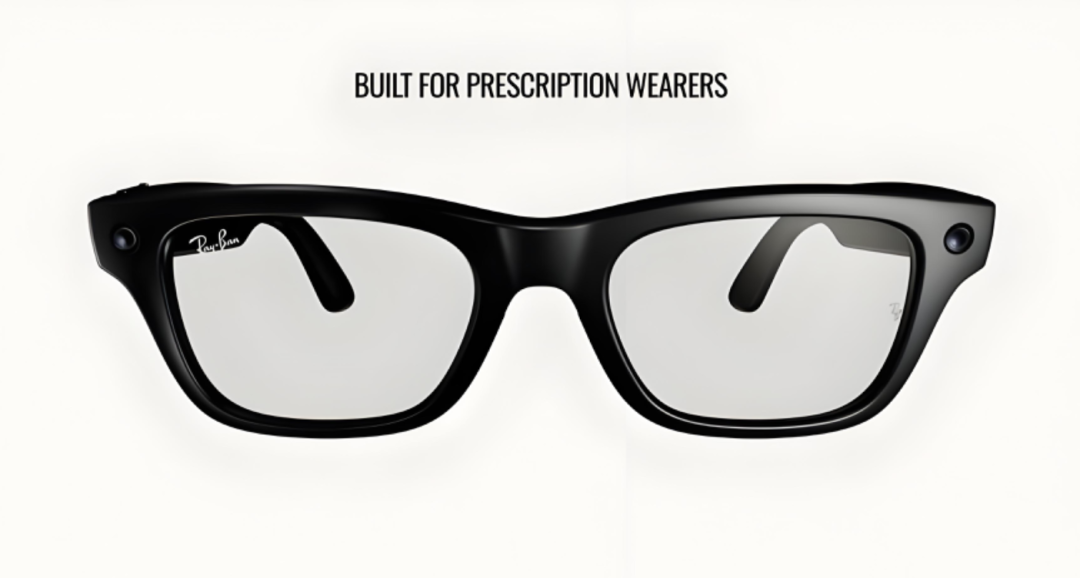
From body fat scales to glasses, forms differ, but underlying actions align.
AI seeks real-world signals beyond the web: physical changes, gaze patterns, voice contexts, and daily actions. These were once scattered in life, hard for models to capture reliably.
Hardware brings reality back; models convert these signals into feedback, advice, and services.
AI wants hardware for the continuous data stream beyond the web.
As this data grows, hardware companies get pulled in.
The real story begins after the device is sold.

Hardware anxiety runs in another direction.
For hardware companies, the goal isn't to escape hardware but to stop relying solely on hardware for profit.
The more mature supply chains become, the thinner per-device margins grow. Cameras, microphones, sensors, and modules become commoditized, with gross margins, inventory, channels, and after-sales services capping growth.
After selling a device, whether the story continues depends on something else: its ability to sink a unique set of data into a specific life context.
Amazon Echo offered an early lesson.
The Wall Street Journal reported that Amazon's device division lost over $25 billion from 2017–2021. Echo was meant to enter homes cheaply and drive shopping and service revenue, but many users treated Alexa as merely an alarm clock, weather reporter, or music player.
Devices enter homes, but businesses don't necessarily enter lives.
This is where AI sparks imagination for hardware. Model capabilities are superficial; the key is transforming device-captured sounds, actions, images, and physical states into services, subscriptions, content, and long-term memory.
Lingverse Xiaofang Machine fits here.
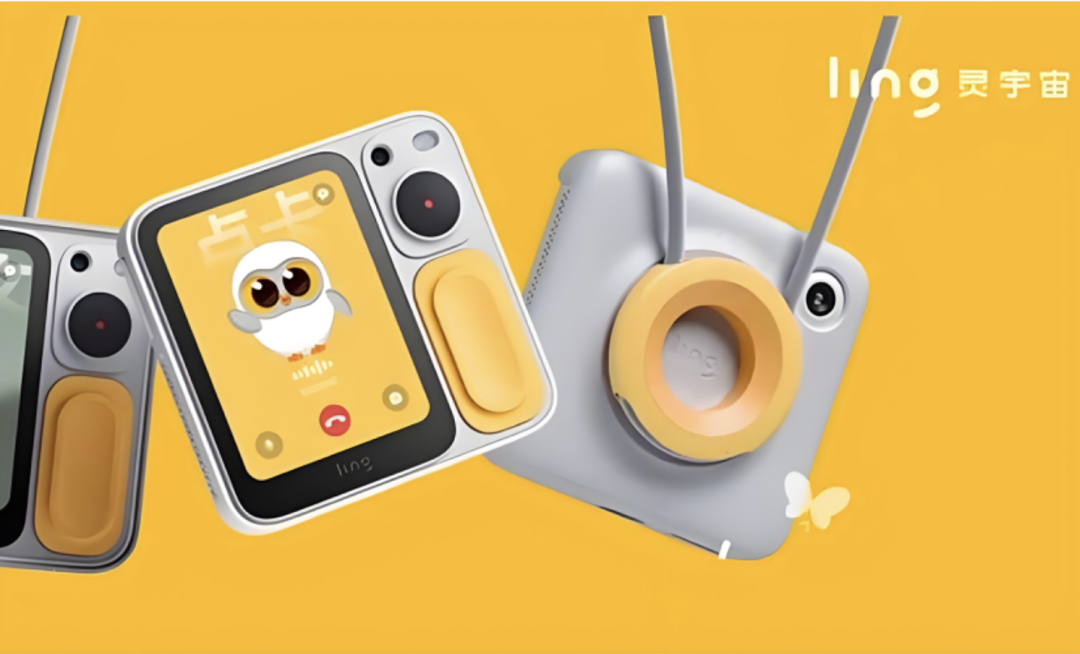
On the surface, it's a children's AI learning companion. China Daily reports it runs LingOS, can be worn on the chest, and uses a "magic camera" to animate museum exhibits into interactive agents. Paired with Luka robots, it forms a product matrix for Alpha-generation cognitive enlightenment, language learning, and outdoor exploration.
But viewing it as a children's camera misses the point.
Gu Jiayi explained in a conversation that Lingverse's hardware terminals essentially serve as AI's "eyes" and "ears" in the physical world, capturing first-person data on how humans see, hear, and interact in real scenes. He calls this the scarcest "physical world corpus."
Xiaofang's value extends beyond the hardware. It connects to Luka, LingOS, content, characters, memory, and services. One device accompanies children outdoors; another stays home for reading, with the system linking scenes, content, and long-term interactions.
This is a path: retain data in your system to make devices smarter over time.
Fuzozo takes a softer approach.
Public data shows Fuzozo is an AI-powered, customizable plush toy by Luobo Intelligence, featuring five-element character designs, natural voice interaction, and long-term memory. While emphasizing emotional companionship, it adds a personalized touch.
Plush toys aren't novel. What's unique is the attempt to convince users this toy has personality, memory, relationships, and growth. The shell is easy to replicate; long-term interaction is harder to migrate.
Plaud takes a harder approach.
TechCrunch reports Plaud has shipped over 2 million AI notetakers, with software subscription ARR exceeding $100 million. AI summaries, transcriptions, to-dos, team knowledge, and subscriptions dominate post-hardware revenue.
Another path leads upstream.
When hardware captures first-person views, hand movements, and real-world interactions, it serves not just its own products but also multimodal models, embodied AI, and world models needing real-world data. After authorization, anonymization, cleaning, and labeling, this data can feed training, evaluation, scene adaptation, and data services.
These industry moves clarify the trend: hardware is becoming the frontline for real-world data.
For some pioneers, data is becoming a bigger barrier than the devices themselves.
Selling a device completes one transaction. Continuous data from the device can link hardware to models, subscriptions, content, services, and even a higher position in the AI supply chain.

Here, AI and hardware truly converge.
One reaches downward, the other grows upward, both orbiting the same thing: life data that once stayed offline but now continuously flows back.
The key difference between this wave of AI hardware and past smart hardware lies here. Previously, selling a device nearly ended the transaction; now, it's just the beginning. What's truly revalued isn't just sensors and models but whether the data-service link sustains after the device enters life.
This link looks enticing.
Hardware collects private data; data feeds models; models make services more user-aware; services boost retention; retention generates new data. As the wheel spins, hardware transcends being a mere device, and models become more than capabilities—they elevate each other's value.
But the flywheel's flip side is higher trust costs.
When Google acquired Fitbit, the EU mandated that Google not use Fitbit health data for ads for a decade. This serves as a boundary reminder: when wearables accumulate abundant health data, regulators first scrutinize whether it enters unrelated commercial systems.
AI hardware faces similar tensions.
A body fat scale collects health data; glasses capture first-person views; children's devices track how minors perceive the world; meeting devices record work relationships and decisions. The better they improve services, the closer they get to users' life boundaries.
The hardest part isn't selling devices.
It's maintaining users' trust that the device remains worth keeping.
Humane AI Pin's exit offered another lesson. After HP acquired some Humane assets, AI Pin sales stopped; cloud shutdowns left most devices non-functional. A hardware package hyped as a future gateway ultimately proved that AI hardware's value doesn't lie solely in the device—it resides in the ongoing services, cloud capabilities, and user relationships behind it. Break the link, and hardware becomes an island.
This shifts the competitive yardstick.
The question becomes: Who controls the data link?
Devices can be replaced; models can be swapped. What truly remains is the continuous stream of data from bodies, voices, first-person views, workflows, and life scenes. The more continuous, personal, and contextual this data, the less it resembles simple functional records and the more it resembles foundational assets for next-gen AI products.
On the surface, software companies making hardware and hardware companies adopting models follow separate paths.
Deeper down, they converge on the same data endpoint: whoever captures real-world data earlier, more stably, and more compliantly will deepen models, extend services, and drag devices from one-time transactions into longer-term relationships.
AI and hardware's partnership won't succeed by merely shouting "AI+hardware" first or stuffing models into devices fastest.
The winners will likely be those who first spin the data-service flywheel.
Only when the wheel turns do AI and hardware evolve from mutual shortcoming -filling to mutual empowerment.
Without it, AI may remain trapped in rooms, and hardware may stay a shiny shell coated in tech sugar.
Once the trend fades away, it's inevitable that everyone will go their separate ways.
-
![]()
Hardware is the skeleton, AI is the soul, and data integrates the two
-
![]()
China’s AI Industry: A Unified Pivot Towards Monetization?
-
![]()
New Progress! Infineon Completes Acquisition of ams OSRAM's Non-Optical Sensor Business
-
![]()
35 Million Bet on an Optical Future! Tengjing Technology Makes a Move in AR
-
![]()
Why World Models Get Stuck on Construction Roads in Autonomous Driving Applications
-
Alibaba Initiates Cultural Transformation: Is Jack Ma Making a Strategic Comeback?
-
Tianfeng Heads to Hong Kong for IPO with RMB 3.8 Billion in Funds: Xingyu's Cross-Border Foray into Embodied AI Faces Uncertain Future
-
![]()
Mengshi Auto’s High-End Aspirations Dashed: Huawei Partnership Fails to Revive Sales, New Model’s Entry Price Dips Below 300,000 Yuan